-compressed.jpg)
Daily, snackable writings to spur changes in thinking.
Building a blueprint for a better brain by tinkering with the code.
subscribe
rss Feeds
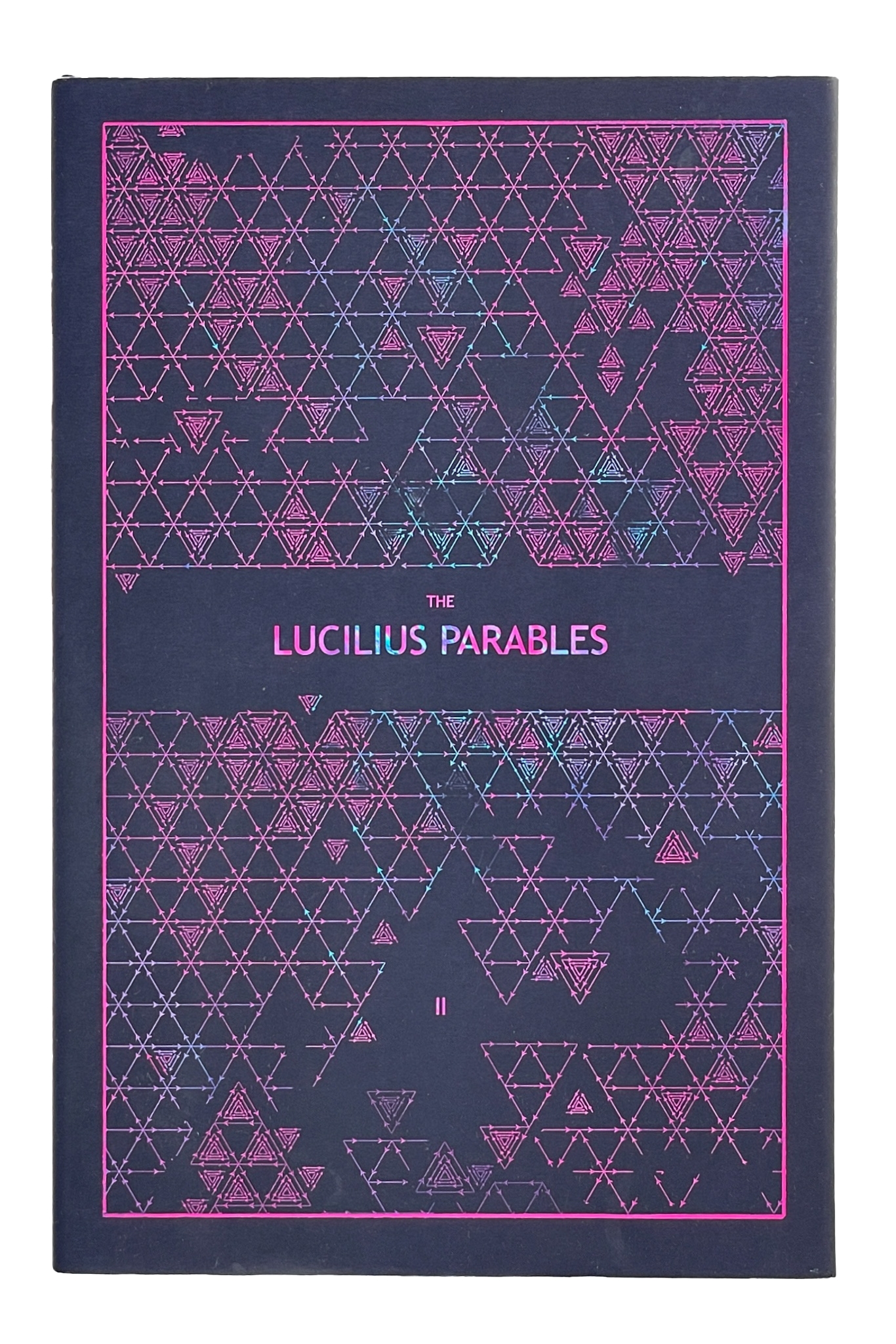
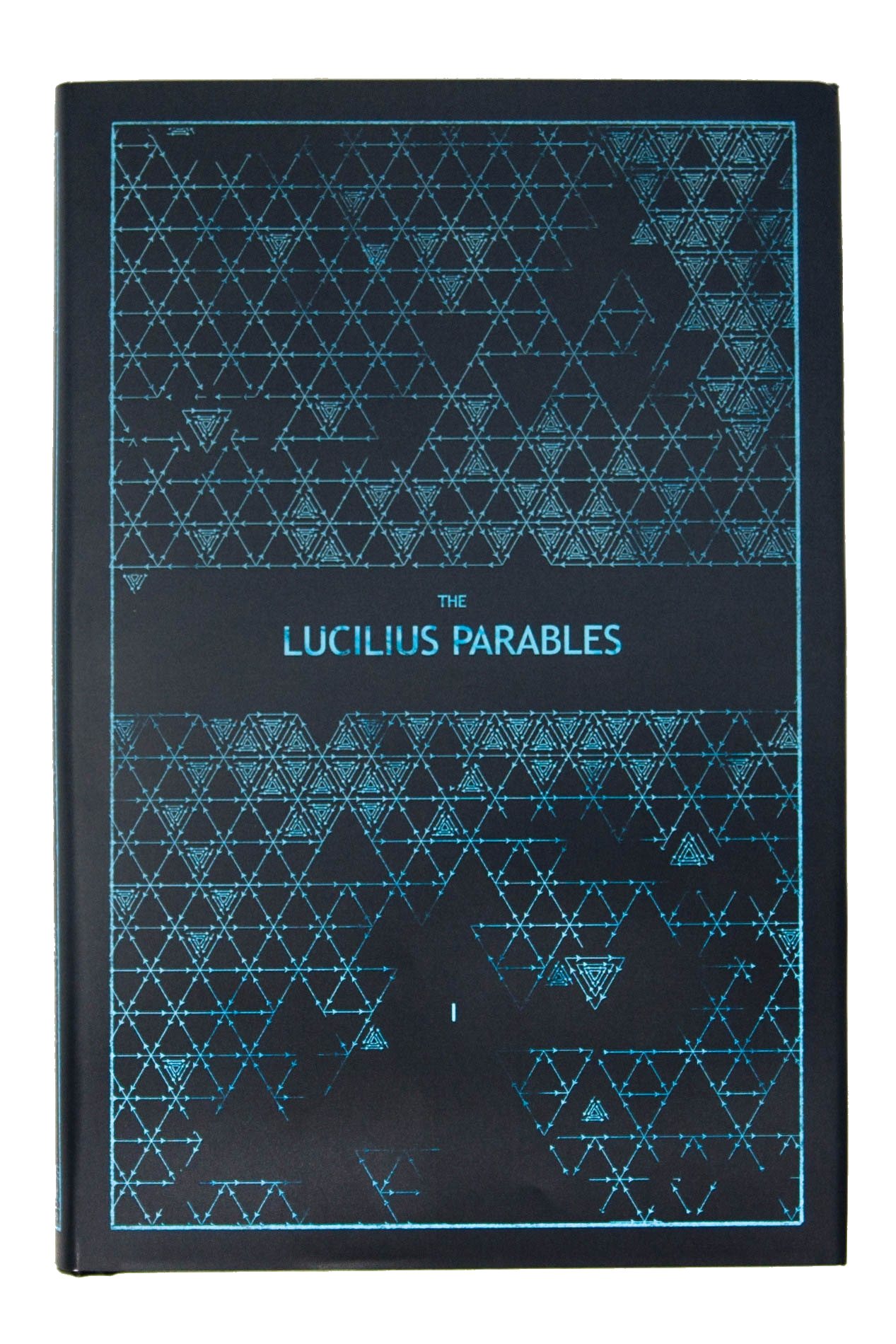
The SECOND illustrated book from Tinkered Thinking is now available!

SPIN CHESS
A Chess app from Tinkered Thinking featuring a variant of chess that bridges all skill levels!

REPAUSE
A meditation app is forthcoming. Stay Tuned.




FALSE MOMENT
July 14th, 2020
As the technology behind photos and film continues to advance in such a way that it becomes more and more seamless with the moment, one wonders whether the need to 'compose' false moments will disappear. When photography as a technology first came into being, people were required to stand very still for a length of time in order for the exposure to work. The limits of the technology required a particular behavior, and that behavior has persisted. For the most part, we are still saying 'cheese' in order to flag the exact moment when everyone needs to smile without blinking.
But imagine for a moment if everything around you, in a kind of 360 degree aura was being visually recorded and an algorithm was monitoring all the angles and compositions and automatically selected moments that spontaneously looks good as photos, compiling those at the end of the day and creating the quintessential photo album of your life? Would we still feel the impulse to compose photos if this were the case?
Probably, either because the behavior is fairly entrenched at this point, or rather because we compose photos not because we are trying to have a likeness of our moment, but because we seek to represent an ideal moment that isn't actually occuring.
We live in our head more than we do in the moment. We chase ideas, dreams and peak states that are perpetually poised in the future, like the proverbial carrot dangling before the donkey. As a result we miss the moment, and ironically, when we do find ourselves wholly present, the experience is often so nice that to interrupt it with the taking of a picture would only lessen our sense of what it's like to be alive in that moment.
We exist in false moments framed by ideals at the expense of the actual moment. Oddly, the thing we are trying to get at is always here with us. The problem is not that we lack something that might exist in the future, it's that our attention lacks a certain flexibility, construction and focus to connect tangential desire with the satisfaction that is always available in the present.

MAYFER'S LAW
July 13th, 2020
This episode is dedicated to Murat Ayfer. You can connect with Murat on Twitter with the handle @mayfer
In many human affairs, it’s not too difficult to assess how long something will take. Our vast synchronization and record keeping across all domains of life enable us to organize the timing of flights, trains, pizza deliveries, surgeries, crop yields – just about everything that occurs with any kind of recurrence. But one area of human activity stubbornly resists such mechanistic prediction: the discovery and creation of the new.
This can be something as complicated as a new gene editing technique or something as simple as a personal project to learn a song on the piano, or learning how to code or building a gazebo. If the people in question are embarking on any of these endeavors with no prior experience that bears any similarity, then we quickly fall victim to Hofstadter’s Law.
Hofstadter’s Law states that everything takes longer than you think it will, even when Hofstadter’s Law is taken into account.
We all know the annoyance of delayed flights, or drivers with our pizza lost in the wrong neighborhood, and certainly complications during surgery can prolong the procedure and amp up the surrounding stress. But such expansions of time are common, and generally expected, if not desired. While reminiscent of Hofstadter’s Law, Hofstadter’s notion is best applied to creative endeavors, and within it’s recursive truth lies another, that shields us in an incredibly important way.
When a creative project finally wraps up, it can be rather astonishing to reflect on how long it took, and how wildly incorrect our prediction in the beginning about how long the project would take. Say for example you’ve just finished a project that you projected would take a mere couple of months, but in the end it took nearly a year. Reflect for a moment and wonder: would you have still started the project if you’d known just how long it would take?
Getting something done in two months is far more preferable to a timeframe six times longer. The reality – if we had access to the future in this way – looks far less appealing than our grossly optimistic prediction.
But this gross underestimation is perhaps our saving grace. By the time we get started and make some meaningful headway, the sunk-cost fallacy can help us forge ahead, even when we begin to suspect just how much longer the project will take. Our cognitive biases here work in concert as a productive illusion that allows us to make progress in the face of a demoralizing reality. We might call this virtuous incidence of miscalculation on behalf of human psychology: Mayfer’s Law. Some better phrasing is in order.
Mayfer’s Law: The miscalculation of time required for achievement enables the undertaking of endeavors far larger than we would knowingly attempt to achieve.
It’s for this reason we start in on little projects that should only take a few minutes, half an hour at most, and to which we are still tinkering with hours and hours, days, weeks, and perhaps even months later. Psychological momentum seems to begin building the moment we start, hence the sunk-cost fallacy.
The fascinating aspect of Mayfer’s Law, is that we witness cognitive biases that often undermine our efforts, combine in a virtuous way. We end up superseding our own sense of our abilities. We grow and we learn as we work through novel problems within the project, and by the end of the endeavor, though it’s taken much longer than expected, we are now more capable than when we first set out. But this growth happens somewhat by accident, or rather almost unintentionally. We undertake ventures that we believe our skills and abilities can handle in a timely fashion, and inevitably we resolve the miscalculation and the gulf between our capabilities and what’s needed by growing. The tradeoff, of course, is that the process usually requires more time,
hence Hofstadter’s Law.
A LUCILIUS PARABLE: COPY & PASTE
July 12th, 2020
Lucilius watched the word count finally tick above the ten million mark. He’d finally generated the amount of content required to populate the mind of his clone. He sat back and watched as the word document saved. Some time ago, he’d reflected on all the things he wanted to do in life and realized that everyone’s occasional fantasy to generate clones of themselves was finally possible. The issue was content. Exact biological copies could be generated, but what about their thoughts, their memories, their beliefs? These had proved to be a particularly sticky problem as people’s first clones of themselves had quite quickly veered off on rebellious paths that were more in line with the stock content that cloned minds were being populated with. There were than a couple clones randomly waving twigs and shouting Latin in full expectation that magic would occur. Fiction had proved to be a problematic stand-in for the content required to populate a clone’s mind.
Lucilius realized that in order for the idea to work, he had to record his own mind, and so he’d embarked on a rather epic writing assignment, and he’d just finished. Two days later the cloning company he’d hired notified him that his clone was ready and he emailed them the enormous word document. A day later, there was a knock on the door.
Lucilius opened the door and there before him stood his own spitting image. “Hey,” the clone said.
“Hi,” Lucilius bumbled, thrown off by the actual experience.
“Well, I suppose introductions are somewhat unnecessary, so I think I’ll just get to work,” the clone said.
Lucilius stood merely still, gaping at the marvel of reality. “Oh, sorry, sure,” he said, moving aside. His clone waltzed into his home and walked right into the kitchen and poured itself a cup of coffee.
“Hope you haven’t worked on that program since you submitted the content document, I had some ideas about which direction it should go while I was making my way over here.”
Lucilius puzzled for a moment and then remembered the contract assignment he hadn’t worked on in several weeks, the repeated messages from the client and his total inability to get any work done.
“Oh, yea, no, haven’t done a thing.”
“Perrr-fect,” the clone said, comfortably striding to Lucilius’ desk, sitting down, sipping the coffee with satisfaction and then cracking knuckles with a stretch over the keyboard. The clone wiggled a little in the chair with excitement, Lucilius noticing for the first time that the adorable gesture was something he knew he did himself. Then the clone opened up Lucilius’ dormant text editor and started ripping apart code and writing in new lines. After a few minutes of staring the clone slowed a moment, stopped and looked back at Lucilius.
“Didn’t… you want to go camping or something? Or go on a hike at least?”
“What?” Lucilius said.
“That’s the whole point I exist isn’t it? You wanted a version of you that would actually enjoy this sort of work so you could go off and do other things that you really wanted to do?”
“Oh yea,” Lucilius said, turning away to let the clone work, stopping momentarily to look back as he scratched his head, puzzled as to how to feel about the whole situation.
Several days later he was sipping coffee on a rocky shore, having just awoken and crawled out of his tent. The days since leaving home had been splendid, kayaking north along the coast and camping each night, cooking trapped crab and mornings filled with meditation and cowboy coffee. The days rolled on pleasantly, but eventually Lucilius began to feel restless. The natural environment was wonderful, and the trip was one he’d been putting off for a long time, but there grew within him the guilty thought that he was getting a little bored. He’d planned a trip of several months, but after a few weeks, he turned back and headed home.
When he arrived, the clone was at the desk, typing away.
“Back early?” it asked.
“Yea,” Lucilius said with the eerie sense that his internal monologue was now externalized.
“Something happen? Thought you’d be gone longer.”
“No, just felt like coming home.”
“Well,” the clone said, swiveling around in Lucilius’ desk chair. “I’ve been busy. Completed that contract and picked up a few more, plus started a couple side projects. One is already done and doing quite well. The bank accounts are looking great.”
“Accounts?”
“Yea,” the clone said, “I opened up one for myself, I hope you don’t mind. Revenue from regular contracts are still going into the main account, but I figured it would be useful to track revenue from unplanned side projects in a separate account.”
“Oh,” Lucilius remarked. He went to the kitchen and poured himself a glass of water while he tried to shuffle through the strange mix of feelings he was having. He couldn’t deny it, he was jealous. The clone had accomplished so much. All work that he normally had to drag himself through to get done, and it took the clone a fraction of the time. But isn’t this what he wanted, he wondered.
“Everything ok? You seem down. Figured that trip would perk you up a bit.”
Lucilius turned to the clone who was standing in the doorway.
“Yea, I’m fine,” Lucilius sipped the water, and as the clone turned to get back to work, Lucilius spoke up again. “Hey..”
“Yea?” the clone faced him again.
“You enjoying this?” Lucilius asked making a vague gesture to indicate the situation, the set up.
“Yea, the work has been great. Loving it.”
Lucilius stared down into the limpid reflection of his face in the glass of water. “Wish I had that kind of motivation.”
“You do,” the clone said. “Where do you think I got it from?”
“Well, I don’t think I’ve ever been as productive as you’ve been while I was gone, so I don’t know about that.”
“You know, I was thinking about that a little while you were gone.”
“Really now?”
“Yea, I figure that I have all the drive and motivation and love for this sort of work that you have, but I don’t have all the things that hold you back, like doubt and that aimless restlessness that seems to give rise to boredom. I looked over the content document you submitted to the company. There’s nothing like that in the document, and so I’m pretty content with what I’ve been doing, but going camping? Or on a hike?” The clone sighed. “That just sounds unutterably boring.” The clone stared off in middle distance, imagining it, and then shivered. “But you, you have both. You like that sort of thing, and you certainly find the sort of work I’ve been doing gratifying. So maybe the two pull at each other?”
Lucilius considered the clone’s notion.
“You know as well as I do, that I’m not a true likeness of you. You filtered yourself, editing in the process in order to create me so that I’d be able to tackle this part of your life. So that’s why I created separate accounts.”
“Why’s that?”
“I figured there was a possibility you might miss the work I was doing, and that you might want to do some every once in a while. There’s always more work.”
“Yea, that’s sort of the problem I was trying to solve.”
The clone shrugged. “You know as well as I that most solutions become bridges to better problems.”
Lucilius let out a short, stunted laugh. The clone’s smile collapsed a little.
“Well,” the clone said. “When you’re ready, I’ve got a side project on the go that I think you’ll like.”
Lucilius looked at the clone halfheartedly.
“Actually,” the clone said, “I could really use your help with it.”
CONCEPTUAL NETWORK
July 11th, 2020
One reason to write, and to write often and on a wide variety of topics is for the creation of a conceptual network. All of us who can read or understand this already have a conceptual network that we can specifically point at, that is, language. Each word is a concept and we network these words together in order to create meaning. There is, of course, the troubling fact that many and most don’t take the time to do any substantial investigation of those words being used. People are left speaking with a predominately emotional shape, one that can even be disconnected from their own best interests. Taking the time to turn these words over, each in turn, and then to go beyond that and investigate larger clusters of concepts, through writing, creates a network that isn’t just robust, but also memorable.
For example, in response to a question, several Tinkered Thinking episodes were offered as a kind of collaged answer. Two benefits of writing arise in this little example. Not only are these episodes still useful and memorable after years, but they are also remixed and juxtaposed in ways that add to their individual utility. Just reflect a little further on this, and ask whether you can remember what you were thinking 430 days ago. Virtually no one can answer this question, but with writing, the value of what was thought 430 days ago can still have a lasting impact on the present. Not only do we develop the thought, but the record of it makes it a bit more memorable, and if the entire subject can collapse into a single unit, like the Title of the writing, then it becomes accessible, mentally, in a kind of indexed fashion.
Think of it this way: imagine you can ping your position with a device, say your cell phone, and this ping would put a tiny dot on a map. Now let’s say your task is to make a map of the interstate highway system in the United States, and this ability to ping your location and a vehicle are your only tools. As you drive along, you ping your position. Now run two simulations of this insane tedium: in the first simulation, you ping your location once every 3 days while driving 24 hours a day. How good would your map look? We might get a vague idea of how far spread the interstate system is across the continent, but would we be able to use this map to get around? Probably not. Now run the second simulation, same exercise, but you ping your location once a second while driving. This map would inevitably be far more useful. Note though, both maps have the same accuracy, one is just more detailed, and the map drawn in this way only because really useful after a certain threshold of density is achieved.
We might be able to say something similar about the mind and the concepts we run on our wetware.
How many people are lost in a hazy sea of concepts that they use, but to poor avail? Is it all that difficult to imagine that one’s own thinking might improve if some effort was made to increase the detail and resolution of the mental maps that we use to navigate the world? How else is this accomplished without being able to confront them in some tangible form, that is, how can you confront what you think without first recording it? We barely remember the last half minute worth of conversation. Is it really safe to have faith that our internal monologue is really tracking all the important parts of the issue as we try to navigate toward a best option?
Currently, writing seems to be our only technology that allows us to track thought in a way that we can engage with constructively. But once the mental map is on the page, it’s invisible ability to run our life is rendered susceptible to editing. It’s an unguarded secret of writers that we can edit thought by simply editing the writing that results from that thought. We in essence edit the code of our thought by editing the writing our thought produces. This evolutionary process of tinkering, if carried out long enough, creates that conceptual network, one with enough interconnection and resolution to help us navigate forward more effectively.
This episode references Episode 758: Title
WORD SALAD
July 10th, 2020
Word salad is confused nonsense. The actual definition renders it as total blabber, but in common conversation word salad seems to have a bit more deception: it’s often used to pin down some language that sounds like it’s getting at something deep or complicated or very intelligent, but is in essence just a bunch of buzzwords strung together with convoluted balderdash.
It must be plainly admitted that a non-zero percentage of Tinkered Thinking might touch this loathsome territory. Not every episode is a nail-on-the-head success. And certainly some episodes are written when the mind is a bit too frayed at the end of a long day, and alas, at the mercy of poor planning. But there is absolutely no regret nor shame in these subpar episodes. If it weren’t for these limp episodes, the best of Tinkered Thinking wouldn’t exist. The reason, of course, is because this is a daily practice, and when something is done everyday, there are going to be off-days, uninspired days, and plain old bad days.
There’s also something to be said for the nature of writing. Is every episode planned before the writing is begun? Not at all. That does not reflect one of the core benefits of writing. As a tool, writing is perhaps most effectively used as an exploration tool. We explore thought with the written word, discovering its contours, the depth and breadth of it’s tendrils, and inevitably, we learn far more about our own opinion and perspective on a given topic than can ever be achieved by mere musing alone. Exploring the unknown in this way is, of course, going to lead into occasional garbled thinking, as the linguistic whims and shape of sentences lead the text off the scent of strong thought and into wordy garbage. Hence, word salad. But again, this is not necessarily a bad thing. Composing excellent word salad, is in itself an exercise that isn’t without value. Even in garbage we can discover discarded treasure, and even within the folds of wordy nonsense, a clean and clear sentence can suddenly emerge and become a seed for more worthwhile pondering.
After all, salad is generally a healthy meal, though perhaps not the most satisfying.