-compressed.jpg)

Daily, snackable writings to spur changes in thinking.
Building a blueprint for a better brain by tinkering with the code.
subscribe
rss Feeds
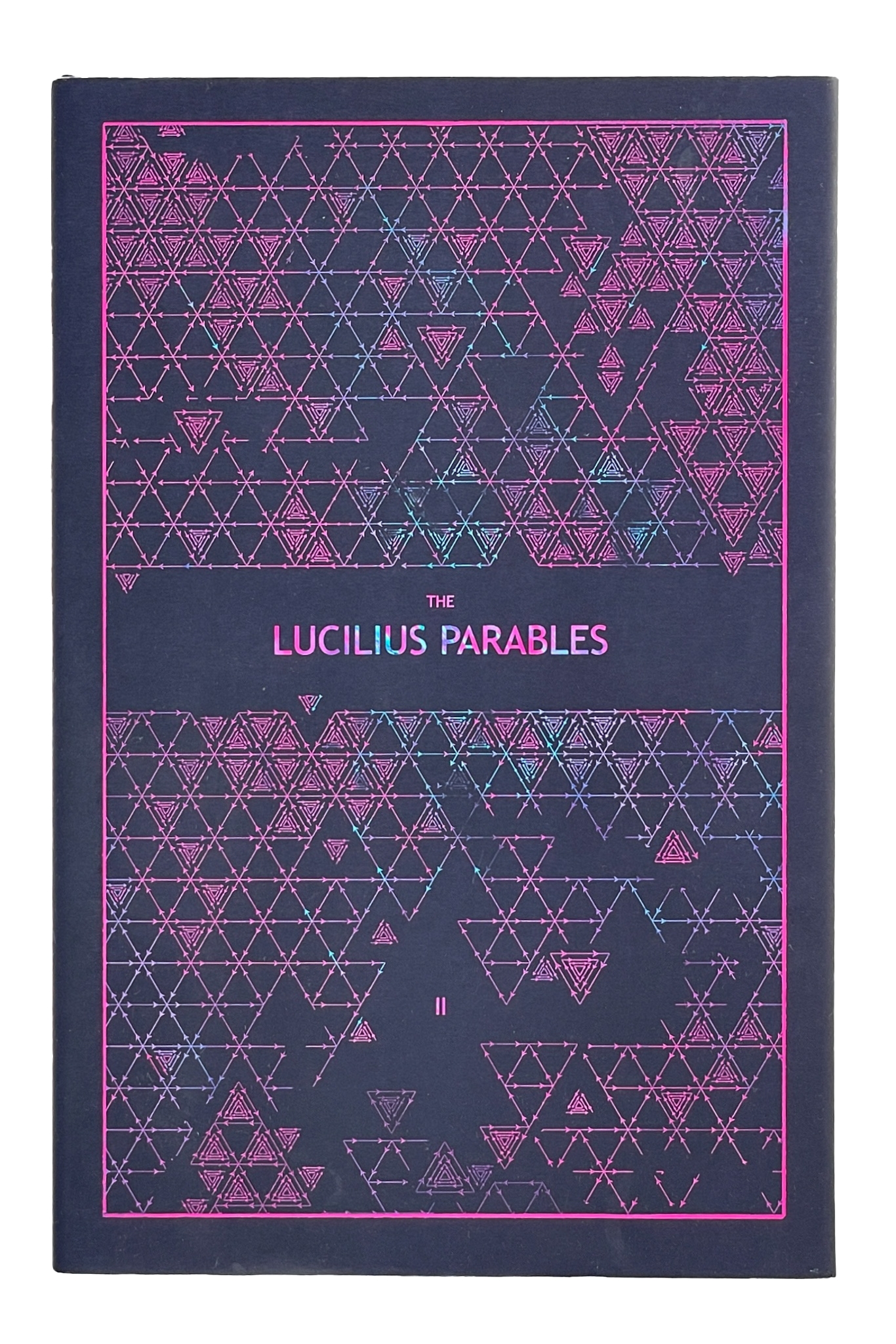
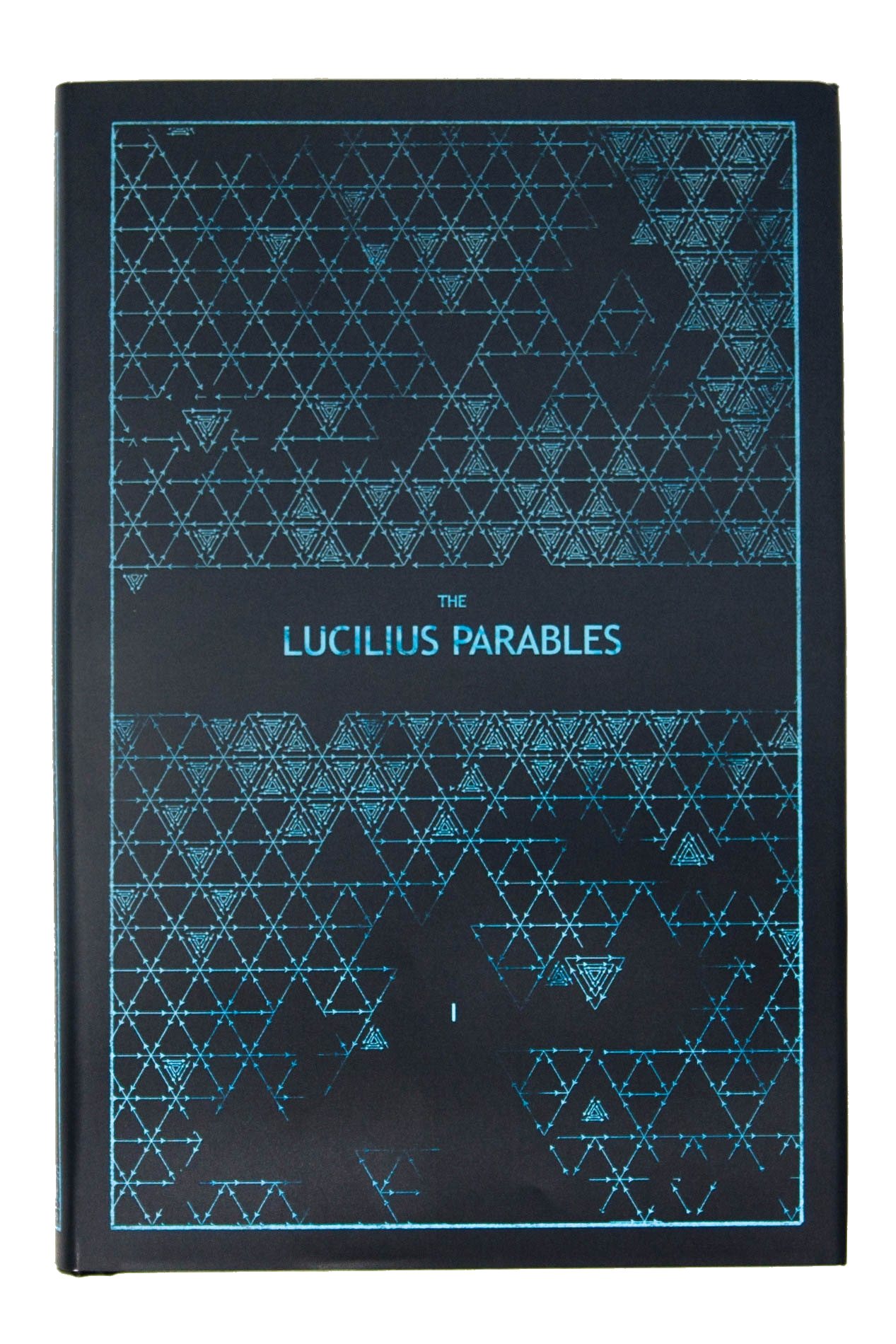
The SECOND illustrated book from Tinkered Thinking is now available!

SPIN CHESS
A Chess app from Tinkered Thinking featuring a variant of chess that bridges all skill levels!

REPAUSE
A meditation app is forthcoming. Stay Tuned.




SENSE-TELLING
April 15th, 2020
If our original reason for moving forward does not fit into our narrative as we look back, we often forget how we got going in the first place.
We make sense of our current situation by means of stringing together altered memories in a way that makes a good story. Many of us are often just reacting to present emotions, and our choices based on this somewhat haphazard direction is what guides are life – but no one looks back on their past with a lazy wave of the hand and admits that it was all kind of random and there wasn’t much thoughtful consideration about what to do. Virtually no one is so honest with themselves on this point, and a person with that sort of awareness more likely makes a wiser choice in those moments than kowtowing to a petty and fleeting emotion.
Our mistake is that we conflate storytelling and sense-making. Creating a story out of the raw material of memory does not necessarily mean that we’ve somehow gained any insight into who we are or how we might change. The story of our past functions more as a salve against uncertainty. We tell ourselves a story of who we are and how we got here as a means to give ourselves a sense of agency.
Real agency, however, resides in admitting the lack of coherence in our past decisions and reactions. By seeing clearly how we differ from the story we like to tell ourselves about who we are, that is where real insight lies.
Sense-making exists between storytelling and reality.
Recognizing the discrepancy allows a person the chance to change, and therefore bend reality closer to the story, and likewise, by doing so, the story such a person now spins is also closer to reality.
WALLS AND DOORS
April 14th, 2020
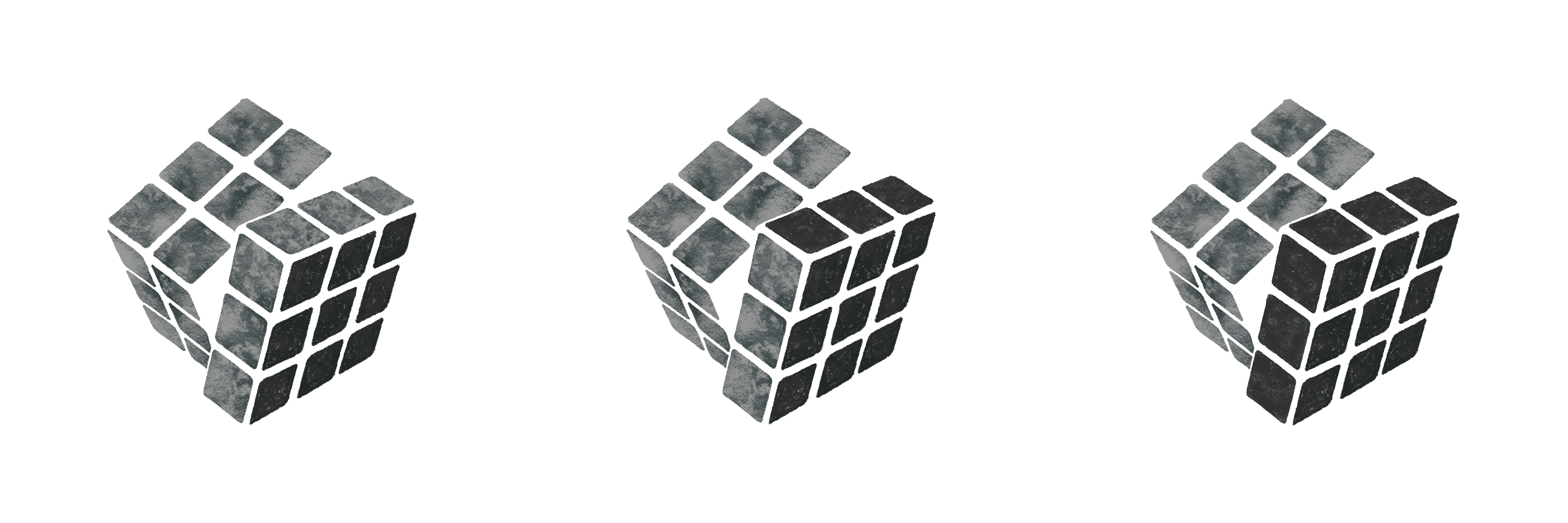
A closed door you are unwilling to open is as good as a wall that bars you from any opportunity that might exist on the other side. A room lined with closed doors is a prison cell for the individual who is too afraid to open any of them.
What really is the difference between a wall and a door?
The difference, of course is that one can move, and the other does not.
We can draw an analogy between this wall/door difference and the way we think and speak. There are certain constructions of thought and speech that are rigid, and others that not only flex and hinge, but crack open a store of possibilities.
Statements are those certain rigid constructions. The etymology betrays the fact. Statement, deriving from state, goes all the way back to the Proto-indo-European root sta-, meaning ‘to stand, make or be firm.” A statement, is the wall of language and thought. And just as walls are meant to keep the outside world, out, thought and language composed of statements likewise is self-designed to keep out new ideas, concepts and even data and facts. In this way, our minds wall themselves in until not only is there no way for anything new to get in, but even more frightening, there’s no way to get out.
Where is the door in our thought and language? How do we open walls and welcome in new information and permit ourselves the ability to gaze out upon the world? Such construction, would not only need to be flexible, but somewhat open-ended, would it not? Is there anything better to invite and incite new little clues from reality than to ask a question?
What better tool is there than a good question for blowing holes in the walls of our mind? We’ve all had that experience when a friend, or loved one, or even a stranger asks a question that seems to open a part of our mind, letting our old stuffy thoughts drain out, making space for a slew of new wondering.
Best of all we can generate these questions ourselves. Like an inmate trapped in a prison cell who imagines a bazooka, and upon opening their eyes find the weapon in hand and points it at the wall.
We all have this ability, the question remains, are you going to keep fortifying the walls of your mind, or are you going to pull the trigger?
BEAUTY AND ACCURACY?
April 13th, 2020
Humans are the species of stories. We live by the narratives we tell ourselves. We look back on a happenstance of past events and actions and choices and we weave a fictional thread through these memories so as to link them up to the present in a way that makes some sense. Rarely is it the best sense. Not only is it clear that our memories are terribly flawed and inaccurate, but they chance over time in accordance to the way our opinions and beliefs change.
We are constantly trying to create a thing of beauty as opposed to something accurate. The problem with this picture is that it ill-equips us for venturing into the future on the hunt for new goals. We cannot romanticize the future in the same way that we do the past. Well, we certainly can, but such a navigational system is far less likely to land us in front of our goals.
Accuracy requires a willingness to abandon the pretty picture. Of both the past and the future. How we got to where we are is not the story we like to tell ourselves about the past. Nor is our plan to succeed an accurate path to actually achieving success. A plan might feel great and seem beautiful, but without a willingness to abandon that pretty picture at the first sign that it doesn’t map on to reality very well, we create a widening gulf between our path and the success we dream of.
Beauty and accuracy are at odds in this respect, and it’s counter intuitive to think that what isn’t beautiful will work better, but this is how the path of progress looks. It is a chaotic dance of pivots that appears to have no rhythm nor rhyme. It makes sense only in the drive it has for a particular direction, no matter how winding the path be to circumvent obstacles.
A LUCILIUS PARABLE: CREME DE LA CREME
April 12th, 2020
Lucilius was in line waiting to get a cup of coffee when he witnessed a truly unfortunate person. At the front of a line was a beautiful woman, dressed in fine clothes, sporting an impeccable face of paint and cursed for the moment with the most disgusted of facial expressions.
“This is bullshit,” the woman said. “I come everyday, how do you not keep it in stock? You know I’m going to be here. Why aren’t these things prepared in advance?”
The woman was clearly upset and making the girl behind the cash register very nervous.
Lucilius watched the disgruntled woman move off to wait for her flawed order, and Lucilius moved up towards the cashier.
“You ok?” Lucilius asked quietly.
The barista, shook her head slightly, her eyes closed, and then smiled. “Yep, what can I get for you? Usual?”
“Dark and bitter, just like my childhood.”
The barista laughed, just as she always did. Lucilius paid, and then joined the disgruntled woman.
“What are they out?” he asked.
The woman looked at Lucilius, seeing his perfect, gleaming shoes, tracing the cut of his suit all the way up to his face where he smiled gently.
“Uh,” the woman hesitated. “Yea, caramel cream. It’s my favorite.”
“I like to think heaven is a place where we can have our favorite things all the time without getting tired of them.”
“Why’s that?” The woman asked.
“Well here, on this world, I have to go without my favorite things to really appreciate them. Otherwise they lose their edge.”
“I always have my favorite, whatever it is. Never pass up the opportunity. You only life once, you know?”
Lucilius nodded. “Also not a bad philosophy. Wish I could follow it.”
The woman smiled, grabbing her order. She looked at her phone. “Guess, I have a few minutes to relax here,” she said, then smiled broadly at Lucilius before finding herself a seat.
Lucilius pondered a moment and then walked out of the coffee shop, and down a few storefronts where there was a small grocer. He went right to the cooler section and found a bottle of coffee sweetener labelled with a caramel flavor. He bought it and went back to the coffee shop, and went up to the barista manning the cash register.
“Here, you mind remaking that woman’s drink with this, just tell her you found some. I’ll pay for it and you guys can keep this for any other orders.”
The barista gave him a funny look and a smile. “Cool,” she said.
Lucilius took his black coffee and went and sat down. He took a slim little book from his blazer pocket and opened to a dog-eared page and began reading.
Some time later, he felt a tap on his shoulder. He turned to find the woman who’d been so angry with her order.
“That was very sweet of you,” she said.
“What was?”
“I saw you go get that creamer.”
“Oh, well, you’re most welcome, but I didn’t do it for you.”
The woman was confused and taken aback. “Sorry?” she prompted.
“I got that creamer for the barista,” Lucilius said, nodding in the direction of the espresso maker where the girl was. “Wanted to make sure no one else would give her shit for not having it for at least the rest of the day. See, I’m willing to bet it wasn’t her fault in the first place, but even if it was…”
Lucilius shrugged. “I guess you really shouldn’t depend on strangers for forgiving others.”
CRITICAL DETAILS
April 11th, 2020
A skill rarely developed among people is the ability to receive and integrate criticism. Examine the way we normally phrase this, it’s all about how well you take criticism, as though it were a punch in the gut. During a time when so many people seem to have forgotten that only sticks and stones can break our bones and words need not ever hurt us, skillfully handling and using criticism is a superpower by default of its rarity. While most are too busy trying to figure out just how injured they should be based on the word choice of others, a person who looks only for beneficial interpretation is fortifying their own agency.
The difference between the two seems at first obvious, but in reality is a bit more subtle. The ‘snowflake’ as such sensitive people are referred to in an ironically affectionate way, derives their worth from the view the rest of the world takes of them. While the person who has developed a process for ingesting criticism has an internal source of worth.
Most personal hells would melt away for people if they could make this subtle switch from external validation to internal. Or rather external invalidation, as this is how much criticism is interpreted.
The subtle issue in this difference is that the individual who takes criticism well isn’t just deflecting it without emotion or ignoring it, but taking it in, just as our snowflake can’t help but hear every last critical word. The difference is what happens to that criticism in the mind of each. To ignore criticism is to miss an opportunity. It’s certainly not pleasant when people throw verbal rocks in your direction, but its important to take a moment to see if any of those rocks are diamonds. It would certainly be an important detail to overlook, indeed critical to what’s really going on.
It says a lot about a person who responds to criticism by seeking out more details of that criticism.
Such an individual has developed the skill of decoupling emotion from such situations. How does a person do this? By understanding deeply that there really is opportunity buried beneath that unpleasant emotion. And the spoils of that opportunity always outweigh the consequences of giving in to unhelpful emotions, if only for the fact that it’s an opportunity to handle those internal emotions and gain a little more agency with regulating and managing them.
But interest in the details of criticism goes a step further. It involves a question, from the person being criticized to the one with the difficult opinion or sobering observation. A question, if not sarcastically or belligerently phrased often comes across as a subtle compliment. It says “I’m not just interested in your point of view, but I value your point of view. So much in fact that understanding your point deeply is more important than my pesky emotions.”
A question is a supertool for softening a person by giving them the opportunity to open up. The act honors their perspective, and the effect of such flattery has a chance of making any further criticism more thoughtful and less abrasive.
Flashy, vitriolic criticism is often an attention stunt, and it can be diffused and converted into real value by the willing perspective of a person who seeks only to improve, even in the eyes of their enemies.