-compressed.jpg)
Daily, snackable writings to spur changes in thinking.
Building a blueprint for a better brain by tinkering with the code.
subscribe
rss Feeds
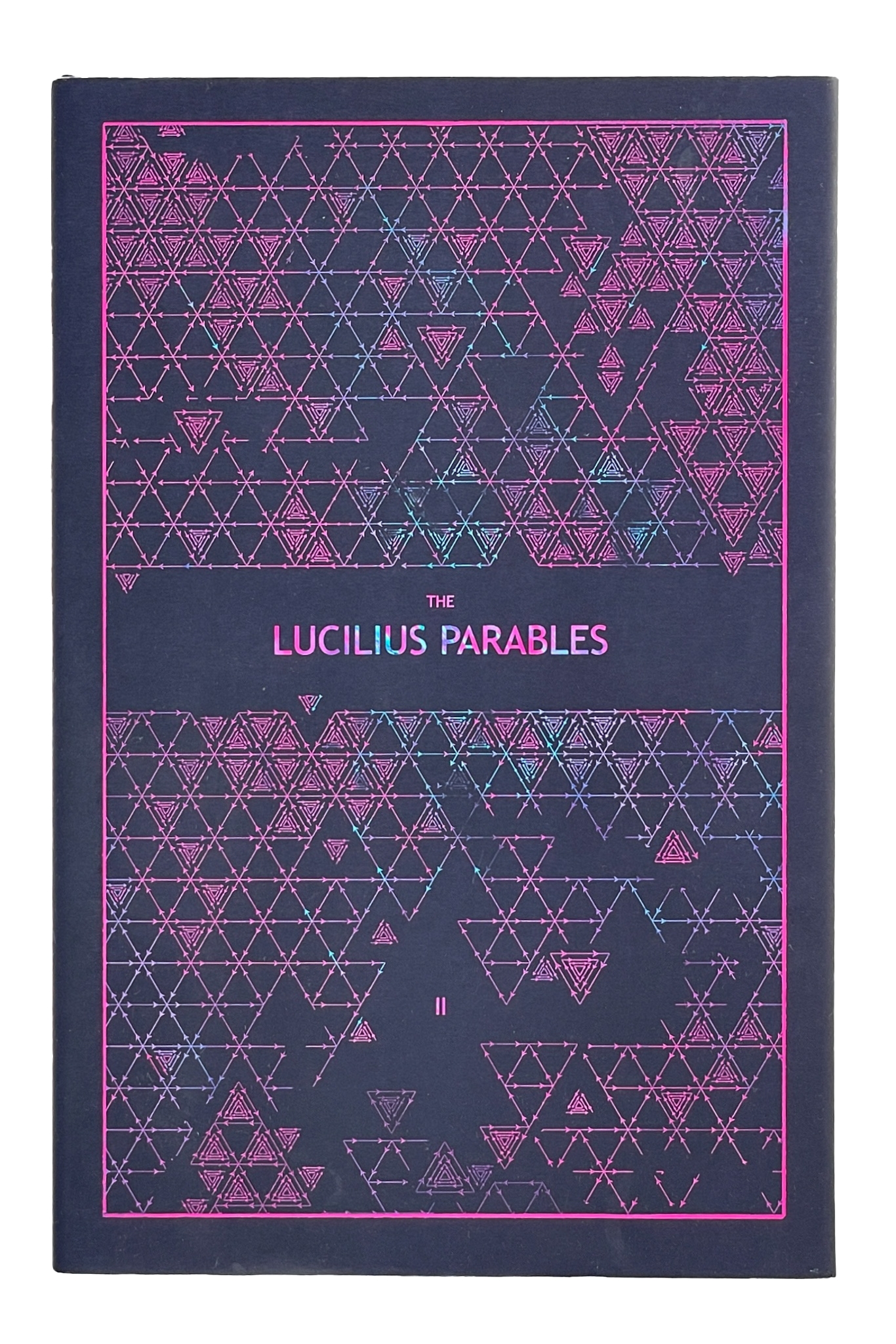
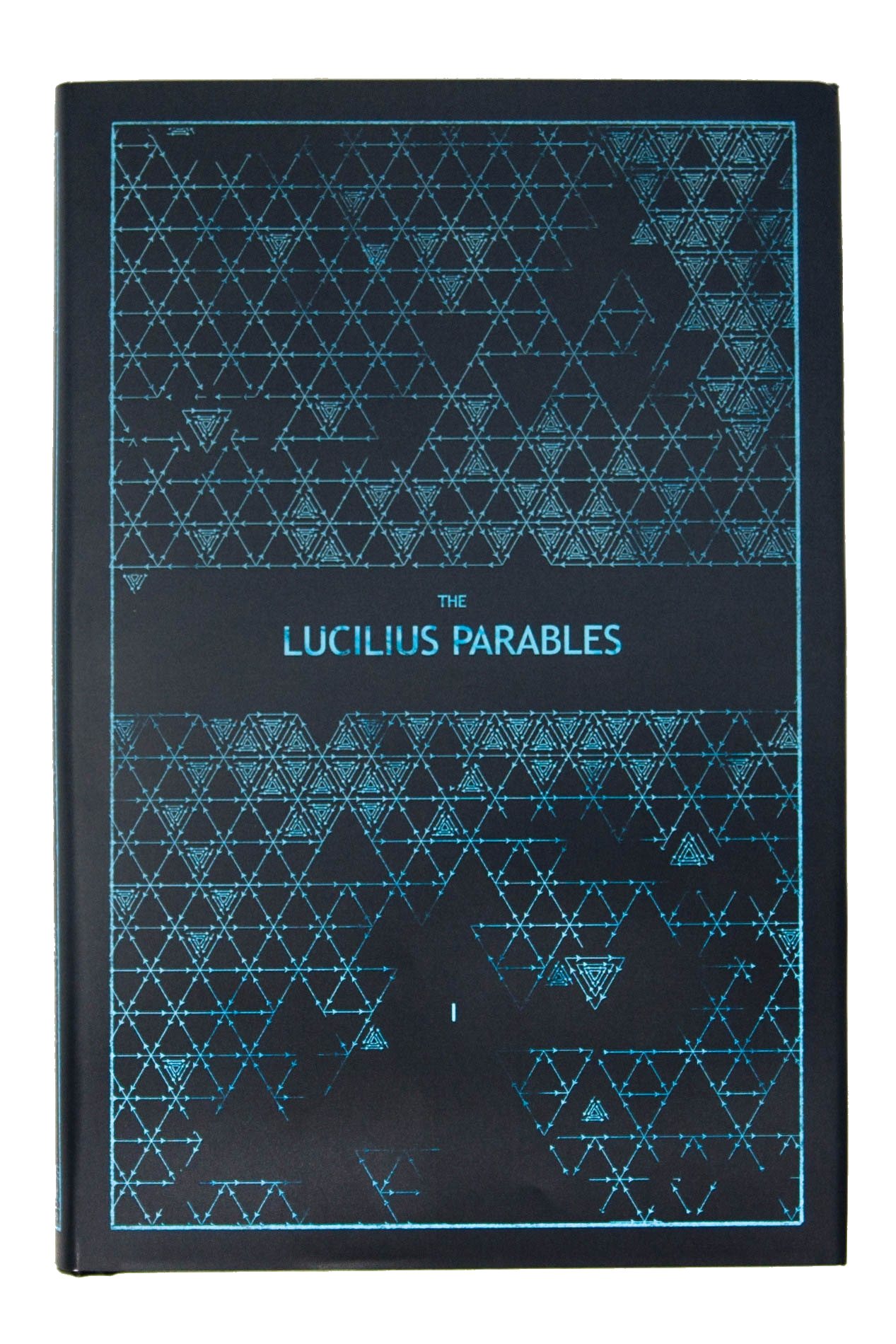
The SECOND illustrated book from Tinkered Thinking is now available!
SPIN CHESS
A Chess app from Tinkered Thinking featuring a variant of chess that bridges all skill levels!
REPAUSE
A meditation app is forthcoming. Stay Tuned.


BETWEEN WEAKNESS & STRENGTH
March 6th, 2020
When learning something big and complex, especially when it requires putting something together, whether that be a book or a woodworking project, or even some kind of proposal and especially coding projects, there come moments in the learning process that are downright paralyzing.
Some new detail arises and makes it seem as though you’ve been looking at the finish line through a telescope without knowing it. And now the little bastard seems to be giggling as it runs even farther away from you, taking with it that glimmer of hope at the end of the tunnel.
Next you look back at all the work you actually have done and suddenly it’s full of problems because of what you’ve learned. Either it all could have been done in an easier way, more efficient, or it actually needs significant upgrading in order to actually move forward.
These points hit like a double whammy, make you feel as though you’ve been pushed back a few steps and the goal itself has ballooned.
This is what learning is, unfortunately. We are constantly beset with this jolting progress. Making headway and then drawing a jail card. Often it’s happening on a much smaller scale as we negotiate the wording of this sentence, or the mis-measured piece of that piece of wood that now doesn’t fit. These smaller aggravations, we mostly take in stride, and we forget about them as soon as we have the next task at hand. But when things culminate and we have the same experience at an altogether higher pitch, it can be tempting to throw one’s hands up and try something new.
The good that causes these moments is easily overlooked. Such moments of reckoning are far less likely without a growth of perspective and ability in some way. It’s by virtue of our greater understanding that we suddenly interpret the situation as so dismal.
There exists a common parallel to this experience that is so spot on, it’s almost eerie. That’s working out. When you engage in resistance training, you’re lifting weights, and if you’re in tune with your body and you know what you’re dong, you’re generally pushing for a kind of max weight. It’s at these thresholds where muscles are pushed into growth.
But it’s also the time during a workout when even the strongest person in the gym feels at their weakest. We experience weakness only when we are at the limit of our strength. Bench-pressing the most weight you can possibly lift makes you feel weak, and in fact if anyone walked by and lightly pushed on the bar, you’d be done. But at the same time it’s an expression of max strength. The two are linked in this beautiful and paradoxical way. Weakness is always trying to encroach upon us. The more we push back against it, the stronger we become.
As is true in the gym so is true in the mind. Those moments when you feel like giving up are the crucial points that often lead into a watershed of progress.
THE ART OF WRITING
March 5th, 2020
This episode is dedicated to an individual who goes by Thumos, and was kind enough to reach out with a question about writing. You can connect with him on Twitter @thumos8
This is either an impossible topic to tackle or it’s as simple as it gets. We’ll find out.
And that’s a main function of writing: to find out.
Before we put down a word, just as we do before we speak, we experience this strange tickle of consciousness, not quite an emotion, not quite a concrete sentence, sometimes a sort of image, definitely a kind of music. For instance, take a moment to reflect on where you are right now, and what you are doing. Your eyes might be busy with the graphical marks that compose these words, or your sense of hearing is flooded with the shape of my voice reading these words. There’s also other things going on. The room has a temperature, a pressure, a darkness or color and then there’s an entire body of sensation that you are hooked into. They are modulating the shape of your conscious experience, similar to the way different sized pebbles dropped onto a smooth surface of water creates ripples that alter the entire body of water. You can close your eyes and the world disappears to some extent, and yet that space of consciousness still exists, but again in a new way. The tickle of consciousness that turns into spoken word or written language arises from this texture of experience.
We often valorize writers and artists and ask where their inspiration comes from. As though within them exists this secret portal, a mythical spring from which spews forth all manner of excellent things. But this is wholly inaccurate. We need only look at the word inspiration. It means quite literally to ‘breathe in’. The artist or writer is not so much channeling some ethereal source as they are taking in the world and reflecting it back in a novel way through some chosen medium. The artist is an intersection, one that filters, and one that can change and thereby refract the world back in novel ways.
Writing is simply the process of recording the unique interaction of the whole universe as it collides on the very point where your conscious experience exists.
This is not exactly something that can be predicted. A piece of writing is as much of a surprise for the writer as it is for the reader. Any claim to the contrary must be forgiven. We certainly feel the sentence before we say it or write it, and while specific details might make it appear as though it was previously fully formed, this is akin to watching a movie trailer and claiming you’d seen the film. It’s impossible to disentangle the truth once you’ve actually watched the movie.
To be sure, I had no idea I was going to write about this today. It was only because I was inspired to wander in this direction at the prompting of someone reaching out and asking about the art of writing. Keep in mind the definition of inspire as ‘breathing in’. We might wonder what would have been written had this request not skipped across the surface of my conscious experience. Surely a quieter collision of ideas that are still having an impact as these words lay themselves down on the page right now.
Art, as was discussed in the previous episode entitled Soul of the Monster, is the act of ‘putting things together’. Obviously words, in the case of writing.
Or perhaps concepts?
Then again, what is a word?
It’s interesting to meditate on the fact that we build meaning out of thin air. Words on their own don’t have any intrinsic meaning, just like their letters. The letter ‘j’ doesn’t mean anything unless it has a meaningful context, as within the word ‘enjoy’. But notice again the letters that surround the ‘j’ in the word ‘enjoy’ cease to mean anything if divorced from their contextual compatriots. The word ‘enjoy’ would also cease to mean anything if it didn’t have the context of the entire English language and culture in which it exists.
Language is an everything-machine. Because of this magical capacity to form a ‘something’ from a combination of ‘nothings’, it can modulate in the same way consciousness does. Words can begin to weigh whimsical with a lyricism nearly magical, as each raps the snare, to tap the drum trap and trip the wire, lifting the mind a little higher. To an image of opulent color, painting a landscape fit only for one. The movie is never satisfying because it’s never the same as first imagined in the mind’s eye.
Writing can takes us to those fictional lands, manifesting them in the mind just as meaning manifests from seemingly nothing. Or it can form itself into a scalpel with which it takes apart our sense of reality, revealing frameworks and realizations we never knew existed, but upon now reading seem to shift -so slightly- every facet of our entire past until they all click, like pins in the tumbler of a lock finally aligned, now effortlessly turning and we open on to a new realm of what it means to exist.
Writing can make us see unreal worlds, and it can make us see this world in a way that feels even more real than before.
And yet, once the words have landed on the page, the image is concrete and trapped, embedded in the fabric of reality. Our thoughts, our actions, our words, often have the quality of writing in water, fading as fast as they occur. But the written word endures a little longer, as though the water hears the plea of the idea - the lyrical image, the notion jotted down - and concedes to freeze it and honor that moment, sending it like a love letter of the past into tomorrow where someone unsuspecting might welcome it with a willing eye.
From here it’s easy to rise into the truly crepuscular language often allocated to mystical experiences. After enough writing and reading, the simple technology really seems to contain an alchemy that borders on a kind transubstantiation, where something as ethereal and otherworldly as thought becomes a part of the physical world.
However, such ramblings are merely gratuitous in the face of the utility writing has to offer.
Yes, it sure looks like a person can create something out of nothing. When you consider it that way, it seems almost eerie that J.K. Rowling conjured a billion dollars out of thin air by writing about a magical world of spells where characters likewise conjure things out of thin air. What came first? The magical spell or the writing of it? Hard to tell when writing starts to sound like magic too.
But billion dollar possibilities aside, the varied utility of writing has much to offer anyone. It’s a way of clarifying thoughts, distilling them, exploring them. Writing forms a kind of mirror, allowing you to see yourself and your thoughts more clearly. And all of this is before we even hand it over to someone else to read.
Writing offers us the opportunity to hone an apology down into a wording that will almost never happen in person and off the cuff.
Through our writing we can entertain and delight, not just during a single instance like an actor on a stage but through time.
We can capture world changing ideas with our writing. Ideas that start movements, revolutions, and likewise ideas that might lead many into disastrous territory. In this way, writing can be dangerous, as we have the ability to engineer a one-way conversation with the future. This is perhaps one of the most important reasons to begin writing in the first place. Anyone has the opportunity to have a say in the future if they simply write down their thoughts. The more people who do this, the more chance the future has of being well informed with a true diversity of thought, the greater likelihood we save the future from being a monoculture of thought. The more people who meditate with a pen to paper or the clack of a keyboard, the fuel we pour into the richness of conversation that will happen tomorrow.
As to how one might get better at writing, say, the “art” of writing there’s plenty to discuss, but only two certainties.
One must start.
And one must keep writing.
All other advice is useless without these two. There is certainly much advice that is valuable, advice that might help, but the act of understanding such advice by reading it or hearing -as pleasurable as that might be- is meaningless compared to the experience of acting upon it, and this requires starting, and continuing the conversation.
SOUL OF THE MONSTER
March 4th, 2020
What is art?
Your basic dictionary definition says something like this:
the expression or application of human creative skill and imagination
It goes on to say that it’s typically visual or musical, the stuff you’d expect.
But what else can fit under this umbrella of human skill and imagination that we don’t usually categorize as art. Does the user interface of an app count as a form of art? Is conversation a kind of art? What about the sewage system or the way that we collect and transport garbage? All of these are the result of some sort of application of human creativity and imagination. Even if they aren’t particularly beautiful or even if they seem as though they might be in dire need of improvement, these things are the result of some human or group of people problem solving. And what is the solution to a problem but some degree of imaginative creativity.
If we pick the lock on the word ‘Art’, open the door and venture down into it’s etymological history, we end up with a proto-indo European root comprised of just the two letters ‘ar-‘ Going back that far, the root means generically “to fit together,” as we might fit together legos.
Art, if we take it back down to it’s most basic, just means putting two things together in a way that makes a lot of sense, either for reasons of beauty, practicality or play.
This is one of the central points of Robert Pirsig’s book Zen and the Art of Motorcycle Maintenance. In this book, there is a fascinating scene where a sculptor is having a frustrating time putting a chicken rotisserie together. The main character takes over the effort and explains that the rotisserie is actually a type of sculpture, albeit one that requires instructions and a step by step process, but nonetheless still a sculpture that shares it’s genealogical roots with the same sculptures that his artist friend creates.
With this understanding in mind we can see that even
a computer is simply an exquisitely complicated sculpture.
For the person you might intuitively describe as an artist, this definition of art might sound uncomfortable enough to even seem heretical. But there in lies the rub: Art transforms itself regardless of whether the artist is willing to keep up and continue to change with it. Once long ago, the poets wrote of splendid and happy things, like love and simply plain joy. But the happy subject was usurped, at first by advertising, and now by pop songs.
Or was it? Was the subject taken or did it leave of it’s own accord for a new transformation, like a person moving to a new city to try and have a new life?
Today, the pop song is the poetry of joy, of ecstasy, of simple good feelings that are mere limp platitudes in any other form.
It was the disgruntled poet who could not keep the muse, nor go along for the transformative ride, not the other way around. The enduring artist doesn’t just reinvent themselves in order to keep up with the art, the artist has to be willing to see any and all forms of creation as art, even those realms that are hidden in plain sight as things that we would never call art.
Categorization and identity become hindrances for the artist who is unwilling to give up something about these identities.
Art, however, is unafraid of changing into a form totally unrecognizable. Whether that be thousands of lines of code, or a new concept born in some non fiction writing. Art is a kind of shape-shifting monster that is unafraid of completely abandoning it’s form, shedding, not just it’s skin, but every aspect of it’s entire being in order to inhabit some new connection between things that the human mind has realized might fit together.
It’s perhaps fitting that so many fear novel innovation – the pace of technology, suspicious of a tomorrow that our creativity seems hell bent on taking us.
And this all might sound like mere generic progress. At best perhaps just technological progress. But note a trend that usually takes place with such progress, especially the material – technological kind. First it appears in it’s most basic form. A form that attempts to elicit the new practicality that arises from ideas being put together in a new way. It still doesn’t often work very well in this initial form, but on top of that, the initial form is usually fairly ugly. Just think about the personal computer. But with time, as the practical innovation becomes more efficient and useful, it has added to it other attributes that we normally think of as ‘art’ all on it’s own. Apple has become a superstar in some measure because they sought to blend the practical art of hardware and software development with the more traditional art of sleek beauty and aesthetics.
(It can perhaps even be argued that there’s ultimately not much difference between the practical art and the aesthetic, but that’s a dimension of argument and exploration that we’ll leave on the other side of the portal.)
The underlying utility of such a discussion of art and it’s various forms is to apply it to one’s self. The person who can not simply reinvent themselves, but quite literally become something else not only exercises their creativity, such a person is an act of creation.
We can become a piece of art ourselves by becoming an intersection where we vacuum up the loose ends of the world and tie them together in novel, useful and beautiful ways.
The real artist doesn’t just make art.
The real artist is art.


HONORED TEACHER
March 3rd, 2020
This episode is dedicated to Murat Ayfer who you can connect with on Twitter @mayfer
The teacher has two aims.
The first aim of the teacher is to become irrelevant as a teacher.
Sure it’s necessary to teach a student the basics, but this never takes all that long. And even with the basics, there’s no need for the teacher to be exhaustive. There’s no need because the first aim quickly blends into the second.
The teacher seeks not just to show the student some basics, but more importantly the teacher seeks to show the student how to explore by asking the right questions. These are not questions for the teacher to answer, but questions that will propel the student in productive directions on their own. Often a teacher does this by answering a question with another question.
The great teacher is honored by the student’s solitary experience of composing questions that are so tightly phrased that they frame the answer which they seek. This is how the teacher seeks to become irrelevant.
The teacher in this case is educating the student on what it means to learn, irrespective of the subject. What it means to learn is to be able to explore.
The teacher doesn’t draw the entire map of the territory and then draw a path through that territory designed for the student to follow step by step.
The teacher gives the student a compass, teaches them how to use it, and then pushes them out the door.
Ultimately, we teach ourselves what we learn.
Teachers are like curiosity. They can only point us in the productive directions. But they cannot take the steps for us.
It’s up to each of us to venture out and explore.
We honor our teachers by seeking to rely on them less and less
and ultimately by joining them in order to explore uncertainty
together.
LISTEN ON REPEAT
March 2nd, 2020
Some songs hit you, and strike such a satisfying emotional chord that you just have to listen to it again, and again, and again.
Sure you can overdo it. But give it some time, a couple months or maybe even a couple years, and it’s no surprise that we’re ready for another dose.
It’s interesting to try and think about life in this way. What sort of life would you have to create so that you’d want to repeat it over and over and enjoy it all?
Much of our time is spent waiting for better circumstances. Whether we are working in order to have time off, or more money or both, much of human life is spent mired in the conviction that it could be better.
There are two ways to approach this potentially depressing framing.
Either we change our mindset about the given moment, and like someone cast in the role of student for a zen parable, we can challenge our mindset to find a way to smile despite the slings and arrows of limp fortune. That is certainly a worthy undertaking and there’s plenty of opportunity to hone your character into that role.
The other approach is to shake things up and start approaching one’s own insecurities with a bit more skepticism and even recklessness.
In can help to talk to yourself as though you’re the main character in a movie about you. In fact, that’s exactly what you are.
Oh, you’re nervous you might fail if you go after that interesting idea? Well I don’t care, I’m bored of this rerun you’ve got going. I want to see something more interesting.
It takes courage to act upon curiosity.
But this creates a kind of forward looking. Thinking about creating a life that you’d love to repeat creates a forward reflectiveness that gives you more reason to pause. It makes you more likely to take action that you’ll be less likely to regret.
Actions that you’ll be proud to see if you were to sit back in a movie theatre all your own and watch your life again through your own eyes.