-compressed.jpg)

Daily, snackable writings to spur changes in thinking.
Building a blueprint for a better brain by tinkering with the code.
subscribe
rss Feeds
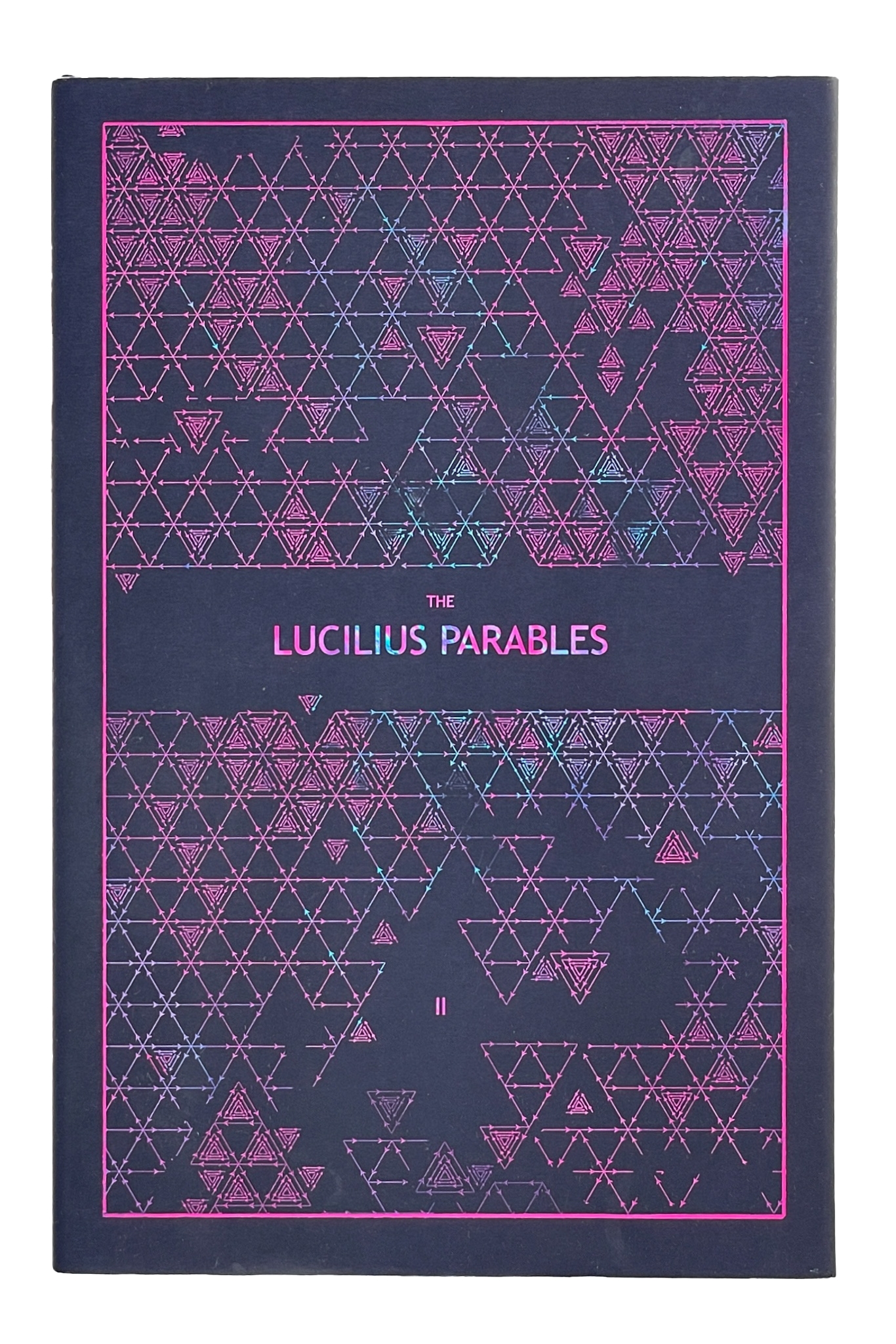
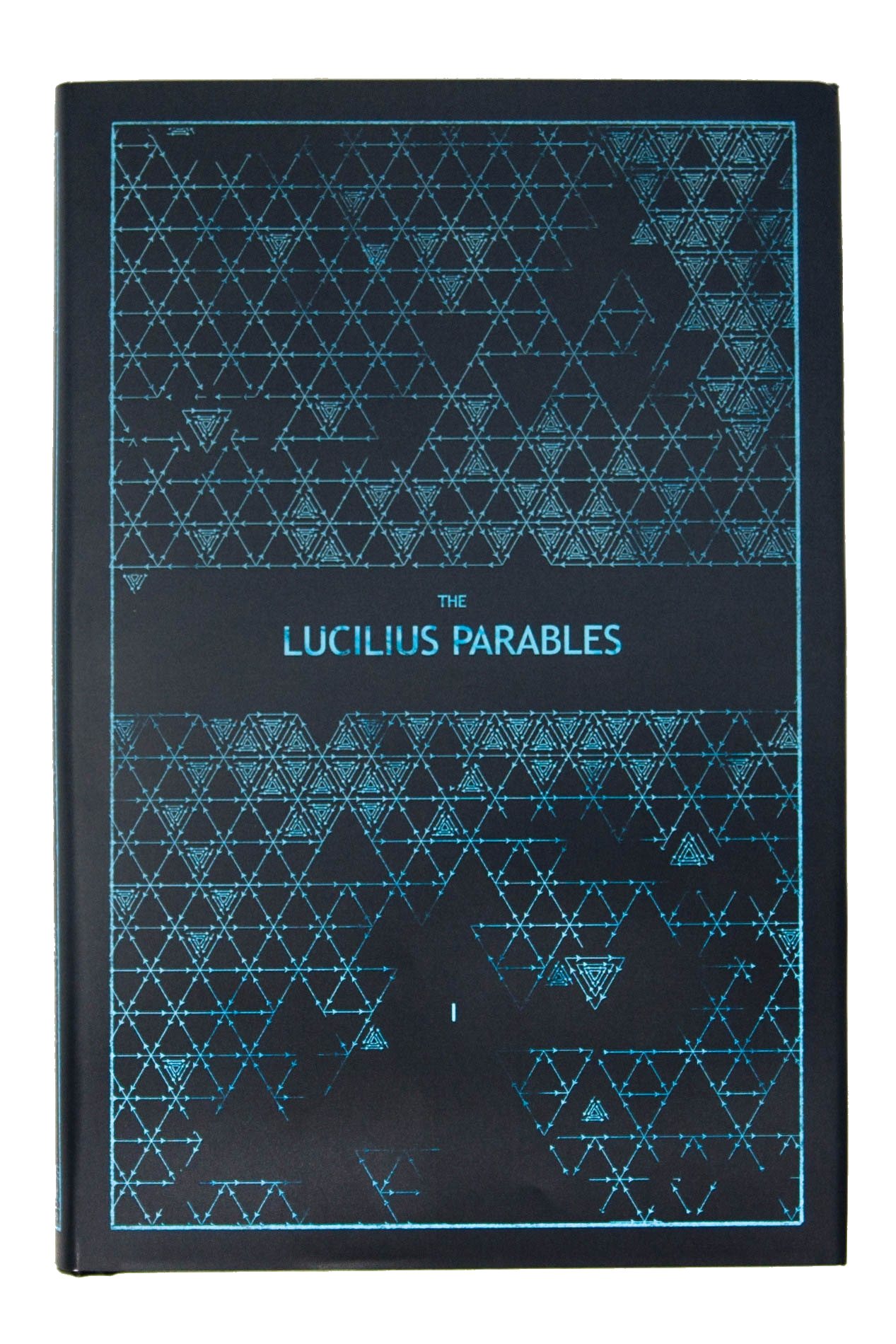
The SECOND illustrated book from Tinkered Thinking is now available!

SPIN CHESS
A Chess app from Tinkered Thinking featuring a variant of chess that bridges all skill levels!
REPAUSE
A meditation app is forthcoming. Stay Tuned.




A LUCILIUS PARABLE: MANY ENDS
June 30th, 2019
Lucilius was sitting in a café sipping coffee, in a tired stupor when he became mindful of the fact that he was staring at a portly man eating a meal of pork belly. The hacked and forked pieces rose faster than the steam of the dish as the man mindlessly mangled the food with his restless chew. Lucilius wondered if the man even registered the taste of such things anymore. Lucilius himself had not eaten in a number of days, on purpose, and was looking forward to the brightened sensation of taste when he’d break the fast in a few more days. He looked down at his coffee, brought the mug to his lips and smelled the hot bitter and chocolate flavors as he took a sip and felt the flavors once more.
He looked back at the man, finding that he’d finished his meal and was again scrutinizing a menu. Lucilius thought about the meal, now dissolving in the man’s belly, thought about where it had all come from, when an old memory lit up in his mind.
Many years ago, he recalled his mother mourning the loss of his grandmother. Lucilius sighed, remembering the moment. For years his mother had recounted an instance when a brilliantly colored butterfly had visited her in a garden. The experience was deeply felt, for she’d been filled with the notion that the butterfly was somehow her mother, returning to visit her.
Lucilius frowned, remembering his own actions, his own suggestion. After enough times hearing the sweet story, he’d queried his mother with something he’d felt was quite obvious.
“I felt as though it was really her,” his mother had said, “it was like she was coming to tell me she was alright.”
“But,” Lucilius finally responded with as much curiosity as frustration, “butterflies only live for about a month. So does that mean she’s passed away again?”
In an instant he had regretted his selfish question. Looking back Lucilius had always been grateful for the genuinely perplexed and curious look that had overcome his mother when he finally asked. Her brow had furrowed a little.
“I never thought about that,” she said with a new and small smile.
The thought did not seem to sadden her, only interest her, as though Lucilius, with his question had lit up a part of her mind that had always been in the dark.
He could still feel a pang of worry about whether he’d caused his mother more pain, even though she seemed unbothered.
Lucilius returned to himself, rubbing some weariness from his eyes, taking another sip of coffee and pausing with the warm cup before his face as he looked to see a waiter setting down a new plate of steaming food before the portly man. With a fork, the man desecrated a perfectly poached and balanced egg, mashing the ruined mess into the rest of his food.
Lucilius noticed his own hands before his face, huddling the warm mug and wondered about all the individual cells of skin and bone, muscle and tendon that made them up. He took another sip of coffee, feeling the movement of those hands. And he wondered where it had all come from. All skin was like a blossom, he thought, continually emerging from within the body, arising from what was eaten.
How many different things, he wondered, had found their end just before they’d been made anew as part of his body? It seemed at the moment, a brutal process, everything getting torn apart to build again something different.
But the horror gave way to a flush of gratitude. He thought again of the butterfly dying and becoming many other things. From birds, and insects to plants and trees and on to all that the world had spun. So much life had turned itself over so that he, Lucilius, might arise,
and live.
DEADLINES VS TIME-LIMITS
June 29th, 2019
Everyone knows what it feels like when a deadline begins to loom. Deadlines can be useful by compressing our effort with some stress. The unhealthy ‘all-nighter’ is a great example of just how motivating a deadline can be. Humans are the only species that regularly deprive themselves of sleep for a whole variety of reasons. (As a side note, there are some whales that will undergo some sleep deprivation when caring for a newborn but this does not even begin to approach the degree to which humans starve themselves of sleep.) And yet, the deadlines that motivate us to stay up all night rarely have to do with anything as important as the care of a newborn.
The hope designed into a deadline is that the time between the establishment of a deadline and the actual deadline will be enough time to get the work done. But this arrangement rarely takes into account human nature and the way we do or don’t do what we are supposed to.
Not only are we likely to procrastinate, but when we actually make moves forward, the work might even expand.
Perhaps by now Parkinson’s Law has come to mind:
Work expands to fill the time allotted for it.
The unfortunate aspect of this law is that it does not go backwards in time. A more precise phrasing might be: work expands to fill the time we have left to complete it.
Parkinson’s Law is the reason why deadlines are useful. They force us psychologically to actually get things done. Without deadlines, the work can continue to expand and space itself out as we deceive ourselves in an attempt to be more ‘thoughtful’ about each decision and action.
This is where a difference with time-limits can be useful. If we can visualize the time between now and our designated deadline as being chunked with time-limits, then we can work more effectively.
Here’s a real-world example:
It’s quite likely to say or hear someone say “all I have to do today is X” and the likelihood that much of the day is spent procrastinating or that X takes all day goes up, when in reality, the day could probably be used far more effectively.
If we give X a time-limit, it’s like a mini-deadline and we can be far more efficient about getting the damn thing done. And unlike a sleep-deprived all-nighter, such daily time-limits are more likely to produce higher quality work because our cognitive abilities aren’t starving for the benefits of sleep.
Often we make the mistake of thinking about our whole day as the time-limit for what needs to get done, but when thinking about how to proceed, we can benefit from thinking about a time allowance that we can give to each and every thing we hope to do. Not only does this compress the work, but it also gives us the ability to simply stop working on something for the time being when it proves to take to long so that we can move on to other things.
This episode was greatly informed by Dr. Mathew Walker’s work which is beautifully presented in his book “Why We Sleep”. Click on the book below to purchase.


WHAT IS A REVIEW?
June 28th, 2019
Reviews, especially with the rise of the internet, have become particularly important. But even without the digital barrier, when someone is handed some sort of selection or menu, a quick question is:
what do you recommend?
The social fabric that we are all a part of functions as a huge information network, one through which we can short cut past the exploratory effort required to understand what something is all about: hence reviews.
But hold up, let’s review this a moment.
What exactly does the word review mean?
It means to look at something again.
Does this fit the definition of what we look at when we read a review written by someone else? Not really. Perhaps it is a review for the person writing, because they are viewing their experience once more through memory, but when other people read a review, nothing that is written is complimented with the concurrent experience offered by memory. Obviously. This is a no-brainer. You might yell at the podcast or wish to deface the website, spray paint “that’s the whole point of reviews!”
Let’s think about these ‘reviews’ in another light and ask: how reliable are the writers of reviews?
Surely what one person writes is going to be different from everyone else. Not only that, but everyone who engages with the same exact thing, whether it be a restaurant, a book, or a foot massage service – everyone is going to have a different experience, even when the content, as with a book is exactly the same!
The ‘Peak-End Rule’ in psychology is a heuristic that describes the way people remember experiences, or rather: people judge an experience based on what it was like at it’s peak emotional intensity and how it ended. The beginning, and the portion leading up to the peak and continuing from the peak have little sway even though we must expect these parts comprise a huge portion of the overall experience.
For example, a couple might be out for a spectacular dinner, everything is perfect and it is quite literally the best meal and dinning experience they’ve ever had. But then at the very end, the waiter accidentally spills red wine all over a $2,000 white dress that the woman has on.
It’s easy to see how the ‘perfect evening’ is suddenly and forever overshadowed by the split-second of misfortune that happens at the very end. It would require an unusual person and one very gifted in mindful knowledge and reflection of their experience to reiterate the experience to a friend without mentioning the ruined dress. Just for a moment, imagine how unusual this would be. A friend recounts a glorious dinner, describing all the little nuances of flavor, giving you a play by play that wonderfully evokes the mood and feeling of the moment, but never mentions the ruined dress. Imagine finding out a few minutes later, perhaps from the counterpart of the couple: “oh yea, that night when her $2,000 white dress got sloshed in red wine? That one? yea, great time.”
This is all just to demonstrate how skewed our experience of everything is. Should we trust a review that bemoans an unfortunate, unexpected and unintended accident like spilled wine and a ruined dress? Of course not. It was an accident and it’s perfectly fair to assume that this won’t happen to someone who is contemplating going to the restaurant.
But it begs another question: what else should we be slow to trust when it comes to the reviews of others? This discussion so far only highlights one major psychological heuristic that tints people’s memory. How many other such heuristics might exist to bend opinion? Not to mention of course that people have different preferences, and sometimes these differences are so drastic that they are complete opposites. We need only think of a die-hard vegan listening to someone describe how delicious a steak was, or vice-versa. While some in these categories might not mind in the least, there are certainly plenty who recoil from the position and preference of the other.
Even without the Peak-End Rule in mind, we can ask our question again: should you trust a review of a steakhouse written by a Vegan? Unless they are commenting on all the non-animal products that the steakhouse might also offer, chances are that something fishy is going on.
With these warping effects in mind we can ask: what makes a good review?
Certainly the woman who describes all the good things about dinner in detail and purposely fails to mention the ruined dress is giving a review that is not only generous and compassionate, but understanding of what the intent and design behind the experience was.
Intention often counts for nothing when it comes to how things turn out, but our ability to thoughtfully reflect and review an experience can be exercised in a way that takes this into account.
While feedback is the holy grail of getting better, feedback that takes into account your mission is far more likely to be constructive in a way that helps you iterate towards that mission.
Poor communication often spits out brutal honesty instead of this more thoughtful and balanced perspective, which brings us back to the beginning: our social fabric is a network that primarily transfers information about experience. A bad review almost always says more about the reviewer, or the node in our social information network, than it says about ..whatever the review is about.
A good review, as in, a well crafted review, (as opposed to simple praise) takes in generous account of what the goal and mission was for any given experience, and then comments on what extent this goal was accomplished. Perhaps the goal and mission are not clear. This could easily be a point of ridicule, but it can also be a great opportunity for a reviewer to help a creator figure out what the goal should be. A good reviewer must also take into account the biases of their own preferences, and put them aside in order to take into account everyone who has different preferences. Doing so absolutely requires some degree of mindfulness, and this often doesn’t happen. Reviews are usually written as a form of self-expression that recounts how closely something was in accord with their preferences. The thing being reviewed is often just a sounding board for someone to elaborate on what they themselves are like as a person, rather than what the reviewed item is like regardless of the person.
Instead of re-viewing, most people are just describing their particular view.
This is why we read a bunch of reviews. From all the different perspectives, we suss out a sense of what reality is, and this is necessary because each perspective fails to take its own nature into account. With enough perspectives, the similarities emerge and the idiosyncratic details of each experience that are highlighted by the warp of each perspective begin to fall away.
It’s worthy to ponder: how good of a reviewer are you?
Can you be the sort of person that gives a fair and honest review?
Or is it just another opportunity to splash the world with who you think you are?
BRAIN CHANGE
June 27th, 2019
Those who feel stuck, victimized, down, depressed or as though they are running in circles often also feel trapped in these feelings.
When we are young, our brain is changing at a rate that is sort of uncontrollable. But with adulthood, we come across the notion that the brain has stopped growing and changing and that we are who we find ourselves to be. It’s this mistaken belief that often contributes to that feeling of being trapped for the down and depressed.
‘If only I could change my brain, then I’d be happy, productive and… whatever.’
This is pretty lazy logic, and it’s employed by this mindset as a means of protection. If our mindset has us convinced that change is no longer possible, then the ideas that make up this mindset have guaranteed their longevity. This is like a dictator who has the people convinced that democracy is simply an impossible fantasy.
But there is a simple exercise for the individual that flat out proves this logic wrong, namely the question:
can you remember what happened yesterday?
If the answer is yes, than that is evidence that the brain has changed, even if just a little bit. But this thin edge of the wedge is all one needs. We can use this and apply a sort of Archimedes’ lever of changes as they compound through time.
The mistake comes with our desire and expectation of instant changes, instant gratification. The success of others looks so solid and obvious, but we never see all of the tiny changes and efforts that amounted to this success, we only see our own steady stagnation. Movies do us the further disservice of compressing all the tiny efforts and changes of underdog characters into montages that last seconds, or perhaps a few minutes at most.
The montage is quite literally a contradiction because it demonstrates large amounts of time and concurrent results as nearly instant.
Memory is our weapon against such illusions. And we need not even test ourselves about yesterday. Hold up a number of fingers right now, and then relax. If that number can be remembered even moments later, then the brain has changed.
Now, we need only get thoughtful about what sort of changes we can purposefully implement to change our life and move towards the goals we dream of.
This episode references Episode 21: The Montage is False.
TINKERED THINKING REVIEW: TINKERED THINKING
June 26th, 2019
Today is a first for Tinkered Thinking: a review. Of Tinkered Thinking itself.
First a quick description: Tinkered Thinking consists of daily episodes, both in Podcast form and text, hosted at http://tinkeredthinking.com The text rarely exceeds 1,000 words and the concurrent podcast rarely goes over ten minutes because of this short-form length. One can easily imagine that the length of these episodes is perhaps intended to be taken over the course of a cup of morning coffee, or perhaps as a sleep aid.
Topics are fairly wide ranging without any high determination. Tinkered Thinking does not at first glance seem to engage in politics, religion, current events, history, nor the financial world. The topics seem to aim at productivity, human agency, conceptual frameworks or mental models through the use and analysis of language. The platform also releases a weekly piece of short fiction that always revolves around the same ‘Lucilius’ character who does not seem to be bound to any set time, nor age. These weekly short stories seem as though they seek to put some of the headier concepts into a kind of narrative form.
So far the platform has generated over 430 ‘episodes’ which comprises well over 300,000 words, or in other terms: about the length of a 700 page book. The platform also has a recommended reading list, a ‘most popular’ section, and a support section where listeners and readers can contribute on a monthly subscription basis or with a one-time option. The platform has also been fairly active on Twitter since the beginning of 2019 with roughly 650 followers.
While Tinkered Thinking clearly has some intellectual horsepower, it occasionally lacks cohesive follow-through on some of the analysis that it puts forth. Whether this is due to the sheer rapidity at which the platform ships content or whether it is mere laziness is up to the reader to decide. The platform seems to indicate an opinion on this matter indirectly through its very own content, drawing analogies like the prospector who sifts through a great deal of useless material in order to find a nugget of gold. One can think of the proverbial ‘drawing board’, that is constantly erased in order to work through new iterations.
The language of Tinkered Thinking, while often verbose, seems purposefully lacking in much certainty. The use of words like ‘perhaps’, ‘might’, ‘possible’ leave the treatment of it’s subjects under-determined and forcibly open to interpretation. Refreshingly, the pronoun ‘I’ does not pollute the platform, unlike so many others.
From a visual stand point, the website is fairly minimalistic with a predominate color of white with black text, peppered with purple design while showcasing one Escher-like drawing in an orange hue. It would be understandable if readers often yearned for a ‘dark-mode’.
While the fictional ‘Lucilius’ stories on Sundays are a consistent breath of fresh air from the rest of the content, the platform is also somewhat mind-numbing in its complete lack of humor.
The platform often attempts to strike up lateral thinking in the minds of it’s readership, and yet it consistently fails to employ this perennial form of lateral thinking. Whether the creator(s) are simply oblivious to this opportunity or simply suffer from total ineptitude on this front remains to be seen.
Overlooking this vast flaw, it’s perhaps fair to say that the platform does occasionally offer novel ways of looking at the construction of many common perspectives. If a reader or listener can actually make it through the daily drone of the episode, there is often a kernel of utility that can be wrenched from the verbose acrobatics of language employed.
Regardless, it does not seem as though this platform is going to cease anytime soon. Though sometimes the platform suffers delays, either due to technical difficulties or other unknown delays, the lag has always ended with a jolt forward when several post-dated episodes appear.
There is rumor that the platform is going to put out an illustrated collection of the Lucilius stories, but this remains to be seen, and as this writer has come to know, such rumors should not be believed until there is something to be seen.
As a conjecture on the future of Tinkered Thinking, it’s not difficult to imagine the content of this platform being reorganized and distilled into a book, if not several books, if the platform continues to produce at the rate it does. Some episodes even read like chapters, or introductions to book subjects. But again, this is purely conjecture.
It will be interesting to see how the Tinkered Thinking platform evolves, if it does indeed evolve. Considering the sheer amount of content, it would perhaps be beneficial to see novel ways of viewing the content in categorized ways as opposed to ‘Archives’ and ‘Most Popular’.