-compressed.jpg)


Daily, snackable writings to spur changes in thinking.
Building a blueprint for a better brain by tinkering with the code.
subscribe
rss Feeds
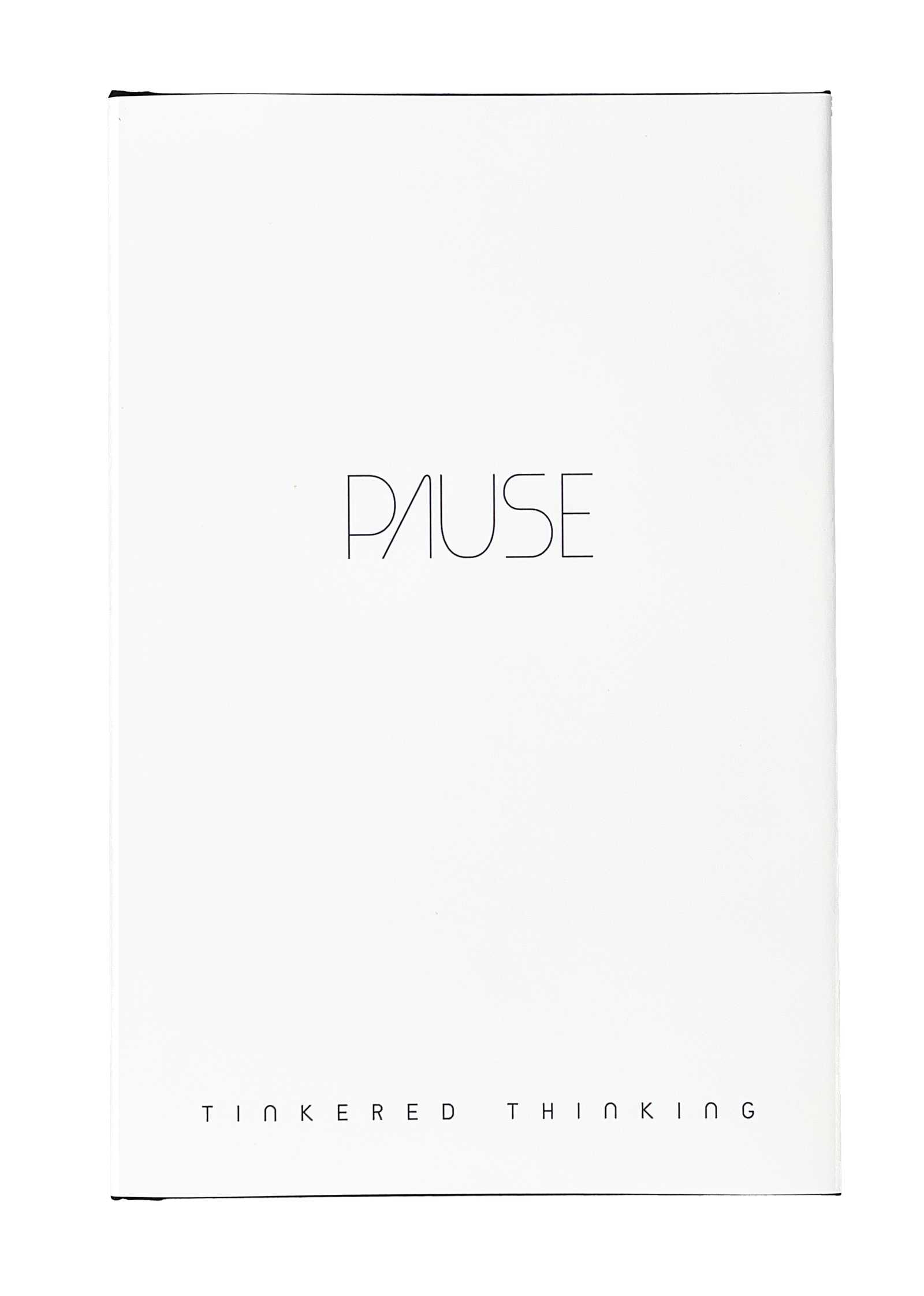
The first non-fiction book from Tinkered Thinking. PAUSE is a short book on meditation. Now available on the Tinkered Thinking Bookstore.
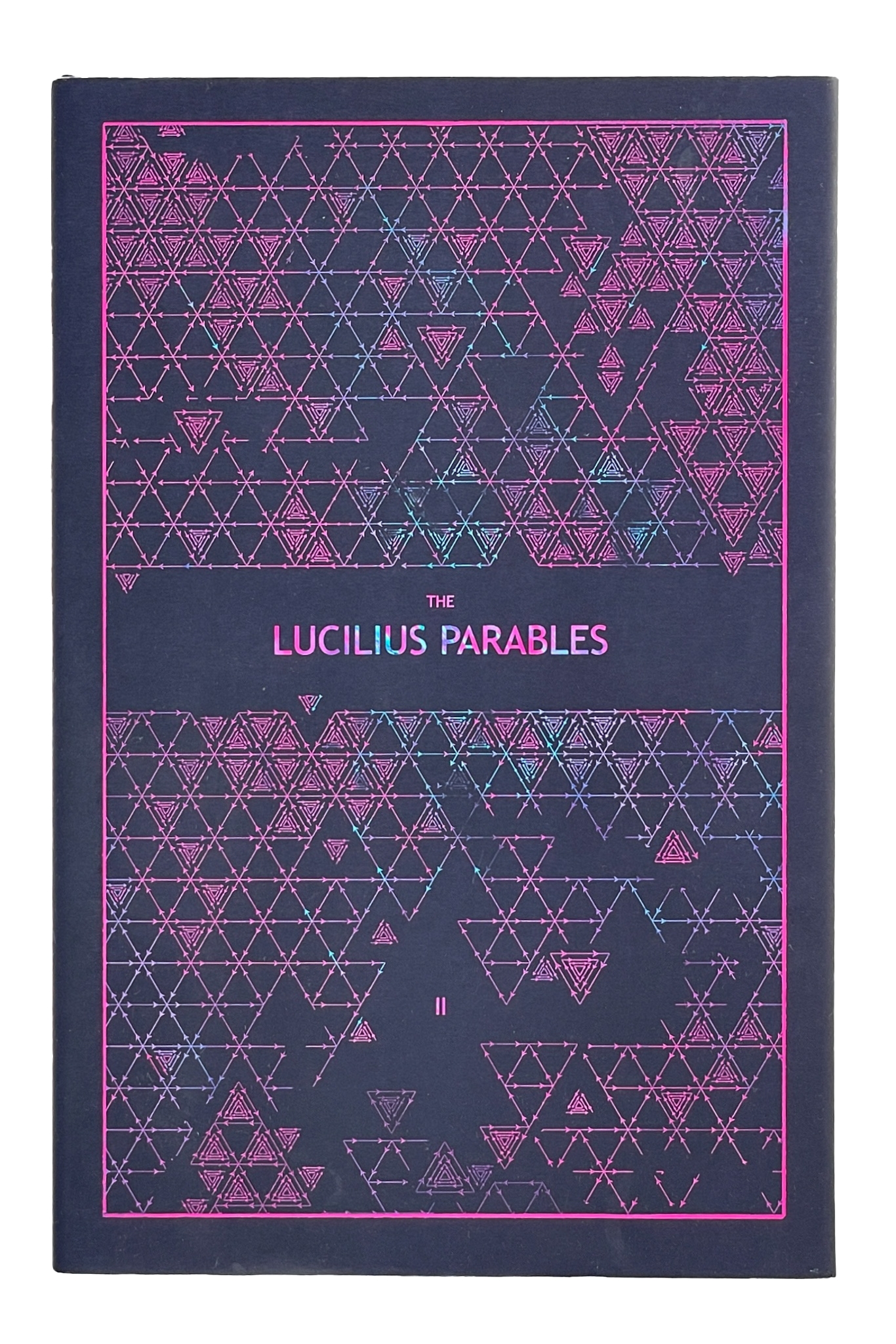
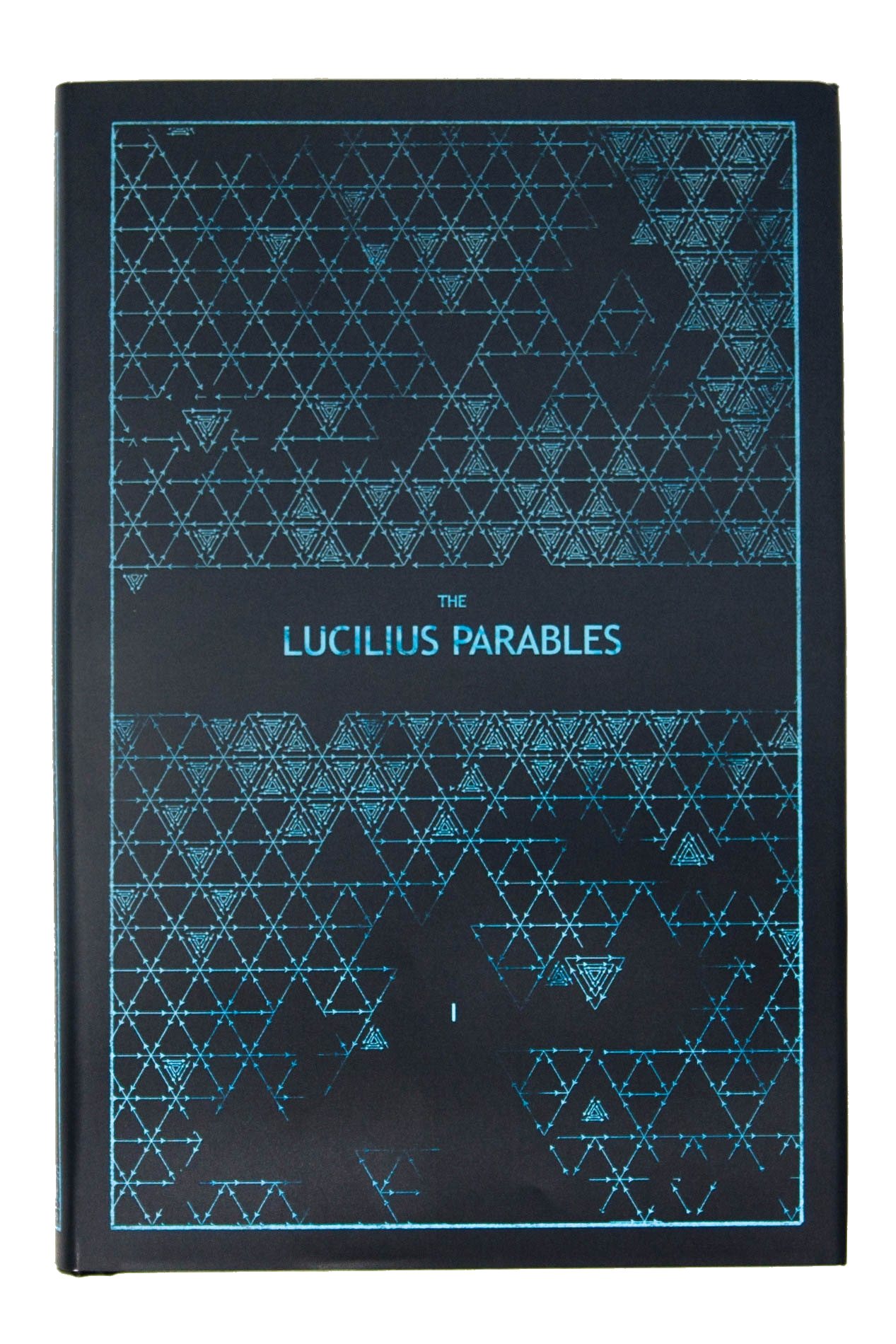
The SECOND illustrated book from Tinkered Thinking is now available!

SPIN CHESS
A Chess app from Tinkered Thinking featuring a variant of chess that bridges all skill levels!

REPAUSE
A meditation app is forthcoming. Stay Tuned.




MINIMUM VIABLE SUCCESS
December 13th, 2018
When starting any new endeavor or acquiring a new skill, we do ourselves a disservice by wanting to be good or great. This is the mirage of the montage, which skips all the boring, frustrating parts where not much is happening. The most important thing to do is to shoot for the minimum viable success.
If say, playing the guitar, learning theory and working through scales are not really great places to start. Even if theory is learned or scales are mastered, there is nothing to really show off, even if we’re just showing off to ourselves. The best thing to do would be to fine a much admired song that is actually rather simple, and work towards being able to play that.
In the arena of computer coding, the first thing that always gets taught is simply how to get ‘Hello World’ to pop up on the screen. Again, this is the minimum viable success.
In classical figure drawing, the use of gesturing is highly employed. This is process of quickly sketching out the entire figure very very quickly. Some exercises will push the artist to draw an entire figure in just a few seconds. This leaves little room to make anything more than just a stick figure, but the exercise proves very useful, with practice, even such stick figures can be incredibly accurate and evocative of the posture.
When it comes to writing, getting absolutely anything on the page is far more important than any other word, sentence or paragraph that comes afterwards. Simply being able to see and know that something has been written has a direct correlation to our faucet of inspiration.
But we should not look for the minimum viable success only at the beginning of every new endeavor and acquisition of skill. It’s at every stage in our process of learning that we should seek the next minimum viable success.
The minimum viable success is really a moment in progress when we feel a sense of satisfaction and fulfillment. These are boosts to our psyche and mentality that sustain us emotionally while struggling to solve the next piece of whatever puzzle and problem we seek to work on. Working in a way that optimizes finding and gobbling up those success points goes a long way in determining whether or not we will stick with something in the long term. If we can understand this about ourselves, then we can learn smarter, by learning in accordance to the satisfaction of our emotional system instead of just expecting some super expression of will power to brute force our way through. Often while learning we may feel like we are in opposition to ourselves, trying to force ourselves to do something. That lazy reptilian part of our brain needs something to chew on, and the minimum viable success is exactly the sort of treat that’ll get it to shut up and let you work in peace with a genuine sense of curiosity.
Each small success compounds into something much larger.
Every large success is simply the result of countless tiny victories.
The question here that we can incorporate into our days is:
Which small piece of this puzzle can I execute will be the most satisfying to have solved?
This episode references Episode 234: Chipping the Composite and Episode 21: The Montage is False
RESOLUTION NOW
December 12th, 2018
As the last month of the year wanes into it’s halfway point, many people are feeling the stress that seems to mount to a sort of crescendo. Particularly in the Northern Hemisphere, people are eating too much, getting sick and because of this vicious cycle of pressure, many look forward to the new year as a way to restart. Hence New Year’s Resolutions.
People seem to think that a new year means suddenly having access to a new self. But people do not change by the tick of a clock, nor the rising of the sun on a particular day. Change is slow, and when attempting to initiate any sort of change, the going is tough and rarely shows any results. Hence why so many New Year’s Resolutions fall to the wayside and fail to ever gain the habitual momentum that is needed for a change in the brain to gain a real structural hold and somewhat secure the new behavior.
January first is an entirely arbitrary day. We would be better to think of every day as January first since we are only ever granted access to the present moment. The past ceases to exist as fast as the present develops, which is also to say that the past never starts to exist. So too with the future.
But, this does not diminish the utility of planning. There are 18 days left before that big imaginary switch, and that’s enough time to push through the hardest two weeks of instituting a new habit.
If you start right now, by the time New Year’s Resolutions rolls around, you’ll already have a change with momentum.
Simply put, when it comes to things that we can take action on right now, waiting for the future is always a mistake.
SCHEDULING FAILURE
December 11th, 2018
Progress on any front in life feels great. It’s clearly one of the best feelings we can have, and it seems to stay aloft, or rather keep our spirits aloft quite a bit longer than the quick pitfall pleasures we encounter everyday, like donuts, T.V. and social feeds.
Pairing our hard-won progress against quick pleasures, we can see that they are actually inverses of one another.
The hard-won progress begins with difficulty, frustration, and even pain, but results in an elation with a decently spread half-life.
The quick pleasure on the other hand, starts with the pleasure, that is generally quick, fleeting and followed by a long and somewhat painful payment. Anyone who has had a bad hangover can remember pondering the previous night and wondering if it was all worth it.
This inversion is not a difficult one to realize, but figuring out how to choose the more rewarding of the two is not so apparent. Many brain processes paradoxically seem geared to lead us astray from forging paths to a sense of fulfillment.
If we look at that hard-won progress, we might breakdown what our thoughts are like just before attempting to do this hard work.
Is there an expectation that we will achieve what we’re setting out to do? What happens when the day comes to an end and we have toiled for hours on a problem that just doesn’t yield it’s solution? We might think that expectation is our driver, our motivation, but it is a ripe recipe for disappointment.
While such self-expectation, perhaps passed down from some tiger parents, work for some people, it’s clearly a stressful sort of pressure-cooker. We would do well to wonder if there are easier and potentially more efficient ways of achieving similar progress.
One curious way might be to find a way to deflate the concept of ‘failure’. This is a big one, the fear of which keeps so many people from every attempting anything outside of a fixed routine.
If we play the thought experiment on ourselves, by asking: what would happen if I was completely, utterly and totally comfortable with failure, would I be more likely to try more things, or less likely?
Often the phrase “what would you do if you were guaranteed not to fail?” is tossed around as an ineffective way of motivating people to find better paths. But this question is an absolute farce. It’s akin to asking “where would you fly if you were superman?”. It’s a nice question to contemplate, but it has no basis in reality. The question requires a dangerous suspension of disbelief. We are never guaranteed to undertake anything without the prospect of failure. This is why that question is a purely unproductive joke, it only initiates day dreaming, not action.
But, what is within the realm of possibility is changing our relationship to failure. We can, by exposing ourselves to it little by little, over and over, become comfortable with it. Just as mountain climbers slowly acclimate to altitude by pushing higher slowly and steadily, or how weightlifters slowly inch their way towards feats of strength that would have been impossible in the beginning, so to can we push ourselves into small curious endeavors and begin to develop an acclimation to failure.
One might ask at this point, if we become so comfortable with failure, would that become a kind of self-defeating default that we seek?
No. The reason is because sometimes we will surprise ourselves with progress. And the elation from that tiny victory is far more powerful than anything we might achieve with a desire to become comfortable with failure.
The exercise is simply to release a sort of mental pressure that keeps one from engaging more fully with what life has on offer to do.
It’s a tricky balance to simultaneously seek progress while being comfortable with failure, but for some, actually scheduling work on projects by scheduling failure, might be a counter-intuitive help.
SLIPPERY MENTAL TERRITORY
December 10th, 2018
If we think of our internal mental world as a kind of landscape, there are certainly obvious highs and lows that we can point out. It’s interesting that our verbiage about how things are going in life actually references a sort of landscape.
The ups and downs of life,
Going through a rough patch,
Flying high,
But however we are doing in the real world boils down to some information that we have the option of taking seriously and embedding in our mind in order to effect our mental state, or not. Our ability to feel a sense of wellbeing is really determined by our ability to navigate and manipulate an internal landscape as opposed to trying to live some story out in the real world. It may be dangerous to explore too much of a disconnect from reality, as this is the hallmark of psychosis in many cases,
but paradoxically,
it is also the hallmark of the stoic and the buddhist, who relegates the state of one’s mind to a purely internal engine.
As Nassim Nicholas Taleb once wrote: “For those..who wonder about the difference between Buddhism and Stoicism, I have a simple answer. A stoic is a Buddhist with attitude, one who says ‘f*** you’ to fate.”
This is the epitome of balance between incorporating reality into our mental models and keeping a certain internal distance from it all in order to covet a self-generating sense of mental well-being.
But such a sort of mental super power does not happen overnight.
Such a perspective might seem like a fairy tale paradox to someone who lives under a barrage of uncontrolled emotions.
Human psychology is generally slow to change, but it does clearly change over the years, and given this fact, we can slowly direct that change until a fairy tale paradox is a little more at home in a mind equipped with greater clarity and calmness.
The first step might be to identify whatever slippery mental territory seems already well entrenched in our mind.
Each piece of this landscape can be edited. This requires contemplating those dark mental processes while in a neutral state.
We might retroactively observe our anger in some sort of situation and ask what we could have done differently. The first step to changing that landscape may be as simple as resolving to walk away from any situation that incites anger. A walk around the block and some slow breathing can do wonders.
Or we might pause for a work out. Even if we find our self in a work setting we can always take 5 and go find a place to bust out a few dozen push-ups.
There are countless strategies to mitigate and restructure the parts of our mind that presents a threat to our mental wellbeing.
The first step is simply giving the whole thing some thought, with calm thoughtfulness. Everything builds from there.`
A LUCILIUS PARABLE: THE BOUNCE
December 9th, 2018
Lucilius was sitting on a park bench in the city in a purely dismal state. A large company he had slowly built over a number of years had come to a disastrous end when everything seemed to crumble from beneath. ‘Unforeseen market forces’ was the pithy and official statement, until further notice. Dark thoughts were filling his mind as huge portions of his brain’s neural network that had been built and devoted to the project were suddenly experiencing severe down regulation due to sudden irrelevance and the retroactive imaginative planning required to try and make sense of large mistakes in the face of a need to feel certainty. Lucilius’ mediation habits were on a long hiatus – a further cost of the now failed endeavor, and so he was not acutely aware of this whole reality. He could only see and feel the consuming and gnawing feeling of utter failure.
It was a beautiful spring day, but Lucilius was unable to notice any of it’s splendor. He merely sat watching the lay of his undone shoelace draped across his fine and shiny shoe.
His dismal reverie was cleaved by a sudden thud and clack of metal. He looked up to see a young boy on the brick walkway, a small bicycle strewn next to him. The boy was silent, looking at his situation. He peeled his hands from the walkway and looked at his scuffed palms, inspecting them. He tentatively rubbed them together to clear the dirt as his mother came up to him.
“honey, you ok?”
“Yep, I try again.”
The kid got up, lifted his bicycle and mounted it. He looked forward and pushed the bicycle, trying to catch the peddles. He fell again, checked himself and giggled some.
“You wanna be done for today sweetie?” The boy’s mother asked.
“No, a little more. Then we’ll come back and do more tomorrow.”
Lucilius watched the young boy continue off with his mother walking along and watching. He’d forgotten about his own situation during the whole interlude and now it was all soaking back into his mind. The dread and dark worry, the sheer open ended feeling that arose from a blank tomorrow. The young boy’s words echoed in his mind, and slowly something began to rise through all that Lucilius was feeling. After a moment, while staring at his untied shoe, he giggled. He looked up at the trees coming into blossom, the bright sky spilling between the branches and the fresh air moving across his skin. He hiked up his foot to the bench and tied his shoe. Got up and walked back into the concrete jungle, slowly shaking his head with a smile.