-compressed.jpg)

Daily, snackable writings to spur changes in thinking.
Building a blueprint for a better brain by tinkering with the code.
subscribe
rss Feeds
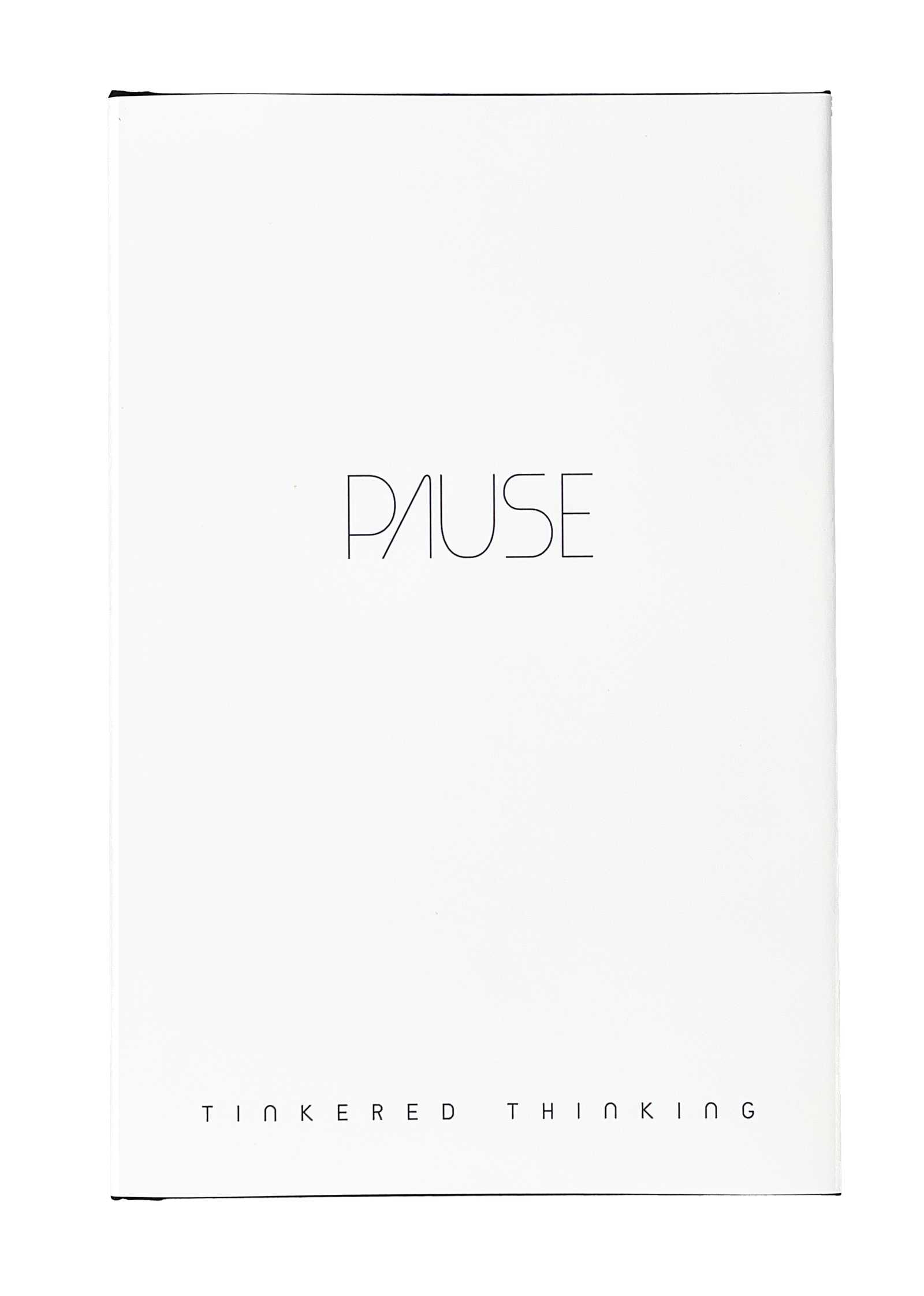
The first non-fiction book from Tinkered Thinking. PAUSE is a short book on meditation. Now available on the Tinkered Thinking Bookstore.
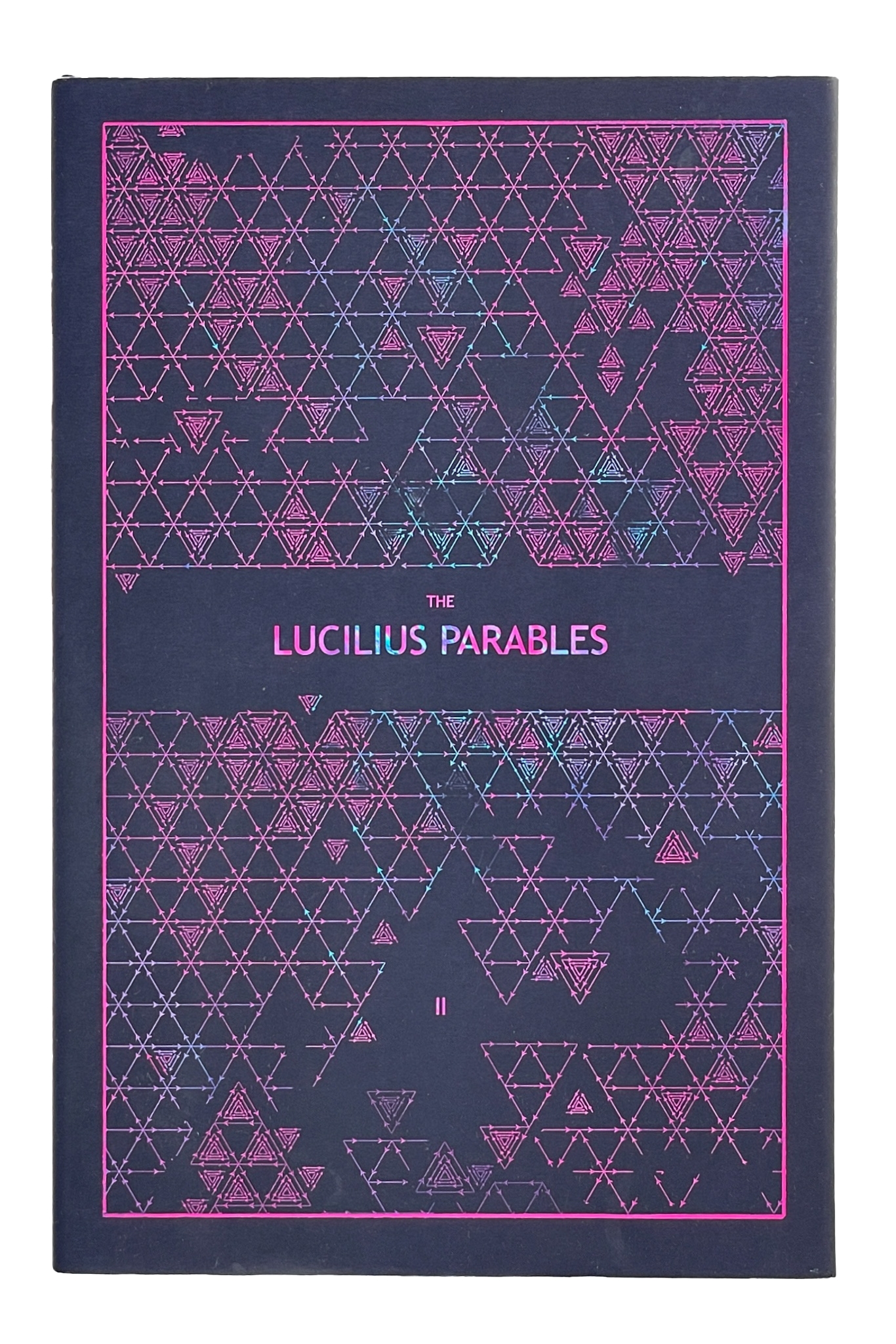
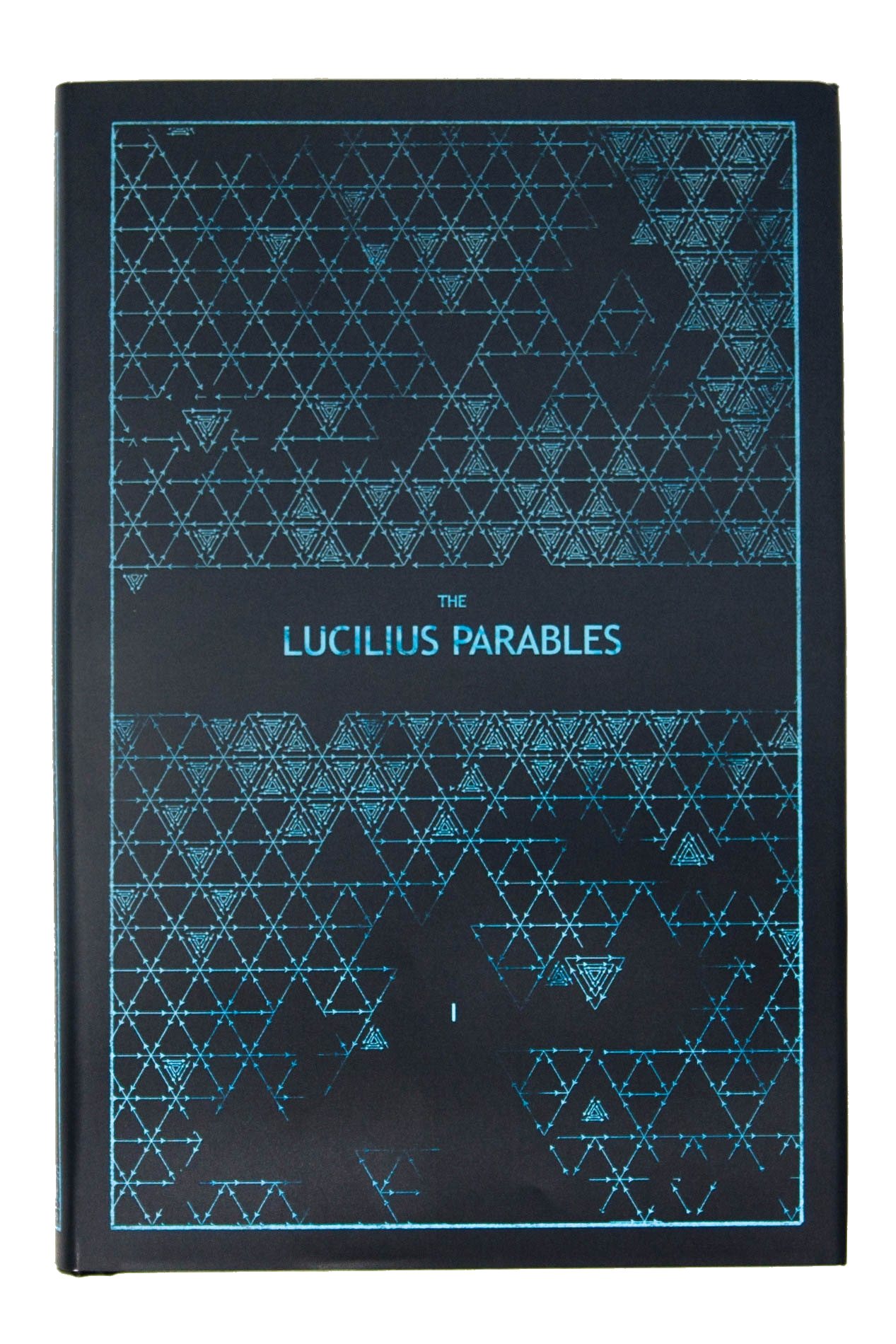
The SECOND illustrated book from Tinkered Thinking is now available!

SPIN CHESS
A Chess app from Tinkered Thinking featuring a variant of chess that bridges all skill levels!

REPAUSE
A meditation app is forthcoming. Stay Tuned.




A LUCILIUS PARABLE: PRODUCTIVE DELUSION
September 9th, 2018
In the early 21st century, the technology of virtual reality and cognitive medicine had reached a critical juncture that allowed Lucilius to play a little trick on himself.
A compound had recently been developed by the pharmaceutical company Mondieu called Mnemectomol which removes all memory of a period up to a year, depending on a incredibly precise dose.
Lucilius hooked up an automated I.V. of Mnemectomol that would deliver a single does to his body at the end of his time in the virtual reality machine.
He had programmed the virtual reality machine so that it would record all of his experiences and then deliver it to an A.I. program that would transcribe the experiences into journal entries. Lucilius had given this A.I. program all of his previous journals so that it could ingest all of his linguistic tendencies and idiosyncrasies and patterns of thinking and revelation in order to produce journal entries that were stylistically impossible to differentiate from his own writing.
Before getting into the machine, Lucilius took the last blank book that would be written in by the A.I. program and wrote a note to himself in the back.
He signed it with the date, and closed the book, chuckling.
Then he got into the virtual reality machine and turned it on.
For the past few years Lucilius had been part of a scientific research group that was probing the potential utility of quantum entanglement for the purposes of a better telephone, but the entire team was so hung up on the whole problem that research had essentially ground to a halt.
Never taking anything quite so seriously, Lucilius decided the group should take a little vacation, and Lucilius had spent the first half of his vacation programing his virtual reality trip.
It was the ultimate RPG, but it essentially sent Lucilius back to the lab. But Lucilius had programmed this virtual reality to adhere to the tendencies of real life only sometimes. Indeed, what else is the point of virtual reality?
Lucilius had wondered if all the brains of the research team had stagnated in a sort of stalemate with reality and an understanding of that reality. He figured that since the underlying laws of the universe are probably stable to some degree, then perhaps that stability was part of the reason the research teams’ efforts to understand had stagnated and likewise reached a point of stability, albeit an unproductive one. Lucilius figured that if his brain could have an experience of reality that was literally unreal then it might stir his brain out of that stable stagnation and into a more creative agitation that might be able to then study reality once more in a fresh and productive fashion.
So Lucilius had designed a virtual situation where he discovers the answer that the research team is looking for after many months of research in this unreality.
Luckily, the technology of virtual reality had progressed to the point where time could be compressed and a day in the virtual reality machine would take only a minute in real life.
The machine clicked on and instantly the A.I. program started popping out handwritten journals that looked identical in nature to Lucilius’ real journals.
After twelve hours, the final journal was scribbled in and the I.V. of Mnemectomol delivered a dose that erased Lucilius’ entire memory of the time in virtual reality and the time he had spent setting up the trick and even up to and including the moment when he’d had the whole crazy idea in the first place.
Lucilius emerged, somewhat dazed and confused and looked around at his surroundings. He noticed the small stack of journals that looked very much like his own. Before questioning further where he was and how he had gotten their, Lucilius picked up the first book and started reading. It was indeed his handwriting but it spoke of an experience he had never had.
He kept reading and before long, he phoned his counterpart on the research team and exclaimed with excitement that he had an idea about what they should do next. It didn’t make perfect sense but it was something they definitely hadn’t tried before.
By the time the automated Uber had dropped him off at the lab, he was nearing the last page of the last journal and already had half a dozen ideas about what they could do.
As he walked into the lab, he turned the last page and saw that it was a palimpsest. His handwriting was overlaid on top of a message in the same handwriting that said:
It was all a dream. Go get’em tiger.
GET INTERESTING
September 8th, 2018
Few would mind becoming more interesting as a person. But what exactly does it mean to be interesting?
It seems logical that interesting people have interests that have them doing work that we find fascinating. But such a sentence is like a definition that uses the word. It’s an effectively meaningless and redundant statement.
What is interesting?
Let’s CLEAVE this sucker.
The word ‘interesting’ comes from a two-part etymology.
inter- means ‘between’.
the –esting (esse) part comes from the Proto-Indo-European root ‘es’, meaning ‘to be’. A good word to think about in order to more fully appreciate this root is a word that starts with it: ‘essence’.
Let’s put this sucker back together.
Interesting, literally means to be between states of being. Or: to be between essences.
How can we make sense of this little riddle? What does it mean to be between states of being? Well, such an image evokes the notion of departing from a prior state of being. We can think of this as a literal place. Who we were yesterday, for example. The in-between space though is by default a state of less certainty. Like jumping from one stepping stone to another. While soaring through the air, our outcome is uncertain. Will we fall between the stones to our demise? Or land safely on a new stone, a step further in our journey of becoming something greater? If the person we will be tomorrow is the same person that we were yesterday, then we by definition cease to be interesting. We are not transcending essences and turning into a different person. We are not wandering in productive areas.
To be interesting –at the root of it’s meaning- is to get out of your comfort zone.
Isn’t that interesting?
This episode references Episode 117: The Cleaver and Episode 133: The Right Track. If you’d like to fully explore these references, please check either episode next.
WHY ARE GAMES FUN?
September 7th, 2018
One way to get at an answer for this question is to examine something else that is not fun. Think of the boring, soul-sucking job.
The two are actually quite similar. Both the boring job and a game have rules and guidelines for operation. They both outline a way of human behavior – a series of actions in a particular order that achieve a particular end.
In this basic way, jobs and games are structurally, very similar. So why do we enjoy one and not the other?
If we examine the possible outcomes for both the game and the boring job, we see that the difference:
A boring job usually entails an operation that achieves the same outcome repeatedly, over and over. Think of a fast food restaurant and how the whole operation is designed in an attempt to produce the exact same thing every single time.
The game is a whole operation designed in an attempt to produce only varied results: ones that we specifically have not seen before.
Both structures are a reaction to chaos and uncertainty. The boring job is an attempt to tame it and control it by force, where the game is a structured exploration of chaos and uncertainty.
The boring job, in some sense is a fearful reaction to uncertainty, whereas playing or watching a game is the result of curiosity. Both represent attitudes that we can take in the face of uncertainty, and most people try to have their cake and eat it too: they engage in a boring job, and then watch sports or television shows, which for all intents and purposes still fit the structural definition of a game. Indeed, Netflix is primarily a giant exercise in the very first game we play as kids: make-believe. But the boring job followed by a dose of sitcom or game of thrones somehow does not lead to a life that feels invigorating and fulfilled.
The trick is to bridge the separation: To find or invent a job that functions more like a game. Of course there will be rules and guidelines that must be invented or discovered and followed, but such rules and guidelines will promote a curious exploration of uncertainty, and one that is open-ended and that can have many possible outcomes.
The quintessential example is the artist, who looks at a blank space and starts drawing, or starts writing, without any idea of what the exact outcome will be or how long it will take. The piece of work created by the artist is diametrically opposed to the perfectly composed McDonald’s hamburger.
But we need not abandon our lives for that of the starving artist in order to feel more fulfilled with life.
What is more important is to realize that there exists a spectrum between the McDonald’s hamburger and the artist’s work. Any given person can in essence find or create a job that has the right balance of repeatable outcome and unknowable outcome. Though, it’s important to point out what we give our highest esteem to in a culture:
to the artists and innovators. Those most willing to engage with the unknown. And though fame is generally a cheap way to determine value and is effectively useless in the short term to see if someone or their work really is valuable to our society, those who have stood the test of time generally fall into the categories of artists and innovators. It’s this long tail result that tells us which side of the spectrum we should strive to be closer to. We may even realize that we don’t have to always exist at one place on this spectrum of: how comfortable I am with uncertainty and how much I crave stable routine. We can change and grow and strengthen as individuals, and slowly inch our way towards the more difficult end of the spectrum, like a child slowly daring herself to go closer and closer to the deep end until the day when all she wants to do is dive to the bottom.
Knowing about this spectrum might be interesting and thought provoking, but how can it relate to life in a pragmatic way?
For someone who is stuck in a boring job, we might ask: what sort of side project can I start and slowly grow? What is I introduced a little more uncertainty into my life by only working four days a week instead of five and dedicating that extra day to my side-hustle.
What if it were something fun?
What if I could turn a game into a job?
Someone who can answer that effectively turns their job into a game.
PURPOSEFUL IMBALANCE
September 6th, 2018
Words like balance, harmony and level-headed are flagship terms for a state of being that we are taught to seek, however the underlying concept is one of inaction and stillness.
Stillness and inaction certainly have their benefits for the mind, such as with meditation, but to seek this kind of balance as a constant status quo is to disengage from living.
We have an abundantly common and mundane example to illustrate this:
Walking.
In order to move forward, we destroy our balanced posture by leaning forward. This lack of balance causes us to catch ourselves once more with our next step.
This toggle between balance and purposeful imbalance is exaggerated in the movements of infants that are just learning to walk. Their movements are stilted, almost jagged, and each successful step looks like a last moment reaction as a foot stabs out at the ground.
Progress and movement is the result of thrusting ourselves out of balance and into an uncertain place with the faith that we will be able to catch ourselves.
We might take the analogy further and think of sprinters who are hurling their bodies into the air with both feet off the ground, all the while maintaining a faith that no matter the surface they will crash into, their feet will negotiate the landing.
Think of the common epithet for today’s entrepreneurs. It’s often said that an entrepreneur is someone who jumps off a cliff and builds an airplane on the way down.
Or think of the Zen prescription: leap and the net will appear.
Each step, whether literal or in the figurative sense for a project, is a leap, a conscious, purposeful act of throwing ourselves out of balance.
It goes likewise in the other direction. If things feel chaotic, as though things are always out of balance, then it might be that we are falling in the wrong direction. To seek some kind of permanent balance, or harmony is a fool’s errand. But to arrest that process of falling and find some kind of momentary balance allows us the space to THOUGHTFULLY PAUSE and consider our RESOURCES and choose some new direction.
But moving in a new direction - even the best direction - is going to require the courage to abandon our new found island of balance.
This episode references Episode 23: Pause and Episode 39: The Resources, if you’d like to fully explore those references, please check out either of those episodes next.
FACES OF FAILURE
September 5th, 2018
Failure is often a huge, demoralizing experience that feeds our insecurities and cripples further action.
For the scientist who has hundreds of experiments lined up to probe the truth of some given piece of matter. . . how is an unexpected result on experiment 256 taken? Like an emotional trauma? Doubtful. Scientists would get nowhere if this was the case. Most likely the reaction is:
“Huh…interesting.”
Impersonal, dispassionate… if anything, such a reaction hints that curiosity has been invoked.
An unexpected result implies that the subject goes deeper than previously thought. An unexpected result shows that there is more to learn. The map is not big enough, not detailed enough. . . There is more enjoyable work to do.
Failure enters our lives in many ways. Those who interpret it best do not even call it failure. Some actually enjoy failure for the simple reason that it allows them to try again and improve the method, the action, the strategy, the thinking.
We have a habit of becoming so emotionally attached to what we attempt, and what people might think of our result that we often blind ourselves from the true value of the result.
The scientist sees simple feedback from the universe.
The first time entrepreneur might see a destroyed future.
Which face of failure might aid the other?
It is not some emotion inherent in reality or the result that coats it with identity. It is our perspective that coats the feedback with emotion. If we test reality with our understanding and our estimation of what can be accomplished, reality will give us feedback. Our perspective of that feedback is everything.
If our perspective is agile and open, we can be quicker to see a new way.
If our perspective is emotionally plump, we are fragile, and taking the next step after some ‘failure’ might….never happen.
Moving forward is imperative.
What face will we put on failure?
If we want to move forward?