-compressed.jpg)
Daily, snackable writings to spur changes in thinking.
Building a blueprint for a better brain by tinkering with the code.
subscribe
rss Feeds
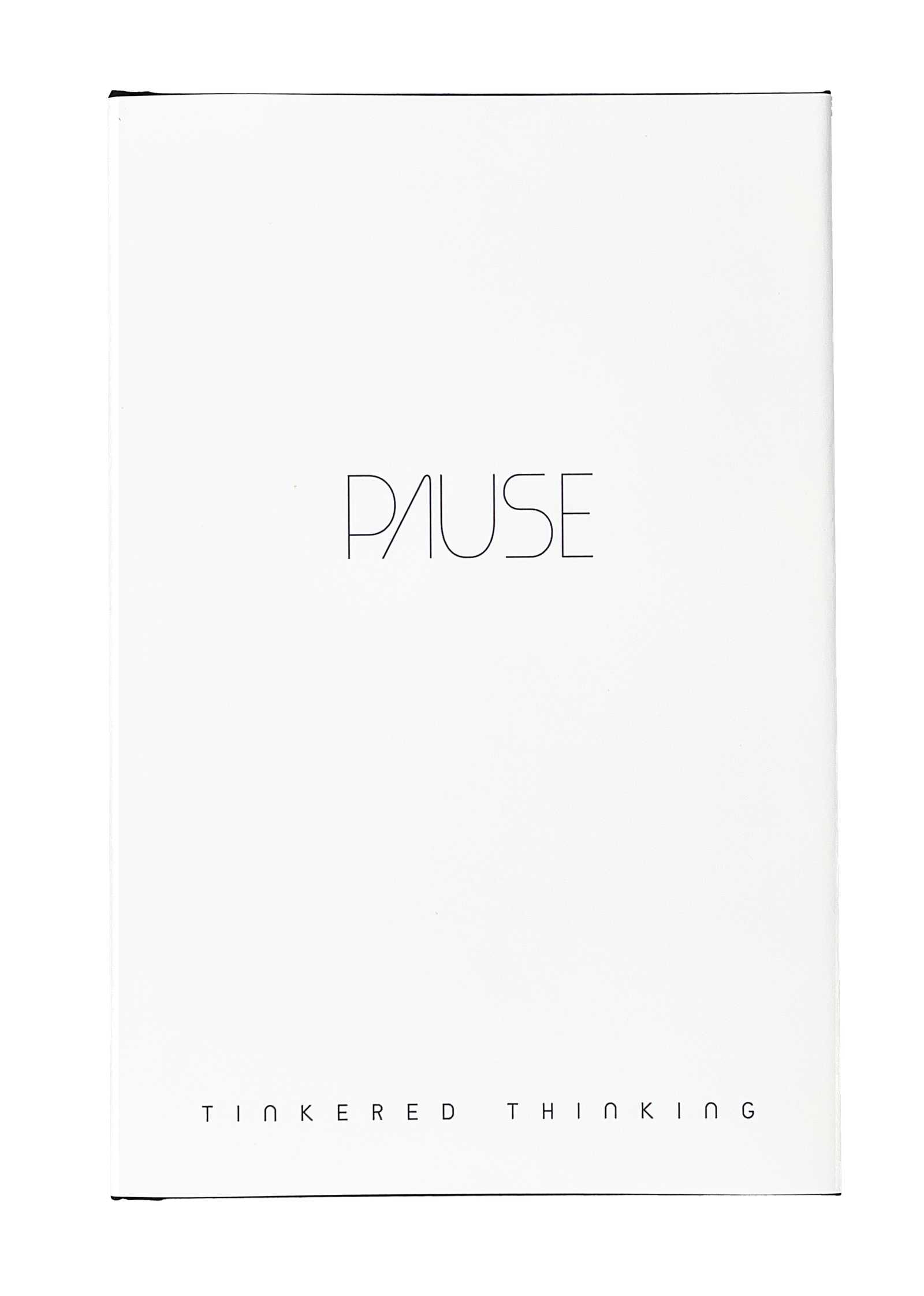
The first non-fiction book from Tinkered Thinking. PAUSE is a short book on meditation. Now available on the Tinkered Thinking Bookstore.
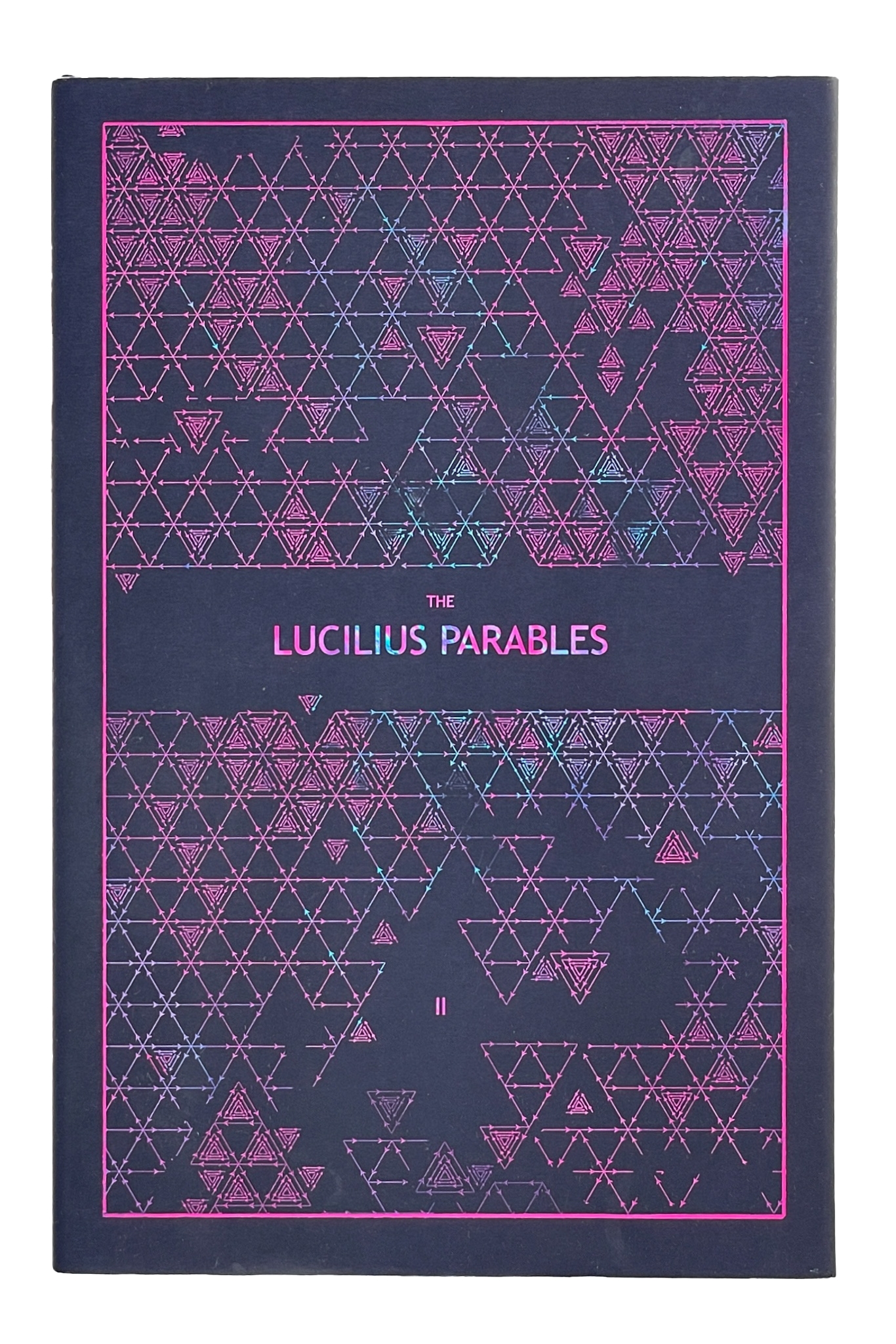
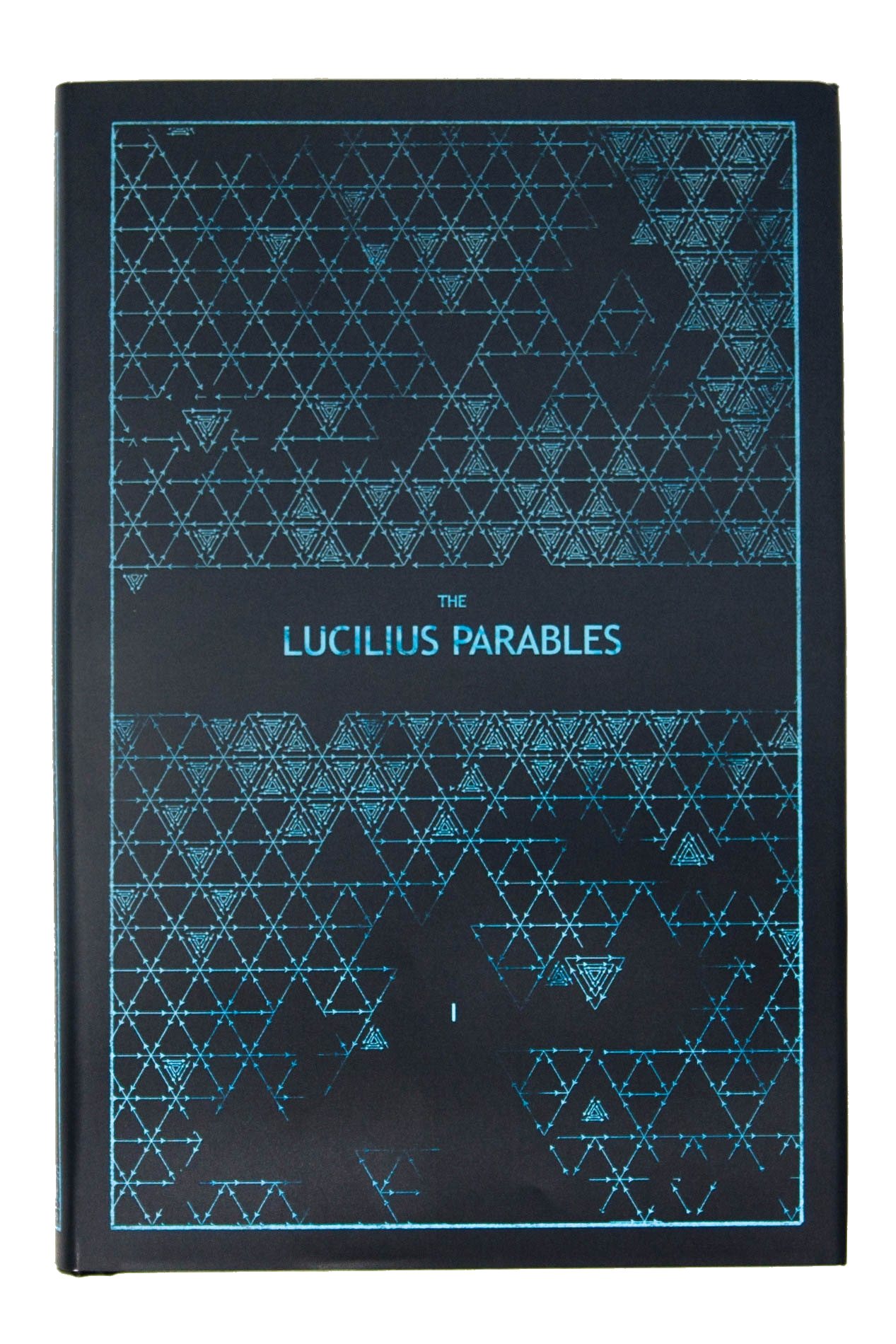
The SECOND illustrated book from Tinkered Thinking is now available!

SPIN CHESS
A Chess app from Tinkered Thinking featuring a variant of chess that bridges all skill levels!

REPAUSE
A meditation app is forthcoming. Stay Tuned.




TINY STEPS AND LEAPS
April 23rd, 2018
There are only two reasons for tiny steps:
The first is for fine-tuning.
But just as the largest switchbacks are at the base of the mountain where it is widest, and the smallest, tightest, fine-tuning switchbacks are at the top where there is simply very little room – tiny steps for fine-tuning come only after large leaps.
The second reason for tiny steps is: fear.
Those who wish to change but are unwilling to take those initial large leaps in different directions towards progress falsely comfort themselves with tiny steps.
“I like to take my time.”
“I do small experiments to get a more detailed understanding.”
“It’s just dramatic and crazy to make such big changes! And it could be a mistake that’s as big as the leap! If a mistake is going to be made, better it be only a small step in the direction of that mistake. Easier to turn back, less distance to retrace.”
Less distance to retrace back to that comfortable little bubble.
How many Disney movies do we need before we intuit the fact that substantial change and growth starts with huge moves, far flung adventure, drastic measures, grand experiments, taking chances and courageous risks? These movies start with a boring status quo: a comfortable little bubble. And then that bubble pops.
Only tiny steps are possible inside that comfortable bubble and they will never result in meaningful, substantial change.
(This does not actually mean we must go on some far flung adventure. We can very easily make a huge leap regarding the contents of our refrigerator. All that requires is a trip to the grocery store with a new and radical intention about what we will buy.)
Relying only on tiny steps towards progress is similar to expecting an ant to one day give you a detailed map of the planet. An ant takes tiny steps.
Unless it’s an immortal ant and we have an absolutely ridiculous amount of time, we’re only going to get a very detailed map of a tiny portion of say, a neighborhood. (Think about how fast and vast the distance travelled by a GPS satellite – THAT will give you a map.)
The other aspect of Tiny Steps Vs. Leaps is that our observational abilities are fairly dull and flawed, especially when it’s with regards to self-observation.
The actual results of tiny steps are simply really difficult to accurately and reliably notice without a large context as a backdrop for the arena of our experiementation.
We kid ourselves that a tiny step we have taken is having a noticeable effect, but fail to take into account the placebo effect - which works even if you know you’re taking a placebo! Chances are, the positive effects of that tiny change are just all in our head.
That’s not necessarily bad.
But it’s a delusional understanding of one’s self.
A positive mental attitude is just first-gear. It will only get you so far.
These delusional effects are harder to ‘fake’ if the changes we institute are more on the order of a giant leap.
Large leaps are more likely to result in actual, noticeable changes. Good changes, unexpected changes, unneeded changes... the whole shebang of experimental results. Changes that are unforgivingly noticeable, and therefore constitute reliable information about the world and ourselves.
We learn more, and we learn more accurately by starting with drastic changes, and working from those large leaps down to smaller and smaller tiny steps in order to fine-tune exactly what works for us.
Think of it this way:
When Michelangelo started sculpting his ‘David’ out of a giant solid block of stone. Do you think he started with sandpaper?
We must not delude ourselves into thinking that we’ve already made those large leaps or that they aren’t useful.
Take out the biggest chisel, the heaviest mallet and start. . .
blasting away.
A LUCILIUS PARABLE: SOARING DREAMS
April 22nd, 2018
During his travels, Lucilius found himself walking through a vast expanse of grassy, rolling hills. It was midday when a single huge tree rising from a large hill came into view. He kept walking and the tree disappeared as he descended into a valley. And again he saw it as he mounted the next hill. He decided it would make a good spot to rest and meditate and headed for the tree. But, as he descended into the next small valley and the tree clipped from sight, he saw something fall from the tree.
From the next hill he saw something fall once more from the tree.
He walked on until he was climbing the very hill where the tree stood. The final steps to the steep hill revealed a small boy, bruised at the knees and elbows, a scrap on his leg clotted with blood and his face puckered with dried tears. He was just about to climb the tree when he noticed Lucilius near.
“Are you ok?” Lucilius asked the small boy.
The boy nodded and looked back to the tree.
“What are you doing?” Lucilius asked.
Looking up into the tree, the little boy said only “I’m going to fly.”
Looking again to the bruises and crusting blood, Lucilius asked “and how do you plan to do that?”
The boy turned away from the tree to face Lucilius.
“If only I jump from a higher branch.” He looked up into the tree, studying the high boughs. “Then maybe I’ll really fly.”
“You’ve tried the lower branches have you?” Lucilius asked. The boy nodded. “And what makes you think you can fly?”
“I was told I can do anything. I just have to believe.”
Lucilius drew nearer to the boy and sat against the tree, pondering the boy’s borrowed wisdom.
“Then why, dear boy, do you aim to jump from a higher branch, if it’s only a matter of believing?”
The boy looked at Lucilius, confused.
“But I do believe.”
“But you are the one that said that believing is all that’s needed.”
The boy wondered about this and Lucilius went on.
“There seems to be another part of your mind – a very useful part of your mind – that is willing to wonder if there’s more to it than just believing. And so you came up with the idea of a higher place to jump from. But what branch or cliff should matter if you believe?”
The boy looked hard at Lucilius, pondering this question. Then his gaze shifted back to his plan high up in the tree, his certainty faltering.
“Perhaps more is required than simple belief? Believing, yes is important and necessary. But perhaps there is more to making things happen than merely believing in the possibility. If you charge ahead, determined to simply believe more truly, then you rob yourself of clear thinking, and that can lead you to do something you may not want to. Something you may regret. Something that may even end up hurting you.”
The boy looked at Lucilius and followed his nod to the bruises and dried blood.
“Put belief aside for a little while. It seems you’ve got it well covered.”
The boy looked longingly back up into the high branches.
“Come sit with me boy and we’ll think about it together.”
The boy sighed, and then sat with Lucilius.
“What gives you the idea to fly?”
“The birds.”
“And what do the birds have that make them fly?”
“Wings.”
“And do you have wings?”
Dejected, the boy looked to the ground and responded, “no..”
“Can you grow wings, or magically make yourself somehow have wings like birds?”
“No..”
“It seems there is a little more to flying than just believing.”
“Yea..”
“Do you like building things?”
The boy peered at Lucilius, suspicious.
“My father says my hands are too small for tools. So I don’t know.”
“We must work with what we have, accepting our limitations instead of ignoring those limitations and trying in vain to do what we cannot. But the key is to first figure out what those limitations are. Then we must survey what we have to work with. And so often, our focus on limitations blinds us from seeing all that is available to us.”
Lucilius picked up a seed fallen from the tree. The seed was shaped like two small wings adjoined with thicker seeds. He picked up another pair and a small twig. Taking a small knife from his satchel, he stripped the twig and made cuts into each end where he fitted the pairs of seed wings. He gave the little glider a push and it flew a few feet before landing in the soft grass.
The boy’s face lifted, and he scurried over to the little glider. He held it up and inspected it before launching it off and watching it soar.
“Sometimes, our dreams don’t fit into the world too well.
... sometimes we make the mistake of thinking we are our dreams. We have minds that dream by any rules and sometimes no rules. But the world exists because of subtle natural rules, and we must learn them if we hope to bring any of our dreams to life.”
The boy raced over to the glider and picked it up again, and then walked slowly back to Lucilius.
“Following a dream blindly can cause us much pain.”
The boy handed the glider to Lucilius, and Lucilius launched it high into the sky, and the boy watched with delight as the glider caught an updraft and flew higher than the highest boughs of the tree.
“Sometimes, we have to let go of our dreams to watch them soar.”
WHAT'S YOUR PASSION?
April 21st, 2018
The word ‘passion’ and the language that surrounds it today form some very destructive ideas.
New-age books and speakers love to use this word and surrounding phrase. For good reason. It functions like a mythical promised land. Those who don’t have it dream of some idealized future when they might finally find it. Those who claim to have their passion, wheel it around like a grand prize in the identity game. For ‘new-age’ writers and speakers, this helps form a sort of inner sanctum that people who feel lost will PAY to get into, or PAY for the knowledge to enter this coveted space of identity.
This is a sham.
And it’s a shame that such language is so widespread throughout our culture.
For those without a ‘passion’. They feel demoralized about themselves.
For those with a ‘passion’? Many of them wear it like a badge of accomplishment. Like the Easter egg was found, and now there is no more finding to do. This perspective limits. People who parade their passion in such ways are far less willing to explore new areas. Even if they don’t parade it around, this identity can still have the same effect internally on the mind.
This word and the language that surrounds it does not inspire people.
It divides and alienates.
(Perhaps it’s fitting that the etymology of the word ‘passion’ comes from the latin ‘pati’, meaning – ‘to suffer’. True to its roots, the word is doing it’s job.)
A new word is not needed. Simply a shift in focus.
The problem with making this shift has to do with our innate love of certainty. A passion feels certain, well-defined. Reliable. This well-defined quality is what creates that strong mental division in the mind regarding those with a passion and those without a passion. The shift in focus must be away from this certainty, which is uncomfortable. But if that discomfort can be embraced, it will aid both the passionate and those who think they lack a passion far more.
How about this question:
What are you curious about?
Curiosity carries no serious commitment of identity. The concept is far more childlike, full of wonder, unafraid of mistakes, and wide-ranging. It is the opposite of the way that the word passion is limiting. If one’s ‘passion’ is a well defined box, curiosity is like a spot-light that wheels around and looks in all sorts of directions. But it lacks that comforting certainty, and that – I’m willing to bet – is why curiosity gets pushed aside by the grand idea of ‘a passion’.
As a sidenote: The threads of sado-masochism that run through the three major religions might also have something to do with this focus on passion instead of curiosity. A focus on suffering and being a glorious martyr has some obvious parallels to the cliché of a suffering-poor-struggling-artist.
It is doubling fitting that the root of the word curiosity is from the Latin curiosus – meaning ‘careful’, but not in the cautious sense, but as in being ‘full of care’ with regards to something.
This is what the passion-camp is trying to say: what do you care about? But that sounds lukewarm compared to the magnificent crepuscular force of the word Passion. But – drawing a box around something to highlight it invariably divides the world into those inside the box and those left outside – the very reason that passion and it’s surrounding language often undermines many people’s ability to explore and progress.
Forget about finding some passion. Waiting for some divine force to whisper it in your ear is a waste of the precious gift of time. Just look around, allow your curiosity to take the wheel and wander. Who knows what you’ll find.
Have a grand passion? If it’s so strong, so grand and so great. Then it can definitely stand up to the slings and arrows of some healthy doubt, some questioning, maybe even a hiatus. Who knows, maybe some curiosity in another field will help you make your next break-through regarding… whatever you’re passionate about.
Intense focus is great. But it’s always good to look up and around every once in a while. You might see that you’re focusing on the wrong thing.
Forget passion.
Find curiosity.
INCUBATION
April 20th, 2018
A butterfly is not built in a day. A bird’s egg takes time and warmth. And ideas have their own shell. A shell that must be grown to protect, and busted open when that idea has matured.
Substantial changes in personality, mood, conduct, opinion. These never occur instantly. Even on the rare occasions when it seems like they do. (William James has much to say about this sort of instant conversion.)
Changes incubate.
Our brains entertain all sorts of idea-guests. We come across a new concept and the brain recreates the idea, allows it some rental space in the cocoon-cranium, and there it interacts with all the other ideas the brain has recreated from example or created from scratch.
Some are tossed into a sort of prison: a collection of anti-identity: The ideas and things that most define what we are NOT.
Others are readily welcomed into the fold. Usually these ideas and concepts are much like the ideas and concepts already there. Easier to recreate, easier to integrate.
In some sense this sounds like a neighborhood. Or a country with an influx of immigrants.
Some of these foreign ideas can come in like a rock-star and gain an admirable following quite quickly. But rock-stars don’t really change the world as much as they simply entertain.
Within the context of this metaphor, this community of ideas, how IS substantial change achieved?
A surge of motivation for self-change and drive might result in reading all sorts of books. Munching through bestseller lists, and what not. This is a good thing. This is a curious mind searching.
While it is important to never stop searching, it is also important to pause.
When something particularly valuable has been found, it does not mean that it has been totally integrated.
If emotional reactivity is a problem that has plagued us for years, one pass through Seneca isn’t going to do much. Even if every other sentence feels like a light bulb going off. . .
We must find those concepts that will help us and go over them many times until such words and ideas become the root of our works.
Reading something that feels like a refreshing splash of water in the face is simply recognition. We trick ourselves by thinking that such a flash of recognitive pleasure is proof that we have integrated the meaning of the quote, the idea and the way of thinking it advances.
Think of the times we try to retell a joke we have only heard once? More than anything we usually only remember the feeling that it caused and we laugh as we butcher a poor, haphazard version. Ideas we want to integrate require repetition, and saturation, in the same way that a joke must be practiced before it can roll off the tongue smoothly.
Otherwise, we find our actions betraying the notions that we have singled out with awe.
Integrating useful concepts requires an investment of time, effort and patience.
These concepts must be welcomed into the brain regularly. To mix more frequently and more numerously with all those concepts already in our head. After enough time, and enough familiarity, a tipping point will eventually be reached.
Our brain will have recreated for itself these useful concepts so many times, that their occurrence will be more numerous than previous ideas that gave rise to our less-than-ideal behaviors.
After many readings, or many exposures to – whatever the resource or influence may be – after all that consistent regular effort… the petri dish will be overwhelmed by a new culture. A new culture of thought. And from that culture of thought, new actions will rise
Always search and wander. But always return regularly to those seminal influences that definitely point in the direction we wish to progress.
The cranium-cocoon on our shoulders is always incubating. The actions that bust forth always spring from the ideas we have chosen to feed it: those thoughts we allow to repeat and form the regularity of our internal life.
If that internal life is to change: a new, consistent diet of concepts is needed.
Eating healthy once or twice, or even three times does not grant us the gift of health.
Just as reading a book full of wisdom once or twice, or even three times does not make us wise.
CLENCHED FISTS CLIMB NO WALLS
April 19th, 2018
An obstacle shows up in your path. Unexpected, perhaps even planted by someone to hinder you.
How do we react?
We may get upset.
And this is a reasonable –predictable- response to expect from any person.
But is it a reasonable approach to the obstacle?
Does such a response help you see the obstacle like a wall that can be surmounted, or even better, see it in a way that can help you? Who knows what advantage might come with the view from the top of such a wall. A view that might provide insight that never would have been possible had you been moseying along your way with no obstacle to block you.
What is the better response? To care nothing? To be totally unfazed?
This is likewise, uselessly extreme, and like any pendulum, rest only exists in the middle since.
A wall cannot be climbed with clench fists, but limp hands are no good either.