-compressed.jpg)
Daily, snackable writings to spur changes in thinking.
Building a blueprint for a better brain by tinkering with the code.
subscribe
rss Feeds
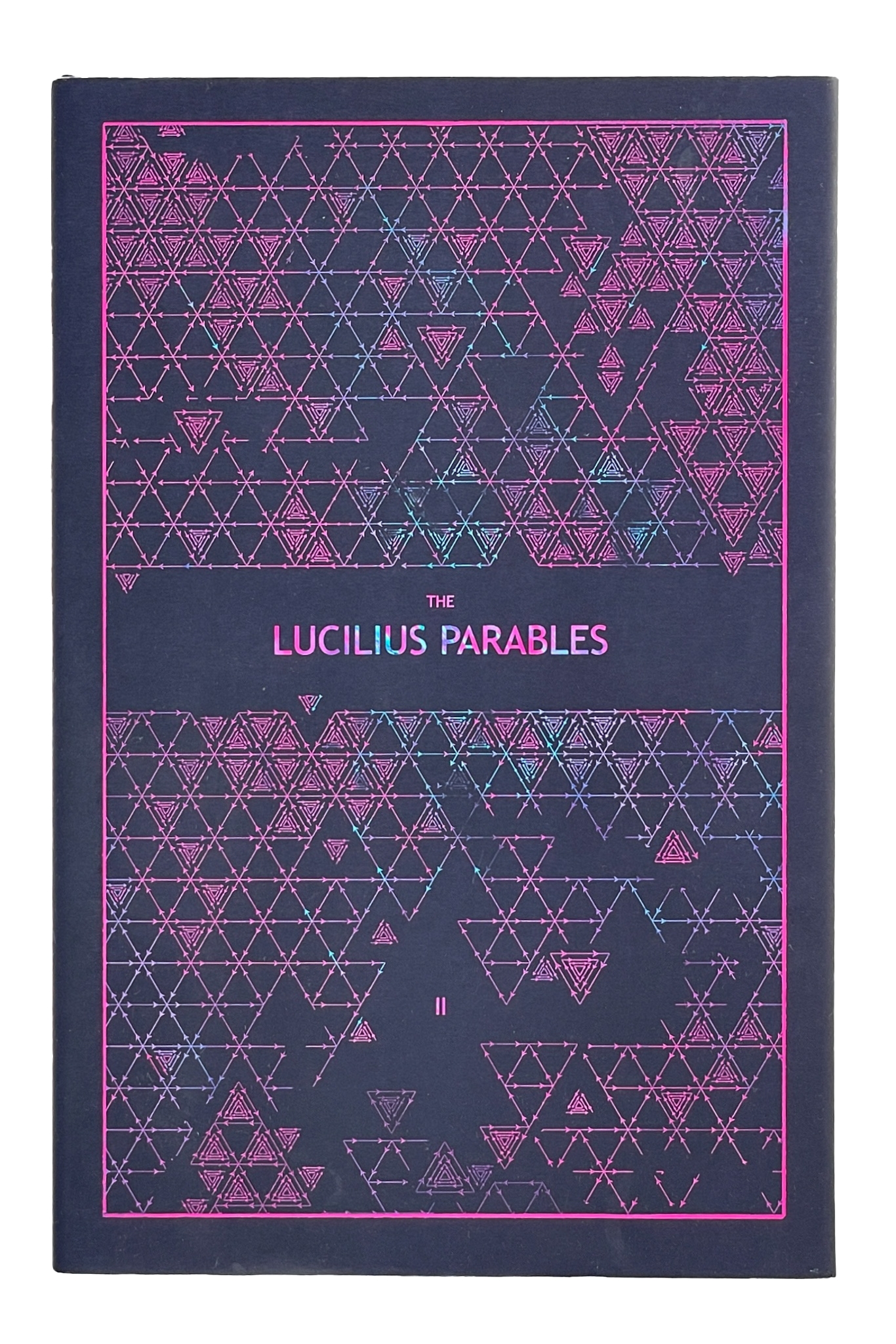
The SECOND illustrated book from Tinkered Thinking is now available!

SPIN CHESS
A Chess app from Tinkered Thinking featuring a variant of chess that bridges all skill levels!

REPAUSE
A meditation app is forthcoming. Stay Tuned.




SYMBOLIC BRAND
October 2nd, 2020
This episode is dedicated to Scott Galloway who is a Professor of Marketing at NYU Stern, host of the Prof G show and Cohost of Pivot.
When the internet gifted the world the power of online anonymity, the first to take advantage were malicious actors. Hackers and trolls, bullies and all other sorts seized upon the opportunity of this identity shield with the aim of conducting nefarious activity that has ranged from simple name calling and heckling to some of the most despicable activity we humans seem capable of. It’s without wonder that the reputation of anonymous profiles as even a mere concept evokes unsettling negativity. Certainly very few tether online anonymity with anything positive.
This is, however, changing. Anonymity was the stuff of legend before the internet. All our fabled superheroes of the last century were imagined complete with secret identities. Anonymity allowed those characters to do two things: on the one hand they could do all the flashy hero stuff, and on the other, they could instantly retreat to the calm status of being just another face in the crowd. There are of course those who have sought to be just this sort of vigilante, but with all the flashy action relegated to the acrobatics that a talented programmer can perform through the internet.
Beyond such extreme activities, a new sort of common anonymity is arising. Increasingly, there are accounts online that are clearly operating with the intent to be some kind of positive influence. Tinkered Thinking is certainly an example that humbly tries to figure out this role. But the decision to remain anonymous has yielded a great deal of unexpected good.
As the online presence of Tinkered Thinking has grown, it’s become a bit of a brand. As one early reader and listener noted in regards to the style and aesthetics Tinkered Thinking: you nailed the branding.
In the context of anonymity, the question of what a brand is begins to carry some interesting nuances. For example, when we think of ‘brands’, we generally think of corporations. An excellent brand, like say Apple might deliver delightful products that integrate usefully into our lives while all the while projecting something like a good aura. Then on the other hand we have the insidious corporation, one that is purposely faceless and that seems hellbent on undermining people for profit and the greed of shareholders. The aura of the later is remarkably similar to that of those anonymous profiles online with ill aims.
Much is also said about the ‘personal brand’, one that is at the core of one’s career and advertised with LinkedIn profiles, Twitter profiles and Youtube Channels. The aim here is nearly always virtuous: pumping up the good juju of a personal brand is likely to pay off. In the age of cancel culture, however, many people with self-built personal brands are discovering the weaknesses of putting a face to the name and having that name be your own. If, however, we take the ‘personal’ out of ‘personal brand’, what exactly does that begin to look like?
Though Tinkered Thinking started and mainly remains a curiosity project, the exercise of what it is as a brand has a remarkable impact. One example is the way Tinkered Thinking maintains a presence on Twitter. Twitter gets a ton of heart for the amount of verbal garbage that people pour into it, and rightfully so. In the context of an anonymous brand, however, the way I personally find myself interacting with Twitter is far different. Many times I’m tempted like all the rest to make a comment that doesn’t really add to the conversation, and may in most instances take away from the conversation. But the brand of Tinkered Thinking provides a powerful psychological filter. Like a kid who has been cast as the captain of a ship while playing with others, the thought of what to do and what not to do in this role comes to the forefront. While others often suffer the understandable mistake of being too personal with a personal brand, Tinkered Thinking isn’t a person: it is an idea, one that anyone can explore and try to integrate. Much of the inane human drama that propagates online simply isn’t inline with this idea, and most people don’t behave in perfect accordance with their values and principles. We as humans are understandably fallible. But a symbol can have a sort of incorruptibility that transcends what we grant our fellow man, despite how corrupt some of the organizations might be that hide behind brands with excellent PR.
We think of these brands as masks to conceal, but such masks can also have an effect on the actor wearing that mask. Our assumption likely defaults to some kind of malicious effect because this is what we’ve mostly seen with anonymity, but more and more the effort of individuals to craft a brand as a symbol to stand for an idea or a set of ideas and principles, the more the effect of that symbol can backtrack in virtuous ways.

MENTAL MODULES
October 1st, 2020
Our own reasoning can play some fairly devious tricks on us. It’s perhaps not hyperbole to say that we are in a constant state of conflict our elaborate talents of self-deception. We reason our way back into bad behavior, and later look back with an almost amnesic astonishment at our own stupidity, impulsivity or mindlessness. The question Why did I do that? Seems suddenly unconvinced by the reasoning that premeditated our ill-advised decision.
Because that’s exactly what it often is: ill-advised reasoning. Benjamin Franklin once wrote: So convenient a thing to be a reasonable creature, since it enables one to find or make a reason for every thing one has a mind to do.
All he’s really saying is that the human mind is great at coming up with a good story about why anything is a good decision. This story-telling ability, phrased in such a way, sounds eerily similar to a new technology that recently became available to a limited public called GPT-3. Tinkered Thinking was fortunate enough to gain access to the limited access api of this new technology and did a few collaborative episodes with GPT-3. In short, GPT-3 is really good at continuing any sentence that you give it. It generates languages that sounds really plausible, and in many if not most cases it’s impossible to tell if something was written by a human or if it was generated by GPT-3. For a more in-depth discussion of this technology, check out Episode 828: What is GPT-3.
Now what’s very important to realize about GPT-3 is that it can ‘talk’ in any direction. Give it a topic like “the future of humanity” and it’ll talk about gloom and doom, but re-prompt it with the exact same thing, and you’re very likely to get the opposite: GPT-3 will start spinning up a new perspective about how there’s so much hope for humanity and that we’ll soon populate the stars. And in many instances of this generated text, there will be the semblance of reasoning. In short it’s very good at generating a believable and cogent story. In one moment it can sound like an awful racist, and in the next it can generate a humbled and caring perspective. If you remember back to high school English class and the assignment of writing a ‘persuasive essay’ you’ll perhaps recall the exercise of coming up with the argument for the ‘other side’ of the point you’re trying to argue. GPT-3 is essentially excellent at this exercise.
Now in the context of our own self-deception and the logic that underpins it at different moments, it seems we too are quite good at this game. In the brain, there’s a location that’s referred to as Broca’s Area, named after Pierre Paul Broca. This area is located on the frontal lobe, usually on the left side, and it appears to be responsible for generating language. It’s a bit strange to realize that we don’t use our whole brain to produce the things we say, and that it’s primarily the product of a small area. Certainly we are using other parts of our brain when we do talk, but the fact that Broca’s Area exists makes it seem like our brain is more like a set of modules, and when we speak about something visual, it’s as though the language module and the visual module at the back of the brain link up. It’s as though our language module can spin up a convincing rationale for anything, but it depends on which other modules have hijacked our own personal GPT-3. We think about getting on a better diet, and Broca’s Area rattles off a bunch of very sensible reasons why this is an excellent idea, but then a day or so later, when the receptors that usually get a regular dosing of dopamine from the sugar we have so regularly, suddenly Broca’s area gets hijacked by the limbic system, and we start hearing an excellent rationale for why it’s a good idea to buy that lava cake that is on the menu.
Seen with this framework, it suddenly seems to make a lot of sense why so many people undermine themselves constantly. The brain has a bunch of modules or modes that are in conflict with one another when paired together, but seem totally sensible if listened to one at a time. The day trader buys the low, thinking it’s a good price and that the long game will be excellent, but then sells a day later when the price has continued to drop and the logic has changed because the feelings around the situation have changed and those feelings spin a much different story when linked up to our language module. We convince ourselves twice in opposing directions and we fail to move forward because our rationale lacks consistency.
This is why a practice like mindfulness can be so powerful. Many people think meditation grants a person control over their mind, which isn’t necessarily correct or incorrect so much as it is just poorly worded. In this context of self-deception, and rationale and language modules and it’s best thought of as an additional module - a mindful module. And in this context, what it does is that it allows the mind to take a bird’s eye view of itself. Instead of being constantly intoxicated by the cadence of our own moment-to-moment rationale and self talk, the mindful module regards that deceptive song in a larger context and pauses the process in order to commandeer that language module for a moment and say: wait a minute, this doesn’t really fit exactly, in fact, that reasoning is just plain bullshit.
Just imagine for a moment if you could accurately call your own bullshit. How much more efficiently would you move toward your goals?
OPTIMAL OBSTACLE
September 30th, 2020
There comes a moment when a child who cannot climb the stairs gets just big enough to heave consortium of limbs up on to that first step. After that, it’s game over. At least for the chronically worried parent who must now track the movement of a child up and down a dangerous set of stairs. The problem arises because the other steps are exactly like the first. If one can be climbed, then they can all be surmounted. But what if, for abstraction’s sake, we made the next step a little larger than the first, and the third a little larger than the second, and so on and so forth?
There would, imaginably be a lag between the time when a child can climb the first step and then get up to the second. For a bigger, more formidable obstacle, we must grow a bit more.
The image here is simple, and the logic requires no stretch, but as a metaphor for the obstacles that we come across in life, we fail to apply the same requisite logic. We’re somehow coddled into the expectation that adulthood should initiate like the first step in a staircase earned by age and default growth, and each step from then on isn’t harder than the last but merely a part of the grind, and this staircase will lead -inevitably- to some idealistic promised land of retirement or ‘making it’.
This escalator grind may have seemed like a sustainable metaphor in decades past when someone could do reasonably well as a ‘company man’, but every hierarchical organization has a limit to the number of steps every employee can take. Those who were or are able to ascend higher recognized either consciously or unconsciously a new level of problem to be solved. In the present day where the idea of being a ‘company man’ looks less and less sustainable, the underlying rubric of constantly needing to level-up becomes more and more apparent.
Two issues hold people back on this adventure of levelling up, and the solution to one unlocks the solution to the other. One issue is that we come up against an obstacle that isn’t an optimal challenge. It’s just too big, and too difficult to tackle, and so we stay put and settle and stagnate.
The other problem is that we stop growing by default. This is perhaps the easiest way to demarcate the border between childhood and adulthood: the second begins when growth either stops or continues only through conscious effort.
Children pick up languages with an ease that seems completely effortless, whereas adults struggle to gain even a modicum of ability with new languages. But an adult can, of course, learn a new language - it just takes a lot of conscious effort.
The experience of learning and working through difficulties goes from being a bit of an escalator as a child… straight to the sheer side of a rock face to be scaled with a huge variety of effort and skills that must be acquired and invented on the fly.
But when this difference, and the way to deal with it is honestly confronted, when a person decides to consciously push their mind through the challenges of new difficulties, then the next large step before which most people stop and stagnate begins to reveal subtle handholds, a logic of solution and soon someone is standing atop a new level of life and experience, having made an optimal obstacle out of something that previously felt like an iron ceiling.
LIVING THE STORY
September 29th, 2020
If you were to sit down and write your autobiography, would it make for good reading? This requires answering two questions. The more obvious one is whether you’ve lived an interesting life. The other refers to how good of a writer you are. It is imaginable that a boring life can be conveyed in a fascinating way. But, of course, an interesting life makes for easier writing, and a great story can certainly make it easier to forgive bad writing. Makes for a valid wonder: what’s easier, to become a great writer or to live an interesting life?
This begs a deeper question regarding what it means to live and ply one’s self to the task of making the most of one’s time. A great writer need not necessarily live a fascinating life. That fascinating life can be discovered within the practice and art of honing one’s own craft, and that’s generally a journey that doesn’t exactly translate into an exciting adventure story. The obstacles and triumphs are of a more cognitive variety - the trial is more with the limits of one’s own self as opposed to the circumstances and vicissitudes of life.
The overwhelming majority of people simply aren’t going to sit down and write an autobiography. Everyone, however, is required to live a life. That adventure is not up for debate, though the amount of adventure we infuse our life with certainly does receive a wide variable. Some lead the same blandly content life, day after day and perhaps never notice how much more could be done with it. While others, in a similar position get to a late point in life and realize how much more could have been done with the time alive. And of course still others understand the fundamentally fleeting nature of life and seize as much of it as will fit within human grasp and wrench it in all sorts of interesting directions. Whichever option it be, we are each writing our own story, written or not, but lived all the same.
It bodes well to reflect frequently and ask earnestly: how interesting is your time alive?
PERPETUAL FAILURE
September 28th, 2020
The goal is to fail, and to succeed means to realize you’re failing. This is at the heart of a mindfulness meditation practice. To simply notice that you are thinking, to realize that fact, is in some sense to become aware that you are not following the prescription of the practice. Or rather that you haven’t been following the instructions. But the very act of realizing that one has been lost in thought is to invoke the aim of the effort.
The simple fact is that we are nearly always, perpetually lost in a rabbit hole of thinking. And we are lost in this maze without even realizing it, as though we are drunk on the act. A mindfulness practice pulls a person out of this narrow point of view, expanding it to include all that is going on. We’re often lost in our own private rabbit hole of thought at the expense of noticing some fairly mundane things, like the feeling of breath entering and expanding our body, the sense of that body’s weight against the ground, the temperature, the pressure, the light or darkness that engulfs us, among an entire host of other simple aspects of what it’s like to be experiencing life.
But these simple variables are often overlooked as we are lost. And yet, the mere noticing of such simple variables can relieve our mind of much un-needed effort.
Strangely, it’s the act of downgrading the importance and prevalence of variables of consciousness that make our experience more aware of the moment. The more focused we become on any one variable within consciousness, the less connected we are with the moment. But the instant we downgrade the importance of this variable and become able to incorporate an awareness of a wider variety, the more in touch with the moment we become.
Mindfulness meditation, is in some sense, the practice of continually noticing how unimportant a single thought is in the grand scheme of things, and to realize it’s a failure to concentrate on such at the expense of so much else that is going on.