-compressed.jpg)
Daily, snackable writings to spur changes in thinking.
Building a blueprint for a better brain by tinkering with the code.
subscribe
rss Feeds
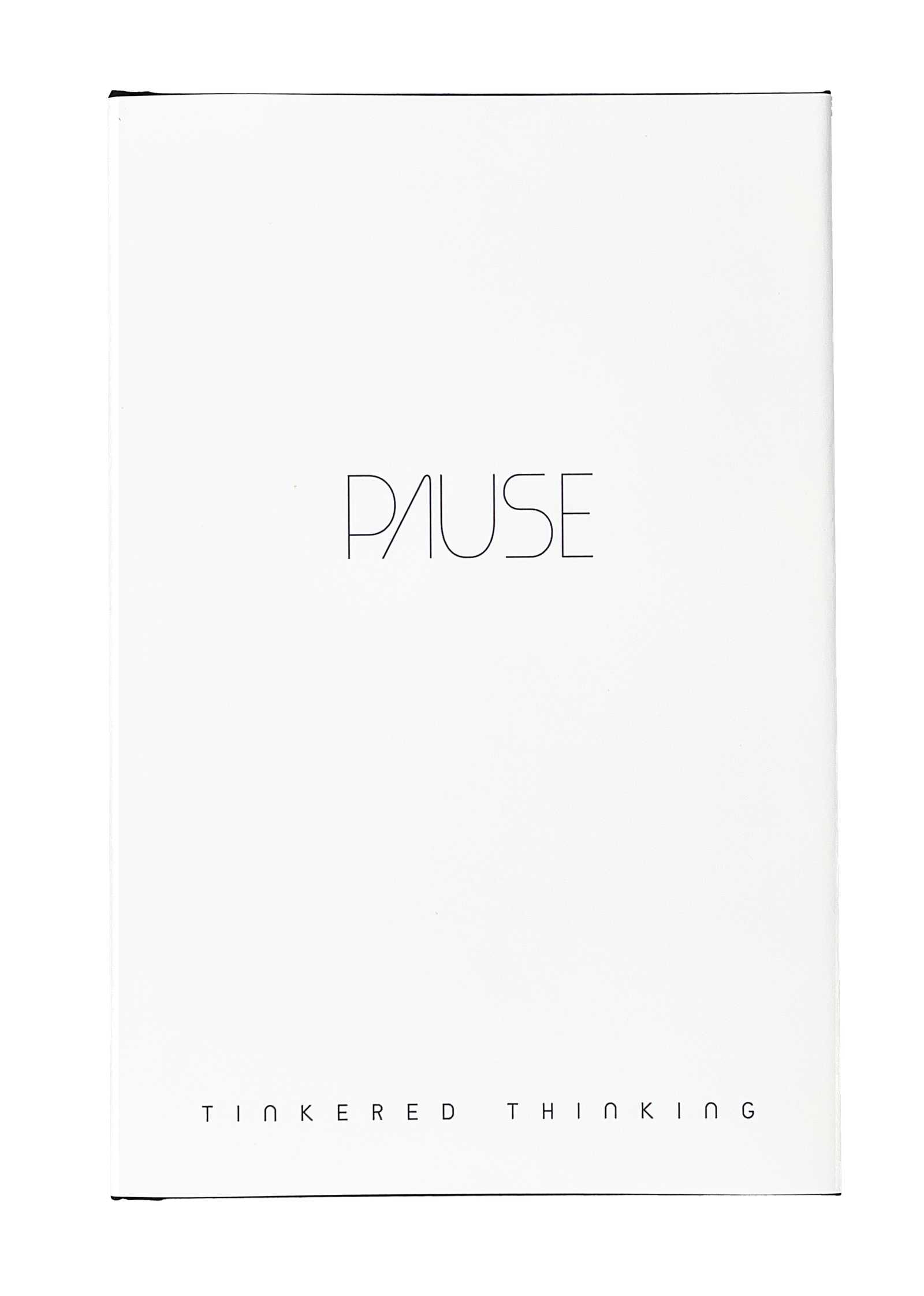
The first non-fiction book from Tinkered Thinking. PAUSE is a short book on meditation. Now available on the Tinkered Thinking Bookstore.
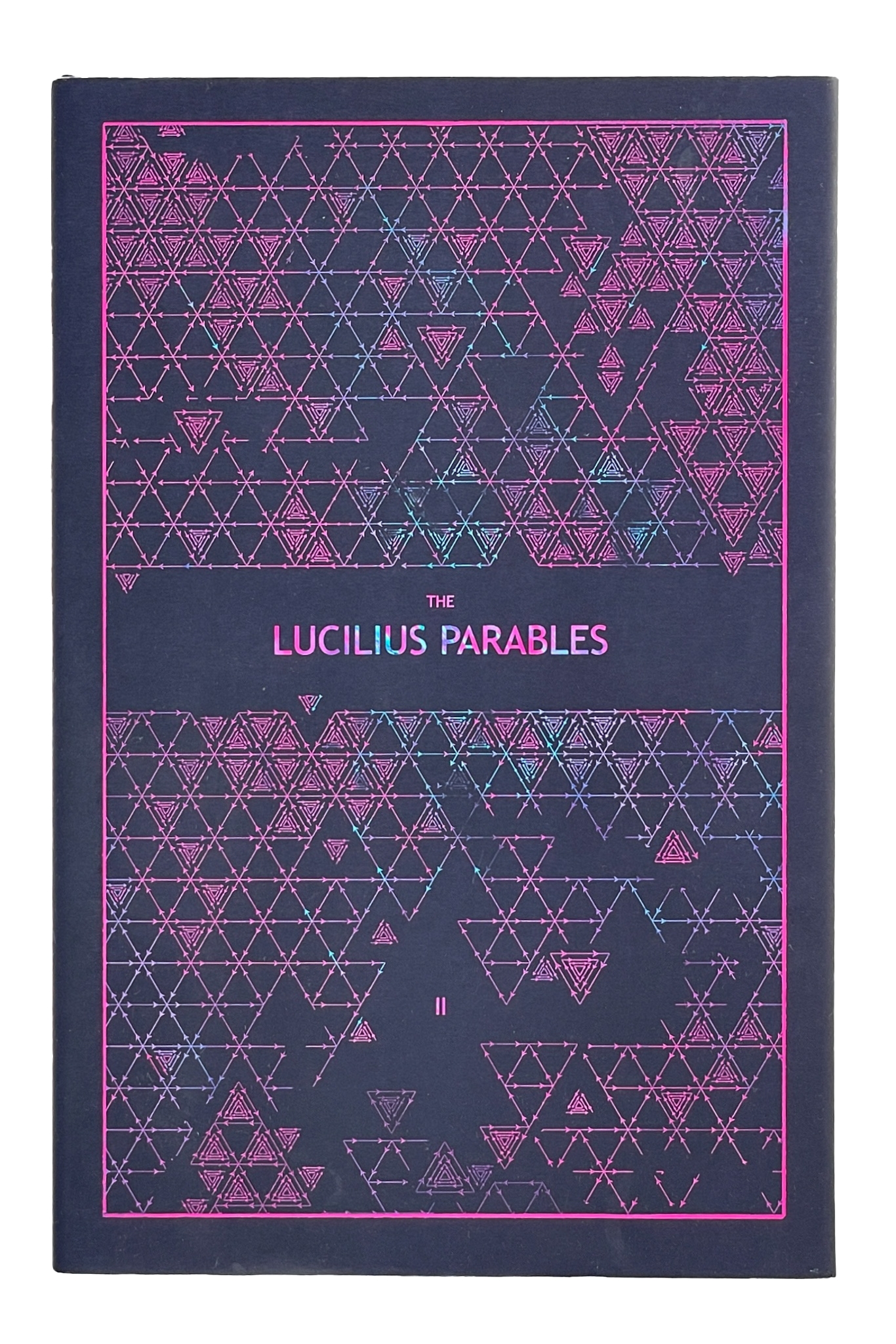
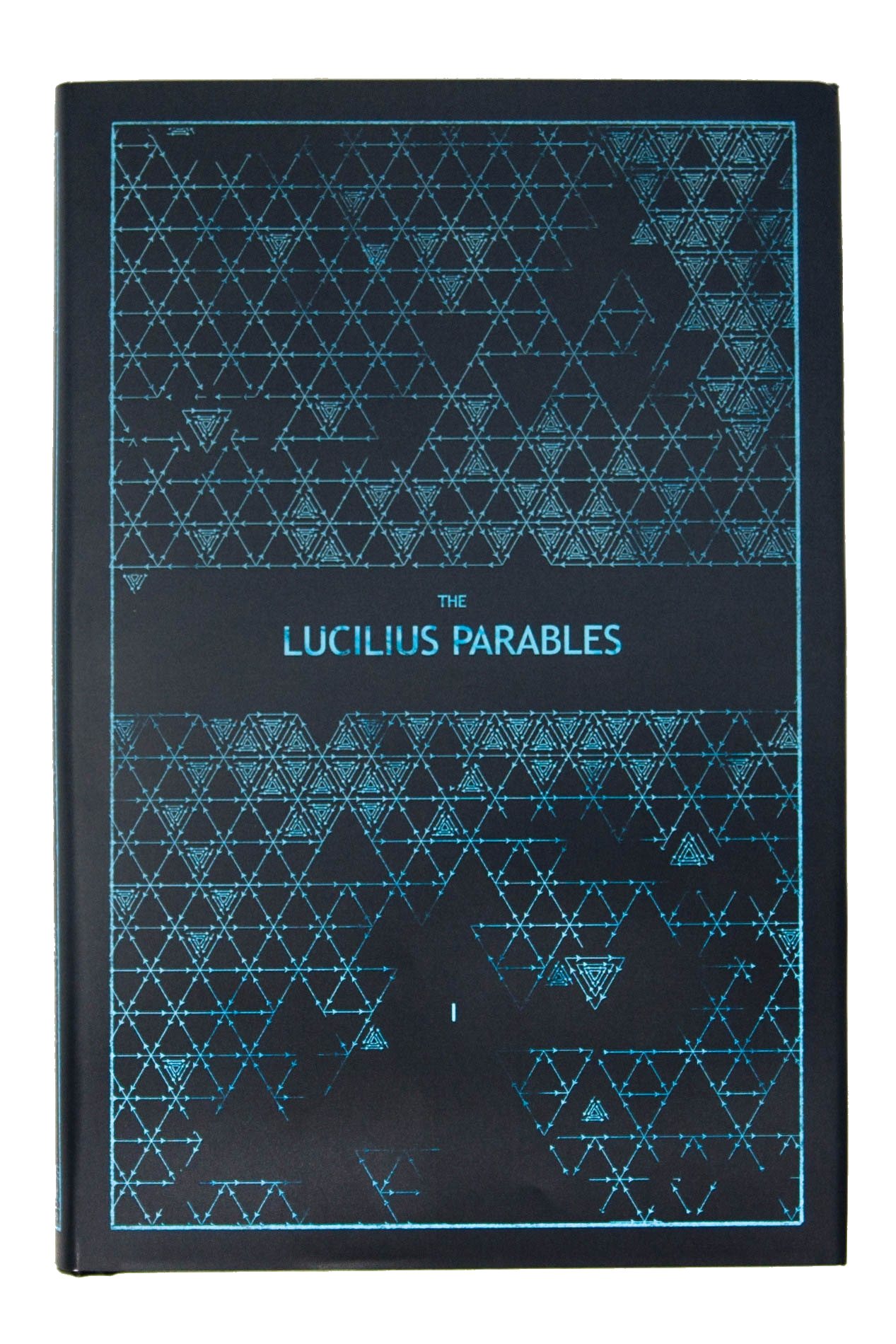
The SECOND illustrated book from Tinkered Thinking is now available!
SPIN CHESS
A Chess app from Tinkered Thinking featuring a variant of chess that bridges all skill levels!
REPAUSE
A meditation app is forthcoming. Stay Tuned.




AN OPEN LETTER TO A READER WHO STOPPED AT THE COPYRIGHT PAGE
September 4th, 2026
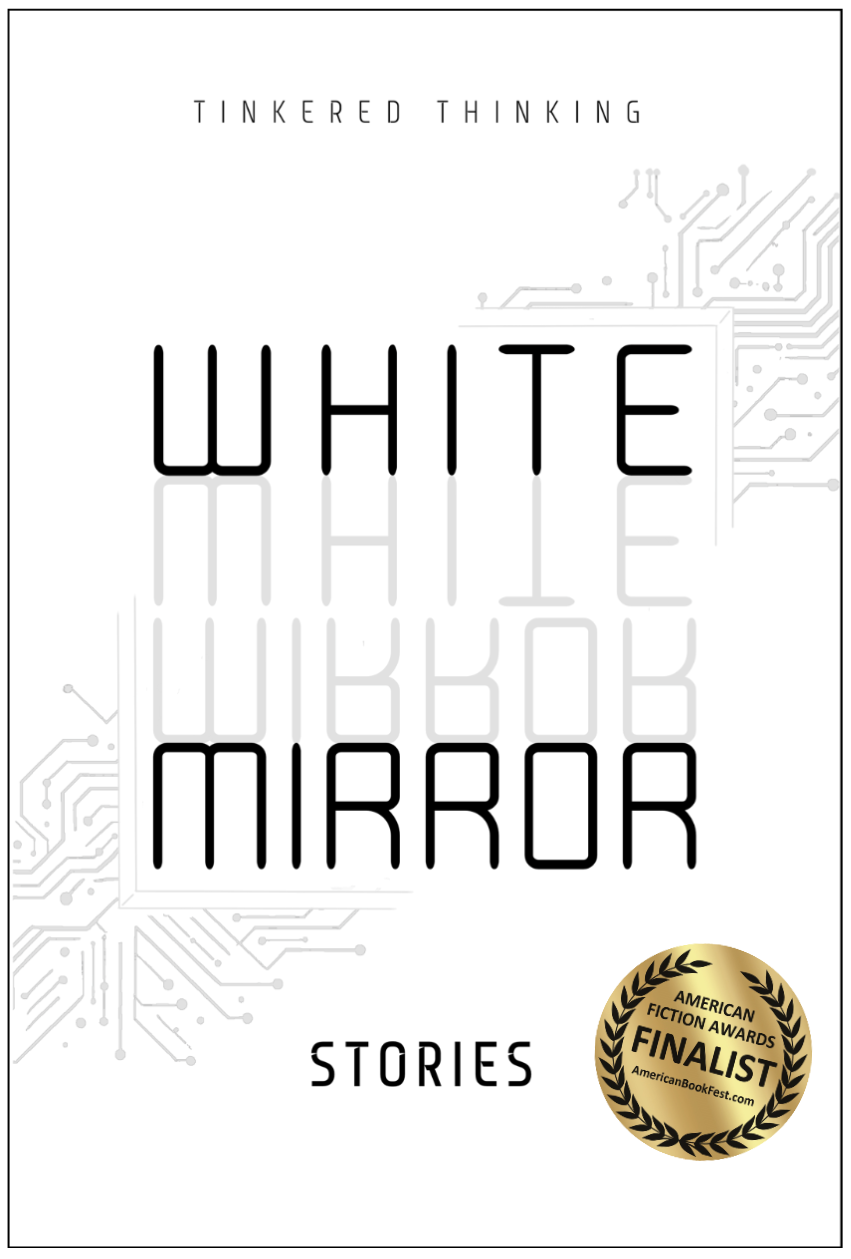
Hello! I am the author of White Mirror. It's a bummer you didn't finish the book, and perhaps an even bigger bummer to leave a review for a book that you didn't fully read. Given your scruples I can understand why you would write this. It seems like you are trying to warn others of some kind of dishonesty or hidden toxin.
Regardless, I think there's a few things you might find interesting. Believe it or not, I used to be an art teacher. I was classically trained in figure drawing, figure painting, plein air painting, draftsmanship and sculpture. My two teachers were enormously important to me and they had a profound impact on who I am as a person, artist and writer. After I went through my years of apprenticeship, they asked me to join the school as a teacher, which I was honored to do. I've since worked as a teacher in several capacities but that time teaching kids how to draw, to paint, to look at the world and express it through their new found skills... those memories are incredibly precious to me, and it continues to inform how I look at the world today.
I learned about Raphael, who was basically like the original Andy Warhol and built and ran the first printing operation with a deliberate distribution channel. But he wasn't criticized by his peers. (The idea that reproduction cheapens art was itself a much later invention) And I learned about the strangely accurate paintings of Vermeer, who almost certainly used some type of Camera Obscura to basically *trace* a projected image of his painting's subject. (There's a really good documentary about a delightfully unhinged guy who basically recreated the entire theorized process to make a Vermeer painting for himself, and the results were incredible. It's called Tim's Vermeer (2013), I highly recommend it!) And I realized that artists are tool-users. A paintbrush is a tool, a pen is a tool, a chunk of charcoal is a tool.
For my first two books (self-published on the Tinkered Thinking Bookstore) The Lucilius Parables Volume I and Volume II, I did all of the illustrations (about 80) myself by hand. I have the skills and my stories are short and I thought it would be a nice little bit of eye candy for the reader to start the stories with. I have enough stories to put out a third volume and a fourth. The bottleneck is the illustrations. They take a **long** time, hence why I haven't been able to get those volumes out, despite the fact that the stories have been written for a long time.
After my start as a visual artist and a teacher, my artistic sensibilities eventually landed on writing, and I eventually wrote a few hundred short stories. (All of which can be read on the blog Tinkered Thinking, along with about 1,000 essays on various topics. All of it is exclusively rough draft form, nothing is edited or cleaned up so beware of the all-too-human artifacts that come with such drafts) And to be sure, I used to be quite a luddite. Before I started Tinkered Thinking, I wrote fiction exclusively on an old typewriter (a Smith & Corona from 1932, which I lovingly repaired and maintained). Eventually I had a bit of a break with my nostalgic outlook on things. Gave up writing for a bit and started reading on topics that I'd formerly ignored. I eventually taught myself how to code (pre-AI) and started building products, which I discovered was just another type of artistic medium. As part of a coding exercise I built a blog, and I'd started writing again, so decided on a whim to populate the blog with my writing. I had no intention of actually starting a blog/podcast but it unfurled organically.
I started thinking a lot about technology in these little essays that I was posting. I didn't really care if anyone read it, I just liked the aesthetics of the little website I'd built (it felt like an art project) and unlike so many bloggers and *writers* I actually really enjoy playing around with words and ideas. I'm not precious about it. It's just fun to watch my thinking manifest right in front of my eyes. To see my thoughts. It's been an incredibly important practice for me. I realized that a computer keyboard isn't that different from a typewriter. (Though there are differences and in some ways I prefer the impracticality of a typewriter — forces you to commit, stay with what you've written. No erasing) And a typewriter isn't that much different from a pen or pencil, and a pen or pencil, or a stylus cut from reeds growing on the banks of the Tigris and Euphrates, used to press cuneiform shapes into clay tablets. They are all related tools, or technologies that grow from one another.
I started to see everything as tools. The bag that I carry my stuff in is a type of tools. And most of the stuff in the bag — it's just a collection of tools, be it an ipad for drawing, a laptop for coding and writing, or even something as humble as a piece of paper to take some notes on. Even words are tools. I think language itself is the most powerful tool that humans have. (whether we invented language is a totally different conversation which I've written about on my blog quite a few times.)
And then AI came along. One of the first interesting things was what Stable Diffusion released, which was an image generation model. Being a visual artist myself, I was curious, so I played around with it and had a lot of fun. I even took **my own art** and trained a custom fine-tuned model on my own artwork. I wanted to see if I could get it to create images in the same style that I like to create. I posted the results on twitter with pairs: one handdrawn by me, and one produced from the custom model I'd trained on my art. The results were impressive and not a single person was able to guess all of the pairs correctly. Again, I was having fun, which I think is a very important part of creativity and artistic expression.
I was lucky enough to get a book deal from Infinite Books based on the strength of my many short stories on my blog. I'd already written many 'white mirror' stories, so it felt very natural to simply continue in that very niche sub-genre of optimistic sci-fi. Infinite Books was an amazing publisher. Not only was I given an enormous amount of creative freedom, but I was paired with a tremendous editor, Dylan O'Sullivan who worked with me one-on-one for over a year to really dial in the language and the stories. The book is as good as it is in large part to his genius, and I am forever grateful.
When it came to the illustrations, I wanted to do something unique, something a bit different than what anyone had ever done before. Given the subject matter of the stories, I felt it was perfectly appropriate: I wanted to showcase a spectrum of different illustrations. From 100% human made to human and machine made to purely AI. I wanted that mix *on purpose*. Not out of laziness. Not because I didn't want to hire or pay an illustrator (because, uh, the illustrator would have been ME) but because I felt it would best honor the actual stories, which explore this tension and nuance that exists between humans and the tools we use.
For example, you used a computer or a phone to write your review. Even if those tools had not been available to you, and you'd travelled (likely with another set of tools, like a car, or a plane or a train or scooter, or hell, even just with the shoes on your feet!) to stand in front of me and personally utter the words of your review, those words would still be tools necessary to get your point across. My point is simply that you cannot function without all the tools that you've been lucky enough to have at your disposal.
I find this tribalistic fracture developing between people self-declaring as Anti-AI and Pro-AI quite sad, and honestly a bit boring. Groups of humans can't seem to learn any tricks more interesting than this tribalistic grouping. There were valuable evolutionary reasons for this to arise in our species, but the trick is beginning to give off a smell. But alas, I'm not here to say what should or shouldn't be. I'm more interested in what things *can* be, which is. . . why I wrote White Mirror. I was tired of the constant dystopian vein in . . . well basically all mediums be they artistic or entertainment. From the terminator movies to the black mirror series, it starts to get a bit dreary. I wanted to give the world something fresh, something that wasn't explicitly slap-you-in-the-face optimistic, but more orthogonal to both camps. I wanted to create some stories that would get readers to consider possibilities they hadn't even occurred to them before. I wanted readers to read just a couple pages that would make them pause and go "huh..." I wanted to invoke some curiosity, some wonder. Unfortunately, you were apparently unable to make it past the copyright page.
The funniest part of your review isn't the fact that you lampooned someone's hard work because you didn't actually read it, it's that you are completely wrong: AI had absolutely nothing to do with the words in the book. That was all me, and later it was the result of a collaborative editing process with Dylan. And this isn't because I don't think AI can help with writing, it's simply because I enjoy the process of working with words far far more than I enjoy the often tedious process of working on an illustration for hours and hours. (Don't get me wrong, I do enjoy picking up a paintbrush or a piece of charcoal and giving a blank page a run for its money, but when it's compared with writing, I have a much much higher stamina for writing, simply because I enjoy it more.) But, even if we put all that aside, there's one final fact that you were unable to suss out. As impressive as the AI models are these days, their abilities don't even come close to what I put in that book.