-compressed.jpg)


Daily, snackable writings to spur changes in thinking.
Building a blueprint for a better brain by tinkering with the code.
subscribe
rss Feeds
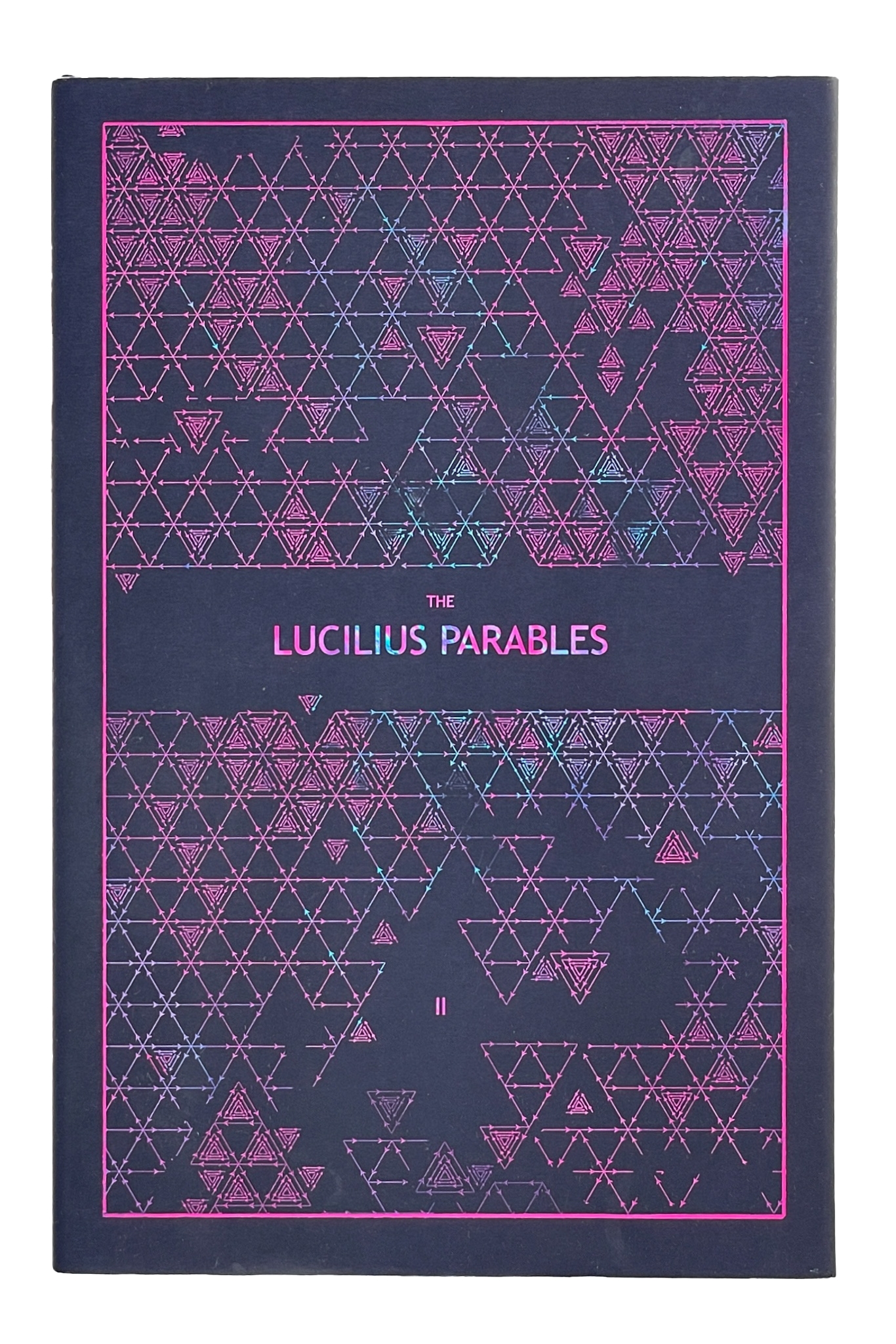
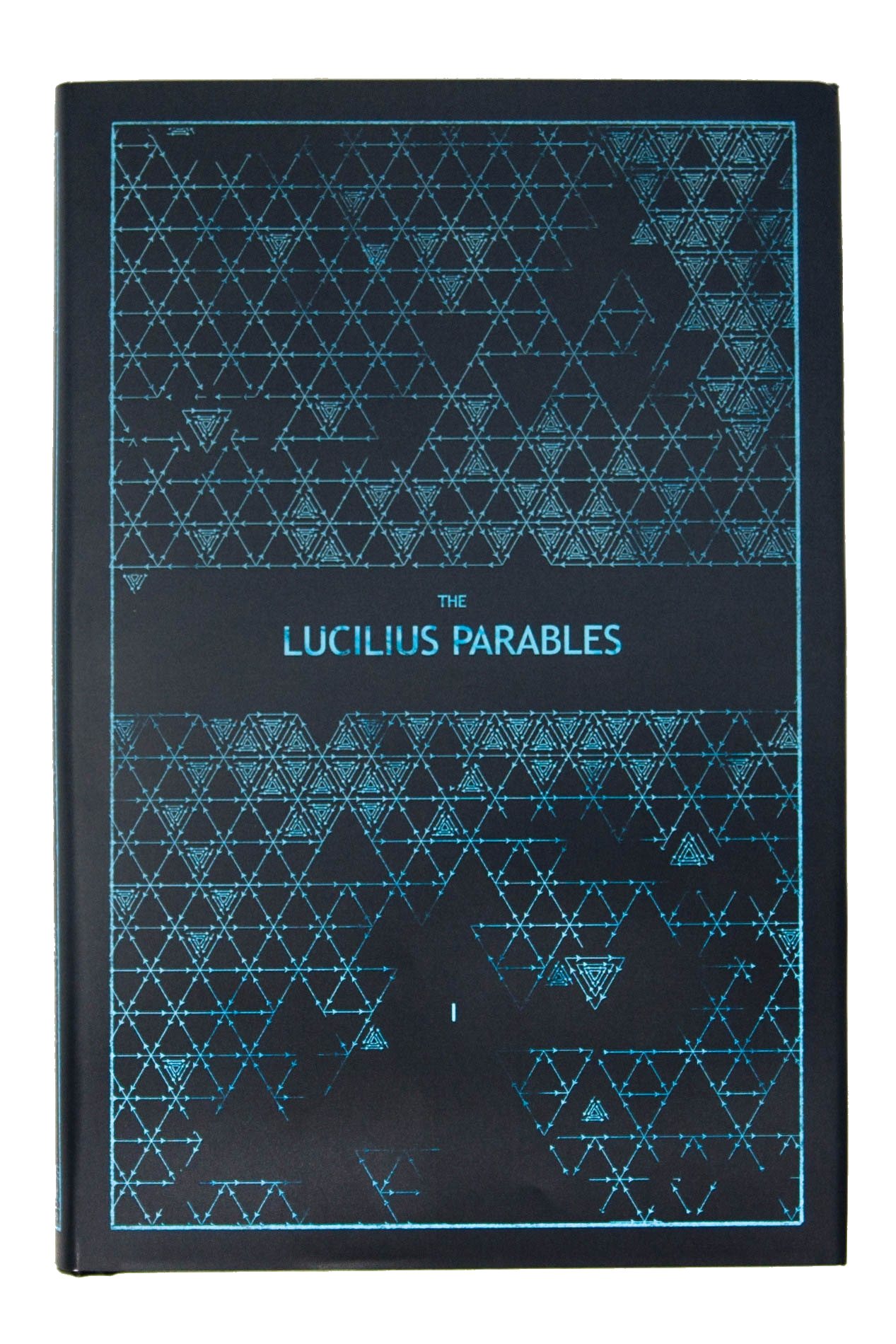
The SECOND illustrated book from Tinkered Thinking is now available!

SPIN CHESS
A Chess app from Tinkered Thinking featuring a variant of chess that bridges all skill levels!

REPAUSE
A meditation app is forthcoming. Stay Tuned.




EXHAUSTIVE ITERATION
June 9th, 2020
Learning in the absence of fun, passion and proficiency always boils down to an endurance test against frustration and emotional exhaustion.
When we are proficient at a skill, it’s much easier to have fun, and with enough time, the fun of practice turns proficiency into mastery and mastery turns a skill into a passion.
But in the beginning, before proficiency and fun, we are left with a brute force approach. Trying whatever combinations and iterations we can imagine and plugging those ideas into reality and waiting for something to light up. As each attempt fails to provoke even the sputter of a spark, the silent feedback from reality grinds on our emotions. Each impotent attempt adds to a building frustration, and exhaustion. All the while, we are inching closer to an answer, to a spark when we find a spot where reality is ticklish.
Our success depends on which threshold is breached first.
Does out exhaustion spill over into a complete abandonment of the task?
Or does the number of iterative attempts needed to find some hint of success run out first?
True failure is determined only by the moment when we stop trying. It’s a bit like patience in that regard.
Staving off exhaustion and increasing endurance is a skill that can be built. Similar to exercise. The first job after years without exercise is going to be painful, but 6 months of daily running is going to make the event far easier to endure – indeed by that point, we’re far beyond frustrationg and exhaustion, proficiency is giving way to enjoyment. But that first run will most likely leave an individual huffing and puffing with their hands on their knees after just a few minutes.
We hear this all the time: just keep going, you’ll figure it out. And while it may be good advice, it focuses on the wrong thing: it’s still referencing something imaginary that we haven’t yet encountered, and it says nothing about that which we are dealing with: namely the emotional experience, the frustration, the exhaustion, the hopelessness that fruitless actions imbue us with.
Perhaps, instead of trying to keep the eye on the prize, that is, an invisible prize, perhaps the experience is an opportunity to renegotiate our own personal response to such situations. Instead of powering through the exhaustion and frustration and trying to ignore it all the while, perhaps we can examine the exhaustion and frustration itself. What if we pause and simply recognize: there are emotions here that are ballooning and gaining strength over me. Merely recognizing an emotion consciously, with thoughtfulness, is often enough to deflate our intoxication with it.
Realize how much more powerful this strategy could be. It would be like going for that first run and managing lactic acid and shortness of breath with the power of mere thought alone. If we can regulate the emotions of frustration and exhaustion, then our minds are free to tinker with a topic for as long as we can stay awake.
The solution is always out there, it’s rarely a question smarts or talent, such things are often just excuses people use when really the issue is people’s own emotions, and how these emotions get in their way. It’s how we get in our own way. We need not fight ourselves in order to move forward. Better to let that frustrated, exhausted part have it’s say, with full attention, and then move forward as one.
INDEPENDENCE & HOMOGENEITY
June 8th, 2020
Envision a typical group of friends, the archetypal group of friends. What are they like? As individuals, how do they decide if they are going to do something or not?
Within any group, there is a tendency toward homogeneity. There is a quality of ‘sameness’ that everyone gravitates towards in order to take part in the experience of belonging to a group. Much of this is just efficiency. It’s easier to abide by the methods that a whole bunch of other people have figured out. If it works for so many others, than surely it must work for me, or so goes the thinking. Regardless of how well a method or a system adopted by the group works, it’s often easier to just go along with it as opposed to starting with a blank slate and attempting to reinvent a better wheel.
When an individual has an idea about something they’d like to do, the first thing such a person usually does is to bounce the idea off the rest of the group. Everyone chimes in with their opinion, and all together the effect of this has more to do with how the idea effects the group rather than how it might fare for the individual. Groups become convinced of their own wisdom by virtue of the fact that there’s agreement or consensus about something. If everyone thinks it’s a bad idea, than it’s probably a bad idea. But again, this is a reflection of the group as it’s own unit, and how it might be affected by the idea of the individual. It’s possible that any idea that is overly beneficial for the individual threatens the cohesiveness of the group. The group as a unit includes that individual, and if that individual has a good idea that might somehow takes them away from the group, the group can have a negative reaction to that idea, though it is often presented in a different guise, one tailored to convince the individual.
From an individual standpoint, this is where solitude can be used as a powerful tool. Divorced from the proximity of other perspectives and their opinions, one is forced to consider deeply their own ideas.
In solitude one has to interrogate their own ideas for value, to interrogate their own self for a desire to pursue that idea, to test how flimsy or strong that desire is, and to match it against values to determine how important the idea is regardless of desire.
The opinion of others can often be a poison and a pollution due to the latent forces that produce it. Certainly a mindful and compassionate person might be able to give honest and helpful feedback, but your average individual is not so pure of mind and intention.
Many and most are riddled with faults, weaknesses and insecurities that thwart and warp their genuine intentions to be helpful. Groups most certainly fall victim to the very same mechanics.
Though this pollution of feedback does not necessarily mean it cannot be useful. But if we have not properly vetted our ideas in solitude with the range of optics we can bring to it alone, then our own stance on the subject does not have proper footing. A lack of introspection leaves us vulnerable to be easily influenced by others: our good idea can be dismissed cringingly by someone who reacts quickly, or our bad idea can be superficially propped up by an enthusiastic friend. In each circumstance, there is no thorough vetting, only a search for someone else to do the thoughtful work.
Independent thought requires first and foremost, independence from others.
A LUCILIUS PARABLE: STREAMING
June 7th, 2020
for Sharon, who wanted a story with a stream in it.
Lucilius was sitting on a rock poised in the middle of a stream. He’d traversed a haphazard path of smaller rocks that jutted out in the water, leading from the short sandy bank, gnarled with curling tree roots. Lucilius adjusted himself, finding that the rock was most comfortable looking upstream. He rested, taking in the place. Threads of water, weaving in living patterns upon the surface gently flowed toward him. It was as though he were moving forward, propelled through the water, and during moments of delightful illusion, he couldn’t tell if it were the water moving or himself. It was as good as any place to sit in meditation. He closed his eyes, and in darkness, the sound of the water dabbling along the land’s ragged edge drifted to him, then the softer splicket of water folding in upon itself, and then finally below it, the low resonance of so much moving across the earth.
Upon that rock, Lucilius spread his mind out against the world to let it dissolve against his experience. Thoughts materialized in that otherworldly film, as though laid against experience, but he merely watched them without eyes, as though they were sounds drifting up from the water, arriving, and flowing across his mind, and moving on. One such thought was the realization that all thoughts, sensations, realizations themselves were arriving to push and carve the mind. Lucilius opened his eyes to look again at the water moving around him. Everywhere, the water was carving it’s own bed, shaping the way it would carve again in the next moment. Rocks rounded, and sediment stirred in gentle tumult, moving like thought through a stream of water and time.
Lucilius closed his eyes again, smiling at that perpetual want of the mind, to grasp, to hang on to each and every little thing - that touch of the mind instantly casting pieces of life into things of the past, cast back, looking back, fossilizing the moment in memory, already crumbling. He breathed deeply and let go of all attempt to grasp at it, and sunk deeply into the present.
Time then smiled upon Lucilius, bowing deeply to the handsome trick, and then it left Lucilius to be in peace. The water of the small stream continued to make it’s bed, carving and burrowing the shape of it’s movement into the earth, the earth itself just a slower stream of movement.
Days past without touching Lucilius. Months carved away with their passing until they became years, and the years, gently moving the tumult of days slowly rounded the decades and centuries, until eons were born.
When Lucilius opened his eyes again, he found that the small stream had left for him his island of rock, and had carved deeply and widely around it. Lucilius now sat upon a stone tower in the middle of a canyon. He could see far below the stream that had become a river stretch off to the horizon from where it came.
He could no longer hear the movement of the water, now seeing only its grand shape. And it in, he sensed something. He followed the vision of the dark water, looking down off the edge of the tower, and then slowly he turned to look behind himself.
He witnessed in a curious and terrible awe as the river extended past, and there behind him it continued to change, lifting, as though separating from the page of reality, the water transforming, snapping to new shapes, like letters or magnets suddenly pulled with immense force into new positions, immortalizing them. The water, and the stream itself became words and data, bifurcating out of the only existence Lucilius could know. And from there it continued to stream, forming itself in a perfect memory before moving on to pages and into eyes, and into speakers, and into ears where it then continues to stream in the minds that contemplate these words.
LOOKING FOR LUCK
June 6th, 2020
Have you run out of luck? Or have you just stopped looking for it?
What is luck? Or rather, what exactly is a lucky occurrence? Some boon or benefit has come our way. Perhaps we’ve won some money, or there is a parking space exactly where we need one, or the boss is later to work than we are.
In each of these, and indeed in most lucky circumstances, the luck hinges on some sort of resource that has suddenly opened up to us. The money we’ve won can be used to buy that thing we’ve always wanted, that parking space is a resource in terms of the time it saves us in order to look for another spot.
Luck, has less to do with some perfect alignment of factors than it has to do with resourcefulness. When the chance resource at hand is obvious, we call it lucky, and when we can’t see anything at hand that can fulfill our need, we call ourselves unlucky.
On top of this, there is a culture of feeling lucky or unlucky, and regarding one’s self as such.
Are you a lucky person?
What makes this the case?
There seems to be this eerie occurrence of people becoming lucky when they start to believe they are lucky. Is this some sort of divine alignment? It’s certainly easy and perhaps even tempting to think so, but there is a far simpler, pragmatic and easy solution to this little quandary.
People who regard themselves as lucky are more resourceful because they start looking at everything as a potential resource - a potential avenue where luck is looking to pour into life. This simple shift in perspective raises a person’s agency because they automatically have more tools at hand in terms of potential resources than the person who is already convinced that the resources aren’t at hand.
Would you look for something if you were certain it wasn’t there? Of course not. And this is exactly how the unlucky person regards their circumstances.
The lucky person simply abandons such certainty and thinks: well maybe there’s something here to work with. And that’s all it takes: to simply look around at one’s circumstances in terms of what it has on offer to be utilized, transformed, tinkered with and combined into a way forward.
What’s lucky isn’t the circumstance at hand. It’s quite literally the perspective that is lucky, and the circumstance simply looks different when we use this perspective.
BIRTH OF BELIEF
June 5th, 2020
This episode is dedicated To Sam McRoberts who contributed to these thoughts in conversation. Sam is a bestselling author of Screw The Zoo and expert in SEO. You can connect with Sam on Twitter @Sams_Antics
Do facts require belief? Do we believe in facts because they are true, or are facts beyond the need for belief by virtue of the fact that they are undeniable, confirmed aspects of reality?
Is it possible for someone to admit something is a fact but also claim that they don’t believe in it? Or is this a contradiction?
The connection between fact and belief is not straight forward. The space between these two words and the way these concepts interact is contradictory and problematic.
The untested assumption ossifies into belief.
When the process of approximating towards a more accurate, more nuanced answer ceases, the assumption becomes stagnant in the mind. But if we still operate on that faulty assumption, that is, if our actions are still taken in accordance to an untested assumption, then does it remain an assumption? Or does that unproven premise harden in some way?
An assumption is defined, after all, as: a thing that is accepted as true without proof.
So what do we call an assumption that is taken very seriously? A listed synonym for the word assumption is belief.
And this is a fair definition of what a belief is: a thing accepted as true without proof. That thing of course, is a bit more cherished than any plain old assumptions. No one ever talks about their cherished assumptions. But cherished beliefs are the pride and joy of many pontificating people.
An untested assumption ossifies into belief when our emotional attachment to that assumption is strong enough to override any challenge of evidence to prove that assumption wrong.
This is a dangerous process, one that deliberately abandons verifiable truth due to feelings. Why this can become so dangerous is because reality does not operate within the preferences of our beliefs. The forces that be coldly play out, and if our feelings and by extension, our beliefs are at odds with the way things play out, we can be left in extremely disadvantageous positions. To ignore reality is to make an enemy of it, one that will not return boon nor benefit without the sacrifice of the beliefs which fuel such disregard.
To understand better reality, we are best served by a process that we fear the most: a process that treats our cherished beliefs with impartial, and even brutal challenge. It raises the question: why hold on to something at such a cost? Is it for the actual assumption, or does it have more to do with the feeling we associate with the belief? If the emotional resonance of the belief were suddenly removed, if one were suddenly able to examine the points of their beliefs without a single shred of positive feeling, nor negative feeling, would such beliefs still be convincing?
No one feels anything particularly negative nor positive about gravity, and yet reality plays a very convincing hand to ensure we all believe in gravity, despite our inability to thoroughly explain it.
Many of us expect this to operate in reverse. We expect beliefs that lack evidence to bend and shape reality. The disadvantageous position often arises when reality has taken a shape so different from the one imagined by our beliefs that the consequences are physically impossible to ignore. We do ourselves a great service by engaging in the painful process of examining our beliefs ruthlessly, fine-tuning them, or abandoning them for better assumptions, a process that slowly brings us closer to the way things really are.