-compressed.jpg)


Daily, snackable writings to spur changes in thinking.
Building a blueprint for a better brain by tinkering with the code.
subscribe
rss Feeds
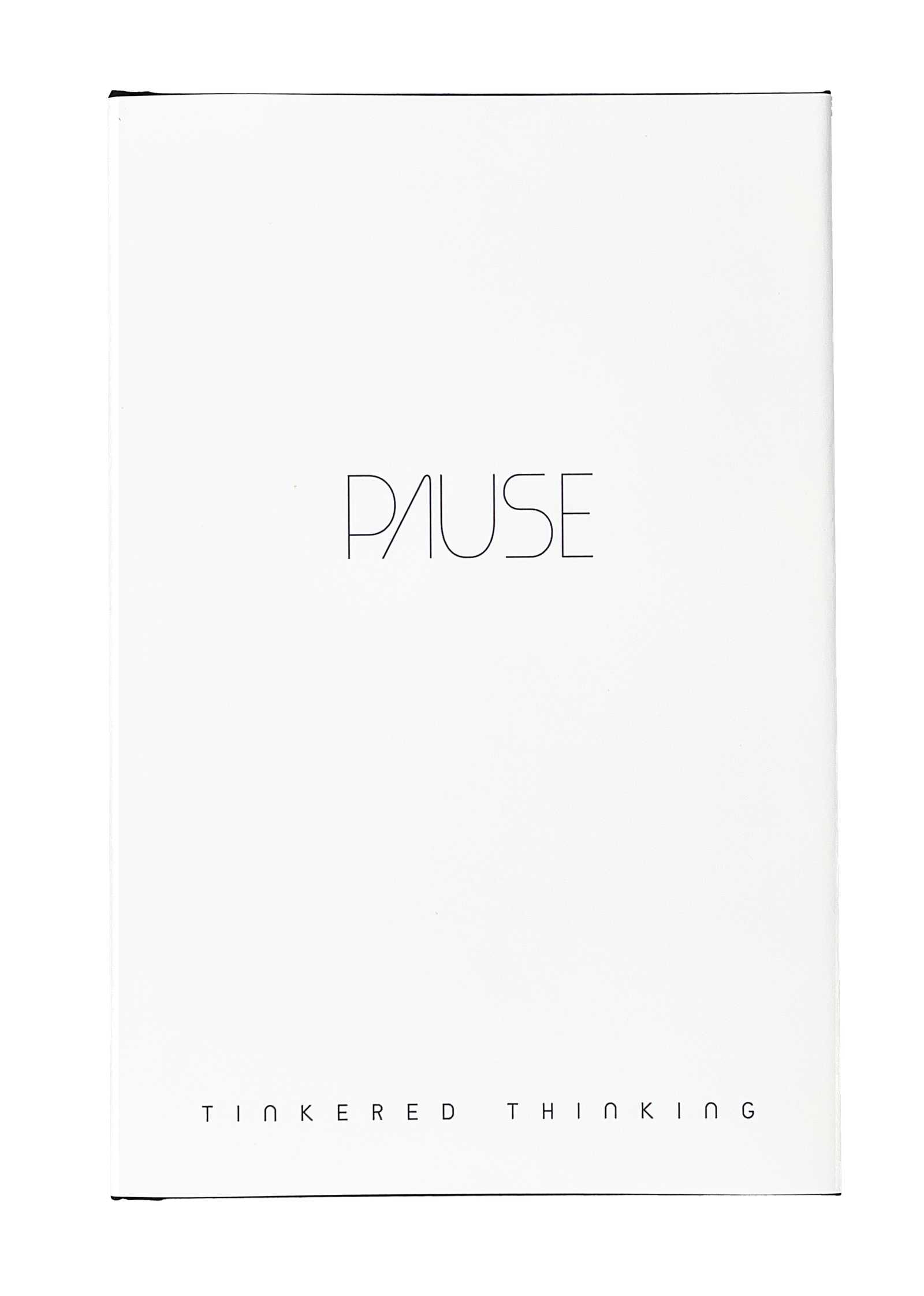
The first non-fiction book from Tinkered Thinking. PAUSE is a short book on meditation. Now available on the Tinkered Thinking Bookstore.
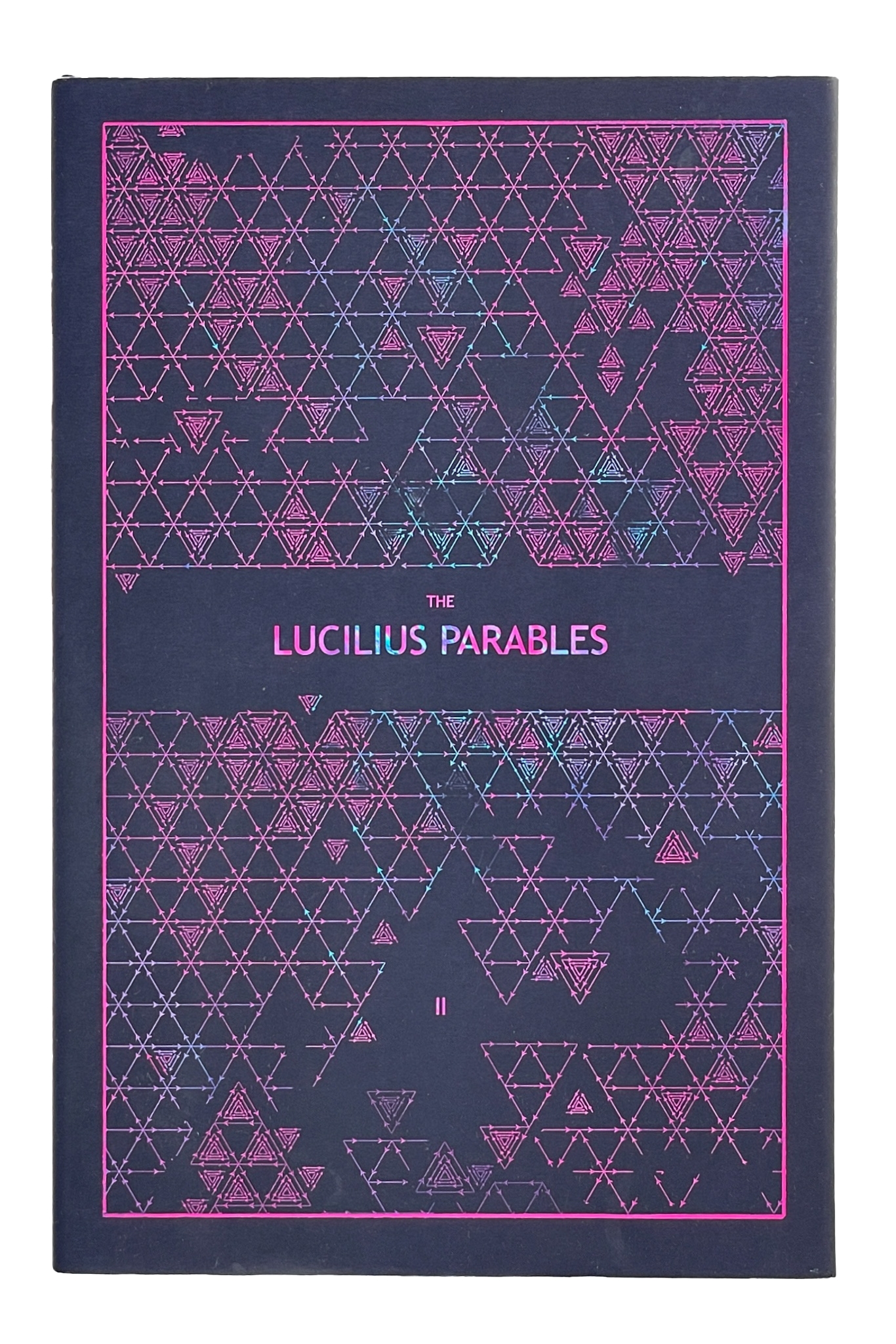
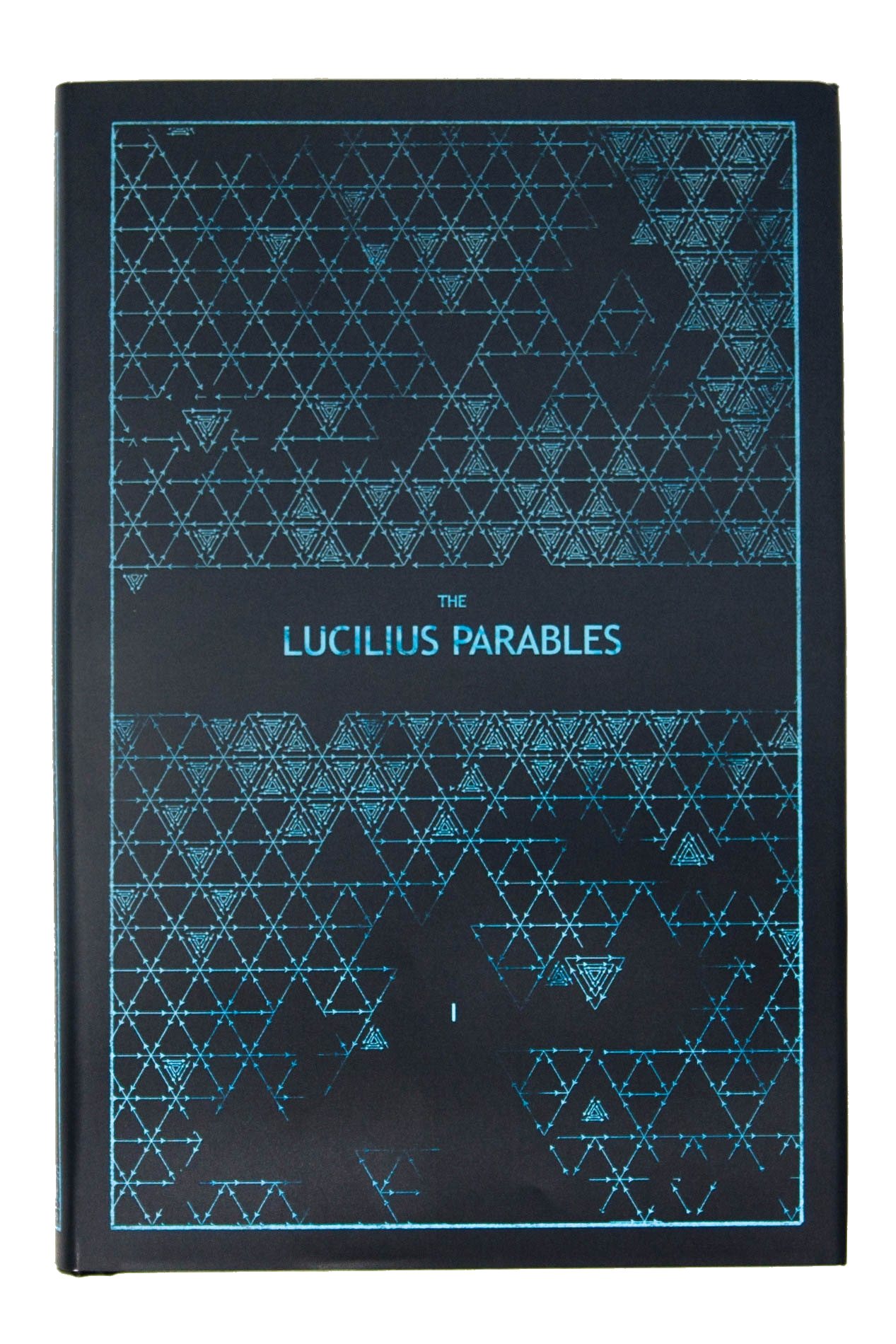
The SECOND illustrated book from Tinkered Thinking is now available!

SPIN CHESS
A Chess app from Tinkered Thinking featuring a variant of chess that bridges all skill levels!

REPAUSE
A meditation app is forthcoming. Stay Tuned.




PEDANT
August 30th, 2018
A pedantic person pays an annoying amount of attention to details that may or may not be significant in the long-term.
Such a person may defend this aim with the noble desire for precision and accuracy. And certainly precision and accuracy have a time and a place where obsessive focus can be a good thing: with, say, the design and build of a rocket ship, or with brain surgery.
Strangely, we rarely hear about a rocket engineer or a surgeon being pedantic about their job.
The word is used in areas where attention to detail may have a self-defeating effect,
in conversation for example.
We must ask what is the point of conversation?
Is it a nit-picking battle to prove superiority? Does such an aim ever result in a net-positive? Or does it merely create more enemies?
If we can be more generous with our aim of conversation: we might say that the point is for both parties to advance themselves via interaction with the other. This is a non-zero sum game, and a much better game compared to the petty king-of-the-hill arguments that so often take place.
Certainly we should strive to be precise with our language and accurately represent our ideas, so we must ask, when does such precision and accuracy lapse into pedantry?
An honest examination of language cannot exist without the admission that it constantly changes. Words organically shift in their meanings, often slowly, and sometimes quickly.
Pedantry comes from a fear of these shifts and changes.
Such shifts and changes force a constant degree of uncertainty into our language, and it is this uncertainty that people can easily grow to fear.
The pedantic person seeks to arm themselves against this uncertainty with an intense attachment to the particular meanings. Another way of saying this is that the pedantic person seeks to arm themselves against uncertainty with an intense attachment to a particular way of thinking.
While the pedant seeks to have an accurate and precise understanding of reality, the error the pedant makes is thinking a certain snapshot of language and the concepts we abide by is somehow the ultimate reality, when really most of these concepts are merely pieces of the human imagination, built on a shifting, restless language that often defies the attempts to categorize things in some kind of ultimate way.
A pedant thinks of language like a mathematical formula that is solved in the same way over and over, when really most of the concepts we use to communicate and the language we use to communicate such concepts operate like a painting that we are constantly repainting on top of itself. Though the resemblance might always hold to some degree and shift slower than we can notice, we would be a fool to think we have the exact same painting.
Pedantic statements are borne from a fear, and an unwillingness to engage with the changing nature of our very human reality.
The pedantic person is someone who’s thinking is structurally stuck in a RUT, which makes such a person little better than a one-track mind.
CEO OF SELF
August 29th, 2018
Most people have had the frustrating experience of getting orders from a boss that clearly show the boss has no idea what is going on.
Do we speak up? Probably not. And when we do, do those suggestions and protests land on deaf ears? Maybe.
We can imagine an entire corporation with a board of directors who all have different opinions and a CEO who only has the faintest idea of the situation on the ground floor of operations. We all know the frustration of the little guy who sees a better way things could work, but who’s hands are tied by the powers that be.
Imagine if a pancreas could talk to the conscious part of a person who is utterly addicted to sugar.
What would such an over-worked pancreas say?
It would probably sound like an over-worked postal worker who is ready to snap. What happens when a person is so sick of being over-worked at their job? Usually they quit.
Should we really be all that surprised when the pancreas quits it’s job after years of producing huge amounts of insulin to deal with all the sugar in the diet?
If the body is a corporation, then our thinking, conscious self would most readily be likened to the CEO. And all those little guys that don’t have a say in the direction of the corporation but have to do all the grunt work might be likened to all the parts of our body.
For many people, a heart attack can be a wake up call, in much the same way a CEO can realize that some changes need to be made when an entire division of the corporation goes on strike.
Perhaps the division on strike feels under paid, knowing the CEO is taking home an enormously unfair paycheck. The bodily equivalent of this might be that pancreas who goes on strike knowing the CEO is just eating donut after donut for that short term gain of momentary pleasure.
Just as we should cultivate empathy for the CONDUCTOR, we would benefit as the CEO’s of our selves if we could have empathy for all the little parts of our body that allow us to live.
Next time we want a donut, or a giant bowl of pasta, or ice-cream, we might opt for a jog and a salad because we are thinking of the little guy. Those small, integral parts of our body that have to do all the difficult, dirty grunt work and deal with our decisions as people.
Chances are solid that if we can develop such empathy for our bodies, we will be rewarded in the long-term with a better state of mind and a more robust sense of contentment that will eclipse any and every limp moment of pleasure we get from something as empty as a donut.
This episode references Episode 135: The Conductor’s Orchestra. If you’d like to fully explore the reference, please check out that episode next.
THE CONDUCTOR'S ORCHESTRA
August 28th, 2018
Is the conductor of an orchestra a musician? Certainly we must say yes because he’s integral to the music making process, but if we were to ask what musical instrument a conductor plays, what would our answer be?
Does a conductor play the entire orchestra as an instrument?
The conductor indicates the pace for every instrument and will provide special instructions to parts of the orchestra and even individuals.
The conductor is looking for an overall sound and effect, just as one particular musician in the orchestra looks for an overall effect from their own given instrument. And each does their job to elicit a particular effect that will bring about a particular emotional reaction in the audience.
This whole process happens in much the same way that we as individual people experience emotions.
For a moment, try to identify the location of emotions.
Are emotions experienced in the brain? As in, do we feel them inside of our head?
No, not really. Perhaps the only thing that comes close to a sensory experience of our own brain is a headache, and even that is not fully accurate to claim.
Emotions are felt in the body.
The experience of fear, for example, might be located in the gut as a kind of sinking feeling, or a prickling on the surface of the skin, or a tremor running up the spine.
Anxiety probably hovers somewhere in the chest area.
Feelings of love and affection might be experienced in a whole variety of places.
We may be prone to thinking of the brain and the body as relatively separate entities. Often we can look at our body and not even feel that it represents who we are or who we would like to be.
But if we pause for a moment on this interplay of body and brain, where the brain sends signals into the body to create the sensations that we associate with different emotions, we may find a much greater appreciation for the body.
What exactly is the brain doing by pinging the body with these physical sensations that we identify as emotions?
We may think of the body as a sort of instrument that gives us information about the outside world: the eyes provide a detailed sensation of light in order for us to know what’s around us, the skin allows us to pick up on a slight breeze and a stomach ache might signal that we shouldn’t eat that sort of food again.
But emotions constitute a way for the brain to talk to itself.
The brain uses the body to talk to itself. It pings parts of the body with sensations to clue the conscious mind into things it needs to address, like when we feel fear and it prompts us to look around and carefully assess our situation. Or when we feel anxiety. . .
We might go so far as to say that the body is a medium through which the subconscious talks to our conscious selves.
We might remember saying something like: “I didn’t realize how hungry I was!” after taking a break from intensive concentration on some project.
And as Gavin De Becker details in his book “The Gift of Fear” we can put ourselves at great risk by not listening to our physical sensations of fear. In this sort of instance, the brain is picking up on clues in the environment that are indicating danger in a way that our conscious mind might not recognize. And so the brain floods the body with sensations of fear as a way to grab the attention of our conscious self and direct it a meaningful way that will help us survive.
Who is the conductor playing the body of emotions we experience? The answer is actually irrelevant in order for this realization to be useful.
Experiments done with split brain patients, where the Corpus Callosum has been severed resulting in a person who’s two brain hemispheres can no longer talk to each other make it seem as though there is more than one person inside of each or our brains. Some researchers and thinkers even like to think of the brain as a committee of entities, like the executive board of a corporation, each member having some kind of say in what the overall person does.
Regardless of what is actually going on in the brain, it is clear that we receive advice and motivational pushes in the form of emotions from a part of the brain that we do not really have much direct access to.
This leads to a very important consideration: How might the health of our body contribute or impinge the ability of our brain to give our conscious selves productive insights via these emotions?
If that unknown conductor in the brain is trying to evoke an excellent performance of emotions, what happens if some orchestra members are missing due to malnutrition?
Something as simple as too much coffee can bring about needless feelings of anxiety and even panic. What else might be screwing up the conductor’s attempts to communicate with our conscious selves effectively?
Poor diet and lack of exercise are the most obvious candidates here.
We might think of the conductor’s frustration while trying to conduct with a patchy orchestra through a screen while construction is being done in the hall.
We might even go so far as to wonder if the conductor would get so frustrated with the situation that we might lapse into depression.
What if the conductor only has those low, somber notes to play?
Should it be any surprise that we wake up in the morning with no motivation, no hope and a growing sense of despair?
If that’s all the conductor can give us, then we might recognize it as our job to give the conductor something more to work with.
Our conscious self is the most powerful opportunity to direct our brain, body and circumstance towards something better.
It might be helpful to even draw a little separation between our conscious, thinking self, and the feelings we have.
If depressed, we might think: ok, my brain is trying to tell me something. What is it trying to tell me? Probably that things need to change, because what’s going on right now, sucks.
If we associate too strongly with those feelings, however, we can get trapped in a vicious cycle where depression and lack of motivation result in behaviors that increase feelings of depression and a lack of motivation.
However, if we can disassociate from those feelings, take them a little less personally, and maybe look at such feelings as information, or advice, or even just a status report of what other parts of the brain think about what’s going on in life, then we can act upon our interpretation of our feelings in more productive ways.
Body health IS brain health.
The first step to a better state of mind most often involves getting the body to a better state of health.
Going for a jog when we don’t feel like it may be akin to adding a whole upper register to the sort of music the orchestra can play, unlocking sopranos and violins for the conductor to add to the whole ensemble.
Eating a healthier diet might be akin to feeding a tired, depressed orchestra that requires more micro nutrients – an orchestra that never plays well on donuts and pasta.
These sort of conscious changes turn the vicious cycle upside-down. Slowly, the conductor starts pulling out other pieces to play. With a more powerful, healthier, robust orchestra, it can handle the difficult melodies of drive, contentment, and appreciation.
It’s clear we cannot choose our emotions as readily as we can choose our outfit for the day. Choosing emotions is more like choosing the sort of shape we’d like our body to be. It does not happen overnight, but with consistent thoughtful action, we can slowly change the body. Is it any surprise that people who push themselves through drastic body transformations in the direction of health feel a lot better?
Perhaps such feelings are the rejoicings of a conductor who finally has the fine-tuned orchestra that can handle such songs of happiness.
VERSION
August 27th, 2018
“The world does not care about your version of it.”
This is a brutal truth.
But the brutality is in the wording. The brutality is in the emotion that such phrasing conveys.
The meaning –or the so-called ‘truth’ in such a statement is not necessarily brutal.
Many short-circuit their own wish to help others with poor wording such as this. Wording that conveys an emotional hardness. This often does not work. Just as such monotonous advice as “stop smoking” never ever works.
If there is a brutal truth it is this: such poor wording only takes a toll on the relationships we are trying to contribute to.
The antidote is the thoughtful PAUSE.
No, we cannot change observable aspects of the world merely by thinking. But the world does react to our actions upon it. (even no reaction is useful information). The results may not be what we expect, nor to our liking, but results of any kind are proof of an effect, however tiny that might be.
The world does not care about our version of it.
But the world will react to our actions upon it.
If we take enough actions, we can build a more accurate picture of the world through the results of those actions: regardless of whether those results are labelled as failures or successes.
With a better picture of the world, and how reality functions, we can fine-tune our actions, honing in on what we can do, and reshaping our world and our reality with those actions to move from the world that does not care about our version of it, to a world that is slightly different today because of our actions.
Perhaps this new world might look a little more like the version we had in mind.
This episode references Episode 23: Pause, Episode 77: The Proper Way to Fail, and Episode 123: Mental Map. If you'd like to fully explore these references, please check out any of those episodes next.
THE RIGHT TRACK
August 26th, 2018
Many of the things we ask ourselves and others have severely poor wording:
“I’m so unlucky”
“I suck at this”
“I could never do that”
When a group is discussing their direction or a person is contemplating what the next move should be, often some variation of this comes about:
“Are we on the right track?”
“Am I on the right track?”
The mistake of this phrasing here is not so obvious.
Compared to a hiking trail, a railroad track has a ridiculously high degree of exactitude.
A track’s direction is far more certain than a hiking trail with wandering forks and dead-ends.
Being on the right track? There’s no hazy in-between space there. You are either on the right track or you are not.
Being on the right hiking trail? That’s a far more nuanced and debatable question.
And yet, when the question “are we on the right track?” is used, it is always in a situation when some unknown solution is trying to be developed. Whether it be a product for a company to sell, a conversation during a difficult period in a relationship, or even tasting an impromptu recipe being developed on the fly.
The problem is with the word ‘track’ and the implications that it carries. It indicates that the current direction is either right or wrong. This is not how creative, flexible, agile solutions are discovered.
If we seek an unknown place that has never been seen or thought of, then it’s guaranteed that no one has gone before and laid the tracks that we can follow.
In fact, the hiking trails to such a place do not exist either.
We must be willing to abandon the train station signs and the arrows where the trail forks.
Our COMPASS must incorporate a larger experience of the environment.
A true explorer uses signs of a truly gargantuan nature compared to train-station signs and hiking trail arrows.
The Moon, the Sun, and the stars place the exploring-environment in a vast context. Such signs are not only huge but require a perspective that incorporates billions, even trillions of miles.
We have developed an affinity for “Are we on the right track” because a track has a high degree of certainty.
The very phrasing is part of a coping-mechanism to combat a FEAR of the unknown.
Embracing the unknown enables a far more liberating set of ideas and phrasing.
Instead of “Are we on the right track?”
We might ask:
“Are we wandering in productive areas?”
This episode references Episode 57: Compass and Episode 63: The Etymology of Fear. If you'd like to fully explore these references, please check out either of these episodes next.