-compressed.jpg)
Daily, snackable writings to spur changes in thinking.
Building a blueprint for a better brain by tinkering with the code.
subscribe
rss Feeds
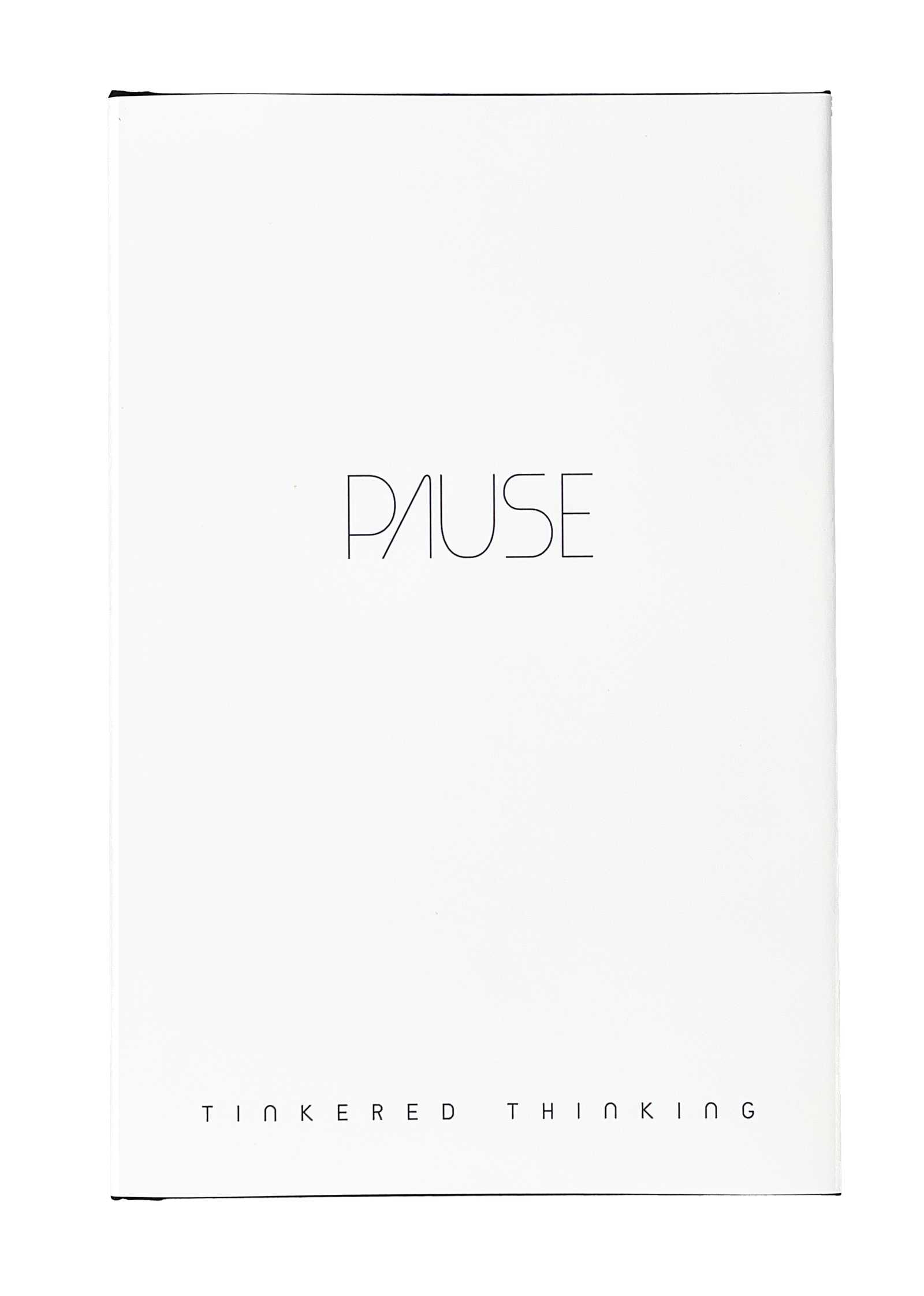
The first non-fiction book from Tinkered Thinking. PAUSE is a short book on meditation. Now available on the Tinkered Thinking Bookstore.
The SECOND illustrated book from Tinkered Thinking is now available!

SPIN CHESS
A Chess app from Tinkered Thinking featuring a variant of chess that bridges all skill levels!
REPAUSE
A meditation app is forthcoming. Stay Tuned.




MENTAL-OPTICS
August 25th, 2018
While shopping for a pair of binoculars, or a pair of eyeglasses, we take a look at all of them, on the shelf or on the rack.
Then we pick up a pair.
We look through it, assess how everything looks through that set of lenses, and then put them down. We pick up a different pair, and look at the world through that set.
If we so desire, we may try them all.
After we have made a tour of them, we may see them all again, aligned next to one another and weigh the pros and cons of each. This one has more zoom. That one has a finicky focusing mechanism. This one is a good general all-purpose.
Often space and finances limits us to purchasing just one, maybe two pairs of binoculars or eyeglasses.
The different perspectives through which we can decide to look at the world, however, are not limited by finances nor space.
Unfortunately we do not have the visceral experience of having all possible perspectives nicely laid out on a shelf or a shop display.
We cannot pop off our emoji eyes like some kind of potato head and look at them to realize: Oh, wow, I’m really angry! Or, oh, I look so sad!
It might not be as visceral as opening up a trunk of different eyes and selecting which one we would like, but this is precisely within our ability.
The myriad sets of binoculars, or eyeglasses, or microscopes or telescopes, or emoji-potato-head eyes exist within our brains as mental dispositions.
It is possible to disregard the experience of a feeling of intense anger and decide to look at a situation with more patience.
It requires a particular mental tool: the thoughtful PAUSE.
This is not something many people automatically do.
It is a skill that can be learned, developed and honed.
The ability to momentarily distance our self from a current perspective in order to consider whether a different perspective would be more useful requires this thoughtful PAUSE.
It is not easy, especially when emotions are involved, but it is possible. Like a muscle it can become very strong with training.
With enough time and practice, we can become our own optometrist, with the ability to fit ourselves with new glasses on the fly to fit any and every circumstance when things fall out of focus.
Every time things become hazy in the heat of anger…
Every time things become heavy under the weight of sadness…
Every time things become claustrophobic inside the vice of aggravation and frustration…
If we can PAUSE.
We can ask: is this perspective the most useful one I can muster right now? Or should I shift and switch perspectives, opt for one that will allow me to calmly…
connect.
This episode references Episode 23: Pause. If you'd like to fully explore the reference, please check out that episode next.
I COULD HAVE BEEN A CONTENDER
August 24th, 2018
This is the complement of the positively-touted ‘Onwards and Upwards’.
They are not opposites. Though one seems positive and one seems negative.
Functionally they are the same.
‘Onwards and Upwards’ idealizes the future and sacrifices focus on the present. ‘I could have been a contender’ idealizes the past and also sacrifices a focus on the present.
Both are nostalgic coping mechanisms designed, built and instituted by laziness.
Sure, we might not be 17 years old with a body growing at full throttle into the shape of a prize-winning boxer. But life does not take place solely in the square of a boxing ring. To trash decades of opportunity because things didn’t work out perfectly during a few dinky years in the second decade is, well, kind of funny. Really sad, but also really funny. And only sad as long as it continues. (the humor need not end)
Trash the past.
Trash the future.
Neither exist anyway.
Draw a golden circle around right now and set it on fire.
See how bright it can get.
This episode references Episode 130: Onwards and Upwards. If you'd like to fully explore the reference, please check out that episode next.
ONWARDS AND UPWARDS
August 23rd, 2018
This is a phrase we hear every once in a while.
There’s a problem with it.
While it indicates a good direction, a positive direction, it devalues the present and idealizes the future. The only thing that is as steady as ‘onwards and upwards’ implies is the rising of the sun each day. (and even that doesn’t always happen depending on where in the world you are.)
Idealizing the future further ingrains a notion that the present is less useful and less desirable.
Compared to the present, however, the future doesn’t really exist at all. It is a phantom. An idea. A dream.
These can be good and useful things. But only if action is taken with such things in mind.
Action can only happen in the present.
Consistently dedicate the present to the hopes, dreams and ideas of the ‘future’, and the future will not come. Instead, the present will slowly morph into those ideas, hopes and dreams. There’s a a subtle but important difference.
Progress on any front will not ever be as consistent as our actions and efforts.
So.
Is it better to look up at some idealized sky where a paradise might lurk in the clouds?
Or.
Concentrate inwards, compressing hope and dreams and ideas into the first action, the next action that can be done. right. now.
POSITIVE MENTAL ATTITUDE IS JUST FIRST GEAR
August 22nd, 2018
All the motivational speakers are right: positive mental attitude helps. You will do virtually everything better if you have a positive outlook.
But.
The positive mental attitude is just the start. Given a big enough, complex-enough task, and the positive mental attitude can lose it’s steam, sputter, and often require some recharge. Many go so far to say that motivation needs to be cultivated daily, and this is a good habit to figure out for one’s self.
But what else?
The analogy of someone banging at a wall in hopes of getting through it, versus the one who stands back to survey the whole wall and notice the door at the far end is a good one because it seems so accurate. So many people seem to be banging against walls in their lives. Many of them do it with healthy doses of positive mental attitude also. But if the wall is made of stone, or titanium, it’s going to take a cosmic amount of positive mental attitude to keep up the ridiculous act for any length of time. Too much positive mental attitude can even create blindness, as though it were the only answer. If I stay positive, I’ll get through this wall!
What’s better?
The experimental attitude.
Take an action. Receive feedback. Analyze the feedback and reassess the strategy. PERSEVERE OR PIVOT. Take new action. Repeat.
Step away from the wall. Look at the wall. The whole wall. Analyze the feedback.
Perhaps you didn’t notice that it’s only an arm’s length taller than you and all that’s required is one good pull-up? Or maybe there’s that door down the end. Would anyone really go back to banging on the wall? Even the most positive person would abandon their previous efforts.
Sadly, many of the walls in our lives, we have built ourselves, limiting ourselves, holding ourselves back.
Positive mental attitude certainly helps when the time comes to earnestly confront the walls that hold us back, self-made or not. But even better is to shift gears and LEVEL-UP.
Build an experimental attitude. All that’s required is curiosity.
What walls are you mindlessly banging against?
This episode references Episode 42: Level-Up, and Episode 72: Persevere vs. Pivot, if you’d like to fully explore the reference, please check out that episode next.
QUESTION
August 21st, 2018
What is a question?
Culturally, at this point in time, it seems as though we think of questions as a sort of lock where the answer is much like a key that unlocks the question, like an enigma, a puzzle, or a riddle.
But does this sort of image really capture the essence of a question?
We might think of the questions we ask others when we already know the answer, when we prompt people in certain directions of thought. In this way, we test people, we see if they can conceive of the key to the conundrum that we have placed before them.
Perhaps we all know the strangely disappointing sense of surprise when we get a response that is equally valid, but not the answer we were planning on hearing.
A question is not one half of the call-and-response, jigsaw puzzle, one-key-fits-the-lock idea that we tend to carry around.
A question is an open-ended concept that creates forward momentum.
Just think about the word for a moment.
Question. Take the last three letters off the word and what do you get?
QUEST.
A true question creates a doorway, a portal to a kind of adventure. If only we have the courage to look at the unknown in this way, because questions are the first and ONLY TOOL we have when it comes to the unknown.
Unfortunately, not all questions are equally useful, but as we describe THE ONLY TOOL, we see that a question can be used to sharpen itself.
Questions can breed better questions, if only they are turned back on themselves.
Often we need only ask: “Is this the best question I can ask about this dilemma right now? What would be a better one?”
If we don’t ask the right question, then we can spend an awful lot of time on a quest that does not lead to our desired destination. This is the sunk-cost fallacy in psychology, when we spend a disappointing amount of time and resources investing in something that does not ultimately lead to the outcome we want.
So when we find ourselves facing a dilemma or an undesirable circumstance, or waking up to a life we never sought nor wanted. We might benefit from thinking of the current situation as a starting point. We will stay stuck in that RUT unless we can mindfully craft the right question, which is really to say: what sort of quest must I go on in order to get to a better place?
Often that better place is a better state of mind. This can be a very difficult concept to wrap a mind around. We think of our brains and our bodies as static entities, which severely hinders the idea of radical change. Fortunately we suffer from a heavy dose of myopia when it comes to this subject. Over the course of a long enough time scale, we change, whether we like it or not. Whether we direct it or not. And this can be a powerful REALIZATION; one that opens us up to conscious direction. A direction that we can choose.
Just as an archer uses both bow and arrow to achieve movement in a certain direction, this REALIZATION is an opportunity, just as there is always potential energy stored inside of a bow. If we can hunt around for the right question, with the right destination in mind, then it becomes a simple matter of practicing our flawed execution and improving as we ITERATE in order to hit the mark and end up where we dream of going.
Just as asking the wrong question can set us on a quest to the wrong place,
we are perpetually – always – on a quest to find a better question, a better quest that will lead to a better life.
This episode references Episode 30: The Only Tool, Episode 124: Realization and Episode 121: Iterate