-compressed.jpg)

Daily, snackable writings to spur changes in thinking.
Building a blueprint for a better brain by tinkering with the code.
subscribe
rss Feeds
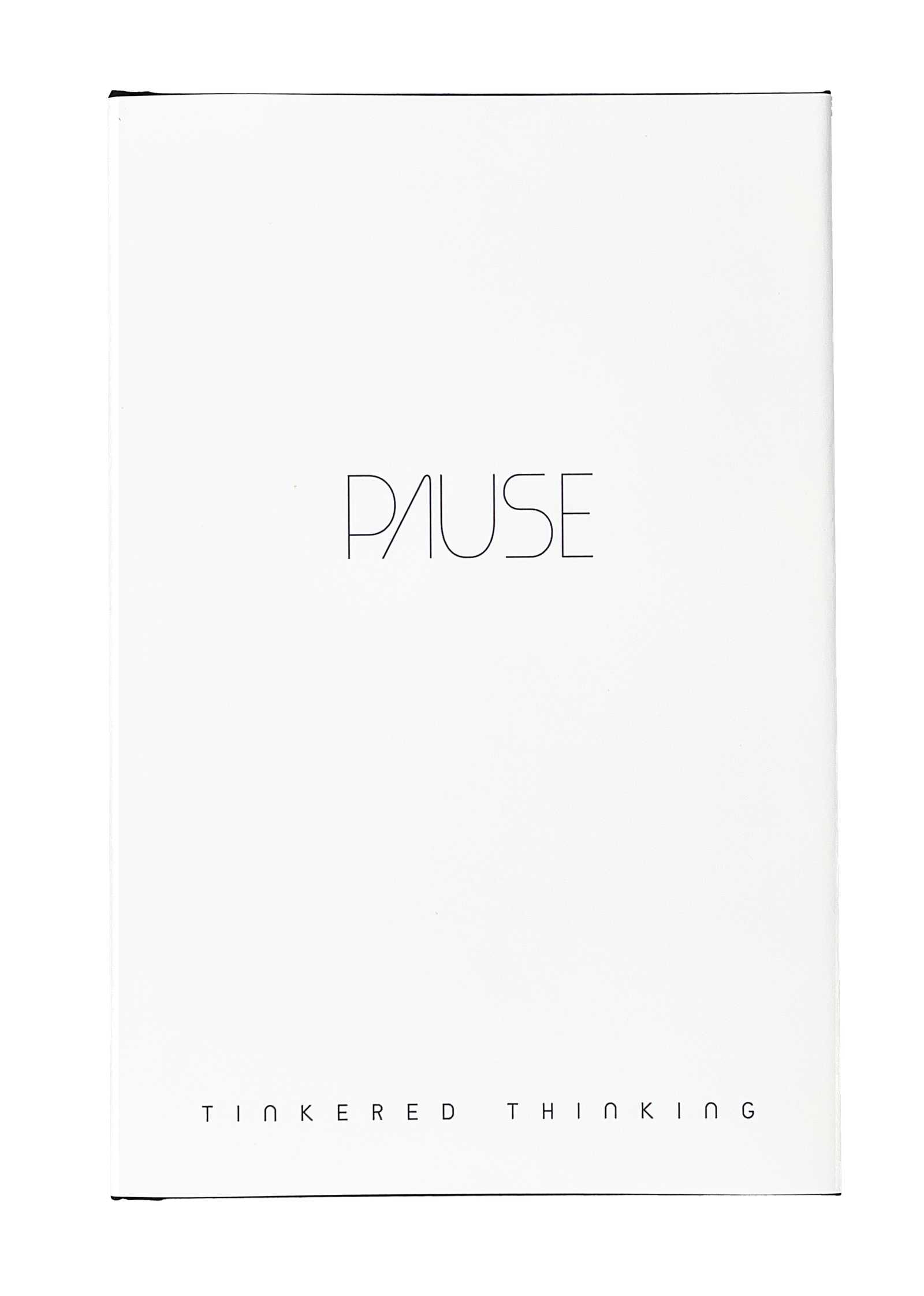
The first non-fiction book from Tinkered Thinking. PAUSE is a short book on meditation. Now available on the Tinkered Thinking Bookstore.
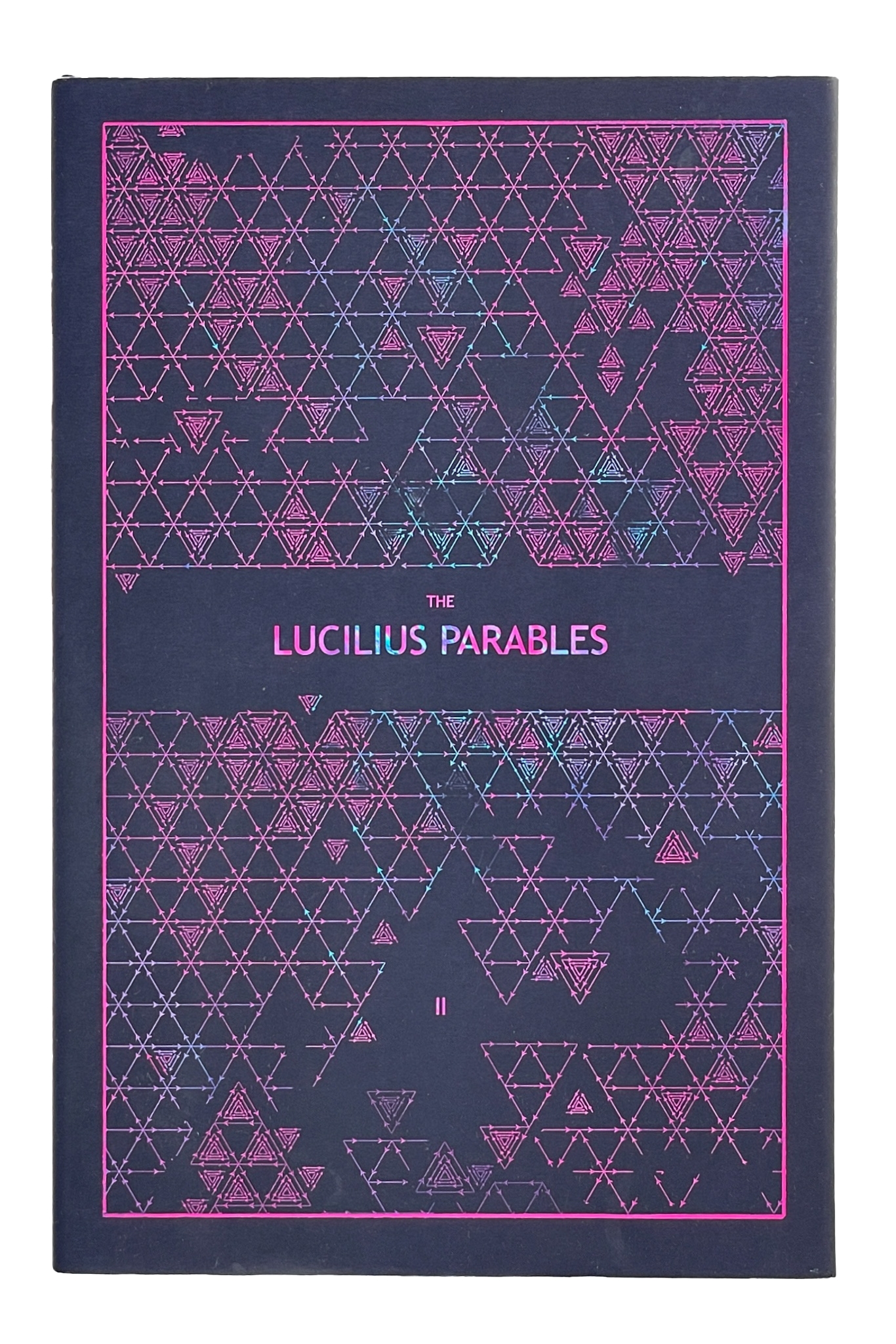
The SECOND illustrated book from Tinkered Thinking is now available!

SPIN CHESS
A Chess app from Tinkered Thinking featuring a variant of chess that bridges all skill levels!

REPAUSE
A meditation app is forthcoming. Stay Tuned.




PERSEVERE VS. PIVOT
June 26th, 2018
This episode references Episode 57: Compass. If you’d like to fully understand the reference, then please check out that episode first.
Those who persevere and eventually succeed are lauded – for good reason. But what about the person who pivots? Are they ‘giving up’ in a sense?
What defines perseverance?
The willingness to keep going even in the face of setbacks and failures.
What defines a ‘pivot’?
Here’s a possible definition.
The willingness to try something new given the information received from setbacks and failures.
What exactly does that sneaky pair of verbs really mean in the first definition: 'keep going'
What does the persevering individual actually do when faced with setbacks and failures? How do you 'keep going' after a setback or failure while ‘persevering’?
Rarely is the answer to do the same exact thing that lead to the setback or resulted in failure. Something needs to be changed. This is the hard work. It requires a teamwork of things: awareness, calmness, optimism, thoughtfulness, curiosity and a willingness to try something new. Maybe only slightly different from the last strategy. Maybe something vastly different.
A pivot is required.
The persevering individual who succeeds is mythologized like a steam engine. They had the drive. Oh, and just happened to find the right pair of train-tracks. Clapped down on those tracks and then it was full-steam ahead to the horizon and beyond. But this is not the case. There are no such fast-tracks.
Better to think of an explorer with a COMPASS. The explorer doesn’t stare straight at the compass the whole time, marching off in the direction it points until the destination is reached. like that train… That would get you killed. You’d end up walking off a cliff, or into a bear den, or a drug den, or into a river home to piranhas, or a casino full of smiling sharks.
Anyone who doesn’t have their face glued to a compass would start to feel their commonsense tingling before making any of those mistakes.
And the more blind drive an individual has, the more spectacular the collision when that locomotive can’t pivot to dodge the building-sized rock that happened to fall on the tracks.
The good explorer is constantly referencing a compass.
But a good explorer spends the majority of their time looking at the terrain.
If the goal is north, it could be better served to go east for a little while, if only to go around a mountain instead of making the treacherous climb up into the clouds. A pivot - to go around an unforeseen obstacle might actually be faster and safer than trying to gobble up the obstacle with loads of work and frustration.
Are you climbing unnecessary mountains?
Don’t just head back down the way you came. Build a toboggan, round the mountain at the height you find yourself and slide down the other side. Or slide east - at the very least.
(A bad habit provides an extremely reliable framework for a new potentially good habit to expropriate. Don't let all that hard work go to waste.)
The results of perseverance are wicked sexy, that’s why perseverance gets all the fanfare. It’s the movie montage that delivers our perfectly-packaged, well-seasoned hero who will save the day in tight clothing.
The pivot is not sexy. It has no fanfare, and is usually marked by some failure, obstacle, some setback. What surrounds the pivot is confusion and uncertainty. The least sexy things for many humans. But it’s like a thousand-dollar check gift-wrapped in the cardboard tube of a spent toilet paper roll. It’s the opportunity to keep going, if only you consider switching things up slightly. By slowing down. Considering calmly. Curiously and creatively: what can be done now?
Perseverance means pivoting as often and as drastically as you need to in order to achieve a long term goal.
Perseverance is made of pivots.
P.S. If your COMPASS is broken, lost, or you feel like you never got one: Climbing a mountain is a particularly good way to survey the scene and get a feel for where you are. That means: learn something – something big, different and hard. Remember though. The climb to the top is not straight up. Best to switchback your way up the mountain. That means, lots of pivots.
WEAKEST LINK
June 25th, 2018
A chain is only as strong as it’s weakest link.
One would be hard pressed to find a concept that has been more over-used in recent years.
Why is there no talk of chainmail?
No person is a single link. A more apt analogy for our psychology is chainmail. We may not have strong links in every area. Hell there may even be missing links and holes. But this does not mean we snap and fail completely like a chain holding some weight, like a person bearing a single gargantuan stress.
Life is a bit more multi-disciplinary than such images suggest.
Best to think of a net, one that can be used very effectively even if it’s not in perfect shape. One that can be repaired, a net that needs maintenance and elbow-grease-love.
Just as a broken automatic sliding window doesn’t rule out the usefulness of a car, the chain image is of little use except to pigeonhole people and their efforts, to falsely delineate more clearly a sense of good and bad, failed and reliable. Our insufferable penchant for such dichotomies is bad in that it gives us an inaccurate way of interpreting events, people and ideas, and blinds us from potential missed opportunities. We see only a broken link when potentially we could see a valuable resource put to work in a different capacity.
Another cultural proverb illuminates this problem: don’t throw out the baby with the bathwater.
Or as Voltaire once put it: don’t let the best be the enemy of the good.
Yes there are weak links in all of us.
And as long as we don’t neglect them for too long and let them accumulate. . .
None of them are deal breakers.
IBRAIN
June 24th, 2018
Much of advertising is designed to appeal to the quick-solution-seeking, lazy parts of ourselves.
How successful would an advertising campaign be if the product proudly claimed that one had to work consistently every day for the benefits of the product to be realized. Advertising does the opposite, claiming that the product will make this hard work disappear, that the benefits will come effortlessly.
The truth is somewhere on the spectrum between these two extremes.
Technologies can drastically reduce effort and maximize benefit.
The design of the medieval plow underwent a huge change in Eastern Asia, giving birth to the modern shape of a plow and the use of the old design for centuries is claimed to be the single largest waste of human energy ever, due to the inefficiencies of the original plow shape.
But technologies do not always improve so straightforwardly.
Smartphones are undeniably more versatile but their effectiveness might be called into question if we are spending countless hours scrolling Facebook or Reddit. Just 20 minutes of this a day, say, in bed before falling asleep, adds up to more than 5 full days a year. Perhaps that doesn't seem like much. But how nice would it be to get 5 full days of sleep?
How long does 5 days feel if we couldn't eat for that long?
What if that 5 days was used to meditate? Instead of an endless stream of mostly forgotten information, we would have a calmer life, clearer thinking, more appreciation, gratitude and self control. How might this affect the other 1,420 minutes of each day?
Recently I saw this tagline: "the 57 must-have apps for entrepreneurs".
No entrepreneur has time for 57 apps, especially if they are trying to start a business.
Might the number of apps we have and the time we waste using some of them be a good metric for the good or bad state of our brains?
We have spring cleaning for the house and we take out the trash daily. Might the same be applied to our phones? Our brains?
Versatile technology means we are given a choice about how to use it. Will we use the technology to help us be better people or just placate the lazier parts of who we are?
Very few people are actually laughing out loud, certainly not as much as is claimed.
But those consistently using a meditation app to help them build a good habit are actively using technology to build better brains.
TWO EYES
June 23rd, 2018
Watching a 3D movie is interesting for about 7 minutes. After that, it’s easy to forget you’re watching a 3D movie. Perhaps that’s because we are so used to 3D . . . i.e. normal life away from a screen.
Close one eye and try and go about your day though, and quickly it’s apparent that something important is missing. You can make sense of everything alright, but it’s flat as hell and distances feel less intuitive.
Any given subject, no matter how we are looking at it, always benefits from a shift in perspective. Like flipping a card to see who won the poker round. It can seem like the card has changed, but of course it hasn’t. Our perspective of that card has changed. It no longer holds possible promise or defeat, it reveals certainty. Or rather, our perspective reveals that defeat or victory. Our understanding of the card has deepened because of the shift in perspective.
Think of a child with a new toy, turning it over and over, inspecting every facet of it. learning. This is the joy of the 3D world, experiencing in such a visceral way that everything has many sides to it depending on how we look at it.
Our language hijacks the visual experience as a metaphor. Do you ‘see’ a solution? Can you ‘see’ the point she’s trying to make? For good reason too. The more sides of a given topic that someone can ‘see’ the greater variety of useful and possible interpretations are available…
Looking at a coffee mug with one eye is only one interpretation of that coffee mug, like a face-down card. Open the other eye and it pops. Suddenly you have a lot more information.
We need multiple perspectives on the same thing to understand it. And the more perspectives we do the hard work to ‘see’, to learn and understand, the more well-rounded we may be said to be.
Perhaps this is why life has evolved just about all seeing-creatures with two or more eyes.
From birth we learn constantly through two simultaneous perspectives.
How might we take a cue from evolutionary biology?
Who is better suited? The stubborn one banging against the wall? Or the determined one who looks at the whole wall and notices a door in it? Both are trying to achieve the same thing: getting to the other side. But only one is willing to entertain multiple perspectives of the problem.
Of course it’s no surprise that one-eyed monsters are considered so… one-track-minded….and, well. dumb.
Maybe a good question to ask is:
Are their any topics that you’re being a real dick about?
(P.S. There is a one-eyed animal, it’s called a copepod. It’s really really small, too small to notice. Which is… perhaps appropriate)
TO UNDERSCORE OR ERASE?
June 22nd, 2018
Our brains have a finicky relationship with facts.
Logically, rationally, it would make sense to gobble up as many facts as we can. Each new fact increases the accuracy of our mental model of the world. And a more accurate map means you can travel around the real terrain with far more ease.
This is not what we do though.
If we come across a new fact. Particularly one that is especially at odds with the way we look at any particular subject. What do we usually do?
We stick to what we know, what we believe, and everything we’ve been doing based on that set of thinking.
One of the reasons that beliefs are so sticky, is that usually when we come across information that contradicts what we think we know. Usually it’s false. (like what the crazy person on the street corner says)
But not always.
And there’s the catch. We ignore almost all information that contradicts our ideas. This means we are also missing out on small bits of important information that could aide us. We miss out because the habit of ignoring contradicting information is predominately an emotional reaction.
How do beliefs change?
Beliefs change due to emotional reactions. It’s the emotional experiences that easily influence how we think, believe and act in the future.
Back in the days of the saber tooth tiger, this was bloody useful.
Those days are long gone though.
The best way to learn is not through our emotional experience of the world. That mechanism is still useful, but it can also be very misleading. Calmly, quietly and thoughtfully considering facts gets us to where we’re hoping to go much faster. Much MUCH faster than simply reacting to what’s going on.
Research shows that information contrary to our opinions and beliefs even hardens those preexisting beliefs. Even if that new information is widely replicated as fact. The polarization over Climate Change is a prime example.
What is the antidote?
It’s not easy:
It requires slowing down and being skeptical about our own beliefs. It requires entertaining the idea that our beliefs might be wrong, that our beliefs might even be damaging.
It requires thoughtfully considering.
Taking the spotlight off of the quick emotional reaction.
Practicing humility. Remembering:
We know far less than we feel we do.
There’s a whole lot of world out there.
We only have two eyeballs worth of it. When those two, limited, windows through which we experience the vast universe come across something new. Maybe different. Potentially threatening to some entrenched believing system we have. How do we react?
Do you underscore?
Or are you willing to erase?
And
Write something new.
Something better.