-compressed.jpg)
Daily, snackable writings to spur changes in thinking.
Building a blueprint for a better brain by tinkering with the code.
subscribe
rss Feeds
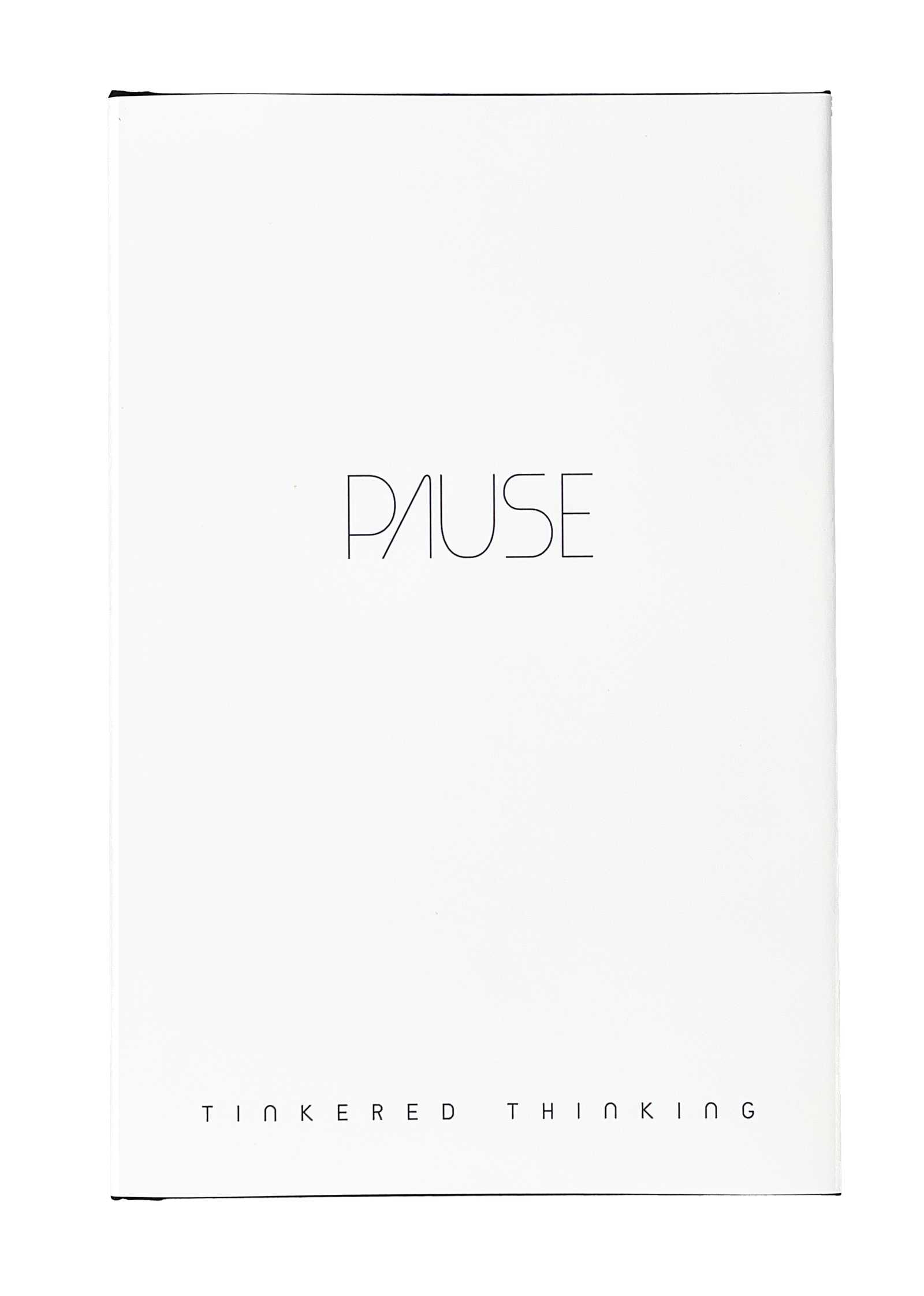
The first non-fiction book from Tinkered Thinking. PAUSE is a short book on meditation. Now available on the Tinkered Thinking Bookstore.


The SECOND illustrated book from Tinkered Thinking is now available!

SPIN CHESS
A Chess app from Tinkered Thinking featuring a variant of chess that bridges all skill levels!

REPAUSE
A meditation app is forthcoming. Stay Tuned.




THE PROPER WAY TO FAIL
July 1st, 2018
This episode references Episode 72: Persevere vs. Pivot. If you’d like to fully understand the reference, please check out that episode first.
The decision to ‘pivot or persevere’ is perhaps a better way of looking at failure. The word failure, the concept, the event. It has so much negative flack associated with it.
Those who persevere, those with ‘grit’ are often lauded for their tenacity. But what about those who pivot? Who ask the difficult questions that result in a new perspective, and therefore: a new direction?
Perhaps when the given task was undertaken, those basic questions were not asked, such as: What is the reasonable timeframe that this will take? How long did it take others to accomplish this. Factor in Hofstadter’s Law. What are the tradeoffs required for this purpose. And so on and so forth. Are the potential results of this effort even something that I really want?
We start with the end in mind, often forgetting just how far away that end might be. How much time that gives for other things to get in the way.
But if something is important enough. It’s important not to pivot, especially when the temptation is greatest, that is, right after a particularly stinging failure towards some dreamed-of end. The failure hits us and we look around. To see who might have been watching. To see if there’s a way out. Away. A way.
But if something is important enough. The best way out out, is through.
If something is important enough. The proper way to fail is to reserve the emotion for the next charge, and examine the result like a scientist observing unexpected results. The proper way to fail is to see the result as feedback. You took an action, and the world gave you the result. This is an opportunity to iterate. To fine tune, to exercise that perseverance by making a small pivot.
If it’s important enough, the proper way to fail is to try again by doing something new.
But why is there the need to pivot? Why did the action, whatever it was, result in the outcome we imagined would happen?
Again, etymology comes in handy hear.
What does failure actually mean?
Failure comes from the latin fallere meaning ‘deceive’.
How does failure come from deception? Where is the deception when we experience failure?
One useful way of looking at this old root is by comparing our idea of the world before the failure and after the failure.
Before failure, we have a certain idea of the way things are, how reality operates, and what the outcome of our efforts will be.
If we take actions based on this mental map of the world and things don’t pan out the way we imagined, then it’s fair to say that our mental map of the world was inaccurate.
In some sense, it’s fair to say that we had deceived ourselves into thinking the world was a certain way.
Failure is merely the realization that we were deceiving ourselves. And now, with new feedback, we can have a more accurate vision of the world and how it works. And with this new perspective, we can pivot towards a new action, one more in tune with the revised vision of the world we now have.
In this way, to fail means to lift the self-deception we have. To fail again and again means to become less and less self-deceptive. To pivot again and again with new information. To fail over and over means to be more honest with one’s self. To fail is to come face to face with how limited our perspective and understanding of the world really is. But it also means to broaden that perspective and hone that understanding of the world and how it works.
P.S. It’s good to note Hofstadter’s Law: Everything takes longer than you think it will, even when you take into account Hofstadter’s Law.

UNLIKELY MENTORS
June 30th, 2018
Warning, there’s some Game of Thrones spoilers in this post for those who haven’t watched to the end of Season 7.
this episode references episode 72: Perseverance vs Pivot, episode 73: Plow Ahead and episode 75: Plan Vs. Hope. If you’d like to fully understand these references, it’s best to check out these episodes.
We have an absurdly strong tendency to lump things into categories, and then lump categories together into larger, and increasingly vague categories. And in the process we sever any helpful cross-overs that such vaguely defined boxes prohibit. In many areas of life and culture, things eventually get lumped into super (and super simple) categories. We all know them:
Good & Bad.
This thinking shortcut is certainly useful. Indeed it wouldn’t exist if it weren’t helpful in some way, even if that reason is potentially due to the limits of brain size and capacity. With any shortcut though, there’s usually a tradeoff, and in this case, it can be incredibly useful to challenge the shortcut and usurp any further usefulness that is inevitably cut short.
Take for example, the above super dichotomy: good and bad.
This slippery pair is what life boils down to in a simple sense. Is this good? Then more of it. Bad? Let’s get rid of it.
But in many ways we find that things we thought were in one category actually belong in the other. Any concerned and loving mother would be stressed out by a member of the family who is not eating and say that such practice is bad. But much scientific inquiry into the nature of fasting has shown that it does very good things for our health.
Let’s take an even simpler set of examples: Villains.
Superheroes are always the good guys. And they fight the villains – the bad guys,
But there is automatically an inherent slight of analysis in this first declaration:
A villain or a bad guy in some fictional setting or even a real one is branded as such because of their effectiveness.
Being effective is often seen as a good quality. In fact it’s fairly broadly accepted that intelligence is an ability to understand the environment, form PLANS and carry those PLANS out to success. Villains wouldn’t garner their illustrious title if they did not have this positive quality.
Oh, but they have bad PLANS.
Fair enough. But does that mean we should overlook the many strategies they employ in order to be effective?
Take two popular examples: The Night King from the Game of Thrones series, and the Joker from Christopher Nolan’s Batman series.
Let’s look at The Night King first.
In season 7, episode 6, Danny flies north to save Jon Snow. Her dragons decimate huge portions of the Night King’s army.
How does this guy react? Does he look on in dejected horror at his losses as they happen? Does he stress over his loss in numbers and think about how disrupted his PLANS are and how much longer it will take to bring his numbers back up again? Does he fear for his own ‘life’?
No. He is calm as a cold rock. And beyond this, he sees the whole situation as an opportunity. Instead of seeing Danny’s dragons as a huge obstacle and enemy that is making him weaker, he sees this obstacle as an opportunity to further his own goals. Like a good chess player, he turns his opponent’s offensive attack into his own gain. He takes down one of the dragons and revives that dragon, which in turn is the key for getting his forces past The Wall.
Seneca, Marcus Aurelius, Epictetus… all of the stoics would have to admit some admiration for the Night King’s clear and calm thinking, his ability to turn setback into advantage.
Indeed the Night King appears to be effective because of his stoic qualities. His emotions seems well managed and supple to his goals, and never does he seem impeded by his emotions. Particularly when there is good cause for negative ones.
Just because he wants to go to war with all of humanity does not means we should ignore the qualities that allow him to be effective and PLOW AHEAD towards this goal. Such qualities are admirable. And his enemies would do much better to learn these stoic qualities.
The Joker from Batman - particularly the Nolan movie – is also a villain replete with good qualities.
In his longer monologues he talks at length about how Batman and politicians, and the police force are all so tied to their PLANS. He scoffs at this and takes his cues from something more akin to chaos. While batman is all about preparation and control, the Joker feeds off of randomness and the unexpected.
Granted, the Joker clearly makes plans to pull off his stunts. It’s impossible to accomplish really anything without having some thoughtful foresight and putting things into place for future execution, and the Joker is clearly planning ahead in order to achieve his goals. The lesson from the Joker is perhaps the emotional connection to such plans. He is completely willing to abandon those plans as things develop. He is not tied to his theory of what might happen. He is a doer, who is refreshingly mindful of what is happening in the moment and this makes his strategy nimble.
When a superhero encounters an unforeseen flaw in a plan, the mood of the audience depresses with the superhero. Whereas the Joker seems positively titillated by any event, whether it be the successful completion of a plan or an unexpected setback.
Which quality would allow YOU to move forward more quickly and efficiently?
The heroes of these stories are unfortunately a bit fragile in this way. Perhaps they have to be in order for an audience to go on the emotional ups and downs required for ‘entertainment’.
The villains, on the other hand, are what Nassim Nicholas Taleb would probably call ‘Antifragile’.
Like the Hydra which grows two new heads when you cut off one, these villains seem to be effective and powerful because of how they emotionally handle setbacks. Like a good entrepreneur, they see opportunity where others might see a dismal situation.
They are able to PIVOT extremely quick.
Superheroes rarely display this kind of emotional ability. And there is something romantic about this inability to let go of an emotion that we as an entertained species really seem to lust for.
But this romantic tendency is ultimately a counter-productive one, and here is an uncomfortable juxtaposition to help.
In Daniel Goleman and Richard Davidson’s fantastic book “Altered Traits: Science Reveals How Meditation Changes Your Mind, Brain, and Body” they recount an episode about the Dali Lama. He is told about a terrible tragedy of a massacre of people and the Dali Lama exhibits a deep sadness about the news, and then a couple of minutes later someone says something funny and the Dali Lama laughs whole-heartedly. Goleman and Davidson recount this anecdote to show how the Dali Lama has the ability to pivot emotionally very quickly. At first glance, a westerner with familiarity with medical jargon might call this bipolar, but Goleman and Davidson point out how this emotional dexterity is the result of thousands of hours spent in meditation.
Being so strictly tied to an emotional state prevents us from integrating new information effectively. If our first reaction to a development in a situation is a negative one, then we risk being blind to seeing how such a development might help us if we hold onto that emotion for any length of time.
We’ve heard so often: We see what we want to see.
or rather,
We see what our feelings permit.
Categories are inevitably a useful tool, but we must be aware of the ways they forestall our abilities. What may be good may have bad aspects, and what we might associate with bad or evil, might have extremely admirable qualities. Nearly everything is some kind of composite of different, and often conflicting qualities.
The benefits of categories are short term, and the long term benefit lies in recognizing the tension inside categories and across categories. Indeed the romantic flaw detailed above may be a simple love of categories.
“I am feeling this emotion.”
To let go of that emotion and smoothly transition to another state is somewhat like a betrayal of identity in that moment, to somehow be less human, as though emotions were the only thing that makes us human. Unless we decide to identify less with any given emotion we are feeling.
Perhaps instead of phrasing things like “I’m feeling depressed”, what if we phrased things like “I’m experiencing some feelings of depression.” Or “There’s some feelings of depression present right now.”
A simple switch in language can help institute a shift in thinking. And in so doing we can distance ourselves from emotions a little and have a better perspective on how useful they are.
After thinking deeply about our long term goals and the good we HOPE to accomplish, we can perhaps then take a cue from the Joker, the Dali Lama and the Night King and PIVOT faster and more effectively when our path towards those goals of good are thwarted, obstacle strewn and laden with plenty of opportunity to lose heart.
PLAN VS. HOPE
June 29th, 2018
This episode references Episode 24: Hope Grows Foolish with No Doing. If you’d like to fully understand the reference, please check out that episode first.
Those who ‘have a plan’ may project more authority, appearing to have more determination. Their certainty is intoxicating. These people have no need to predict the future, they make the future. In this sense, ‘the plan’ is very close to an expectation. And expecting the future to be a certain way is far different than making the future. The hubris surrounding such language is apt to be it’s own demise.
Those who HOPE for certain things to work out, may appear weaker. As though they have less will, determination and appear to regard themselves as more victim of the whims of fate. They are more ‘realistic’, more ‘down to earth’. Maybe even jaded with a shade of defeat. Not surprised when things don’t go their way. Fuel for an undercurrent of cynicism? Perhaps. The hopeful person can certainly be in one breath both the positive and waiting for life to prove them wrong yet once again. Proving their secret cynicism is justified…
Where is the middle ground between these two less-than-ideal perspectives?
The first tends to ignore the concept of disappointment all together – very dangerous. The second is bracing for impact, and in so doing, almost expects the disappointment. This can easily be a self-fulfilling prophecy. You get what you concentrate on.
This is not to say that it's bad to have a plan and hope for the best, but there is a flaw in both strategies. It becomes obvious by their relationship to disappointment. They are both coping mechanism for a fear of disappointment. The first ignores it. The second is already partly convinced it’s going to happen.
The middle ground is not another coping mechanism.
The better path is to chop at the root of the problem instead of hacking at the leaves.
The opposite of fear is curiosity.
The space between?
Indifference.
Given any task or goal, you’re perspective on it’s outcome falls somewhere on that spectrum: fear – indifference – curiosity.
Much fear is paraded around as positive action and certainty about the future.
Curiosity is simply a strong desire to know and learn.
This has nothing to do with hoping or expecting the future to be a certain way.
Might it be a better way to look at the things we undertake?
NO RECIPE
June 28th, 2018
Recipe books are like schools. They show you a bunch of orders, give you a bunch of hoops to jump through, but rarely does a school teach you how to live or a recipe book how to cook.
Recipes, or instructions of any kind do two things: they give off the impression that what you are doing is already known and therefore there is no way to improve upon it. Therefore no need to improv–ise what you are doing. And two: they set up an expectation. If only you follow these rules, you will have exhibit A: beautiful result.
Both of these are traps. The first robs you of thoughtfulness. Doing something for the first time, on the fly, requires thinking. A recipe requires an automaton. The second sets up an expectation that may result in disastrous disappointment when the oh-so-perfect rules do not produce the beautiful result. Any number of reasons could be the culprit. Inevitable flaws in the writing of the recipe. Perhaps something was vague, perhaps something was assumed and not clearly spelled out. Perhaps there’s a million things wrong with the recipe. Maybe someone rushed it, just to get something to print and on the page. . .
The opposite of these two things can be a powerful tool while learning: Ignorance and lack of expectation.
The second – expectation, or lack thereof- ensures that you will not be disappointed. You are starting with a clean slate, and just about anything is better than a blank slate.
The first allows you the chance to make quantum leaps in learning. You are not stuck to an ordered list that only allows you to fit inside one step at a time. Unfettered thinking bounces around all over the place, and the learning, probing, wondering, curious brain makes connections everywhere and anywhere it needs to, as it tries to figure something out.
Is this not at the heart of what makes kids cute while they learn at quantum speeds compared to most adults? They fumble with ignorance, without the least amount of expectation-induced hesitation. They make loads of mistakes and fall, sure. But then it clicks and we are amazed that they figured something out so fast.
So when it comes to anything where totally failing won't result in real harm..
Go ahead. Throw the recipe away. You might learn something.
It’ll be cute.
PLOW AHEAD
June 27th, 2018
This episode references Episode 23 entitled PAUSE and Episode 34 entitled WIGGLE. If you’d like to fully understand these references, please check out those episodes first.
When the going get’s tough, the tough get going. Right?
Do we plow through obstacles? If so, what is being done to the obstacle? Is it being destroyed? Tossed to the side?
This is the cultural essence of the phrase, to ‘plow ahead’. Like some sort of juggernaut. Like a train headed towards a fiat stalled on the tracks. But this phrase deserves a little more thoughtful consideration.
What is a plow?
Is it pushed or pulled through the ground in order to destroy the ground? As though the ground were some sort of pesky obstacle? No. The plow reshapes the ground. The plow alters the ground so that it is more conducive to receiving seeds. The plow aides a natural process. When most seeds that fall on the ground may dry out or burn after germinating before the tiny root can WIGGLE down for a hold, the plow opens up the playing field for the individual seed. Literally.
So what does it mean to ‘plow ahead’? . . . when the going gets tough?
Are we to confront obstacles like enemies, subdue and destroy them, remove them from our path and head on straight towards our goals? Or is there a subtler suggestion in this cultural adage?
Might we alter an obstacle to aide us on our way to a goal?
A wall in your way is a pain until you see the value of such a new perspective when you’ve climbed to the top of it and looked around.
To plow ahead doesn’t mean to grit your teeth, close your eyes and charge forward. A sharp plow is like sharp insight, and plowing ahead means meeting your obstacle with thoughtfulness, concentration and a willingness to see how such a pesky-seeming-object might benefit you.
Imagine some post-apocalyptic weary traveler, ignorant of the ways of fallen civilization, coming across a functioning car in their path while running from some dangerous enemy. The desperate traveler, in ignorance, will probably see this car as an obstacle, impeding the path.
If only this traveler knew how much faster they could ‘run’ behind the wheel.
PAUSE the next time you feel thwarted, pushed back and pushed down.
You might be looking at the golden key to a better future.
If only you sharpen your plow and look at your situation a little differently.