-compressed.jpg)
Daily, snackable writings to spur changes in thinking.
Building a blueprint for a better brain by tinkering with the code.
subscribe
rss Feeds
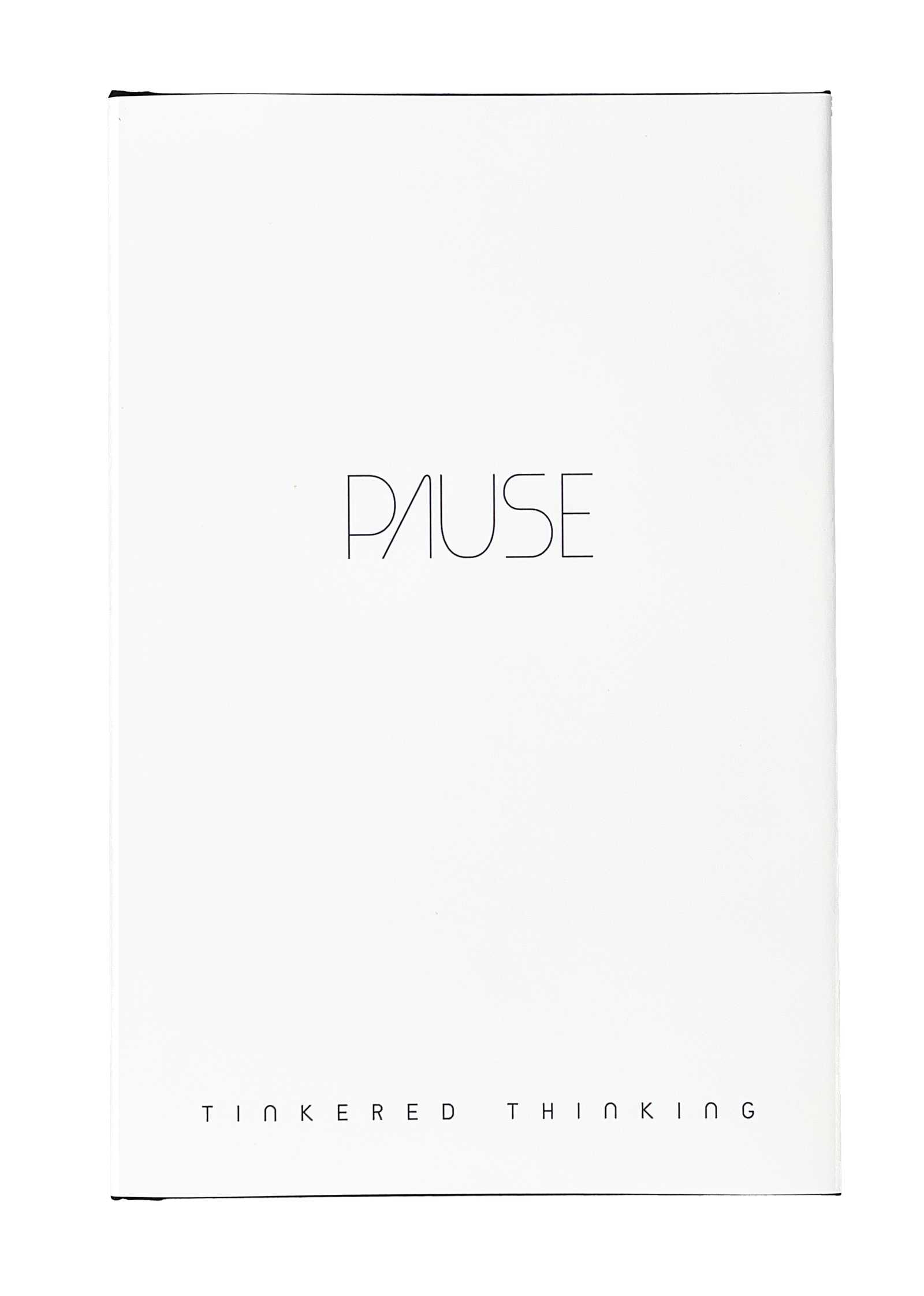
The first non-fiction book from Tinkered Thinking. PAUSE is a short book on meditation. Now available on the Tinkered Thinking Bookstore.
The SECOND illustrated book from Tinkered Thinking is now available!

SPIN CHESS
A Chess app from Tinkered Thinking featuring a variant of chess that bridges all skill levels!

REPAUSE
A meditation app is forthcoming. Stay Tuned.




BEHAVIORAL STOCKHOLM SYNDROME
June 16th, 2018
This episode references episode 57 entitled Compass. If you’d like to fully understand the reference, please listen to that episode first.
In 1973 four people were taken hostage during a bank robbery in Stockholm Sweden. Due to some strange avenue of human nature, these hostages developed feelings of trust and adoration for their captors and refused to testify against them in court.
The hostages grew fond of their captors.
There is a fashionable and sexy trend to ‘own a problem’ by wearing it like a badge.
In order to solve a problem, it must first be identified, yes. But to end with this identification is to stay focused on the problem and risk over-identifying with the problem. This is not owning a problem and solving it, this is the Stockholm syndrome grafted onto a set of behaviors. This is confusing a problem with a sense of identity and growing to love the problem because we hope to love ourselves and fail to differentiate between the two.
If humans are capable of developing positive feelings towards others who have taken them captive by force. . .
is it really much of a stretch to think we’re capable of developing positive feelings for bad ideas that hold us captive?
Is it possible that we are capable of achieving this self-destructive acrobatic merely because it’s easier? Identifying with a problem and loving it, wearing that problem as an identity calls for no further action.
As in every case, we must use our COMPASS to determine whether we are acting productively.
Does it evoke fear to identify a problem and accept it, and even love it? How does it feel to honestly face a problem and begin the uncertain process of attempting to solve it with actions that may fail?
THE SQUEEZE
June 15th, 2018
Pushing into new territory is fraught with uncertainty. We venture into new territory on a guess, hopefully with curiosity, maybe determination.
The longer uncertainty remains as the reigning emotion, the harder it is to push forward.
The farther we push forward, the closer we get to a solution.
Our path towards a goal is squeezed ever tighter between these two facts: Between rising doubt and a nearing solution.
The experience of this squeeze is an emotion: a fear.
If we can relax, accept the fear, and thoughtfully move forward, no goal is out of reach.
ARCHITECT
June 14th, 2018
It is easy to conclude that we are a product of our surroundings.
Whether we like it or not
We are the sole architect of our own experience.
From this statement it is easy to fall into this bad pseudo-logic trap: that your undesirable situation is a product of your own making.
But our situation and our experience of that situation are not the same thing.
Besides, such a negative conclusion is an unproductive dead-end.
Like many finer details in language, it is one side of the architect coin. The other side is this: no matter what the situation is, we have the potential and ability to change it.
We cannot remake it wholesale in a moment. Like anything it takes time, just like the current situation took much time to develop.
The place to start is our experience of our situation.
We may not be the sole architect of our situation – but we are the sole architect of how we experience that situation.
The first and most important rebuilding that must take place has nothing to do with the outside world (i.e. the world we see, touch, smell, hear – our situation). The first and most important rebuilding must be within our mind.
If we can change our idea about our surroundings. See our situation and our surroundings as mutable, then we can become again like the little kid with a box full of Legos, or a jar full of play-dough.
This is an idea that we may build in our mind to change our experience of our situation.
If we can change our experience of our situation.
We can respond to our situation differently.
We can see what affect our new response has on our situation.
We can fine-tune our response.
And in so doing. . .
fine-tune the changes of our situation.
There are many excuses paraded as iron-clad reasons that roll out on the tongue of certainty. But nothing is for certain. Any ‘reason’ is a concept that is produced, replicated and ‘believed’ by the brain. Many people point to the brain and claim some sort of certainty about it’s chemical or structural make-up. But this in itself is an idea – a concept. One that we only have a very hazy understanding of. Of all the things we have studied and learned as a species, our own brain still remains one of the most mysterious machines. To claim some sort of certainty about it is unwise.
To know any given subject requires the hard-won* ability to manipulate all possible parts. Like a chess master who can manipulate a game, or a mathematician who can manipulate formulas in order to discover something new. Or a master musician who can discover something never before heard but loved by many. Few such masters would claim certainty about their field in such a limiting way as people claim certainties about their own brains. Just as masters discover through the manipulation of parts they understand, might we borrow practice and manipulate what parts of our brain we can. . . even if we don’t fully understand such parts?
Regardless,
The very act of making a claim is building an experience of one’s situation.
If we can PAUSE. If we can doubt our own certainty. If we can entertain radical ideas that might aid us. What’s to lose? The only thing that can be lost is a conceptual certainty – a limiting one at that.
If we can commit to these simple steps: doubting our certainty, fostering curiosity, taking action. . .
We can embody our role as
The architect.
*Just being alive does not mean we automatically learn how our own personal brain functions, simply because we think some and operate in the world in some capacity. That ‘hard-won ability to manipulate parts’ is difficult to achieve and requires constant prodding of our own personal brains in order to learn about it and change it.
FREQUENCY
June 13th, 2018
We cannot do all our breathing on Sunday and expect we’ll be set for the week.
But we apply this sort of thinking to other aspects of our life.
What has a better effect:
Working out once a week for 7 hours OR working out 1 hour every day.
Eating a really healthy diet once a week OR switching one very nutritious meal every day/
Meditating for an hour and 20 minutes once a week OR meditating 20 minutes a day?
Breathing is a constant non-negotiable practice. The consistency and frequency of breathing are both really really high. Ignore either of these variables about breathing, and… well… you die.
We all have activities and habits that we wish were more engrained, more effective and easier to carry out.
Have we asked what sort of consistency and frequency is optimal for each of these habits and activities?
Is our fitness plan really doing much good if it’s got high consistency but low frequency? Once a week just isn’t enough. The brain needs a daily dose of endorphins.
Does that one good day of nutrition do much good if the other 6 are crap? Many argue that at minimum, it needs to be the other way around: 6 days of healthy eating and one cheat day. Consistency, and higher frequency.
Meditation? Can’t say. Perhaps one single long meditation a week would have comparable effects as daily meditations?
The point is that such activities and habits that we benefit from exist on a spectrum of consistency and frequency. Some require very high frequency and consistency. I.E. breathing. Whereas others are not so needy of our time.
Realizing that each practice has some mysterious optimal frequency is the first step.
The second step is experimenting:
Trying different frequencies for consistently long enough periods to be able to note differences in effect.
And be wary of what works for others. Each person has their own frequency requirement for any given activity or practice that might benefit. And that magical metric probably changes over time.
But like anything else:
best to just find out for one’s self.
THE TURTLE AND THE CAT
June 12th, 2018
It’s easy to envision the turtle on it’s back, legs flailing, potentially doomed.
Often it can feel as though a mindset has grown such a kind of inconvenient shell that is bound to betray it’s original purpose of protection and truly leave us feeling like we’re fucked.
Sometimes solving a problem only makes things worse.
The problem might be thinking there’s a problem in the first place: trying to solve a problem that doesn’t exist simply creates. . . problems.
What is so precious in our thoughts and beliefs that needs such protection? If a thought or belief, or set of beliefs must be harbored from injury, is it so valuable? Should not it work the other way around? Should not thoughts and beliefs have the durability that they enable us to take wiser action? Would it be better idea to have beliefs that are more akin to the variability of events? Beliefs that are flexible, agile and can react swiftly to some sudden and unexpected turn of tide?
Cats always land on their feet. It’s easy to envision the way a cat stretches and flexes so quickly in the air to reorient itself. It needs no shell since it can rely on it’s swift flexibility and agility to deal with circumstance as it arises. It does not prematurely anticipate what kind of circumstance may arise and grow a cumbersome shell in hasty anticipation.
Different animals for different environments perhaps.
But which has achieved more freedom?
The one that relies on the kindness of motorists to stop and wait while it slogs from one bog to the next, bogged down by it’s own cumbersome protection?
Or the other which has domesticated all mankind and made the internet a shrine of it’s divinity.