-compressed.jpg)
Daily, snackable writings to spur changes in thinking.
Building a blueprint for a better brain by tinkering with the code.
subscribe
rss Feeds
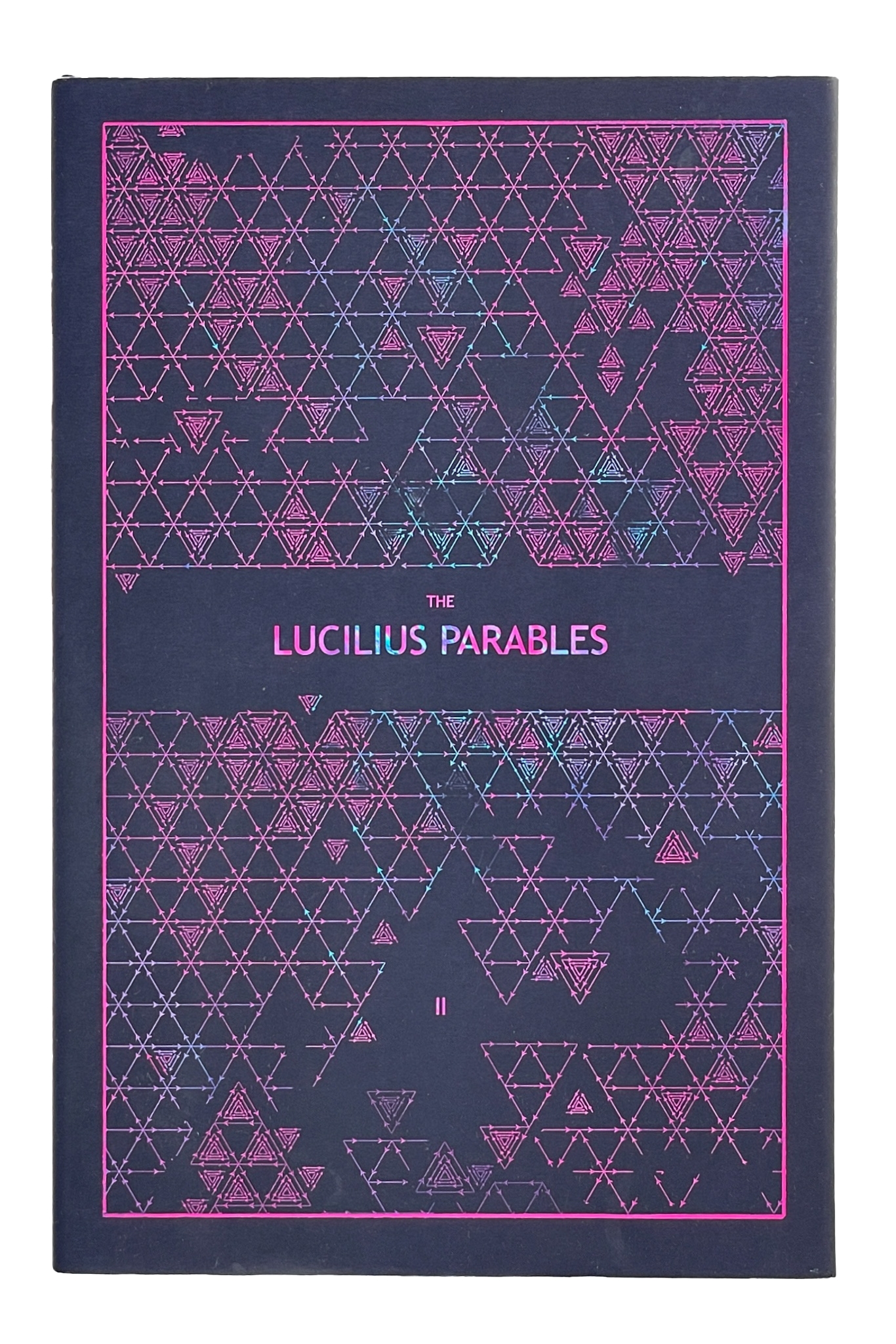
The SECOND illustrated book from Tinkered Thinking is now available!

SPIN CHESS
A Chess app from Tinkered Thinking featuring a variant of chess that bridges all skill levels!

REPAUSE
A meditation app is forthcoming. Stay Tuned.




EDUCATION'S PARADOX
November 6th, 2020
It seems education is always in need of improvement. Where education is regarded as important, it is never good enough. Just imagine if a school or if a nation came to the quaint decision that their education system was as good as it possibly could be, that no improvement was necessary and even possible. The image is as funny as it is paradoxical, and it hints at the conundrum that always besets any educational system, which can best be summed up by a question:
How do you teach someone to be better than you are in your area of expertise?
The next generation of teachers are invariably being taught by the current generation of teachers. And, if it’s possible for education to improve than theoretically there must be some kind of subtle bootstrapping that turns today’s students into teachers that are more capable than the one’s doing the training.
Before slicing into that difficult trick, notice that the teacher is beset with two difficulties. Not only must a teacher be well learned in their subject, but there’s a meta-subject that a teacher requires a sufficient amount of expertise: teaching.
Many of the best minds who have broken ground with new forms and areas of knowledge were not terribly good at translating that discovery to other people. There is a kind of intermediate variety of educator who functions like a translator: understanding the obscure discovery and translating it into a form that is more readily understood by other people. The brilliant mind who makes the discovery is a one-trick pony. The intermediate translator is a two-trick pony: understanding in the first place, and then translating.
The improvement of education is a sly two-step movement: on the one hand there is always room for improvement with the translation - and this is probably the area that has always been at a chronic deficit. Everyone learns a bit differently based on their prior experience, their vocabulary, their exposure to the subject and when the communication abilities of the teacher are mixed in, the results can be all over the place.
What’s perhaps the biggest missed opportunity in education is that teachers have almost no incentive to get better as communicators and translators of complex topics. It’s without a doubt that many teachers would like to get better at their job, but this does not mean they are well incentivized. We would all like climate change to be mitigated, but that does not mean we are well incentivized to make it happen. We do, however, have more incentive to buy a really sexy electric car - primarily because it’s sexy. Climate change mitigation is a secondary bonus because sexy cars are desired regardless of if it effects the climate for better or worse.
Imagine for instance if teachers didn’t get paid unless their students made money because of what they learned in class? That creates an undeniable incentive for the teacher, and there are even institutions like Lambda School that have instituted this type of structure.
The other bit about education’s two-step climb is the discovery of new and useful pieces of knowledge. Currently, we really don’t have a system for coming up with new ideas. Certainly we have the scientific method which tests ideas, but we don’t really have a rubric for how to induce novel revelations about the universe. It’s sort of random, but that doesn’t mean random can’t be herded into productive directions. If for example, the first step of education went through substantial improvements than we’d simply have a greater number of capable thinking students, which raises the number of possible chances for new realizations based on the apex of current understanding. If for example a great idea is only 1 in a million, but a population only has half a million well educated people, then it’s going to take 2 generations to have a great new idea. If however, a population raises it’s educational efforts by an order of magnitude and produces 5 million well educated people then they are likely to get 5 great ideas in a single generation. Any network effect between these ideas further magnifies the effect of the original effort to improve the education of more people.
To refocus on this translation and transport of knowledge from teacher to student must also admit a further cramped aspect of the set up. Some people, perhaps even most people learn best by doing, and the current way that school is imagined is often not in line with this at all.
It’s tempting to imagine a not so distant future when our teachers are individual AI’s that are calibrated precisely to who we are and what we know, intuiting exactly what to reveal and when for greatest retention and further creating novel, tailored exercises that naturally hyper charge a student’s ability to learn.
It’s a nice thought, but still far from a reality.
In the meantime, the next best thing is to attempt to become that AI teacher for one’s self. This requires a good deal of self-awareness that is used to study one’s own self and to observe what sort of challenge works best, and how to choose and implement that form of challenge from a subject that may be a complete mystery. This is a self-contained instance of the earlier bootstrapping problem. How do you pick the correct sort of challenge from a subject you know nothing about? The trick here isn’t to pick perfectly but to have the mindfulness to pivot to a smaller or larger chunk of the subject depending on how difficult or easy that random stab at the topic turns out to be.
IMPOSITION OF THE IMAGINED WORLD
November 5th, 2020
All sorts of things hang over our head. Something embarrassing that happened yesterday. The impending meeting in a couple hours. The dream project that hasn’t started but just continues to balloon and swell like a quaint depressing rain cloud grown into an angry and towering thunderhead. The imagined world is so palpable that often times it becomes an opaque blinder to the real one.
Watch where you’re going!
Someone yells as we snap out of a daydream, seeing the red light.
When the imagined world and the real world seem to be in sync is when we feel best. Often this is when things are going according to plan, but not necessarily. When things go according to plan is just the most recognizable form. For example, the past can’t unroll in the same way the future does in accordance to our expectations. So how does something like the remembered past fit into this instance when the real world and the imagined world seem to be in sync?
There are two aspects to this. One is the reality we have given the past that has occurred. The second is the way we imagine that past. What happened yesterday and the day before is certainly the crucial antecedent to now, but many aspects of the past were invisible as they occurred and more importantly the past exists only as we remember it. Memory is flawed as it is formed and flawed further as memory is accessed. This downfall is also the tool to aligning imagined and real worlds. But it requires separation. One person can curse their past for the present they have while another can understand that past in order to make sure that present doesn’t persist or get worse. The difference is the relationship each has to the past - to the imagined world.
The same applies going forward. One person who has their heart set on a future outcome is crushed when things turn out differently, whereas another person who gingerly holds possible futures at the same distance as the past isn’t crushed when events develop unexpectedly.
Regret and disappointment are a function of our relationship to imagined worlds more than they are a fact of reality.
By recognizing that a relationship can be squeezed between a person and the imagined worlds of the past and the future, and even the present further allows for that relationship to change. Reality is constantly giving a stream of honest feedback about how good or unhealthy that relationship is, and the rule of thumb here is that dissonance is painful. If the future is something to dread, does that say more about reality and the future that will take place, or does it say more about the person, and the relationship they have with an imagined future?
Incredibly, the same applies to the past, even though the past seems to be this solid, immutable entity. What has actually happened to result in the current situation certainly can’t change, but our relationship to it can. Again: does it say more about someone’s past or the way that past is seen if it’s regarded as terrible?
Both the futures we think might happen and the past we think happened are reflections of the way we react to the world. The way these imagined worlds impose upon us either enables or disables our ability to react effectively in the present. And with a little sense of separation - an ability to recognize a relationship to these imagined worlds - and a willingness to try and augment those relationships, the present can slowly, even suddenly begin to look full of opportunity and hidden leverage.
COEFFICIENTS OF ADDICTION
November 4th, 2020
Success can be boiled down to addiction management. But addiction is bad, something to be totally minimized, cut out. Right? Certainly when the addiction is used in the traditional form - when it refers to something that’s overtly harmful. Then again, it seems different things create different levels of addiction. The obvious hard drugs are certainly past a particular threshold that makes the addiction very obvious, and it’s these things past that threshold that we typically take seriously as addictions. But even beyond this threshold, different things still seem to inspire different levels of addiction. It seems that different things have different coefficients of addiction. The idea of a ‘coefficient’ here is injected to pin down this idea of variability among addictions. For many, if not most people, the coefficient of addiction for something like smoking might be very high, whereas for someone else, the coefficient of addiction for the same thing might be quite low. Sugar is another substance where the coefficient is quite high for most people. Now what happens if this coefficient is considered down below the detectable threshold, for something like work?
Most people can’t wait to finish, to relax, to indulge in the more pleasant addictions of food and entertainment, and perhaps a smoke and a drink. The addictive quality - the coefficient of addiction is subjectively present in these things. We can quite literally feel the pleasure.
But then again, some people manage to get addicted to things that don’t seem so obvious - like work. There are some people who are quite clearly addicted to their work, and it’s clearly not due to some sort of obvious chemical reaction as happens when we ingest something. There is, however, a chemical reaction happening - a complex set of neural interactions that all have their own specific weights that influence future probabilities that such a set of neural interactions will take place again. Those weights, based on things like receptor density and transmitter output can slowly change with use.
An exercise routine just started feels painful but becomes a pleasure with enough repetition, as the relevant neural pathways change and adapt.
To return to that opening statement: success can be boiled down to addiction management, applies, not just to the big obvious addictions that are best avoided, but also to the ones that don’t feel like addictions and which aren’t yet addictions. Bluntly, it’s a matter of avoiding those activities that have normally high coefficients of addiction, and trying to boost the number of those activities that have normally low coefficients of addiction - those things that require discipline and will power. With enough use, activation, and routine, these low coefficients of addiction can slowly rise, until things that normally take discipline and willpower become easy because they become pleasurable - even addictive.
NUANCE OR NOT?
November 3rd, 2020
A dichotomy is best represented by an either/or statement. They represent one of the simplest frameworks for making sense of life. It’s with dichotomies that we begin the process of teaching children language: up/down, yes/no, good/bad. It’s this last dichotomy which becomes the master umbrella under which many if not all other dichotomies directly fall. At the very least they gain a loose association.
For example, even the 3 dichotomies already listed represent this association quite well. Moving upward is associated with good. Moving up in the corporate later through promotions, and it even has the spiritual reference of apotheosis - that of ascending to the heavens to become a god. Whereas, the opposite - moving down - has the exact opposite association.
It can be difficult to move beyond this dichotomous way of looking at the world and develop a perspective of nuance.
Nuance is the antithesis of the dichotomy. Or rather, it is the synthesis of a dichotomous pair. The primary difficulty with dichotomies is that the choice of one over the other is often an attempt to negate the existence of the one not chosen. This is innocuous for some situations that work well with a dichotomy, like
Do you want to eat Thai tonight?
No.
Injecting nuance into these sorts of questions often just creates more trouble than it’s worth. But notice how it’s exactly this sort of situation in which we are most likely to inject nuance in an attempt to show consideration for the other.
Notice further that nuance is exactly what is needed in situations when it’s most likely rare. For example when countries are on the brink of war or political parties are at a stalemate.
The hunt for nuance itself becomes a dichotomy that we forget to consciously incorporate into our retinue of consideration. More explicitly that dichotomy is a choice between using an either/or perspective - or - diving in deeper to find if there is a subtle shade between the two that needs to be uncovered.
One of the oldest sets of dichotomies is useful for picking through this notion of whether to use a dichotomy or not: virtues & vices.
Temperance and Gluttony make for a good selection. Doing only one or the other both result in a life that is perhaps not all that great. Pure gluttony leads to some pretty gross places and absolute temperance isn’t.. well, fun. So perhaps, we might wonder if there’s some nuance between the two that makes for better living?
The middle road between these two highways is often phrased with the modern aphorism: moderation in everything.
The one thing this moderation forgets to moderate is, of course itself. What if, instead of constantly borrowing a bit from both temperance and gluttony, the two were pulsed. For example, celebrating gluttonously after an intense couple of months of hard work and diligent temperance, as opposed to dulling the intensity of work with a constant meagre stream of half-assed gluttony.
There’s another modern aphorism that’s best used to edit the first: go big or go home. And that’s not injected here to apply just to the gluttonous celebration as is often assumed, but also it’s to apply to the stringent period of work before hand: if you’re going to do something, do it. And don’t let anything else slow it down or get in the way.
Already it should be obvious that there can be nuance even in the way we apply a dichotomous framework. And this occurs primarily due to time. These frameworks exist through time, and because of that there are some situations where one is appropriate and not the other, and other situations where some mix in the middle is best mandated.
But in spite of the blatant obvious fact that we exist through time, we speak of life as a static thing. We regard our political parties, our views, our beliefs, even our decision making process as static entities, and because this is the way discussion has evolved to describe these things, it truncates our ability to communicate by allocating descriptions to primarily dichotomies.
To remember the variable of time and the inevitable ingredient of change which it brings is to realize the key flaw in all dichotomies: it’s never either/or, it’s always somewhere in the middle, a mix of the two.
KERNEL
November 2nd, 2020
Virtually any piece of writing is a sprawling, branched animal that weaves sentences through the foaming cacophony of thought ricocheting throughout the brain. Even something as simple as a Haiku, or a single sentence response dives like a harpoon down into the catacombs of meaning inherent in each of us, stitching together sense and reaction. Each piece of writing begins, literally with a single word, but before that word is even written, where does that piece of writing exist?
The perennial bemoaning of writers block owes an unfortunate homage to the individual who came up with the concept. It seems most likely Percy Shelley conceived the kernel of the idea that would bloom into what we know of as writer’s block.
The antidote is of course to repeat the exact same sort of instance: to conceive just the kernel of an idea. This very piece of writing, for example was spawned from such a kernel while thinking about how yesterday’s story, The Lucilius Parable entitled On the Page came into being. The kernel was extremely simple, fitting into a single sentence. The story - that piece of writing - is merely an extrapolation on that idea, like a kernel cracking and sprouting and growing into a plant or a tree. Considering it literally: all of the information of the tree or the plant is inherent in the seed, in the kernel - very little if any of that information actually changes as the plant or the tree grows - the growing is merely an extrapolation. It’s the kernel on a different level of resolution, but instead of zooming in, it’s blown up to a size that other things can interact with.
Of course not all pieces of writing materialize with that pristine and perfect kernel being present in the mind before a first word gets written. This is part of magic of the writing process: writing can be used as an exploration tool, like a pick for a prospector, or a flashlight in the dark. Sometimes, it’s necessary to write off in random, uncoordinated directions until that kernel is found, after which the real writing can begin.
For the beginner with writing, all that random, uncoordinated writing can feel like a waste, or more commonly - something to save that is perhaps not worth saving. That stuff is slag - the useless rock moved in order to find the diamond. But even then there are usually valuable traces of the kernel as we search for it, and sometimes that detective process of looking for the kernel actually works as a nice piece of writing in of it self - the kernel forming a kind of punch line unexpected by both the reader and the writer looking for it.
Writing as a tool has a sly set of edges that both honour the same aim: it’s used to nurture a kernel of an idea and make it bloom, or it can be used to dig around for that kernel.