-compressed.jpg)
Daily, snackable writings to spur changes in thinking.
Building a blueprint for a better brain by tinkering with the code.
subscribe
rss Feeds
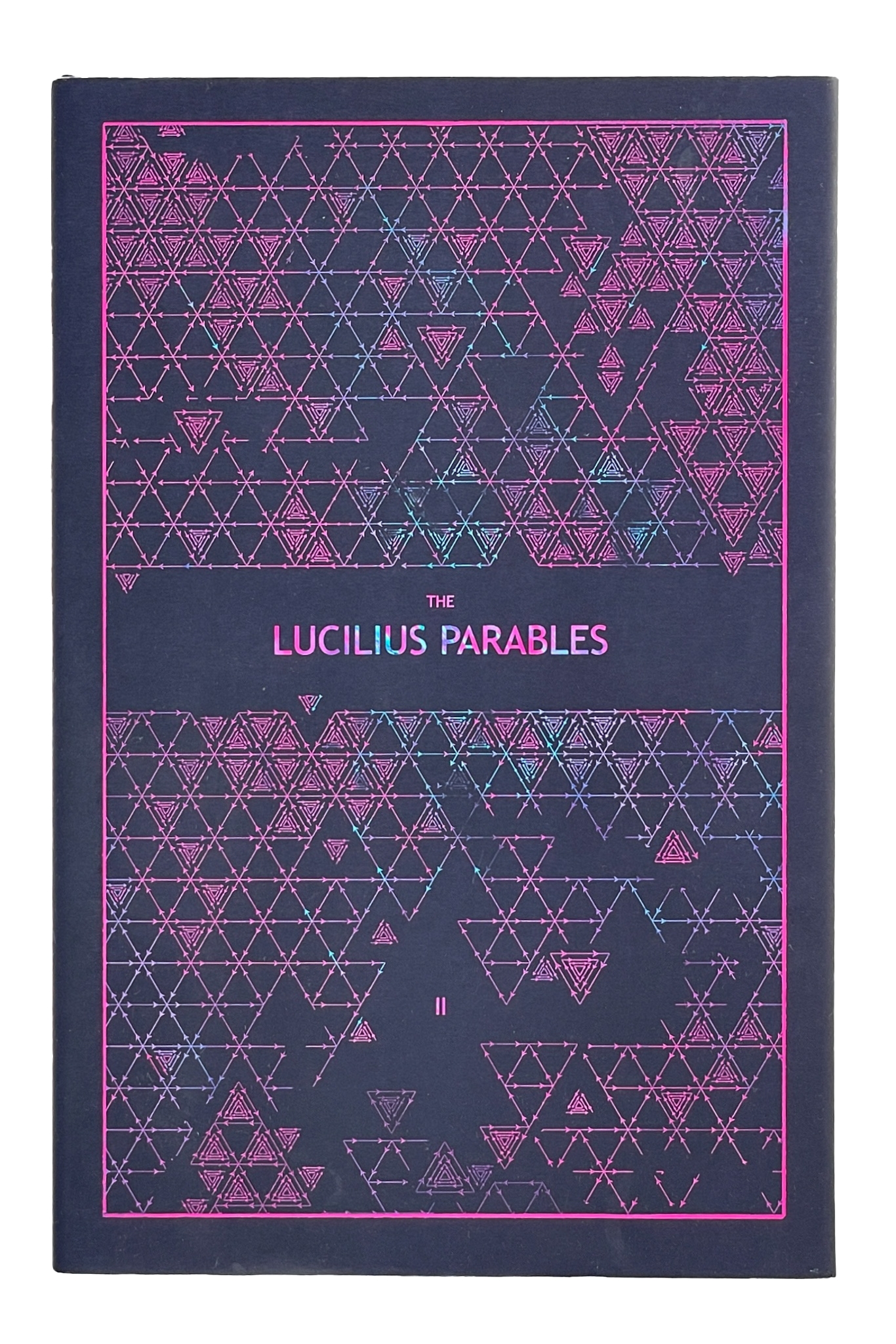
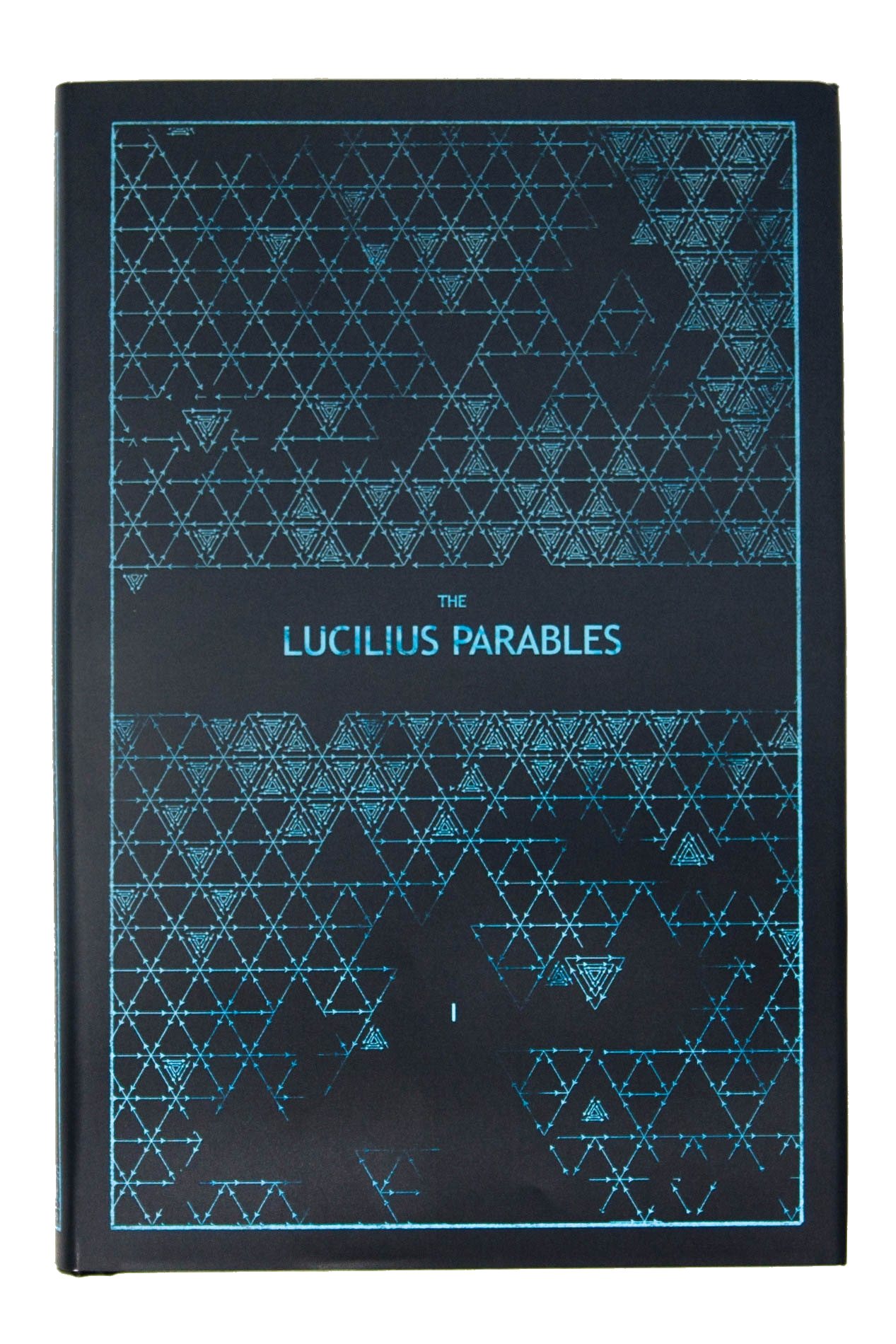
The SECOND illustrated book from Tinkered Thinking is now available!

SPIN CHESS
A Chess app from Tinkered Thinking featuring a variant of chess that bridges all skill levels!
REPAUSE
A meditation app is forthcoming. Stay Tuned.




DEMO VS. WORKING ITERATION
August 22nd, 2020
A term that flies around in business lingo and particularly the tech world is minimum viable product. This is generally the first crude iteration that can be tested in the market to see if it has any capital potential.
So what is the difference between this minimum viable product, or a first working iteration, and a demo? Is not a demo supposed to perform in the same way?
A demo is often a form of theatre. It is the semblance of an idea that others can see, feel, hear and touch - not just a description of the idea. In some cases there is no possibility for a demo. A fictional novel, for example, goes straight from idea into full execution. It’s not possible to ‘demo’ a novel, because even just an excerpt is an actual instance of the working iteration, even if an excerpt cannot be shipped.
If we were forced to fit the fictional novel as a product into the concept of a demo, we might imagine a book with a fantastic cover, expertly designed, with the title and author listed. Perhaps a small stack of these books make for an excellent photo. But if someone were to actually open the book, it would be blank, or perhaps what they’ve seen is just a beautiful and convincing dust jacket wrapped around a completely different book. That would be a demo.
A working iteration for a novel would be a first draft. This satisfies the basic function of the end goal. There is now something that can be read which honours the original idea and allows the imagination a fully informed experience for envisioning what the end product after editing and rewrites might look like.
What’s the point of sharpening the knife and cleaving difference between the concept of a ‘demo’ and a working iteration?
There’s more risk when creating a demo. Not only can the demo fool other people, but an individual can fool themselves into believing they have a good idea through the crafty theatrics of the demo . . . when in reality, the idea could still be a dud. Now, with this potentially deceptive demo, we’ve perhaps wasted time making a fantasy look real, when the time could have been devoted to an actual working product.
The first draft of chapter one might not look as flashy and impressive as product photos for a beautifully crafted book with the correct title on the cover, but one has far more substance, and it’s exactly that substance that can tell us whether this project is something we would be wise to devote more time.
ROLLING FRUIT
August 21st, 2020
The day starts, you have a ton to do, particularly one massive project that feels like intimidating even though you’re excited to bring it to life. How do we get the ball rolling? How do we take on the daily Goliaths?
More than anything, it’s a matter of starting, not doing.
Doing something refers to the whole task - which is never within the purview of possible action. We can’t just ‘build a website’. We certainly say that when it comes to language, but that’s the key deception. When it comes to the actual ‘doing’, the language fails to describe the what actually happens. First we open a text editor, then we create the basic html skeleton, then we add styling, then we add more details, functionality, etc.. The task, whether it be building a website from scratch, starting a business, or even something as mundane as doing taxes is actually a huge chain of tiny incremental actions.
Describing our task in more minute detail can have a tremendous effect on the way we get rolling. Instead of writing “do taxes” on the to-do list, its actually a lot more effective to write something like “gather W-4’s”. This is a far easier task, and more importantly, it describes an actual single action.
This specificity can work like magic, particularly because the first actual task is easy, and if we identify it correctly, it can feel like low-hanging fruit.
It’s this actionable low-hanging fruit that helps us get the ball rolling.
Once we’ve actually started, it’s much much easier to jump to the next link in the chain of actions required to get the whole task done.
Strangely enough, human psychology mirrors physics. We all know that it’s much easier to keep the couch moving across the floor than it is to get the couch moving in the first place. This is because the nature of friction for a stationary object is much higher than the friction of a moving object. The same is true of the mind. The friction an idle mind experiences is much higher than the friction opposing a mind in motion.
SELF-CONSCIOUSNESS & CURIOSITY
August 20th, 2020
Our current state contains subtle clues about what needs to change in order to get where we want to go. This isn’t just true literally, as with location but figuratively: it’s the underlying implication of all areas of life:
If only I could notice the right details…
If only I could see the signal in all this noise..
If only I knew exactly what to pay attention too..
The nature of realization is a subtle alignment of pieces that illuminate a particular structure binding and relating them all. Before realization, these pieces float among one another, perhaps with only vague association - that association being that they are all aspects of the issue that has created so much confusion.
Our experience of confusion is generally regarded as negative and unpleasant. It’s bound up with frustration and impatience. But confusion is one side of a rivalnym - a term coined here on Tinkered Thinking to identify a pair of words that refer to the same thing, but in opposite or rival ways - similar to both antonyms and synonyms.
Confusion describes our experience with a subject that we don’t fully grasp nor understand.
But so does curiosity.
Confusion is the unpleasant negative version of this experience and curiosity is the desirable one. The different ways we experience this unknown are so drastically different that we scarcely ever notice that we are referring to the same thing - the unknown.
This pair of rivalnyms also contain another important complement which unravels the core of their differences: one is externally focused, the other is internally.
At first pass, we might think both these words are externally focused - they both deal with a subject outside of our selves. But what exactly is confused when we find a subject confusing? The assumption is that it’s possible to make sense of the subject, so the subject is not inherently confused, otherwise we probably wouldn’t be spending time trying to figure it out. The confusion has more to do with our own state than it does the issue at hand. We can easily fit curiosity in to the same rubric. We are curious. The subject might also be described as curious, but it’s still reflexive: the statement describes something about our state.
The internal - external distinction is either a bit more subtle or maybe a bit of a stretch. The experience of confusion, as typified by frustration is an assessment of our own self.
I can’t get this,
I don’t understand this,
Am I stupid?
Frustration is an inwardly focused activity. And it’s also a dead end: the answer we are looking for does not lie within an assessment of our own abilities, it lies externally, in the details we are studying and an invisible way they are connected that has yet to click.
Curiosity on the other hands is the exact opposite. When curiosity is running high, we often forget our own self completely. We get lost in the details, exploring them, toying with them, playing. The focus of curiosity is external, and this is despite the fact that we probably don’t yet understand exactly what we’re dealing with, otherwise, why would we be spending time with the topic?
A subtle equation emerges when the pieces are framed in this way. When patience is added to frustration, curiosity emerges. But what exactly does that mean? Aren’t frustration and patience just antonyms? Is this supposed to mean that the default state is actually curiosity and we just screw it up by adding impatience and frustration? Well, yes. Impatience and frustration in the context of something we don’t understand occurs when our own self gets in the way. We abandon an interest in the situation to become focused on the nature of our own incongruity with the situation.
Appropriately though, we get in our own way when we become overly concerned with a sense of self - an identity, a concept of who we are as an entity that can and can’t understand something. Perhaps, we can make a bit more progress and have a bit of fun during the process if we let go of our sense of self a little bit.
THE TINKERED THINKING BOOKSTORE
August 19th, 2020
Earlier this week, The Tinkered Thinking Bookstore was launched with purpose of making The Lucilius Parables, Volume I available to readers and listeners for purchase.
Tinkered Thinking was responsible for just about every single aspect of this book. The writing, the typeset, the art design, the illustrations…everything.
Even The Tinkered Thinking Bookstore was also coded from scratch in-house. Other than the work of a professional editor hired primarily for proofreading and of course the actual physical construction of each book and mailing, every part of the reader’s experience, from awareness through the podcast, the website and twitter, through the purchasing process and all the way until the last page has been turned, all of this was done in house.
The purpose of going through the sizeable effort of building an online store from scratch has to do with economics. Platforms like Shopify offer the ability to quickly set up an online store, but of course these stores are usually a minimum of $30/month. This isn't much, but an upgrade of the ‘look’ of the store can be a couple hundred dollars, and with time, the cost of playing a ‘long game’ with a product over a couple years starts compounding, because who knows, it might take another year or two of exposure before something takes off. With a platform like Shopify, that time is going to cost, meaning there’s a financial downside to running a long experiment that doesn’t go immediately well. The more time with available exposure, the more potential upside the project is exposed to. The Bookstore hosted by Tinkered Thinking drops all of these costs to tiny fractions. While the sale of a single volume of The Lucilius Parables doesn’t yield much profit due to high print-on-demand costs, it’s enough to cover the running costs of the online store for a couple months, unlike a platform like Shopify which would require the sale of several books to cover the cost of a single month.
The whole aim with every piece of this project has been to create an automated hands-off system that costs next to nothing to run, in case no one is interested, and then instantly generates a profit once a purchase is made. This asymmetry of low cost and potential benefit has the best chance of allowing Tinkered Thinking to grow in interesting ways. If Tinkered Thinking became a project motivated by money in order to survive, not only would this influence the content in potentially negative ways, but that’s also just a situation that I have no interest in dealing with personally. This setup is designed not so much with profit in mind, but in order to keep personal curiosity completely unhindered while giving readers the chance to own a beautiful piece of Tinkered Thinking. In its own small way, this is an attempt to create a non-zero sum business situation that has as little possible downside for all parties, be it reader or Tinkered Thinking.
These lofty considerations aside, it’s also perfectly realistic to say that The Tinkered Thinking Bookstore is an experiment in the market viability of the Tinkered Thinking audience. This is an important measure that is often ignored when it comes to art like fiction. Economics and all things money are often ignored by artists as something grungy, cheap and shallow, but money can function as a very important thermometer. It’s a mechanism for communicating perceived value. And as obvious as that might sound out loud, and as much as the starving artist might bitterly scoff at that point, it is an avenue for understanding the way people perceive: which is the main concern of art. While it perhaps comes out best when art is done for art’s sake, art in complete isolation is meaningless. Even the starving artist secretly hopes their work will adorn the walls of the wealthy at some point in the future, be they alive to enjoy it or not. To ignore the signal provided by money is to ignore information that can help us understand people more. It does not mean we must bend our art to boost that signal, it means that we can investigate the possibility that our art might be landing as a false negative. Lack of profit doesn’t necessarily indicate something fundamental about the art itself, but it does indicate the possibility that people can’t see the fundamental point of the art.
Low-cost experiments as provided by technology like print-on-demand and in the case of Tinkered Thinking, an incredibly low cost online store enable an artist or creator of any kind more room for experimenting with the connection between the reader, the listener and the content being created.
This asymmetry of low risk and high potential reward simply makes it more likely that a creator might tap into a virtuous cycle with their audience that in turn allows even more room and freedom to explore the process of their creation with a greater range of curiosity.
You can check out the Tinkered Thinking Bookstore and the First Volume of The Lucilius Parables at tinkeredthinking.com/bookstore, or check out the links on the main website.