-compressed.jpg)
Daily, snackable writings to spur changes in thinking.
Building a blueprint for a better brain by tinkering with the code.
subscribe
rss Feeds
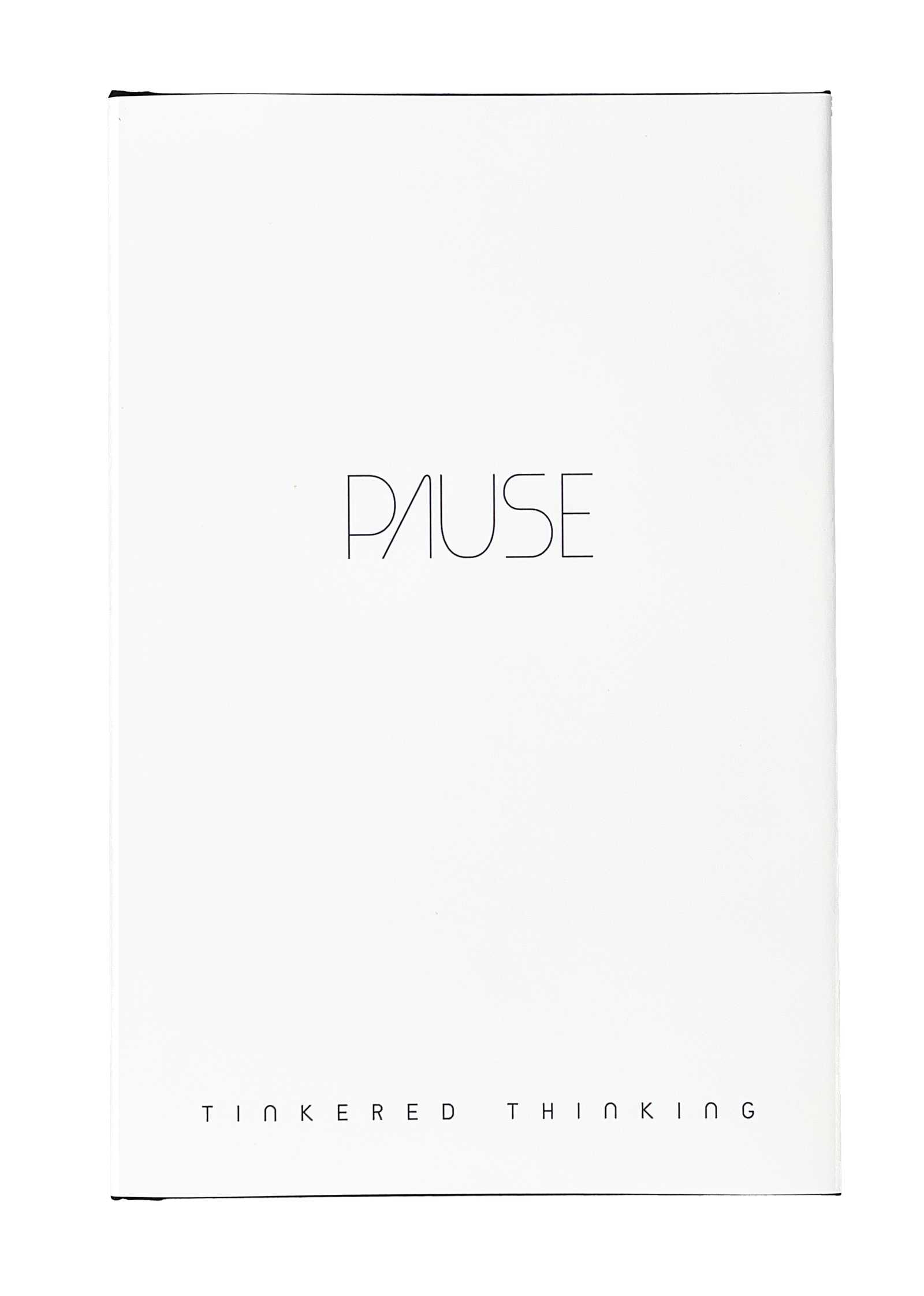
The first non-fiction book from Tinkered Thinking. PAUSE is a short book on meditation. Now available on the Tinkered Thinking Bookstore.
The SECOND illustrated book from Tinkered Thinking is now available!

SPIN CHESS
A Chess app from Tinkered Thinking featuring a variant of chess that bridges all skill levels!
REPAUSE
A meditation app is forthcoming. Stay Tuned.




ENDLESS WAYS
August 20th, 2018
Often when we express an idea or statement, we feel we’ve nailed it. And when someone does not understand, we find it mind boggling.
“How can they not understand!? I said it so clearly!”
(Strangely, we think repeating the exact same words will do the trick.)
The feeling of expression is the culprit.
But we can take it one step further. We can remind ourselves that there are endless ways to express an idea, an opinion, a feeling, a concern.
These different ways of expressing an idea, opinion, etc. are merely different perspectives on the same given topic.
As though the topic were in the center of a vast circle. Every point on that circle is a different perspective. A different way of looking at the same thing. A different angle, a different set of details.
This subject is fussed about a lot with interpersonal skills: telling a subordinate that they need to improve, talking to a boss about a colleague, expressing frustration to a partner..
But what about the things we say to ourselves?
Self-talk is a real thing. We all do it.
But have we thoroughly sussed out all the better ways we can talk to our selves?
Colleagues, bosses, subordinates, friends, family, spouses…. we connect with them and progress if we take the time to phrase things with more thoughtfulness.
Might we progress faster and more efficiently if we devote some time to the endless ways we can speak to ourselves?
A LUCILIUS PARABLE: UNINTENTIONALLY EARNED
August 19th, 2018
Lucilius was sitting on a patio, eating and drinking with a beloved old friend, watching people as they walked up and down the street. The sun was bright and people were in their summer clothes. The wine was light and cold and the food was too much for Lucilius. He smiled looking at one of the murals up on the buildings.
Lucilius’ friend was looking out at the people also, and with a mouth full of half-chewed food, said with not a little disgust.
“So many tattoos…”
Lucilius followed the attention of his friend and looked at all the designs that people had adorned their skin with. Some people had nearly all of their arms and legs covered with the designs.
Lucilius’ older friend turned to Lucilius and asked with a face confused and sad:
“Why would you ever do that to your body?”
Lucilius looked off at some bright patch of the sky and remembered his time aboard the old whaling ships during the early 1800’s. He remembered how sailors would come aboard a new ship with all of their tattoos showing. It was the resume of the times, and everyone aboard knew where a sailor had been, and what he had done to earn those tattoos. An anchor for crossing the Atlantic and Swallows to mark the many thousands of miles over the water. Every design and image had a meaning. A meaning to be earned and worn with pride. He remembered his first tattoo, the dip and prick of the point tapping into his skin. A slap on the back from a fellow sailor and swig of rum. All of his tattoos had long faded over the last couple hundred years and his skin shown unknowingly clean.
He looked back at all the designs people had showing on the sidewalk. How many of them meant something, he wondered. Had any earned their tattoos in the same way sailors earned them in years long gone? Lucilius smiled, and remembered his old friend’s question.
He turned to his old friend and looked at his friend’s round pot belly. Lucilius poked his friend’s pot belly and with a smile asked,
“Why would you ever do that to your body?”
RUT
August 18th, 2018
Everyone has been stuck in a rut. In fact, everyone is still currently in a rut. The word rut is just the negative way of pointing out a habitual thought pattern.
What would the opposite of a rut look like?
Structurally, it would look like an infinitely smooth surface. The opposite of a rut is essentially no structure.
But the moment we begin to move across that infinitely smooth surface, we leave a mark. If we travel in the same way across that surface, our footprints begin to stamp in a track. Enough trips and that track becomes a deep groove. And if we don’t like the destination, then we call this path a RUT.
We use this analogy for the mind because thoughts seem to occur in a similar way. The more we think in a certain pattern, the more likely we are to think in that pattern again. Neurologically this makes a great deal of sense. In neuroscience, the Hebbian Theory can be summarized (and oversimplified) by saying that neurons that fire together wire together. This process creates stronger pathways for electrical signals to travel in the brain. These strong pathways would best be thought of in terms of resistance. The stronger the pathway, the less resistance there is for a signal to travel down that pathway, making it more likely for that pathway to be used.
. . .In exactly the same way that a path across a grassy field is most likely to be taken because it’s most likely the fastest route, hence it is the path of least resistance and it is clearly marked out, making it the obvious choice.
. . .Or how tracing a drawing is so much easier than drawing something new.
This is why it can be so difficult to get out of a RUT – because it’s so much easier for the brain to operate in that RUT.
We need two pieces of mental equipment to deal with RUTS, and together these tools are at the core of the brain’s ability to change, explore, discover and solve.
The first is the thoughtful PAUSE.
If we know we are in a RUT, often the simple act of stopping, sitting and concentrating on some slow breathing for a few minutes is enough to gain a better sense of center.
The second tool is the question.
We must ask the right question. Often we do not start with the right question.
For example, if we are stuck in a RUT and we stop, thoughtfully PAUSE and try to think proactively about the situation, we often ask:
Why am I doing this? Why am I thinking this?
These are actually not productive questions at all. But they are a start on the quest-ioning path. Plus, the answer to these questions is essentially Hebbian’s Theory, so we’ve already got the answer.
The question tool is infinitely useful because it can be used to sharpen itself, for example we can simply ask:
What’s a better question to ask at this moment while thoughtfully pausing in the middle of a RUT.
We might be able to productively over-simplify a lot of the mental and situational RUTS that we get into by asking:
Since I know where this behavior or pattern of thought leads to, and I don’t like it, where would I like to go instead?
If basking in the warm glow of a Television, or scrolling facebook for a few hours always makes us feel like an unproductive waste. We might ask, what would be better than feeling like an unproductive waste?
We can perhaps remember how good it feels to accomplish something, even something small, like making the bed, or cleaning a room.
But an important part of getting out of the rut is making it harder to go down that path. We have to fill in the rut a little bit.
This might involve throwing a hammer at the television, or turning off the phone and putting it in a lockbox for an hour or two a day.
Thinking we will just magically develop the willpower to ignore the slippery slope of the RUT and be a more productive, interesting, wonderful human being is NOT a good recipe for success.
Best to change the environment so that it’s as easy as possible for a new behavior to flourish and as difficult as possible for an old behavior to continue.
Changing the environment can be challenging because it’s often shared, and this is the trap of the ROSE-COLORED CUFFS. But if we can use our tools effectively, we can ask the right questions that can lead us to a perspective that makes the process look like less of a hassle and more like stumbling into a better life
This episode references a few, Episode 23: PAUSE, Episode 30: THE ONLY TOOL, Episode 33: ROSE-COLORED CUFFS, and Episode 12: Natural Spring, if you’d like to explore those references further, please check out any of those episodes next.
REALIZATION
August 17th, 2018
What is a realization?
The root of this word is so clearly obvious, it begs against looking up, but it’s rarely a bad idea to dive a little deeper.
It comes from French in the first decade of the 17th century and means “bring into existence”
But what exactly is coming into existence? Do things cease to exist simply because we do not acknowledge or sense them? This seems like a recipe for disaster. This definition makes reality sound like a dream that we can create at whim.
Since we’ve all experienced those painful wakeup calls when reality smacks us in the face, we can rest assured there is something more going on here.
The word derives form the adjective ‘real’ from early 14th century, and there’s no surprise here, it means “actually existing or true”.
Tracing the outline of the obvious here, we circle back and ask: what exactly is coming into existence when a realization occurs?
We have to differentiate between two things here: reality and our MENTAL MAP of that reality.
Reality is a semi-negotiable territory. We can have an effect upon reality and rearrange it, but only in accordance to some non-negotiable rules.
Every realization is an instance when we change our MENTAL MAP based on some new information from reality.
A realization is essentially an attempt to make our MENTAL MAP of the world more real.
Every map is inevitably a simplification of the territory….
But what is of even greater importance is identifying the mistakes we’ve made while labelling non-negotiable rules.
This is at the core of first-principles thinking in physics: identifying the few non-negotiable rules and working up from there.
The important mistake is labelling something as a non-negotiable rule when in fact it is not.
Culture is replete with rules for behavior that are effectively arbitrary at their core that we perceive as non-negotiable.
For example, gravity is a non-negotiable rule of reality, while keeping the grass cut short in front of a house is a cultural rule which has no intrinsic meaning outside of it’s cultural context. The culture can easily change and we could all start planting gardens instead, whereas no change in culture is going to affect gravity.
This is why we have slogans such as:
“Think outside of the box”
“Don’t be a square”
“Free your mind”
All of these are referencing how we behave within the confines of rules that we have mistakenly labelled as non-negotiable.
The point of such slogans is to forget these arbitrary rules in order to have a greater agency, a more expansive effect on the reality we inhabit.
Any realization suddenly might fall into one of two categories, and we might ask:
Is this a realization about the non-negotiable rules of reality?
Or is this a realization about culture?
Indeed, culture is a part of reality, but the difference is that we can change one.
Any realization about the way we behave and interact as people should be tempered with a pending sense of expiration:
The way we behave and interact changes, and it can change fast, especially as a group.
Perhaps the only realization here – the one that accords to reality, is that we can have an effect on the way that change goes,
if only we think outside of that arbitrary-cultural box and take action.
This episode references Episode 123: Mental Map. If you’d like to fully explore the reference, please check out that episode next.
MENTAL MAP
August 16th, 2018
Each of us carries around a mental map of the world. Our idea of the way things are and the way they work. But like any map, it’s a simplified representation of the territory and the territory we are mapping is reality.
Google maps may be the most comprehensive map to date, even including where people were on the side walk and where cars were on the roads at the time the map was made. But all of those details are almost instantly out-of-date by the time the map is made and available, even if it’s available seconds later.
A map might be generally defined as a simplified model of something that actually exists.
We need maps because we need the world simplified. There’s just too much going on to keep track of. So we need shortcuts.
As soon as we are born, we begin building this map. First with light and shape and slowly recognizing the familiar pattern that makes up a parent’s face. We even start to build a map of our own body and the fact that we have some kind of conscious control over it, and once that map is strong enough we start using it to explore the laws of physics and gravity. We fight gravity by trying to roll over and crawl. But eventually we understand it well enough to use it instead of fight it. We use it to balance ourselves against the planet so we can stand up and walk and run.
School is supposed to help us build our mental maps in the most important areas, and yet many people feel it totally misses the mark.
Perhaps the most comforting aspect of mental maps is that they are imperfect and incomplete by default. If we had a perfect understanding of the world, there would be no need for the shorthand of a simplified map to try and understand it. This means that no one has it all figured out. Everyone’s mental map is severely incomplete. And so when we find ourselves intimidated by someone else’s confidence on a given topic, we must realize that their map may be stronger in detail around such a subject, but even a master of any given skill can still make improvements to their map. It’s the top performers who recognize this fact most acutely: the fact that there are always ways to improve.
And to improve means erasing and redrawing one’s own mental map so that it’s a little more accurate. so that it’s in accordance with reality just a little bit more. The resolution is a little higher, the proportions are just a little more accurate. The color, texture and detail are just that much more fine.
We get stuck in ruts of inactivity and depression, where we lack creativity, motivation and compassion when we stop fine-tuning our mental map. Or, when we start drawing the map without looking at reality, which is the most dangerous thing a human can do.
When we stop seeking to understand how things around us work, and begin to make up those explanations in isolation, we start to construct a collision-course. We can live in accordance to a wildly inaccurate mental map for only so long.
Imagine trying to navigate a mountainous hike with an inaccurate map. If we only pay attention to the map and ignore the reality right in front of us, we risk walking straight off a cliff. And yet, so many people make decisions and take action based on a mental map they have not updated, one they stubbornly cling to. We may say that people cling to such out dated mental maps out of a sentimental sense of nostalgia, but really, it’s fear of uncertainty.
That uncertainty comes up at the moment between abandoning some current detail of the map and redrawing it to be more accurate.
We can best understand this if we imagine drawing an actual map. If we realize that some part of it is inaccurate and needs to be changed, we need to erase part of it. And the moment before we redraw that map in a more accurate way, there’s nothing there.
That blank piece of map is a terrifying prospect for most people.
Whereas a child’s natural curiosity doesn’t even blink at such a void, it seems the older we get, the more prone we are to fear having a void in our map, even if only briefly. This is how we can get stuck using old maps which lead us into ruts or keep us on collision courses until reality smacks us upside the head with a big wake up call.
The only way to avoid this trap is to perpetually remember that a map is never finished by default. The default part is the most important part.
Maps are incomplete by default, because they are simplifications of the territory we are mapping.
All of our mental maps are incomplete by default. This should in no way be a cause for losing hope because creating a perfect mental map is impossible. It just means that we can always become a little smarter, if only we have a better grip on the territory, and the only way to do that is to have a willingness and a consistent practice of
This episode references Episode 68: Underscore or Erase? if you’d like to fully explore the reference, please check out that episode next.