-compressed.jpg)


Daily, snackable writings to spur changes in thinking.
Building a blueprint for a better brain by tinkering with the code.
subscribe
rss Feeds
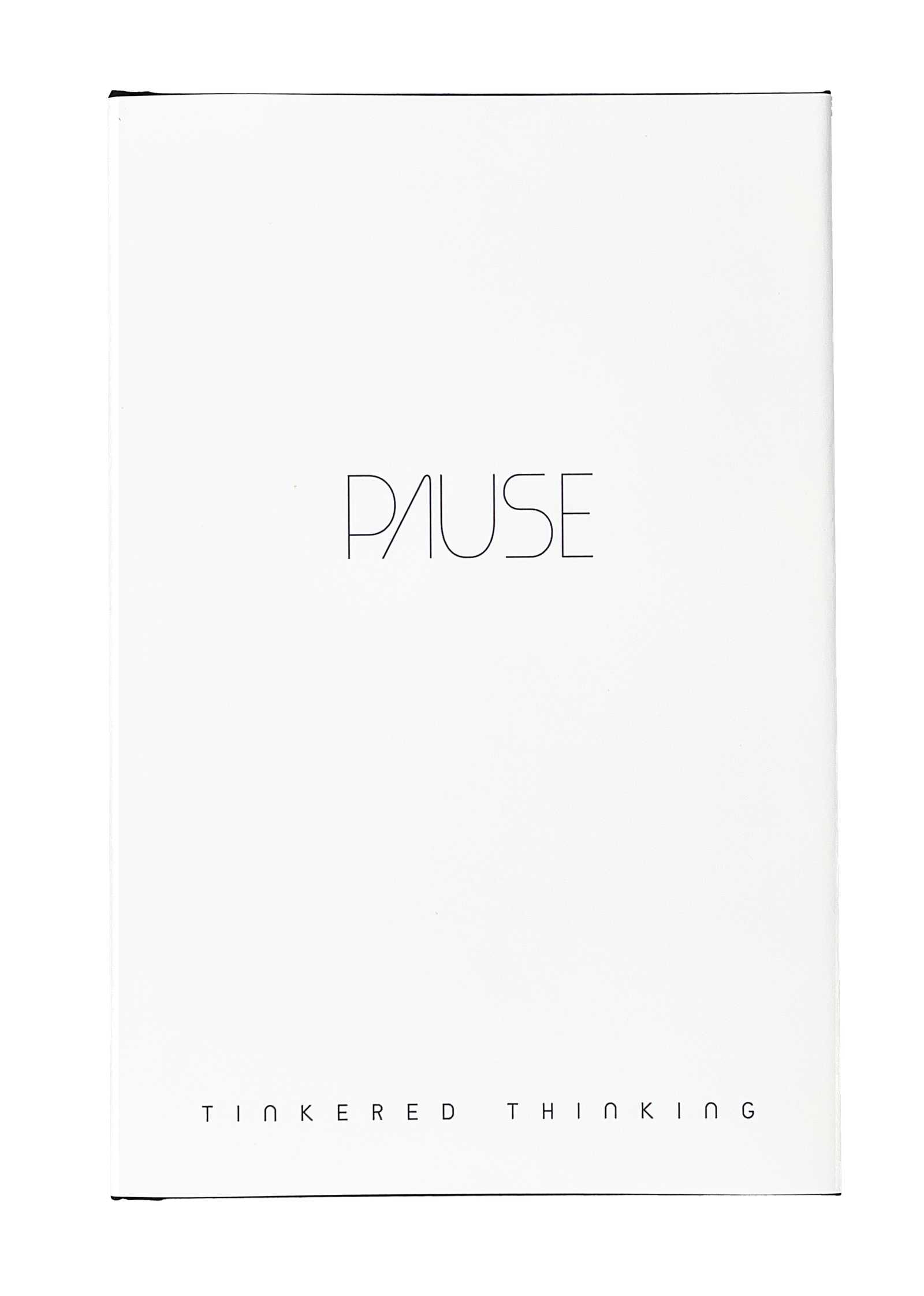
The first non-fiction book from Tinkered Thinking. PAUSE is a short book on meditation. Now available on the Tinkered Thinking Bookstore.


The SECOND illustrated book from Tinkered Thinking is now available!

SPIN CHESS
A Chess app from Tinkered Thinking featuring a variant of chess that bridges all skill levels!

REPAUSE
A meditation app is forthcoming. Stay Tuned.




ENDURE
August 15th, 2018
“I hate it, but I’m going to endure it until I understand it.”
Recently someone said this while drinking a beer.
A beer. Usually, if we order something at a restaurant, we enjoy it, or we are ok with it. But if we hate it, we have the culturally accepted option of sending it back in order to get something new.
This person, had a much different idea of what it means to experience something. The overwhelming majority of people never ever put on this sort of perspective. Restaurants are for pure enjoyment. Often sustenance and nutrition aren’t even a consideration. Just raw gustatory pleasure. Certainly not any kind of arduous intellectual endeavor, which is exactly where such useful perspectives are left quarantined in our lives.
Often it’s for work or school and under duress that we endure the difficult process of interacting with a given subject without understanding it.
Nearly all of us seem to have developed an incredible aversion to the things we do not understand. And often it’s this lack of understanding that breeds something like hate.
Think about a kid saying “I hate math.”
What exactly is going on here?
Has math injured this kid in any way?
No, certainly not.
It’s a lack of understanding that makes anyone say they hate a given topic. The lack of understanding leads a person to make a value judgment about themselves, and because that judgment is a negative one, negative feelings are projected back at the subject.
This is a perfect example of the ageless trap of taking things personally.
Math has no intentions about the person who does not understand Math. It holds no grudges, just as the beer holds no grudges, intentions or ill-will towards the beer drinker.
Opinions about beer, or about math are inevitably aroused from the story we tell ourselves about who we think we are.
The past seems to tell us who we are in conclusive ways. We think we are terrible at math because of some bad grade, or the assessment of some teacher, and we hold on to those experiences as proof of who we are or are not.
But these past experiences are merely events where we failed to endure a lack of understanding to it’s end.
To endure means to stay solid and steadfast.
Many times, we are too embarrassed by our own lack of understanding to confront it effectively. We take refuge in an emotional outlet by expressing hate about the subject, instead of calmly debunking our ignorance with small, hard-won realizations that amount to an understanding of a given subject.
It’s clear that enduring our own shortcomings and working through them and past them will result in more understanding, and ultimately more compassion.
We are less likely to hate, if we understand more, and in order to understand more, we must endure the unpleasant time of actively experiencing our own ignorance.
Whenever we find ourselves saying we hate something. It is nearly always an indication of our own shortcomings.
But if we can understand something by going through the difficult process of enduring our ignorance on the subject, then we can effectively
solve our hate.
ITERATE
August 14th, 2018
Groundhog day is a movie where the main character experiences the same day over and over. It’s the exact same day, Groundhog day, and he has to endure the same celebration in a small town over and over and over.
The main character, played by Bill Murray hates the beginning of the process and tries in vain to get away from it all. He even resorts to suicide. But alas, he is given the same day once again.
He finally comes to a sort of peace with the situation and begins to embody a frame of mind that is less based on being imposed upon by external circumstances, to a perspective that is more akin to “What the hell, might as well do something with the time.”
This is where the character begins to change and blossom.
He begins to explore and more importantly he begins to ITERATE.
With piano lessons, with ice sculpture, with all sorts of things.
He devotes a little of each day to iterating on this or that project.
And in each areas, things begin to COMPOUND.
The most brilliant part about the movie is not that the character gets the gift of a seemingly infinite repeating day.
The brilliant part of the movie is that it’s really not any much different from normal life.
Yes, different things happen from day to day. But with routine, structure and schedule, we can make our own Groundhog day, and in so doing create repeating spaces were we can make progress on all sorts of fronts.
One good one is waking up.
For a lot of people, waking up is a painful, difficult, miserable process. The reason why it’s often difficult is because our focus is backward. We are thinking about how comfortable and restful it was to be asleep.
But what happens if similar good feelings apply to the things we are about to do? Like waking up early to open gifts on a holiday, or get going for a vacation that has been in the works for a while.
Or how about a project that we’ve been making progress on.
What is the project is an insanely simple one.
What if the project is just to wake up with more drive and motivation?
How might we accomplish this repeating feat?
No formula will work for everyone and this is why it’s so important to ITERATE the process and try to find what works.
It might help to replace the alarm clock with a coffee maker that brews on a timer. It might be helpful to adopt a cold shower routine first thing in the morning. Or doing pushups or stretches or meditation or figuring out what the best food to give the body first thing might be.
Regardless of what the final formula for the best possible morning wake – up routine might be, the most important thing to undertake is the process of Iterating.
We may find that we can always make it a little better.
And in so doing we never hit a plateau.
We are living a trend.
The truly strange thing about embodying a living trend with any sort of iterating project that we attempt to improve ourselves through is that with any kind of consistency and perseverance, we can perpetually experience a better version of ourselves. This would mean that every moment is a time when we are better, which effectively means we are perpetually experiencing the best existence we’ve experienced because our ability to engage with reality supersedes all prior moments.
Of course no one functions on this kind of upward trend. We all fall a few paces behind in this or that respect or with this project or that hope. But the prospect is still one to shoot for, because it is a perspective that offers a high probability for improving.
This episode references Episode 80: Compound. If you’d like to fully explore the reference, please check out that episode next.
NEXT LEVEL
August 13th, 2018
How many levels are there? This is a fairly straight-forward question when it comes to a video game. It’s like a book. There’s a first page. A beginning, a middle and eventually that last page comes around and hopefully, if the writing is good enough and the imagination of the game developers is creative enough, that last little bit of the book or the game is as satisfying as possible. A paragraph, or level, or boss character to defeat that requires the context and skills of the entire game or book in order to succeed or truly appreciate.
What about life?
Often we here people say colloquially “That’s some next level stuff”.
But what does this mean?
How many levels are there?
Is there a glass ceiling of growth that we cannot go beyond as individuals? A final plateau that we are forever stuck on, running flat toward an infinite horizon, forever unable to attain anything higher, more expansive in context?
No.
As humans, we can always keep growing. The problem is that the process either gets cut short, or we start to go in the other direction: we start to decay.
Remember, it’s best not to rest on one’s own laurels. Our minds are sharks and if they are not moving forward, they are dying.
If our brains are not challenged with learning and new knowledge, then our brains are decaying.
It seems that the shifting nature of the present does not allow for much stability. As much as we like to fool ourselves otherwise.
Each moment is either a moment of growth and learning
or
it is a moment of decay and oblivion.
For the depressed mind, staring at the past and seeing a lack of accomplishments might be akin to chewing on some kind of masochistic gristle, and in turn hinder or downright prevent any change for the better as the focus on the past determines the future by perpetuating the past.
We must remember that the present moment is a TIGHTROPE, where neither the past nor the future actually exist.
Our next action is constantly a blank slate, no matter the past, no matter our accomplishments or lack thereof.
Focusing on the past too much results in decay and oblivion. Fearing the future or fantasizing about it too much likewise is a recipe for the decay and oblivion of the moment.
Each moment is a choice between decay or growth.
We can sink back down a level and let more time pass us by.
Or we can LEVEL-UP and grow.
The truly incredible piece about being alive is that while we know where the bottom level is, whether it be beginning with birth or decaying into death, we do not know where the top is.
As far as we know, there are infinite levels above us through which we might ITERATE.
All of us can, within a minute or two, think of areas in our life that we’d like to be better. Areas where we’d like to LEVEL-UP.
Often the steps to gain that next level are fairly simple, straight-forward and even blatantly obvious.
Figuring out the steps to the next level is not the hard part.
The part we seem to have so much difficulty with is choosing in the moment to take those steps, one after another, consistently, by paying mindful attention to what we are doing during that moment.
This episode references Episode 42: Level-Up and Episode 88 Tightrope. If you’d like to fully explore these episodes, please check them out next.
A LUCILIUS PARABLE: NORMAL IS THE NEW CRAZY
August 12th, 2018
Early in the Twenty-First century, Lucilius found himself on a bus, tired and staring at a woman who was clearly homeless and lacking in the sort of mental stability that was considered normal at the time. Lucilius was very tired and did not realize how off-putting his staring might be. He was looking at the details of this woman’s poverty. The cheap stretch pants that teenage girls had worn a decade prior, a jean jacket that had the wrist cuffs chewed off, and a faux Louis Vuitton suitcase that was mended with duct tape along one side. The front of the suitcase was bedazzled with small, fake, plastic jewels to make a unicorn head.
Lucilius, being so tired, dazed off into a blurry middle space, and did not realize he was still looking directly at the woman.
On the quiet bus, she noticed and yelled.
“What the fuck do you think YOU’RE looking at?”
Abruptly, Lucilius snapped back to attention, realizing the woman was speaking to him, realizing his casual mistake of staring haphazardly, but rudely in her direction.
Lucilius quickly wondered what response he might say. He could ignore this woman. It was common practice to just ignore the loudly less fortunate. He could spit words back at her in the manner she had.
But this is a person, Lucilius thought. And he had been looking in her direction, not out of some perverse sense of anthropological disgust, but with genuine interest.
“I was looking at your bag,” Lucilius said. “I really like the unicorn head.”
The enraged woman’s face softened.
“Oh,” she said. “Why thank you. I did it myself.”
“How long did it take?”
“This? Oh just a day or two. Had to do it twice cause I didn’t have enough sparkly bits and didn’t realize, so I had to make it smaller.”
The bus lurched to a stop and the woman realized in a fluster that she had to get going. She propped herself up and gathered her belongings and started shuffling toward the door.
She stopped where Lucilius stood and smiled quickly at him.
“Nice talking to you.”
“You too,” Lucilius said.
The woman shuffled off the bus humming and walked into the night.
Interesting, Lucilius thought. Lucilius looked around the bus at all the other people. None of them seemed phased by the interaction in any way. Normal, Lucilius wondered. This is what normal is supposed to be. There was something uniform about all the people left on the bus. Something subdued. Something sadly insane.
Normal is crazy, Lucilius thought. Because it’s safe and nothing is more dangerous than playing it safe.
GROW GILLS
August 11th, 2018
The brain might not be able to shape-shift as fast as a chameleon changes colors, but it certainly has the ability to change itself drastically over time, if there is enough pressure or curiosity.
One way to think about our shifts of perspectives is to think of our personality like an evolving organism. It can be inspiring just to think about how many changes some organisms have gone through to reach their current form.
Take whales for example. They started off as a sea-creature, evolved into a land creature, and then returned to the ocean to become the biggest animal on the planet today. These sorts of iterations take much time because the lifetimes of such creatures are so long.
Fruit flies on the other hand are used in experiments because they iterate so fast. They are lucky to live for a month and a half. Such a short lifespan is a boon to researchers who wish to observe changes between generations.
But what about the evolution of the mind?
Surely none of us can claim to be the same sort of person that we were when we were 5 years old. And only a sadly short-sighted 80 year-old is going to claim they are the exact same person they were when 18 years old.
It’s clear we change over time, and naturally this must be a result of changes in our brain.
As with exercising the body, it’s equally clear that mental hardship only does the brain good: solving a problem is far healthier for the brain then endless hours in front of a languid sitcom.
Often we are hurried along to perform the same task day-in and day-out at a job or due to the obligations of family. A lack of variety is akin to a languid sitcom in this case.
But we do not PAUSE to consider the ramifications.
Indeed it’s often painful to PAUSE because to do so involves facing some hard truths about the way we spend out time and it can be sad, disheartening experience to realize that our life does not match our PRIORITIES. And we humans have a fantastically detrimental ability to avoid such experiences.
But if we can endure that uncomfortable space.
Like a creature diving farther down into the water for sustenance.
We might evolve super-efficient lungs.
Or… if we hold our breath long enough, we might just grow gills.
Just imagine this super-power: The ability to do with ease anything that is uncomfortable, taxing, difficult or scary.
This is like a person who takes cold showers merely on the principle that it’s an exercise of will.
If this kind of vigilance over one’s self could be extended to all areas of life, what might we be capable of?
What might we achieve?
How much more of that unknown depth might we explore if we could grow gills?
This episode references Episode 23: PAUSE and Episode 10: PRIORITIES, if you’d like to explore these references further, please check out those episodes next.