-compressed.jpg)
Daily, snackable writings to spur changes in thinking.
Building a blueprint for a better brain by tinkering with the code.
subscribe
rss Feeds
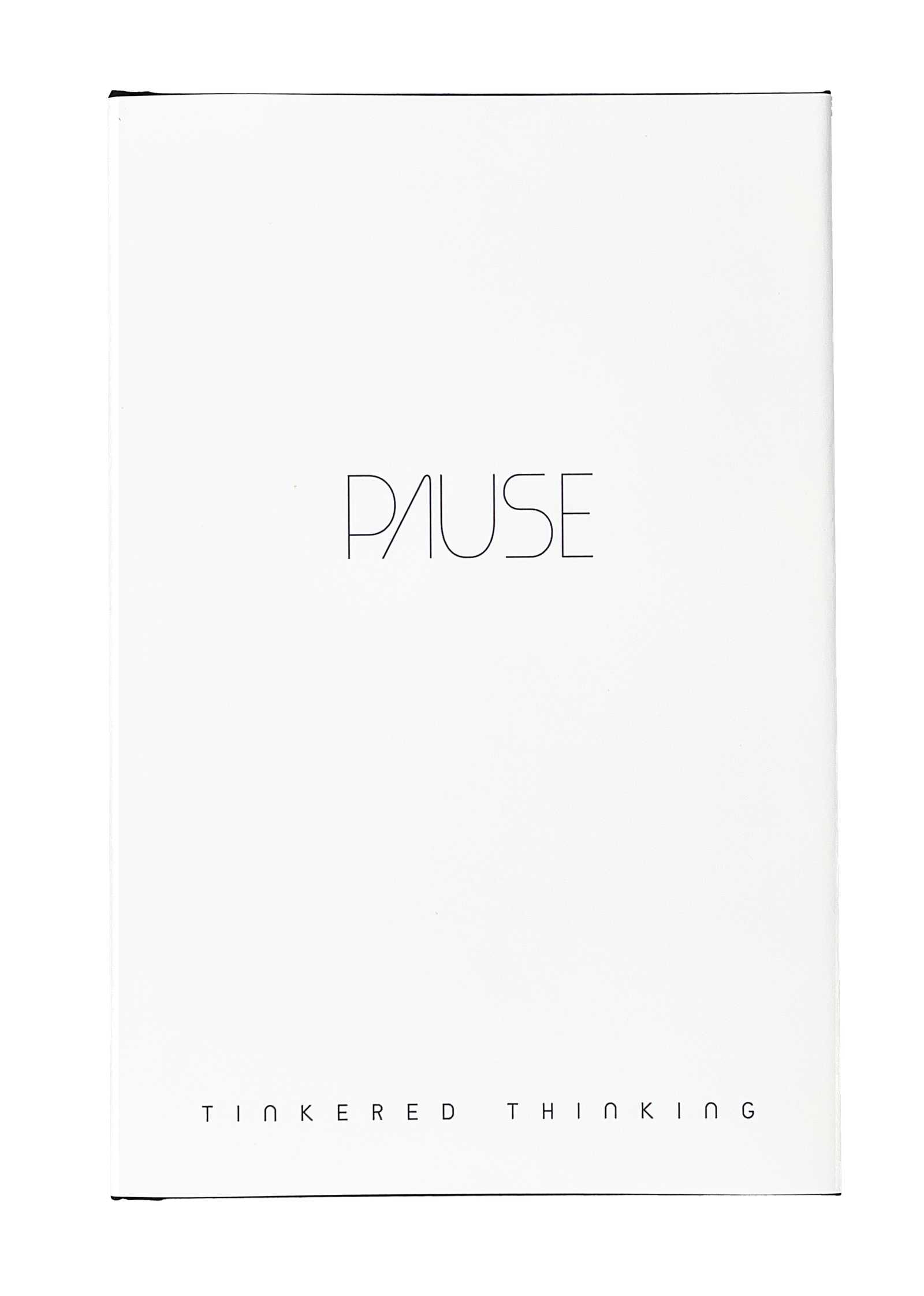
The first non-fiction book from Tinkered Thinking. PAUSE is a short book on meditation. Now available on the Tinkered Thinking Bookstore.
The SECOND illustrated book from Tinkered Thinking is now available!

SPIN CHESS
A Chess app from Tinkered Thinking featuring a variant of chess that bridges all skill levels!
REPAUSE
A meditation app is forthcoming. Stay Tuned.




THE CLEAVER
August 10th, 2018
The WELL OILED ZOOM is the ability to zoom in and out on subjects. It’s akin to seeing the forest and then taking a look at a single leaf or vice versa. It’s an incredibly important skill to have because otherwise it can be like walking around looking at the world through a TUBE. Just try to imagine driving a car looking through a pair of binoculars.
Sometimes, however, things can get to the point where our ZOOM is effectively stuck, and life is constantly focused on one thing. Those who experience depression or anxiety might feel as though their zoom is stuck in this way in the sense that repetitive and negative thoughts are often a hallmark of these experiences.
If such a sort of condition were literalized as a tube someone felt forced to perpetually view the world through, how eager would a person crave a way to chop down that TUBE, to get that zoom working again and see the world in a different, larger, more generous way?
One important avenue is is to use THE ONLY TOOL, which is a method of designing a series of questions that create better questions. Asking the right question can be like taking a CLEAVER to the tube stuck to our own narrowly focused view.
THE ONLY TOOL is merely the act of finding a better question.
Perhaps we feel as though we have asked all the questions we can, but this is a hall mark of a ZOOM that is stuck.
The key to building a CLEAVER is remembering that there is always a better question we can ask. A better question we can ask of ourselves. A better question we can ask about our situation. A better question we can ask about the questions we’ve thought of so far. A question that can sharpen a question, and in so doing cut through whatever fog keeps us from seeing a more generous, wondrous life that we can explore creatively and curiously.
This episode references Episode 54: The Well-Oiled Zoom, Episode 30: The Only Tool, and Episode 113: The Tube. If you’d like to fully understand those references, please check out those episodes next.
BREAKTHROUGH THE CLOUD COVER
August 9th, 2018
What exactly is breaking when we have a breakthrough?
A breakthrough in therapy.
A breakthrough in a research project.
A breakthrough while starting a business.
More than anything, what is breaking is the CONTEXT. What exists on the other side of that break is a larger, more generous CONTEXT that includes the previous context. The breakthrough is an expansion of CONTEXT.
In all of the examples, the therapy breakthrough, the research project, and starting a business, any breakthrough hinges on something we did not know, something we were not aware of and could not conceive of before the breakthrough.
A breakthrough in any of these areas involves learning something which adds a piece of knowledge or insight to our CONTEXT.
If we think of our own personal CONTEXT as all the perspectives we take on all topics plus all the knowledge we’ve gathered through our life and visualize it like a puffy cloud, what does a breakthrough look like?
We’ve all seen those sped up videos of clouds growing from seemingly nothing.
A breakthrough is like one small part of the cloud getting larger, gaining ground, and taking up more space.
We can imagine the personal CONTEXT of all people as little fluffy clouds that are slowly growing and morphing in shape as they learn and grow in different ways.
The analogy extends a little further.
We can ask: do those pleasant cute little fluff-balls of cloud actually DO much? No, not really?
It’s the huge, rolling thunderheads, the massive cumulonimbus clouds that extend straight up to the stratosphere that do something. These clouds provide massive amounts of water to the ground below and charge the soil with nitrogen, and yes, sometimes create damage with floods.
But the point is such a cloud has an effect.
How does this relate to our own personal CONTEXT.
Think of the person who would be best represented as a huge cumulonimbus thunderhead and compare it to one of those small Toy Story clouds.
That thunderhead has a much larger CONTEXT. That thunderhead represents a person who can entertain and understand a much greater variety of perspectives. Someone who has done the work of gathering lots of knowledge.
And just as the huge size of the cumulonimbus allows it to give back in the form of rain and lightening and thereby have an effect…
The person who has strived to expand their own CONTEXT by gathering knowledge and understanding many different perspectives can likewise have a much greater effect on their own life and the lives of those they connect with.
The difference might be akin to the amount of knowledge and flexibility of perspective a university professor has compared to that of a young child who has a much smaller CONTEXT.
Expanding one’s CONTEXT is uncomfortable work. Indeed one way our CONTEXT expands is when we are forced by external circumstances to confront something difficult. But we cannot rely on external circumstance alone to inhabit a better CONTEXT. We must challenge ourselves.
Otherwise we will be relegated to being one of the sheepish clouds, floating by the thirsty land.
Or, we can become a thunderhead that has unstoppable GENEROSITY.
This Episode relates to Episode 79: Rotten Cherries and Episode 93: The Generator, if you’d like to explore these references, please check out those episodes next.
BROKEN MOLD
August 8th, 2018
Occasionally, when we wish to highlight how special or unique something is, we say that the mold broke.
“They broke the mold when they made you.”
A mold is used to create the same thing in a uniform way, over and over and over. Breaking the mold means we must start from scratch and create something new.
But the phrase connotes something innate. Something that came before someone’s eyes popped open for the first time. And this is not as useful as it could be.
Many aspects of our lives and the systems which govern our days work like a mold. We are molded by school to expect waking up early in the morning to then commute to some building where we are expected to do work for a good portion of the day. The habitual practice of school molds us to conform to the daily 9-5 jobs that generally come after schooling. Our behavior is not just the thing being molded by these systems and practices. As with any behavior, it is rooted in our thought. The environment that surrounds us and the systems it makes up molds the way we think to a large extent.
And much of this ‘molding’ is dissatisfying, and even depressing.
We may bemoan the fact that whoever made us before our eyes popped open didn’t break the mold so that we could be different and special in some admirable way….
Or we could look at all the aspects of our life that is trying to mold us. Into a certain person. Who does a certain set of things. And we could wonder: how do I break this mold?
A walk down any old shady sidewalk can give us a lesson in breaking the mold.
It’s easy to trip on such sidewalks because if a tree is nearby, chances are one of its roots has pushed the sidewalk up and cracked it. Most all of us have had this experience.
But has anyone actually ever seen the sidewalk crack in this way?
No, and it’s because of how slowly, but consistently the tree grows.
With a constant pressure, and constant growing, the living flesh of a tree cracks stone and rock.
While it would be faster to take the proverbial sledgehammer to one’s life in order to crack up all the things that are molding us in ways we don’t like - in the same way we can FIREBOMB OUR LIFE, the tree root provides a bit more precision, if we are willing to be consistent and have patience.
If, for example, someone is dissatisfied with their 9-5 existence, simply quitting solves the problem immediately, but not for the long-term. On the other hand, if such a person were to spend a little bit of every evening and the weekends planning something new, say a business, then slowly, with consistent work, and growth, such a person can crack through that job-mold.
Our own thinking is a sort of mold for our daily behavior.
And if our daily behavior has lead us to a dissatisfying place, then we’ve got to address what’s molding that behavior. Often what's needed is a question. THE RIGHT QUESTION can crack an opinion in two and leave us in a much more interesting space where we must come up with a better thought, a better mold, and that will begin to change the way we behave.
This episode references Episode 15: Firebomb Your Life, and Episode 19: The Right Question. If you'd like to fully understand the references please check out those episodes next.
HAWK AND THE HOUND
August 7th, 2018
The dog does not have very good eyesight. At least compared to the nose. Even if the ‘target’ can be seen, the dog still follows the scent, even if that scent takes it in a round about route.
Why?
The obvious answer is that the nose is a stronger source of information. And maybe there’s not a super high correlative power between what is seen far off and what is smelled. (Perhaps birds of prey are the exact opposite).
But there is far more to appreciate about a pooch with it’s nose to the grindstone – so to speak.
The Blood Hound is living exclusively in the moment and pivoting at an incredibly rapid speed as the nose dodges back and forth, following the highest concentration of smell. It knows something is there, but more importantly, the hound doesn’t need to see the final destination. The hound’s ability to suss out where to go on a moment-to-moment basis has embedded in it an implicit faith in the fact that the process works.
Unlike The Big Launch which is exclusively focused on some distant, future fantasy, the hound is working with what it’s got, in the present.
Consider also the Hawk. Soaring high above with excellent vision. Some prey is seen, and boom, the hawk goes into a dive bomb. Poor little rabbit.
Do we imagine our endeavors more like the Hawk or more like the Hound?
Which would be more useful?
We would do well to note the difference in environments. The hawk is floating through the air which has practically no obstacles. The hound is perhaps navigating a forest where straight shots rarely exist.
Which environment is a better analogy for our lives? A straight shot towards our goals? Or a shifting terrain full of obstacles that are rarely seen until they are right in front of us?
The Big Launch is planned and executed like a hawk dive-bombing towards prey.
But we do not live in a sniper’s paradise.
Being focused on some distant object can blind us from the sinkhole we’re about to walk into.
Best to sniff out some kind of success instead of imagining it and aiming for it.
Best to look around at what’s close, see what we have to work with: Stop and smell the roses.
Wake up and smell the coffee.
Never know. There might be some curious scent to follow.
Who knows where it might lead, but a scent will tell you:
there might be something there.
If only we follow it, instead of plan it.
This episode references Episode 72: Perseverance Vs. Pivot. If you’d like to fully understand that reference, I suggest checking out that episode next.
THE TUBE
August 6th, 2018
It’s easy to forget that a context larger than our own thinking exists. Indeed a context exists that is larger than all human perspectives combined. We are invariably trapped in our own perspective and the context it creates.
One way to visualize this is to think about something we all did at least once as a kid. Walking around while looking through a long tube. What does the world look like the longer the tube is? What does the world look like the more narrow the tube is?
If the tube is longer and more narrow, our context becomes increasingly small. It almost has the effect of ZOOMING IN. It’s easier to focus on the small portion of the world we can see and our focus determines our reality. In some sense, our focus determines who we are as people.
Identity could be defined as the mental context in which we imagine ourselves, similar to the visual context of the world we see at the end of the tube. The word identity comes from a root that means ‘same’. We imagine who we are on some sort of ultimate level of reality is the same as what and how we imagine ourselves to be. But these two things are different and we perpetually forget it. We can know there’s a difference because, sometimes, we surprise ourselves. When it turns out we can do something we didn’t think we could do. When we say something we’re impressed by. These little cracks in the continuity between who we think we are and who we turn out to be show that who we are is greater than what we merely think. We must remember this, and try to extrapolate on it.
Identity, or the way we think about ourselves, is a function of the words we use, just as our visual field is a function of the tube we look through and how long and narrow it might be. Luckily, the same words that box us in with our thinking can be rearranged to form the tools to open up our perspective. The words that build our own personal prisons can also be fashioned into keys to unlock doors or sledgehammers to BREAKTHROUGH walls.
Words can cleave open others, expanding less useful concepts into more generous contexts. Words are like Aladdin’s genie in the lamp. They can describe and design any concept we can imagine. Just as they describe and design the self-made prisons in which we live, or the tubes through which we look at the world, those same words can be fashioned into a CLEAVER which can hack that tube down so we can see more, or hack our way through the walls that keep us.
But first we must ask: am I walking around looking at the world through a sort of tube? Or are there specific subjects, or people, or situations that I look at as though through a tube?
Often it’s not a bad thing to narrow our focus, to zoom in and concentrate. But as most all of us learned as kids walking around looking through a tube, it’s easy to lose site of the larger context and trip and fall on something.
This episode references Episode 54: The Well-Oiled Zoom. If you’d like to fully understand the reference, please check out that episode next.