-compressed.jpg)

Daily, snackable writings to spur changes in thinking.
Building a blueprint for a better brain by tinkering with the code.
subscribe
rss Feeds
The first non-fiction book from Tinkered Thinking. PAUSE is a short book on meditation. Now available on the Tinkered Thinking Bookstore.
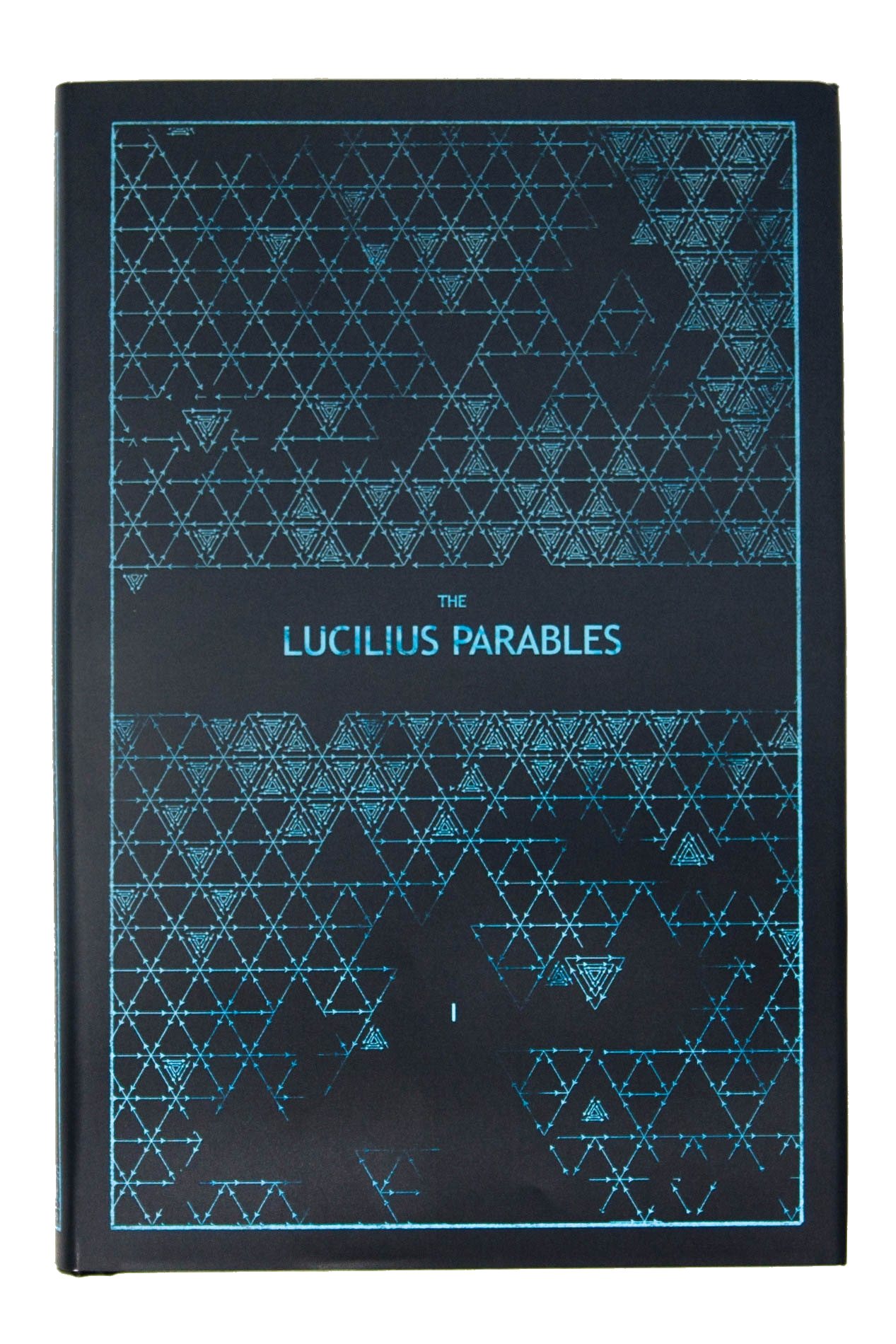
The SECOND illustrated book from Tinkered Thinking is now available!

SPIN CHESS
A Chess app from Tinkered Thinking featuring a variant of chess that bridges all skill levels!

REPAUSE
A meditation app is forthcoming. Stay Tuned.




A LUCILIUS PARABLE: STUBBORNNESS
August 5th, 2018
A young man approached Lucilius who was watering a plant in a neighbor’s garden and was asked why people are stubborn.
Lucilius watched the soil around the little plant darken and sink. He responded: “All are weary of who they invite into their home lest the guest make a mess of things. They fear not the mess, they fear the cleaning.”
“I do not understand,” said the young man.
Lucilius turned to the young man and asked, “have you ever entertained a good friend at your home?”
“Well yes, of course” said the young man.
“And when the party was finished, did you smile thinking on the good time as you put your house back in order?”
“But of course,” said the young man.
“You take out your fine china, and cook according to your plan, and when all is finished you know where everything is and you know the place where they must return. There is no confusion. And so even though there is effort to entertain a friend, it is not difficult. Would you agree?”
“Yes, but what does this have to do with people and how stubborn they are?”
“We are reluctant to entertain guests who might make a larger mess than we like to expect. Our fine china may break in such a mess. Things long forgotten may be pulled out into the light unintended and when we put things in order we are confronted with these mistakes from the past. Things do not simply return to the way they were before. Entertaining Strangers is risking the order of our homes. This is why people only entertain ideas they already agree with. To do otherwise is to think long and hard about a new order for our minds.”

THE LITTLE RED BUTTON
August 4th, 2018
What does the little red button signify? In movies we see the little red button in control rooms for a launch, or underneath the desks of bank tellers, or in a special suitcase.
The little red button can be an abort button, or a panic button, or it’s the last step to launch something big.
It’s used for extreme events, when we are either retreating in panic or initiating a move forward with tremendous force.
Everyone has a mental version of this. A little red button that we use. But how is it wired? Does it cue the frustration? Does it release the floodgates of emotion and tumultuous language? Do we always regret pushing the little red button, wishing it had some sort of locked cage over it? Do we use that little red button to launch missiles in panic?
Or is the little red button something we eagerly look forward to? Something we know we can’t push until everything is ready and set. Something that has hushed reverence while we put together the rocket ship that will explore an exciting and new distant territory?
Imagine the young kid who has spent painstaking hours building her contraption, wiring parts together, fixing motors and wheels or levers. Perhaps it all started when she came across a box of electronics and found a red button, unused, hooked up to nothing. What did she imagine? How inspiring could it have been to think about what that button could start. And so she builds something and finally hooks up the red button. Imagine that moment as she pauses just before hitting the button, like pushing the first of a long line of dominos.
We’ve got to ask, what’s our red button hooked up to? An array of explosives that we’ve rigged for the next time someone pisses us off? Or is it reserved for those special OCCASIONS when we’re ready to see what our hard work can do on its own?
This episode references Episode 105: OCCASION, if you'd like to fully understand the reference, please check out that episode next.
BAD PATTERN
August 3rd, 2018
We love patterns. Our ability to recognize them and extrapolate on these correlations has given us incredible abilities to understand and create.
But with anything that we’ve inherited from time. It’s fair game to expect that it’s operating with a couple of bugs.
Music is perhaps the most obvious example of this pleasure of patterns. Music is all about patterns, and indeed this hold on a level deeper than just repeating notes and beats.
The reason why some notes sound good together and form a ‘chord’ and other random assortments of notes don’t sound good has to do with this love of patterns and our innate ability to recognize them. The different notes of a chord sound good together because when the individual resonating frequencies of each note are literally laid on top of each other visually, they match up in a bunch of places – hence a pattern, that our brain can instantly hear. It’s the recognition of that overlapping pattern that gives us pleasure.
What is more interesting is that random notes that don’t sound good together have resonating frequencies that do eventually match up! But the distance between correlated parts is far enough away that it’s harder to recognize. The correlation seems less strong, and therefore less pattern is recognized and less pleasure is produced in the brain.
It’s clear we favor high correlation and short distance between correlated parts when it comes to our pattern-recognizing software.
Could this be a problem?
What if it’s beneficial to ignore the small highly correlated pattern in favor of the bigger pattern that has correlation spread out over a lot more time?
Would our pattern-recognition software lead us astray here?
In 1967 Martin Seligman performed some interesting experiments and discovered a phenomenon he dubbed ‘Learned Helplessness”
To summarize his experiments quickly, he put some dogs in an uncomfortable situation that was designed so they had no ability to change the situation and make themselves more comfortable. He then placed the same dogs in an uncomfortable situation that they could change. The dogs did nothing. They had incorrectly learned that they had no power over their situations. Given the new situation, they did not even try. While a control group that had always had some autonomy over their uncomfortable situation readily took a chance, tried something and made their situation better.
Both groups of dogs were exercising pattern recognition in the first part of the experiment. The ‘helpless’ dogs quickly came to the conclusion that there was no correlation between their efforts and any change in their environment. In this case, no correlation IS the correlation. Where as the autonomous dogs found a correlation between their efforts and the changes in their environment.
This learned correlation then carries over into the new situation. The helpless dogs are convinced that there is no correlation between their efforts and their environment, and they do nothing.
These dogs formed a conclusion very very quickly.
Humans are prone to this exact same ‘Learned Helplessness’, and many researches believe it may be at the heart of clinical depression.
Learned helplessness occurs because we think we see a pattern and a correlation:
I do this and I fail. I do it again, I fail.
Ladies and Gentlemen, we have a pattern.
And once we recognize this pattern, the conclusion it creates is impossible to remove without counter-intuitive and difficult self-questioning. The acceptance of the conclusion then creates a negative feedback loop where acceptance of the tiny pattern then replicates the pattern, making the pattern bigger, the correlation stronger, and therefore making it seem like it’s validity is more robust.
If our effort is a foregone conclusion in this way, then the result of our effort is an inaccurate reading of our effect on reality.
Accepting the conclusion creates the illusion of further confirmation that the original pattern is relevant, when in reality there is an important distinction that should be made between an authentic pattern and which tiny authentic patterns we deem relevant.
Think of how many times a baby falls and struggles as it learns to walk. Not only is the effort impressively consistent, but more importantly, the effort is just a constant fail.
Perhaps babies are literally too unaware to realize just how epically they are failing. Ironically, it is this lack of awareness that eventually enables them to succeed.
COMMUNAL DREAM
August 2nd, 2018
In the practice of mindfulness it’s occasionally recommended to try looking at daily life as though it were a dream. This is recommended in order to help the mind ‘let go’ a little bit, and take things a little bit less seriously. This is not because important things aren’t serious, but because the shift in perspective can be very beneficial.
The exercise can also unearth some interesting aspects of our relation to reality. Such as how similar dreams are to our experience of the past. Both are remembered, only.
We cannot go find the past, hold it, touch it, or experience it again. Much like a dream. We cannot go find a dream we have had, we cannot touch it, hold it, or experience it in any way other than memory.
Considering this, the past might be more accurately described as a communal dream than anything that has a basis in reality.
Reality is defined as “the world or the state of things as they actually exist, as opposed to an idealistic or notional idea of them.” And everyone always disagrees on what happened, even in the very recent past, which betrays the fact that we are converting our experience of reality into a remembered perspective, one that is limited and flawed.
The definition of reality excludes the past from being a part of it.
This is a point worth pausing on for a moment. The definition of reality does not include the past. The past simply does not exist. Reality might be the conglomerated ramifications of that communal dream we remember, but all of those events no longer exist. The past exists only as a communal dream that we all somewhat remember being a part of.
This can be a scary notion. But it can also help us focus more on the present moment and appreciate the moments we have with others and the opportunity to take advantage of the time we have to do something we feel is worthwhile.
There is also something very liberating about seeing the past as merely a dream. We become less tethered to what has happened. There is less of a reason to hold grudges or continue to be sad about something that we remember happening, or something lost that once was. While some things in the past are healthy to honor, most of our preoccupation with the past is an unhealthy one that keeps us from exploring more productive avenues in the present. Realizing that the past is not actually a part of reality can help us severe those tethers and take healthier risks that might improve our reality and the reality of those around us.
Though, this all may be so we can all just remember a better dream.
CHEAP THRILLS
August 1st, 2018
There are endless ways to waste time. Indeed, the only real question in life is how shall we spend our time? Much of the economy is based on pleasure or entertainment to fill up this time and most of it consists of cheap thrills.
There it is: Time. The most valuable resource that we know of. A resource that only runs down and one that we can’t quantify, because we never know how much time we have left. And yet we squander this divine resource all the time with cheap thrills. What exactly does that mean?
A cheap thrill is a value indication not only of the person who creates the cheap thrill but it’s also a value indication of the person who buys the cheap thrill.
And a ‘value indication’ in this case is how much each person thinks or feels their time is worth. Or perhaps more accurately, it’s part of a mental habit about how valuable such person thinks their time and their effort is worth.
It might be useful to ask: Do I have a habit of acting in a way that does not make my time very valuable?
We might think our time is valuable. We might know our time is valuable. But do we act in ways that demonstrate just how valuable time is?
For the person who creates a cheap thrill and the person who seeks such a thrill, there exists a subtle prison of feedback here. The person who can only afford a cheap thrill might rationalize that such an activity is justified because nothing better can be purchased. This is a case of playing the victim. If such a person isn’t willing to admit that their time is only worth as much as the cheap thrill they actually pay for, what’s really happening is that they are denying the fact that if they skipped the cheap thrill and thoughtfully paused to consider how such time could be better spent, then it would make their time more valuable than it was when it was spent with the cheap thrill.
Such a denial is what keeps this loop spinning.
Likewise, the person who creates a cheap thrill is doing something very similar. They might be wealthier, perhaps much wealthier than the person who can only afford a cheap thrill, but there is not an exact correlation between money and time. This isn’t indicated just by the fact that some people can procure lots more money in less time, but also by the fact that most people facing death would pay any amount of money just to get more time.
The creator of cheap thrills may create wealth, but such a person devalues their own time.
Again, when it comes to time, we would be best served not ask “how can time best be converted into money?”, but simply, how best can we use our time?
If we find ourselves habitually spending time in ways that seem to devalue that precious resource, then the first good use of time would be to thoughtfully pause, potentially for much longer than is comfortable, and confront the difficult question: How can I use my time more wisely?
Shall I seek out a cheap thrill?
Or shall I test myself, and push myself.
for that, we need to create an occasion for a distracting test…
This episode references Episode 105: Occasion, Episode 107: The Distracting Test, and Episode 23: Pause. If you’d like to fully explore those references, please check out those episodes next.