-compressed.jpg)
Daily, snackable writings to spur changes in thinking.
Building a blueprint for a better brain by tinkering with the code.
subscribe
rss Feeds
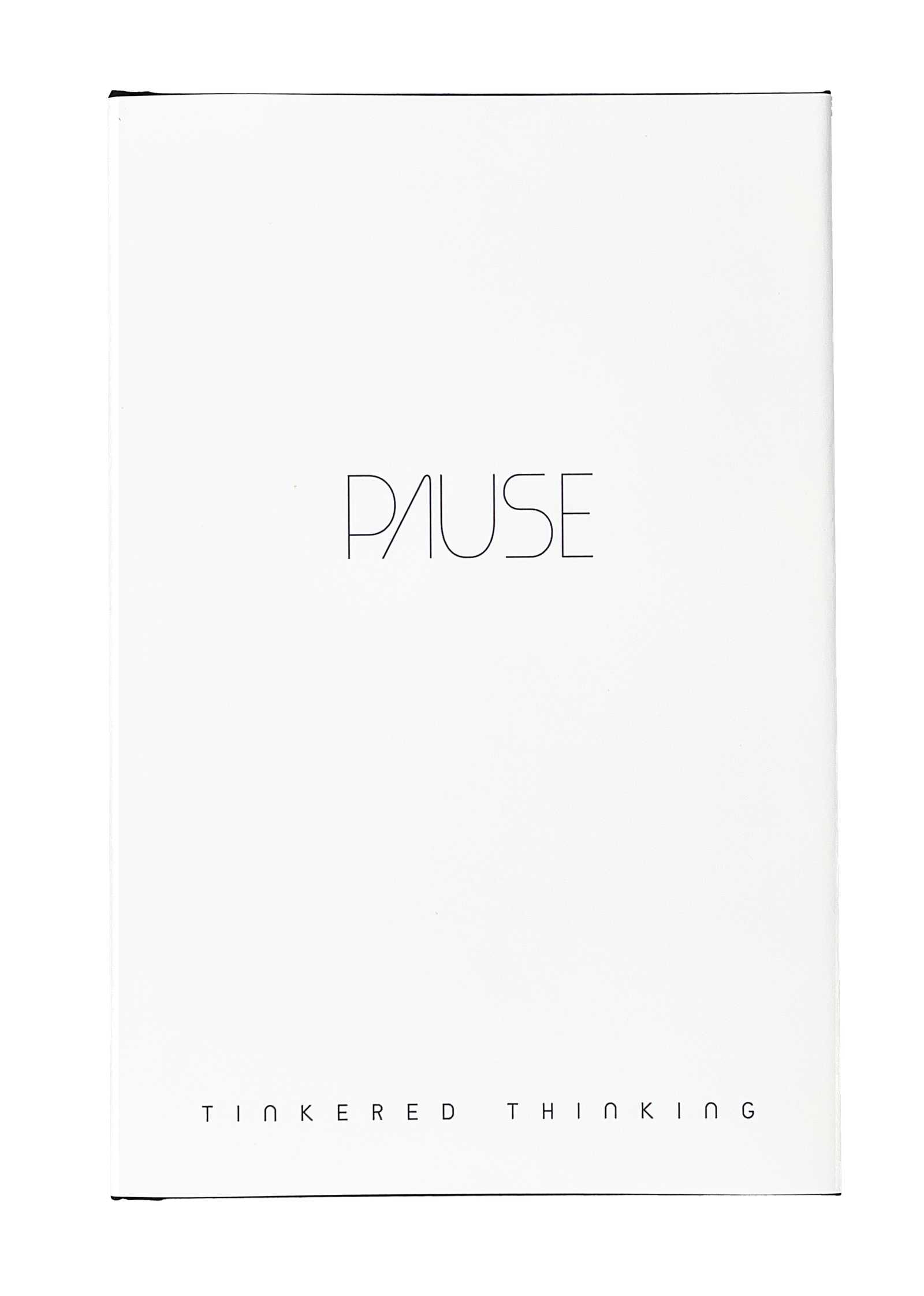
The first non-fiction book from Tinkered Thinking. PAUSE is a short book on meditation. Now available on the Tinkered Thinking Bookstore.
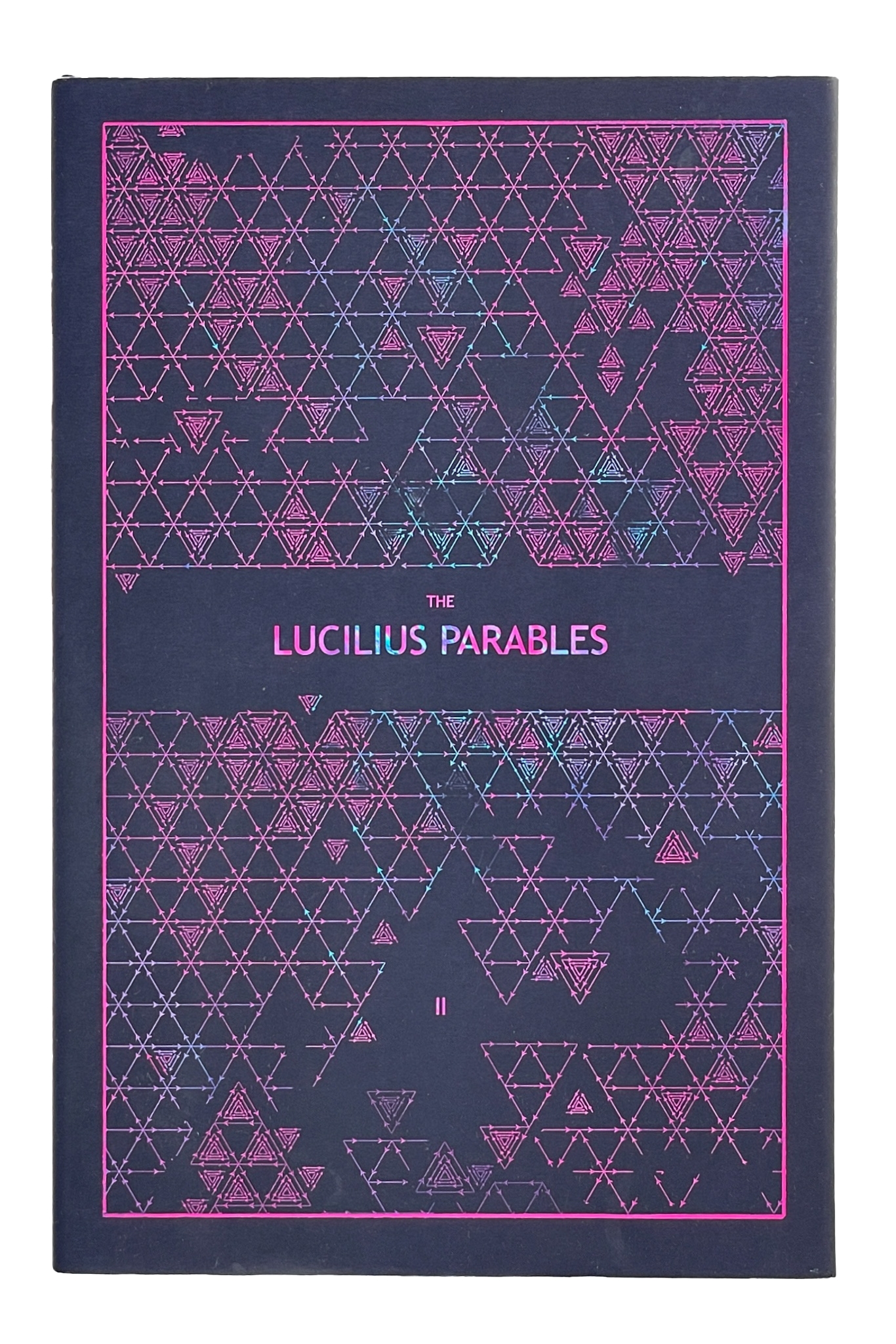
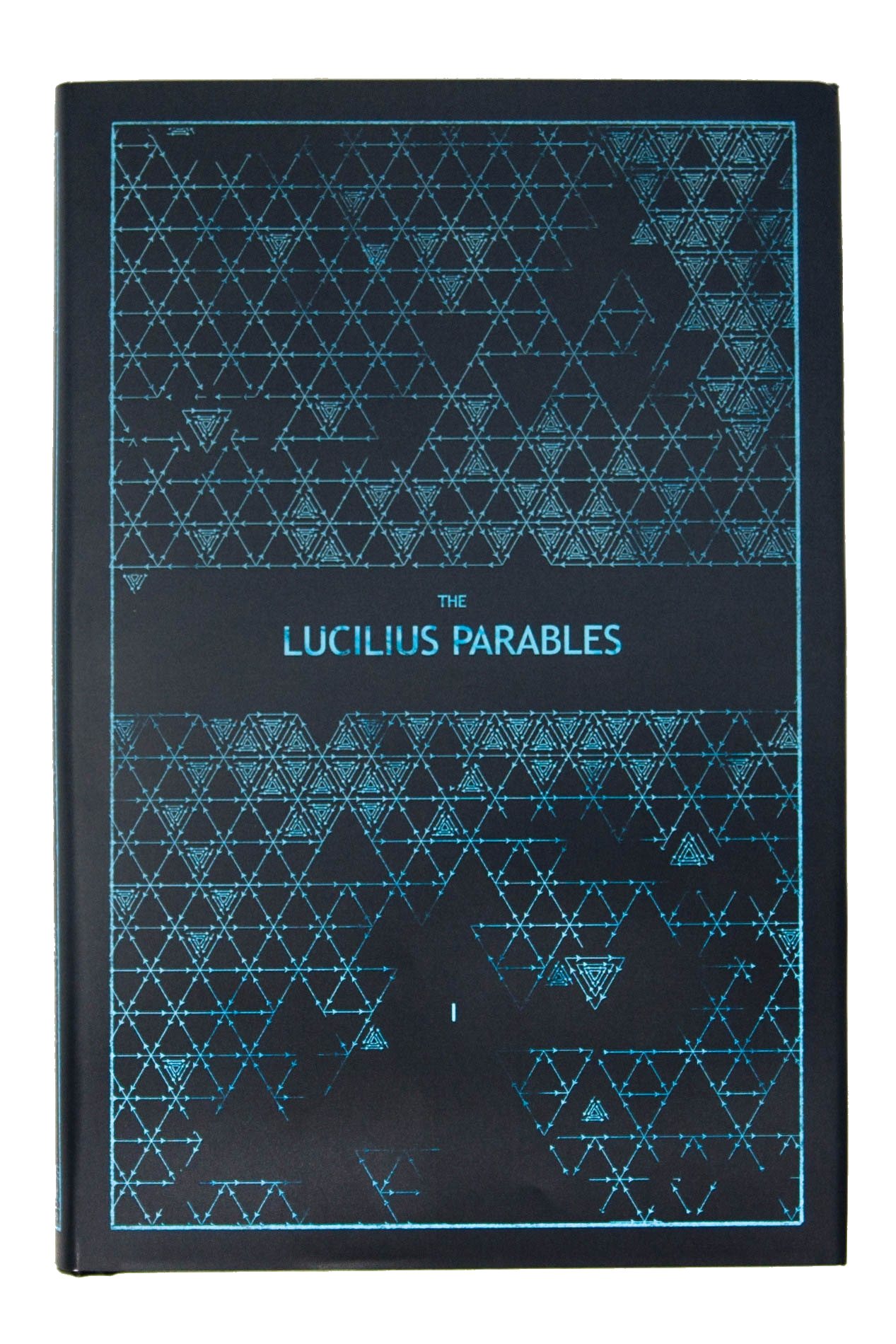
The SECOND illustrated book from Tinkered Thinking is now available!
SPIN CHESS
A Chess app from Tinkered Thinking featuring a variant of chess that bridges all skill levels!
REPAUSE
A meditation app is forthcoming. Stay Tuned.


THE DISTRACTING TEST
July 31st, 2018
There are endless distractions to gobble up time. Much of the economy is based on pleasure or entertainment that can also be qualified as a distraction.
Distracted from what though?
Well, what exactly does it mean to be distracted?
Dis, the prefix for the word distracted, means ‘apart, or to separate’, and we all know what traction means.
So to be distracted means to loose traction. This is a terrible and dangerous situation if we find ourselves in a car and lose traction.
But what does it mean in a more general sense and how does that relate to our life?
Turning the question on it’s head might help.
What does it mean to have traction in one’s life? Someone who has traction in their life might be said to know where they are going. That such a person is making progress. Moving towards a goal, or a set of goals.
So to be distracted is to loose clear sight of those goals and spend time driving off in meaningless directions without wonder or curiosity.
The entertainment economy exists because a person’s time is incredibly valuable. And if that time can be redirected so that such people spend that time distracted, then the value of that time is usurped by the person who creates the distraction. This also makes sense if we think about how much money is spent on a distraction, such as CHEAP THRILLS versus high-end luxury.
Now what is the opposite of distraction? How do we define traction in a real-life circumstance? What exactly are we doing if we are making progress towards a goal? We are testing ourselves. We are pushing into unknown and unfamiliar territory to figure out what needs to be done in order to achieve a goal. School has unfortunately indoctrinated us that a test is a simple regurgitation, but this does not hold when we think about what is means to be truly tested. Such a phrase evokes epic images of heroic feats. And any Disney movie will hammer it home that a hero rising to the challenge is not simply regurgitating the methods employed in earlier circumstances. The hero is using compounded tools slowly compiled through the hard, testing experience of training in order to use in new ways against a fresh and unfamiliar test.
So is life to be either a grueling test or a distraction?
No. There is pleasure in both the distraction and the test. But not all distractions fit our fancy and some tests just aren’t our mountain to climb.
There is a middle ground.
We must find the test that feels somewhat like a distraction. In what manner?
It’s useful to note a sentiment that has been echoed by countless writers over the years. In countless ways writers have said
“I don’t enjoy writing, I like having written something.”
Note where the pleasure comes from in this sentiment. It does not come at the beginning.
In contrast, how many times has it been said that the best part of the movie is the trailers at the beginning.
Between all of this is an even more important slice of the middle ground.
It’s often referred to as flow. Or being in a flow state.
The timeline of the flow state is the opposite of the movie. Where as sitting down for the movie is often the most exciting, pleasurable part, the process of trying to get in to a flow state is the least pleasurable part, when laziness and procrastination try to pull us back to youtube, facebook, or Instagram.
That flow state is a sign of balance between the grueling test, and the pleasurable distraction. Time zips by because we are actually having fun, but we are also making progress, having fun, and moving forward with traction.
So much of LEVELING-UP has to do with realizing that in many instances of life we actually can have our cake and eat it too. Just not right up front. And it will require difficult and novel, agile thinking, along with the suppression of everything that wants pleasure immediately.
LEVELING-UP requires us to find a distracting test. Something that challenges us, but rewards us during the process and continually after we have achieved the goal.
This episode references Episode 42: Level-Up. If you'd like to fully explore the references, please check out that episode next.
PANDORA'S SATELLITE
July 30th, 2018
In the public arena, switching one’s stance on a subject is often an act akin to shooting one’s own foot. Which is strange considering a moving target is harder to hit.
It probably has to do with our fear of uncertainty and randomness. If someone shifts their opinion, we worry what else about them might shift. Unfortunately we love certain definitiveness. We like to categorize things and have them stay put. Just imagine if while cleaning your room, objects meandered about at random. Establishing a sense of order would be an infuriating endeavor to say the least. (Perhaps this is why the parents of toddlers can get so stressed.)
As a population of people we expect individuals, especially those in the media spotlight to be like lighthouses that never shift. Indeed a moving lighthouse would be the worst nightmare for someone trying to navigate and many sailors have been deceived and killed by bandits who lead them onto rocks by impersonating a lighthouse’s flame in the wrong place.
The expectation is an unfair one. No one fully figures out everything, and because of that we must understand that people will and should shift in their views and their understanding of things as they live and learn.
As individuals, how shall we best think about the possible perspectives that can be taken of any given subject?
Any given subject should not be treated like a painting for which we stand in front of and look at from pretty much one angle.
We need to be agile and on the move and treat any given subject like a sculpture. Something you walk around and look at from many angles. We might trace a circle around a sculpture, and in doing so it’s important to remember that any given circle has an infinite number of points on it.
But even a circle is limited in the way that you can view a sculpture or a picture.
Think for a moment of the artist who made the sculpture. While sculpting, how many perspectives did they take while working? Such an artist likely had a ladder on hand to look at it from all sorts of angles above the sculpture. Such an artist also probably had the sculpture elevated so that the artist could crouch down and look at it from many lower angles. In all, the artist is trying to consider the work from a sphere of perspectives. This is probably not done in some orderly fashion either, like tracing an equator around the piece and then moving up a few degrees of latitude and looking at it from a higher tighter circle around the sculpture.
We are all fairly familiar with the story of Pandora’s Box. It was opened and out spilled a chaotic mix of evils.
Pandora has an interesting name though. Pan means ‘all’ and ‘dora’ means gift. Perhaps her box contained the wrong sort of gift, but imagine if she had a satellite. What kind of a gift would that be?
Pandora’s Satellite would move around the earth in any and all directions, looking at the earth from every possible point of view. Like the artist looking at their own sculpture, we would benefit from thinking about Pandora’s Satellite, and ask: “How else can I look at this subject?” Remember, just like points on a circle or a sphere, there’s an infinite number of ways to look at anything. Should we be so trusting and certain of our own opinion on any given topic? Or would it be more beneficial to entertain a few other ways of walking around a subject.
It would even do some good to entertain that original fear of uncertainty and randomness and even embody it. Taking a view of a subject from a random set of points is going to make much quicker work of figuring out what you’re looking at then starting at one point and making an ant’s crawl around the subject.
And also remember when someone switches their opinion on a subject. Perhaps they’ve got a better understanding of the subject by entertaining other points of view and a new one just proves to be more useful.
This episode references Episode 103: Opinion or POV, Episode 69: Two Eyes, Episode 81: Walk and Talking, Episode 8: Tiny Steps & Leaps If you haven’t checked out those episodes yet, they would definitely be great starting points for this episode.
OCCASION
July 29th, 2018
Present someone with the occasion, and what happens?
Throwing out an interesting and contentious topic into just about any group of people will GENERATE the occasion for just about any and all to jostle and joust against one another in order to gain the floor to share their wisdom, their logic, their common sense, their infallible feeling . . . and perhaps first and foremost their ability to out-argue and grasp at some elusive sense of ‘winning’.
What do these people do without the occasion to jury and joust?
Most often, we remain passive. The most active thing we do is to look for passive activities.
(Thank you Facebook Feed, Reddit, and Instagram)
Only with the right occasion do we seem naturally impelled to become active. Forced by work, goaded by a social group, instructed by school.
Indeed, we may have years of poorly structured, instructive schooling to thank for this built-in passivity.
Once school has ended, how many of us simply wait? Wait for the next occasion. When something is asked of us.
Some go back to school. Is it in part so that we can again have the assignment? So we can be handed the occasion to actually do something. The backbone of this decision is about the ‘credential’ that lies at the end of additional schooling. The legitimacy that enables us to get an interview and say,
“I’m legit, I did this stuff, when certified people asked me to.”
Is it more impressive or less impressive to go through the schooling on one’s own, say via online courses and independent study?
I went to school. I have this piece of paper.
Or.
I taught myself. I figured it out.
Indeed the first is supposed to give us the later. But school misses the most important step. It fails to teach the near infinite malleability of the moment. That during any given moment while watching the fourth season of a show, we can turn the T.V. off, put away the tub of ice cream, and go find something interesting and difficult to delve into.
The years of occasions that school offers us... so that we may rise up to the occasion… always fails to imbue us with a more important lesson:
We must craft our own occasion.
And then rise to it.
This episode referenced Episode 93: The Generator, if you’d like to fully understand the reference, please check out that episode next.
PULL-STRING
July 28th, 2018
This episode references Episode 101 entitled RESPONSIBILITY and Episode 23: PAUSE If you haven’t read that episode it’s highly recommended you do so before listening to this episode.
If RESPONSIBILITY is the ability to respond to things that happen in our lives, we must also think about the manner in which we respond.
Ability to respond should not be mistaken for merely responding in any capacity whatsoever. Being able means being effective, which means selecting the appropriate response and executing it diligently.
Just because we can muster some kind of action in response to a life circumstance, does not mean we are necessarily picking the correct response.
This call-and-response dance that we must engage in with our life can breed a bad habit of responding in a canned number of ways, like a pull-string toy.
If we experience anxiety about our station in life, do we respond the same way by buckling down and working harder longer hours at the same dead-end job? Doing this repeatedly does not simply perpetuate the problem. It’s recreating the problem anew.
Think about this for a moment.
The response to anxiety becomes the thing that creates the conditions for anxiety to arise. How backward is this? We like to regard ourselves as smart thinking human beings that would not fall for this kind of silly trap, but this iatrogenic habit is everywhere keeping us imprisoned in the lives and personalities that we wish to grow beyond.
Another example that really makes this sort of bad cycle obvious is the experience of looking in the mirror and not liking what we find. How do we respond? Well if the response is to quell feelings of depression and little self-worth instead of the underlying problem, then we are more likely to make ourselves feel better with short-term solutions, like a bowl of ice-cream. The dopamine fix will make us feel better faster than anything. But as we all know, it doesn’t last. More importantly though, the response to the problem helps perpetuate the problem, indeed, once again, it creates the problem. This is like the pull-string on a toy. Repeating one of a few rotating responses to things that happen in life.
How do we begin to unravel this ever-tightening knot? How do we rip the pull-string out, root and stem and become smarter and more agile with our responses to circumstance?
The first piece of this puzzle is to recognize what exactly the response is addressing. The answer is more obvious in the second example. The response of eating ice-cream is addressing the depressed feelings, not the cause of the depressive problems. Addressing the actual cause would require the opposite of what we feel like doing in the moment.
The analysis is the same for the first situation. The response is geared towards the feeling of anxiety and not the cause of that anxiety. Recognizing the difference between an unpleasant emotion and it’s cause is the first step to loosening this vicious cycle knot.
The second is to think carefully about a better response to the initial circumstance, the real problem at hand.
Both of these require only one thing: a thoughtful PAUSE. Before reacting, we must regain a sense of calm. Only then are we most likely to think clearly about what would actually make our life better.
OPINION OR POV
July 27th, 2018
What is the difference between an Opinion and a Point of View?
We might jump to the quick thought that they are the same thing. But then why two? Why not just one word?
Words shift in their meanings. They shift by subtle changes in connotations that then begin to have a long-term effect on changes in definitions.
A connotation is an additional idea or feeling that a word invokes aside from it’s primary definition.
So what might we say is the connotative difference between Opinion and Point of View?
Sometimes, this sort of comparative juxtaposition can benefit from throwing in a third word and seeing which word gravitates closer. Let’s take this word:
Belief.
Which one is closer? Most people would probably say that Opinion is closer to a belief than Point of View.
Both are considered nouns, but Point of View implies more than just a static entity.
Why? Perhaps it’s because the word View is also a noun and a verb. The word ‘Point’ also has the implication of being located in a larger space.
There is something about this phrase ‘Point of View’ that is simply a little more active than the standalone word Opinion. Point of View has the connotation that it can change at any moment. The view can change by merely changing the location of the point. Take a tiny step in any direction and suddenly the view changes. It also evokes a sense of it’s own limitation: the larger space implied naturally includes other points from which we might view the subject. And perhaps most importantly, Point of View has an outward focus – literally. There is a clear separation between the actual thing that is being viewed, and the observer who can see it from one specific side or another specific side if only the point of viewing is changed.
The word opinion does not do this nearly as effectively. Opinion is more inwardly focused. A declaration of someone’s belief more than it is an observation of something going on in reality. It’s a static noun that does not even imply the possibility of change.
So often, when asked a question, we are expected to have some kind of fully thought out response ready on hand, as though speaking were merely a matter of looking up an entry already written and logged somewhere in our brain.
How often do our responses in these circumstances trap us into commitments of belief and expectations of action and behavior that we quickly find ourselves disagreeing with?
How can we take a can-opener to the whole concept of opinion and give our minds a little more breathing room to consider subjects with more thoughtfulness? Can we design our language to make room for changes in our own point of view?
How about this: the next time someone asks you about something, even if you’ve thought deeply about it, try this:
“I’m not sure what I think about this, but the way I see it right now….”
Sometimes we forget how much we have changed over the years. We need to remember that this also applies to the future: we are going to change, for better or worse, but luckily we can choose. One step in doing so is to make a habit of designing our language to anticipate, and facilitate how we might change in the future. Only if we are thoughtful, can we change for the better. Setting ourselves up for a smoother, easier transition will simply let a better perspective and a better life arrive a little sooner.
This episode references Episode 69: Two Eyes. If you’d like to fully understand the reference, please check out that episode next.