-compressed.jpg)
Daily, snackable writings to spur changes in thinking.
Building a blueprint for a better brain by tinkering with the code.
subscribe
rss Feeds
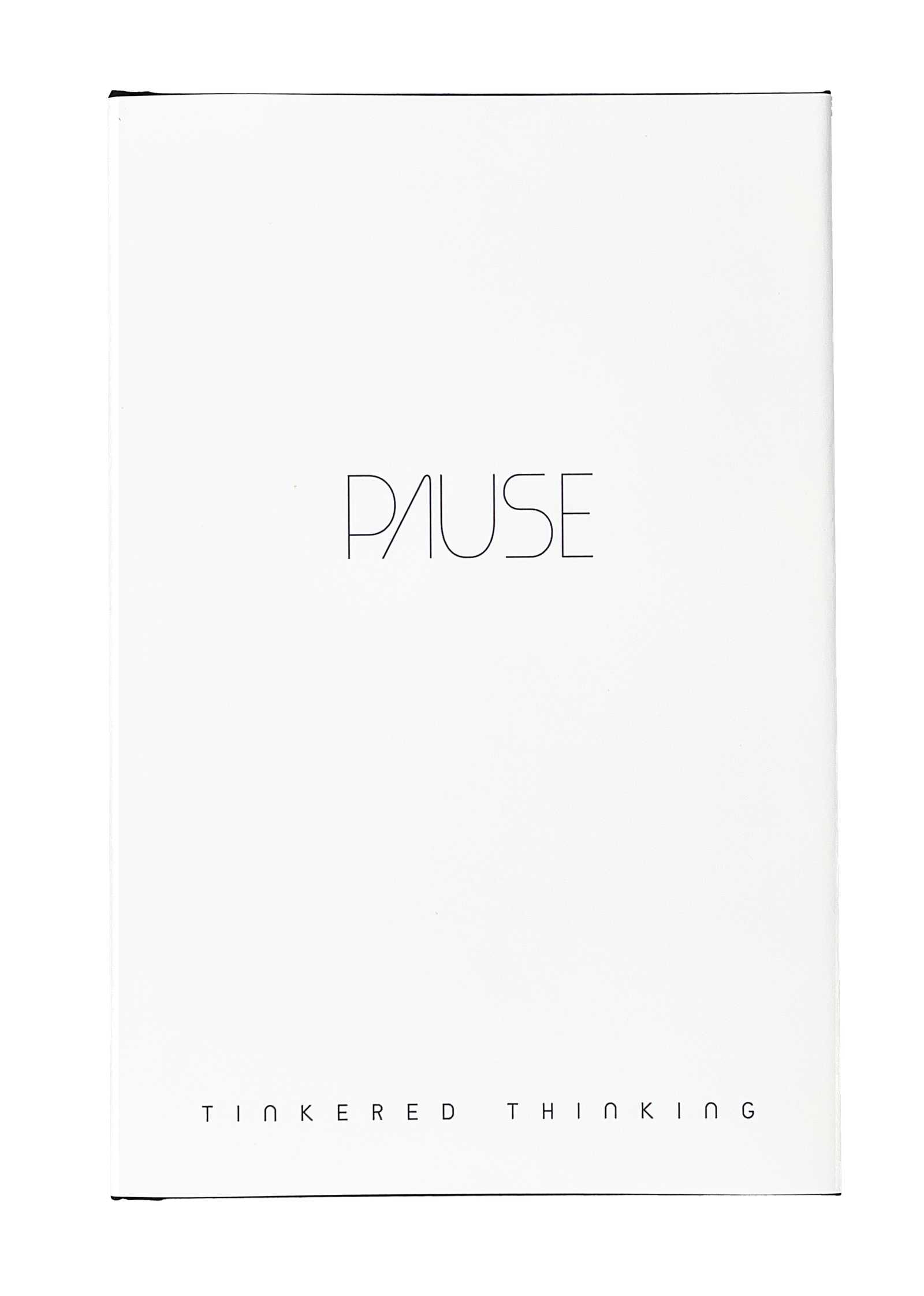
The first non-fiction book from Tinkered Thinking. PAUSE is a short book on meditation. Now available on the Tinkered Thinking Bookstore.
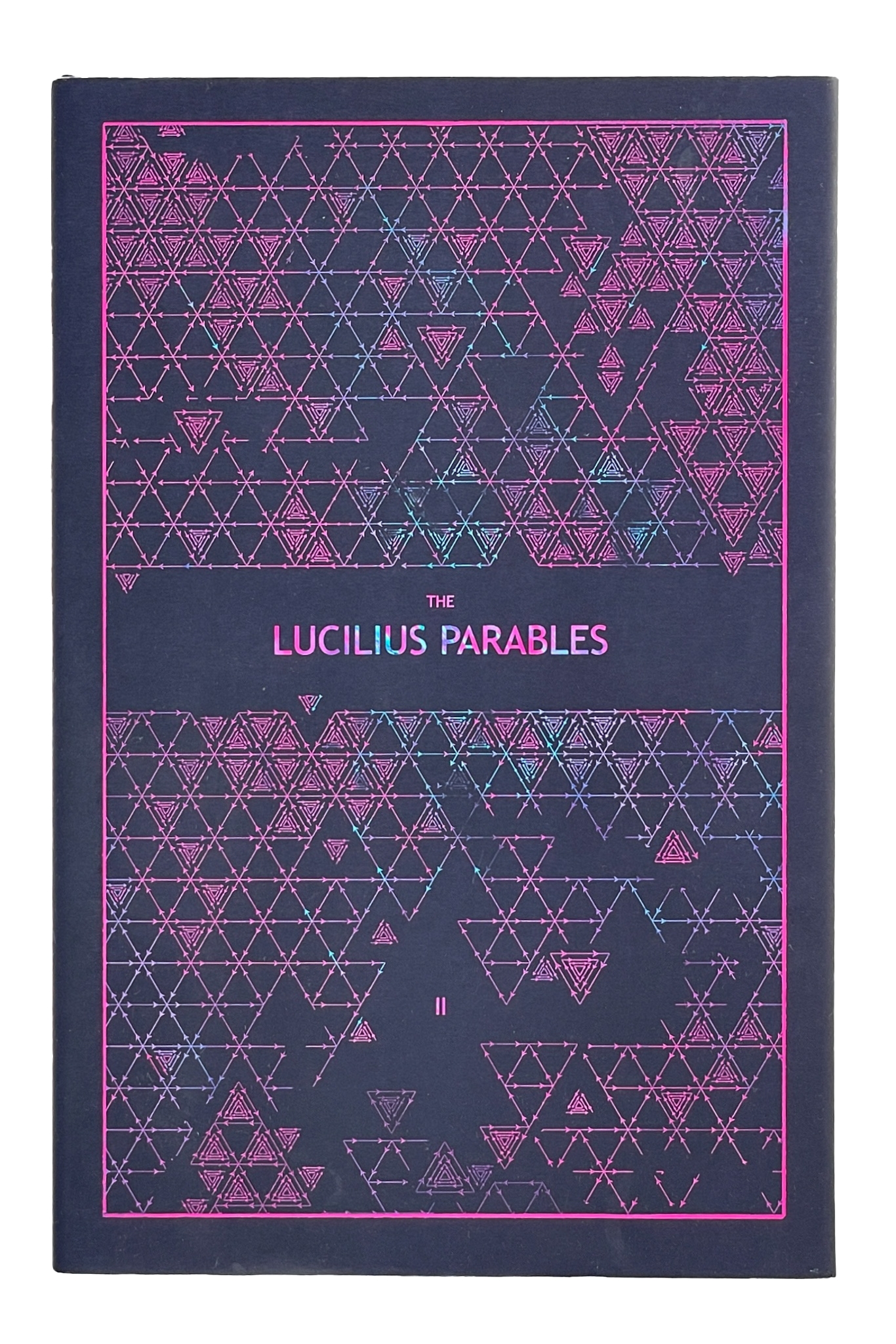
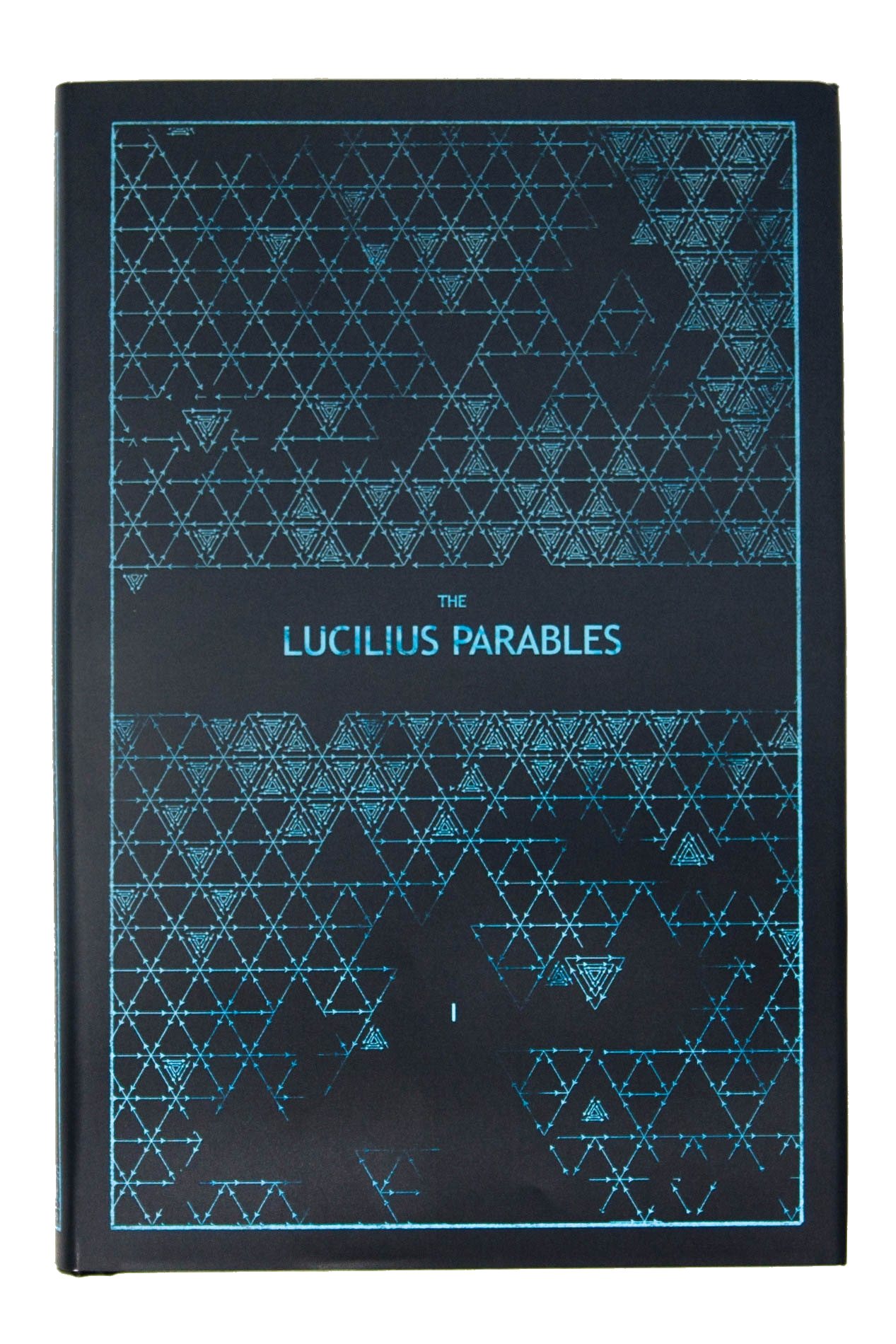
The SECOND illustrated book from Tinkered Thinking is now available!

SPIN CHESS
A Chess app from Tinkered Thinking featuring a variant of chess that bridges all skill levels!

REPAUSE
A meditation app is forthcoming. Stay Tuned.




FROM ZEUS' HEAD
July 26th, 2018
In Greek Mythology, Athena is born one day when Zeus has a headache. Someone cleaves his head with an ax and his daughter Athena pops out, fully grown in full battle armor.
If only our hopes and dreams could materialize in the real world in such a spectacular and wishfully quick fashion.
Alas, while some people’s migraines might feel like headaches fit only for Olympians, our projects and endeavors almost never occur in the same divine fashion.
But this is how we often think of other people’s accomplishments. When someone has a book published, how many of us are quick to think that we could never accomplish such a feat?
Or someone who cycles across North America. How many are quick to box themselves into the category of people who could never do such a thing?
Why do we look at the book or the cross-country trip and fail to think of all the little bits of time it took to accomplish? Perhaps because we only ever see the fully formed Athena in full battle armor.
It’s effectively a magic trick. Of course we’re smart enough to know that writing a book must have taken loads of time that was not necessarily filled with the sort of creative spectacle that Athena’s birth entails, but somehow we seem to forget it. Perhaps it has to do with that old adage: out of sight, out of mind.
A cross-country cycling trip is just a matter of going for a bike ride in one direction every day for a couple months.
Writing a book is just a matter of sitting down everyday and throwing words at a screen for a little while.
Have an Athena-sized idea?
Best not to hope for a headache. Best not even to think of it as a fully formed idea. Maybe just take a first casual step. And repeat that casual effort everyday, and see what happens, who knows what new coast you might find.
RESPONSIBILITY
July 25th, 2018
The concept of responsibility has a feeling to it much like bitter medicine. Something that’s probably good for us, but something that is perhaps not pleasant, a burden even.
But is a responsibility a burden?
Perhaps. These two words might just be different ways of looking at the same thing. Burden is simply listed as a heavy load. For a body builder, this is perhaps ideal. We do not get stronger without challenging ourselves with heavier loads. But what about responsibility, what exactly is it?
It’s perhaps most interesting to define this word by rearranging it’s phonetic constituents.
We can say that responsibility is simply…
The ability to respond.
For the body builder, the heavy burden is exactly what they need. The body builder has the ability to respond to a heavy load.
Perhaps something becomes a burden when the load is too heavy and our ability to respond to a load or task or obligation is too weak.
Or perhaps we are just feeling lazy. But then again, when it comes to responsibility, is there much difference between being lazy and weak?
When something happens. Do we freeze? Do we remain idle and lazy?
Or do we respond?
Defining the word ‘responsibility’ with these two question puts a spin on it that makes responsibilities seem less like a burden and more like a challenge, a call to action, a time to rise, something to achieve.
And just like the body builder, we can constantly challenge our ability to respond and Level-Up. If our ability to respond grows stronger than we can easily take on more responsibilities.
The ability respond merely means that we are a person of agency. That we can have an effect, that we can take action and achieve something.
So.
When something happens - even something as simple and subtle as the beginning of a new day:
How do you respond?
this episode references Episode 42: Level-Up. If you don’t fully understand the reference, I suggest checking out that episode next.
*-ility the suffix is strangely not etymologically related to the word ‘ability’ even though they mean practically the same exact thing and the spellings are suspiciously similar. How this occurs is befuddlingly funny to think about. The etymological dictionary used here claims there is no relations but says that they both come from the same latin root abilitas which is perfectly appropriate for the uses of this post.
YET: A WAY OUT OF THE BOX
July 24th, 2018
Very often we trap ourselves by stating things as conclusions.
“I’m not good at Math.”
“I can’t meditate.”
“I’m not motivated.”
While these sorts of statements may be accurate in the moment while we say them or think them, such language fails to recognize changes that may come in the future. Further, if we let this sort of conclusive language stand as it is, there’s the risk that we will believe it as it is.
These statements might accurately depict the moment and the past, but they also sound like facts about ourselves - facts that we can continue to believe into the future.
These conclusive statements do not encourage or even allow our thinking to expand beyond them and wonder what possibilities the future might hold. This language works like a box that we build around ourselves. We are then working in the mode of categories instead of progress. We begin to always identify as a person who is not good at math, or someone who is never motivated or someone who cannot meditate and so on and so forth.
The most insidious aspect of these kinds of statements is that they are often true when we say them.
As ridiculous as it might sound there might even be something to be said about wanting such statements to remain true because to have them change makes our statements untruthful.
What a nightmare rabbit hole of dangerous loops this simple human tendency creates.
How do we get out of this mess?
By adding one single little word to such statements.
This is the power of the word YET.
Let’s revisit the same sample statements with the addition of this word.
“I’m not good at math… yet.”
“I can’t meditate… yet.”
“I’m not motivated… yet.”
Adding this sweet little word to the ends of these statements blows them right open. These conclusive statements remain truthful in the same way they were before, but now they have the new dimension of future possibilities. The addition of the word yet even flips the certainty about their accuracy. Yet implies that it will not always be the case. Yet forces a person to confront the fact that change is possible, and this sort of language accurately expects that change will happen. But the change is in the direction that we want.
If these conclusive statements without the word yet act like a boxy category that we can get stuck in, the word YET is like a window in that box, a door, or even a whole side ripped off. YET frees us to explore the possibilities of who we might become.
So the next time you find yourself rattling off a fact about yourself. . .
add the word YET
and see what happens.
A LUCILIUS PARABLE: LET GO
July 23rd, 2018
Lucilius was a young man living in the modern metropolis of Boston, when a girlfriend asked him to bring a small kitten to a veterinarian. He caged the small cat and walked 5 blocks to a veterinarian practice housed in a local home. Upon entering he saw a stainless steel table mounted in the living room where a huge man worked with a small dog. Several people were seated waiting for their animal to be seen and Lucilius took a seat.
In due time, Lucilius was up and the huge man told Lucilius to put the cat on the table and keep it in place.
Lucilius lifted the small kitten from the cage and placed it on the table, and then with both hands, held it in place.
But the cat was quickly spooked, pushing against Lucilius hands and then turning on them, twisting to strike at them with pin tipped claws and small young teeth.
Lucilius gripped the animal tighter wincing at the pain as it sank tooth and claw into his skin.
The veterinarian turned and saw Lucilius struggling with the kitten and said “no no…” he waved away Lucilius’ hands.
“Let me show you how to keep a cat in one place.”
The man did not touch the cat but left the cat where it was. After Lucilius had released the animal, it stood startled, taking in it’s surroundings as though for the first time. A few moments later it started to walk to the edge of the table. But before it could judge the ground for a jump, the veterinarian quickly swept the kitten back to the center of the table, and left it there.
Again, as though for the first time, the kitten was startled and took in it’s surroundings for the first time.
“You have to let the cat think that it’s in control,” said the veterinarian.
The cat walked to the edge of the table after a few moments and the veterinarian repeated his strategy, sweeping the cat back to the center of the table.
“As long as the cat thinks it has control, it won’t resist the quick moves you make.”
Young Lucilius watched the veterinarian dance with the cat.
The huge man kept sweeping the cat back to the center, readying shots while the cat tried to figure out what was happening. He applied the shots with such skill and quickness that the kitten could barely register what was happening, remaining relatively calm the whole time.
The whole affair was done with little effort.
The big man smiled at Lucilius. “Remember, we can ruin our own chances at success if we try too hard. Best to relax, let things happen as they wish and look for those moments when we can make a difference. For good or bad.”
Weeks later, Lucilius was travelling with the girlfriend and visited an aquarium that had recently acquired a Great White Shark, an animal that Lucilius had long regarded with majesty since he was a child. But upon arriving at the aquarium the two learned that the shark had died in captivity, as had every white shark ever brought into such tight confines.
Years later, Lucilius watched an entire nation reel in shock after a violent attack on a beloved city. The people did not see nor notice while startled by tragedy as the reigning government repealed their rights in the name of safety.
And many decades after that national tragedy, when Lucilius was learning to meditate, he remembered the veterinarian’s lesson and did not try to stop his thoughts, but watched them, entertained them, and slowly reeled them in.
SAFE ASSUMPTION
July 22nd, 2018
“It is one of the delights of science that common sense is so often wrong” – Richard Passingham
If this is the case, then we are disabled in ways that we can only have the most round-about awareness. Like sneaking through the backdoor of decision making.
If common sense can be wrong. Wouldn’t it be prudent, dare we say wise, to question our common sense?
Change blindness is a well documented perceptual phenomenon where large portions of a visual field – say the back drop of a theatrical performance – can be changed without the audience knowing.
This concept can be seen in many aspects of our little human game.
Take for example the anxiety-filled experience of the yearly family get-together.
“She’s lost so much weight!”
“He’s gotten so fat!”
“You’re so skinny!”
“You’re looking healthy!”
Very often, the first comments are about the most obvious changes.
And if there is no obvious change, do we make the mistake of thinking that there hasn’t been a change?
This is the trap of Rose-Colored Cuffs. Just because someone looks the same, does not mean they are the same person. People not only have new experiences in the intervening times between our reunions, but it’s been shown that personalities change, shift, and evolve over time.
It’s a productive line of thinking to draw a correlation between the obvious changes and the unseen changes. If someone has lost a good deal of weight, rest assured, it is because of another change, or multiple changes a person has made that do not come along with their visual appearance.
The trap takes the same logic in the other direction. Internal changes, or unseen changes don’t always create changes we can easily notice.
Such things often require a generous heap of warm and welcoming conversation.
Often a difficult thing to come by when people who have long-known us speak with unconscious assumption that we remain the same.
Pending any obvious – often physical – changes they might notice.
The only safe assumption that we can make, is that our ideas about other people are probably wrong.
Or rather:
The only safe assumption that we can make, is that our assumptions are probably wrong.
The trick is to figure out if what we are saying, thinking or doing is based on an assumption.
This episode references Episode 33: Rose-Colored Cuffs. If you’d like to fully understand the reference, please check out that episode next.