-compressed.jpg)
Daily, snackable writings to spur changes in thinking.
Building a blueprint for a better brain by tinkering with the code.
subscribe
rss Feeds
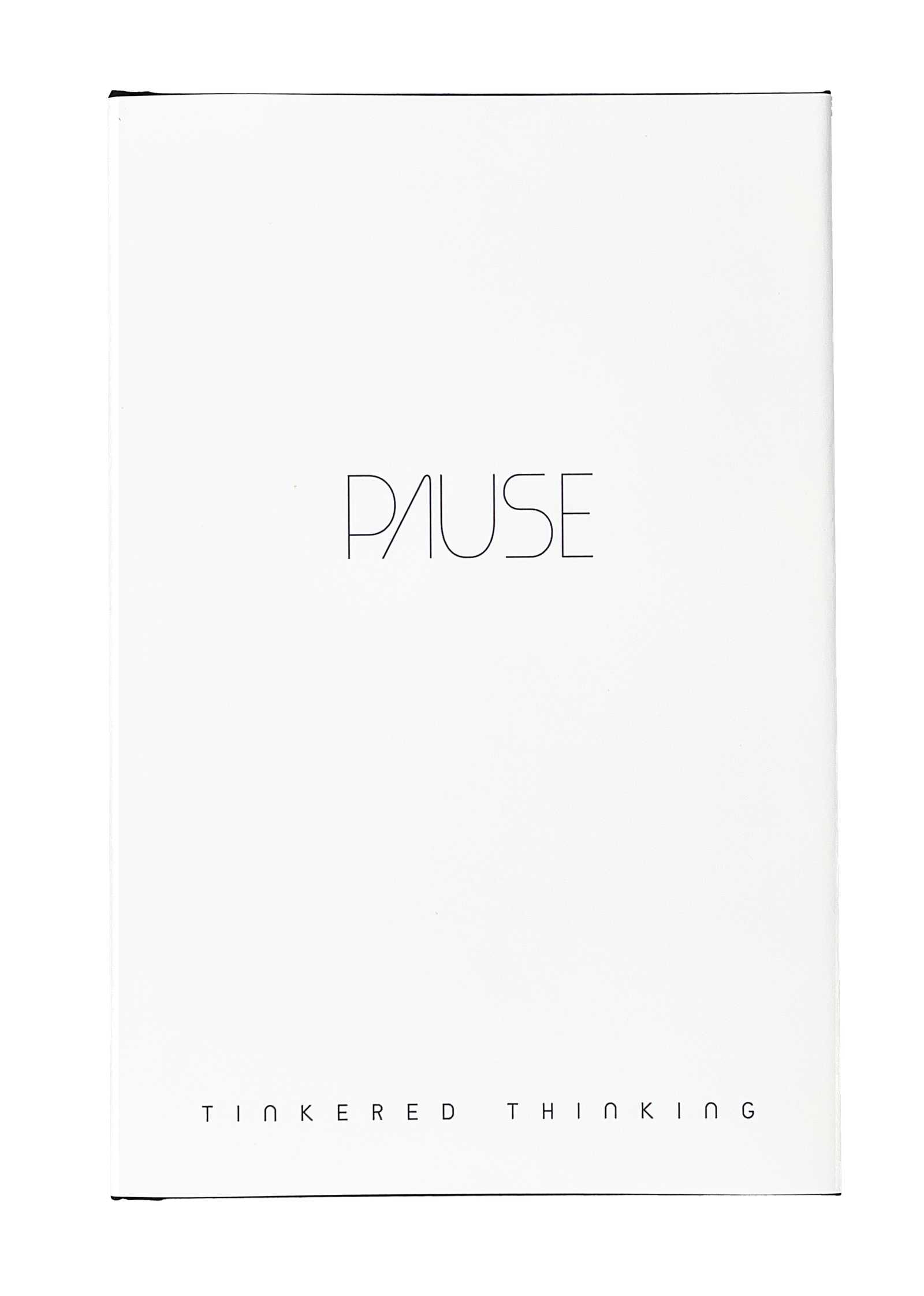
The first non-fiction book from Tinkered Thinking. PAUSE is a short book on meditation. Now available on the Tinkered Thinking Bookstore.


The SECOND illustrated book from Tinkered Thinking is now available!

SPIN CHESS
A Chess app from Tinkered Thinking featuring a variant of chess that bridges all skill levels!
REPAUSE
A meditation app is forthcoming. Stay Tuned.




FOCUS
July 16th, 2018
Ever been staring off into that blurry, dazed, unfocused space, when suddenly a little fly materializes in perfect focus out of nowhere?
Where was that little sucker before he popped into view like some ridiculous quantum particle?
Playing around with focal lengths on a camera can offer an equally dazzling way to view small details while other details in front or behind are totally obscured by a lack of focus. Toggling that focus back and forth draws back and forth an invisible screen of focus that sweeps from the background to the foreground.
Like a great movie that enables us to forget the blatant fact that we sit in a giant room full of strangers. . .
Focus is not so much about what it’s applied to, as much as it’s about what isn’t in focus.
Horses have blinders so they can’t focus on too many things around them.
A clean working space can keep the mind undistracted from details that remind one of yet one other thing to do. . .
This is referred to as essentialism in the world of productivity.
This can help us accomplish loads of progress.
It can also keep us unquestioningly on track as we follow the herd over the cliff.
A laser-sharp focus is a powerful ability that should be honed.
But the act of being focused is not what should be practiced. Some call that state Flow.
What’s more important is the gear shift that gets us in and out of that laser focus.
That transmission is THE WELL-OILED ZOOM.
It allows us to sweep that focal plane back and forth, highlighting details in turn, surveying all the variables and then returning to focus on the one detail that needs attention.
Focus is not a state.
Focus is the practice of shifting concentration from one thing to another.
This episode referenced Episode 54: The Well-Oiled Zoom. If you’d like to fully understand the reference, I suggest checking out that episode next.
FUEL UP?
July 15th, 2018
Here is a different way to look at food and nutrition.
Often we say ‘gotta fuel up!’.
As though our bodies are like cars or planes that have a gas tank designed to hold one uniform ingredient.
Imagine a car that could repair itself.
Would you be interested? No more outrageous and incomprehensible bills from the mechanic.
The tradeoff here would be that the car can’t repair itself from gasoline alone. It needs metal components of all sorts of varieties to be incorporated in all sorts of special places. So the ‘gas tank’ needs to be filled with gasoline and tools and parts.
This is a better analogy for human nutrition.
When we eat, we aren’t just fueling up,
we are tooling up.
Trillions of places in the body are waiting on the body’s own Amazon Prime infrastructure to deliver parts to fix and improve things, and it’s also waiting for the tools to make those repairs.
But without the right piece or part delivered, what happens?
Everyone has had the frustrating experience that happens in every work environment: being expected to perform and produce a particular result without the proper tools and resources.
Sometimes our ingenuity and endurance are enough to pull it off.
But would you want your neurologist to operate without the proper resources and just wing it with ingenuity and endurance?
Probably not.
The body has a built-in cardiologist, dermatologist, endocrinologist, and many more…even a therapist.
But without the proper resources, how can these bodily entities perform? Without the right tools and resources and fuel, their abilities begin to collapse, and we then seek the professionals who have dedicated their lives to understanding these systems.
What do these resources, tools and fuel look like?
It does not look like a donut.
Of course, the field of nutrition isn’t a real science because it’s so complex it’s impossible for a single person to have a full command of all the areas of knowledge and specialization that would be required. In the same way that general practitioners only have a hazy understanding of what might be going on and so then refer someone to a specialist, the world of nutrition would require the same vast army of specialists.
That being said, some things are pretty obvious.
If we give the topic some of that precious thoughtful PAUSE, there are things we can figure out. There is progress we can make.
A steady and consistent habit of curiosity and experimentation would probably be the best strategy for making real strides in order to figure out what nutrition would be best for our own unique body.
Considering all of the documentaries on this subject, it can even be entertaining to learn.
In thinking about the future, and our health,
Will we simply ‘FUEL UP!’ and risk the expensive and even traumatic experience of the medical establishment rabbit hole? Or can we think about it backwards? Can we see that buying the more expensive, healthier food is actually investing in health on a day-to-day basis, as opposed to saving that money for heavy medical bills that will eventually come down the line when our poor day-to-day nutrition finally catches up with us.
The question is even simpler: will we give the body the tools it needs to perform at it’s best?
This episode referenced Episode 23: Pause. If you’d like to explore the reference further, I suggest checking out that episode next.
STIRRING YOUR ICED TEA
July 14th, 2018
From a young age I have enjoyed stirring iced tea after pouring a little sugar into it and watching the tiny blizzard whip into a whirlpool.
Then. Stir the other way.
The whole glass would go from an orderly circular rhythm to chaos. And from that chaos a new whirlpool would form in the opposite direction. Often times, I would try to see how fast I could get the direction to change, pressing that chaos into a smaller and smaller length of time.
Whirlpools are the way that I visualize vicious and virtuous cycles. As you move down in a whirlpool you get a tighter faster version of what’s going on. It’s somewhat like a fractal.
Depression often fits the pattern of a vicious cycle. At the top, things can be slow. Maybe even so slow that we do not notice, like the circumstances from many years ago when the trends of depression may have begun, and it all seemed invisible then.
And with time, things can intensify.
Things go down and down, and the very process seems to reinforce itself. Depression can feel like a tightening that is happening all the time. And thinking about it often seems to only hasten this process. . .towards some kind of endless bottom.
After my child eyes had studied that chaotic blizzard of sugar in so many glasses of iced tea, and I had become strong enough to really push quickly and exactly in the opposite direction, I noticed something.
Tiny whirlpools formed immediately when I reversed direction.
All together it looked like chaos. But it was just more complicated. As I stirred counter, lots of little whirlpools formed and joined, until everything in the glass was going in a new direction.
It’s not recommended that you stick a spoon in your ear and try to stir your thoughts in a different direction. And while the analogy is still apt and some people can achieve wholesale reorganization of their person in a way that might be likened to a religious transformation, not everyone has that switch conveniently available.
Perhaps just get one thing rolling in the other direction. Let it ride against whatever whirlpool or vicious cycle consumes your thoughts now. And it will gain momentum. Like two gears. One spinning the other - spinning it an the opposite direction.
Maybe it can be a simple habit. Like going to the gym just for the punching bag. Because every time you look at that punching bag, you picture your depression personified. Caged up like some horcrux in that bag, and you beat the shit out of it bitterly every time. The more you concentrate on how much depression has taken from you, held you back, the harder and longer you punch. And before you know it?
You’ve had a hell of a workout.
You probably feel great. (It’s worthwhile to do some casual research on the links between physical activity and decreased symptoms of depression. Thank you Acetylcholine. And all you other ridiculously named neurotransmitters.)
Just get one thing rolling in the other direction. Let it gain momentum from what’s going wrong.
Then add something else to whirl in the opposite direction.
And then another.
And another.
Before you know it the vicious cycle of depression has given way to many small virtuous cycles. And they join, now feeding into each other and everything quickens. Till suddenly. Everything is moving in the right direction.
It doesn’t have to be all at once.
In fact, it’s probably best to keep in mind it can’t be all at once.
Just start with one little thing.
And stir.
A LUCILIUS PARABLE: WHIMS OF FATE
July 13th, 2018
When Lucilius was a young man, he worked as a scribe for a very learned scholar in a vast library. There was a pervasive military presence in the city at the time and the attacks and vying for position with enemies was a daily constant. But, being such a young man of noble and lofty conceptions, Lucilius never imagined that his beloved work at the library would ever have anything to do with the outside world.
But that day the market was deserted and the sky was black to the north. Lucilius quickened his pace so that he could have time to see what was happening before he had to be at the library. As he hastened, the low buildings slowly shifted apart, the street widening and opened to reveal the docks, where ships were burning. Rising above the people watching, the smoke filling the sky. A commander had tactically set fire to his own ships to thwart an enemy. But the tactic was a risky one, and all moves in war, even the most restrained, hunger for casualties.
As Lucilius neared the end of the street where people thronged at a safe distance to gawk at the spectacle, Lucilius’ gaze followed the path of the raging fire, his heart rising to choke him. The great library was ablaze with all the ships, engulfed and fed by new winds, carrying the fire into the city.
Lucilius felt the pall of death creeping round him, though nothing was dying. He ran towards the library, a hysterical terror rising in him. Most of the building was alight and the flames were spreading. Lucilius could see, knowing the inside, what sections were being eaten, devoured by the flame, the endless scrolls twisting to black crackle before dissolving into grey powders, authors turning to embers and the only recorded memory of mankind dissipating like a small puddle before the hottest summer suns.
Drawing close enough to feel the magnificent heat of the inferno, Lucilius collapsed at a gap in a line of men staring at the bright tragedy. Lucilius wept for the lost words, his mind wrenched into a hopelessness for the future. The many souls that would come will have none of the wisdom that he and so many before him had toiled to preserve.
The library was gone and Lucilius, still on his knees, looked up at the smoking carcass of the building. Beside him remained, an old man, the scholar he worked for, whom he had not noticed during the magnificent destruction of the library. The old scholar was smiling while looking upon the lost treasure of words.
“How can you smile at this tragedy?” Lucilius snapped at the old man in sadness.
“Dear boy, we have a new start. So many old moldy words. They keep us from discovering what else we need to find.”
“How can you say this? How many times have you regaled to me the endless wisdom that we had in our hands.”
The old scholar shrugged. “What is true will be true forever. What is true does not need any fragile dark mark made on some scroll. What is true will be found again, it will fly through the whims of fate like a divine arrow, straight and true.”
TIGHTROPE
July 12th, 2018
This episode references Episode 77: The Proper Way to Fail. If you'd like to fully understand the reference, please check out that episode first.
For a moment, imagine being a tightrope walker. High up, with no net.
How would we manage our concentration in this situation?
FAILURE is simple and obvious. There are two major directions that we need to be concerned about. Too far in either direction and it spells disaster. Balance derives literally from ‘having two scalepans”.
For things to remain stable we pit one against the other. Too much left is rebalanced by leaning a little to the right.
And for this to be achieved continuously, we have to remain attentive and in the moment.
All of this about tightrope walking is obvious, but tightrope walking offers an even richer analogy beyond the literal need to stay attentive and faithful to the present moment.
For a moment, imagine that on one side of this tightrope is the past and the other is the future. During the day, our mind is a sea of thoughts. Troublingly few are actually about the present. Most often we are dreaming or dreading the future or regretting and reliving the past. Every moment our mind is walking a tightrope between these two endlessly large concepts. We fail to remain present and we fall into thinking about the past or the future. Life passes us by in these moments.
But neither can or should be vilified. Like the pull to fall on either side of the tightrope walker, the present requires the future and the past, balanced against one another in harmony, and our ability to exist in the moment requires balancing all that we have been and all that we have experienced against all that might happen and all that we might be. By this balance can we nullify the past with the possibility of the future, build the future with the lessons of the past and achieve a virtuous cancelling with one leaning against the other, leaving us squarely in the present.
We’ve all learned how to balance enough for daily activities, but anyone can admit that it would take more learning and practice to reliably walk an actual tightrope. The case is the same when it comes to staying in the present moment. We all have the tools and some experience, but doing it reliably on command and consistently requires more learning and focused practice.
Are we going to look at the tightrope and just say we can’t do it?
Are we going to make an excuse of having too many thoughts. Too much chaos, too many emotions?
Or are we going to do something, take action and try a strategy in order to keep balanced?