-compressed.jpg)
Daily, snackable writings to spur changes in thinking.
Building a blueprint for a better brain by tinkering with the code.
subscribe
rss Feeds
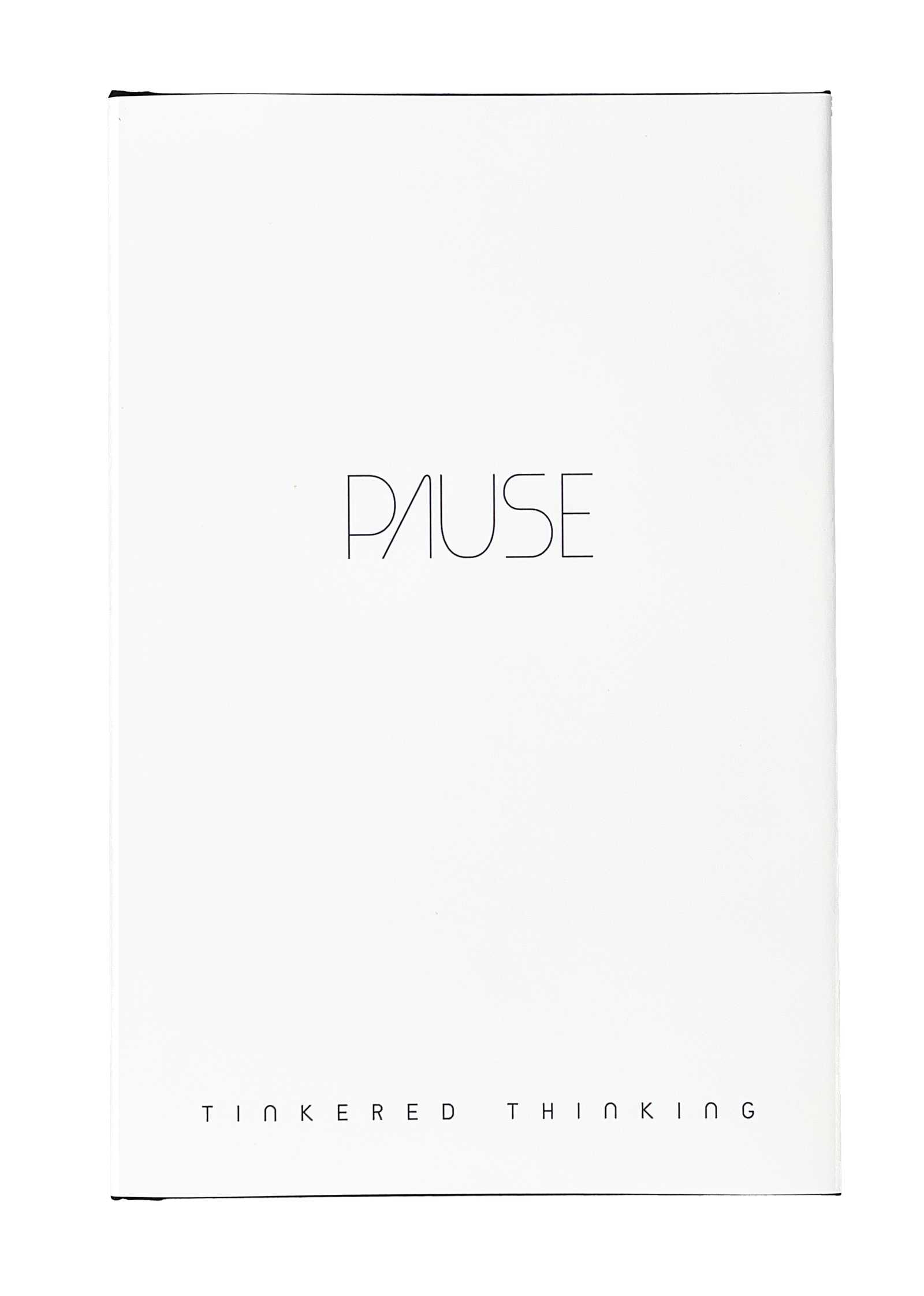
The first non-fiction book from Tinkered Thinking. PAUSE is a short book on meditation. Now available on the Tinkered Thinking Bookstore.

The SECOND illustrated book from Tinkered Thinking is now available!

SPIN CHESS
A Chess app from Tinkered Thinking featuring a variant of chess that bridges all skill levels!

REPAUSE
A meditation app is forthcoming. Stay Tuned.




THE COMPLAINT
July 6th, 2018
This episode references Episode 72: Perseverance Vs. Pivot, Episode 77 The Proper Way to Fail, and Episode 23: entitled Pause. If you'd like to fully understand these references, please check out these episodes first.
Why do so many mope and grope?
It’s easy, for one.
Why is it easy?
The complaint follows an ancient formula that has changed little. It is akin to a picture frame that a person carries around and looks through every time they see something that could be better. Or just a pair of shit-streaked glasses. There is no need to interact with the problem. Just observe, feel, speak. The observation is certain. It is an accurate depiction of reality. It deceives us into feeling certain about reality, as though we have identified it, nailed it down, called it out once and for all.
Certainty is a wondrously cozy feeling. We seek more of it. And the formula is very easy to apply. This act in the name of certainty helps perpetuate the status quo. Because no changing action ever comes from this formula. And the longer it perpetuates, the longer our "observation" is valid and the more solid our sense of certainty about reality. This is a vicious cycle.
What is the opposite of the complaint?
Buckling down, staring an uncertain path in the face and trying to figure out how to get the current state of things to morph into a better future.
No easy formula there.
Does this have the potential for a habit?
Only in the vaguest way.
Or by means of small specific habits: Remembering The Pause. The think. The Experiment. The Interpretation of Failure as Feedback. The Pivot. . . this list goes on.
The conundrum is this:
Developing many difficult habits vs. one easy ancient one?
That’s why the complaint is rampant.
So next time you feel like criticizing someone for wearing rose-tinted glasses.
That optimism can float someone through a few of the difficult habits.
And if that’s the case.
They can probably figure something out.
Do you have a problem?
Well if you’re looking for someone optimistic to solve it.
Then you have two.
WALK AND TALKING
July 5th, 2018
This episode references a few others: Episode 63: The Etymology of Fear, Episode 59: Frequency, Episode 38: Confidence 2.0, and Episode 14: Sample all the Kool-Aides
The common phrase is to walk the talk. Or do what you say you will.
Even this is difficult, to take action based on things we know and proclaim we believe and hope for. You think it would be easier.
But let’s take a step back and look at something even harder.
We have all read a book, or heard a concept that felt at once like an illuminating revelation and a comforting confirmation.
Did we take action based on the new idea? Or did we simply slide our own views closer to the interesting, perhaps well-articulated idea? No change is necessary if we are simply coming across a finer-tuned confirmation of what we have always known and believed, right?
Let’s take another step back and look at something even harder.
We all come across ideas and concepts that we do not like. That happens every day and our sensitivity to such things is frankly, ridiculous. But what about that space between these last two spots on the spectrum? Somewhere between… coming across an illuminating confirmation and something that provokes a straight-up NO. Something that teases out a little curiosity but also makes us raise our guard?
This is that hazy space that defines our boundaries.
And yet, is it not universally regarded as a good thing when we push our own boundaries? Is it not universally regarded as growth?
Does this not imply that we should encourage strong curiosity when it comes to things that raise our guard?
There are three simple steps here:
First is simply doing what we say: Walking the Talk. That’s perhaps the first box to check off.
The second is pushing our boundaries. And those are often found by experimenting with views that we aren’t sure we agree with. And.
Experimenting can only be done through action. We must take action based on views that we are not fully on board with in order to experience the results.
Not talk, not thought, only action, only by walking that talk. Experimenting with new talk, and walking it. That’s growth.
The third is the most radical: To not simply disagree flat-out with others and their concepts, but to develop the right balance of skepticism and Confidence 2.0 that allows you to wholly abandon your own views for a little while and try on a different pair of shoes. And then take a walk in them.
This might sound like some nerve-wracking heresy, and in some instances it can be dangerous, and one can easily lose their way in favor of people adept at manipulation. But it’s also the quickest method for say… learning a language. Full, unapologetic immersion. Nothing is going to get you speaking Chinese faster than moving to some part of rural China where English simply doesn’t exist. To simply function requires a nearly wholesale abandoning of one’s native language.
Let’s dial it back to something less extreme. Say a common topic of contention. How would such a conversation go if you had already donned the perspective you disagree with? And not simply thought and talked about, but acted differently as per the perspective and experienced the results of such.
Consistency, of a certain variety, is far too overrated in today’s day and age. We must remember what both Charles Darwin and Abraham Lincoln once said…
The former said “It is not the strongest of the species that survive, nor the most intelligent, but the one most responsive to change.” Or rather the one most willing to change.
And when the celebrated president was accused of political flip-flopping on an issue, he said “I like to think I’m smarter today than I was yesterday.”
Simply put, changing your mind is a sign of health, and potentially a vastly more efficient recipe for success. It requires flexibility, which is a kind of creativity, and by sampling all the kool-aides, we can pick out the best ingredients, and from the morass, concoct our own secret sauce.
Frankly. It’s not enough to walk the talk. That’s where you start. That’s the foundation.
Where you go is ultimately determined by how carefully you listen.
And then of course,
You have to develop the courage to risk changing.
COMPOUND
July 4th, 2018
This Episode references Episode 42 Entitled Level-Up. If you’d like to fully understand the reference, please check out that episode first.
Learning has compound effects.
Knowing addition, subtraction, multiplication, division, and the rules of algebra has a compound effect that allows the learning of calculus to be much easier. At least if it is compared to an attempt to learn calculus with no previous exposure or understanding of any mathematics.
The cumulative effect of these compounding tools allows the brain to LEVEL-UP it’s abilities.
Might the structure of this process be applied to the brain, our well-being, our personality on a larger scale?
How do we institute virtuous cycles of growth within the brain?
What might the results be if we compound a 10% improvement in:
Our fitness,
Our mindfulness,
Our diet,
Might improvement in one area aide improvement in another?
Can improvements in mindfulness help us make better choices with our diet? Can slowing down and being more thoughtful give us a better chance, a higher probability of making a better, healthier choice?
Can a better diet perhaps give us more energy to bring to the gym and power us through those first tough work-outs?
Can the neurological byproducts of exercise, such as phenethylamine, anandamide, and endorphins, help us have a positive impact on mindfulness exercises? Most definitely.
Can small improvements in these three areas have, not only a compound effect, but a circular-compounding effect. Each benefits another in a a circular fashion.
This is a simple example of a virtuous cycle. Like a spiral staircase, each effort and improvement in one area creates a stronger platform, a higher probability for the next area to go well.
With a few of the right moves, and some consistency, can we send our minds on a new trajectory? One that spirals upwards? A trajectory that helps us LEVEL-UP.
ROTTEN CHERRIES
July 3rd, 2018
Context always matters.
Someone can easily be vilified and cast in a bad light if a particular statement they have uttered or written is -picked and presented as a stand-alone statement. Without the original context of the statement, a new context arises instantly: a narrower context that can only be inferred by the one statement. The person who pulls a statement out of context hobbles anyone who reads it – forces blinders through simple ignorance.
Indeed in some sense we are forced to do this with ourselves and our message. We are invariably limited in what we can say and so we try to be succinct and pack our meaning into denser and denser sentences. Or we simply think that a listener will intuit all that is left unsaid. When really what is needed is more conversation, an expansion of context until at last two perspectives can be seen as part of one environment, limiting themselves and each freed with the introduction of that larger context.
It’s a fairly reliable rule that if you aren’t actually up in a tree harvesting one of nature’s delicious sweets, then
Cherry-picking always yields rotten fruit.
INFERNAL PARKING METER
July 2nd, 2018
“In the beginning nothing comes,
in the middle nothing stays,
in the end nothing goes.”
– Jetsun Milarepa twelfth-century Tibetan poet and sage
Jetsun’s observation here is directed specifically at meditation, and the gradual process of change that occurs in one’s mind after much practice.
At first it seems like a colossal waste of time. Even ridiculous.
Imagine putting money in a parking meter and nothing happens. The damn thing seems broken. Why would you ever put more money into it? Maybe one more coin, just to make sure it’s broken. But after that? It just seems unwise.
So many just simply stop.
This is the case with many of the endeavors we embark on over the course of life. We pick up a guitar and sound like a cat walking on a piano. This happens an aggravating number of times. So we quit.
This is juxtaposed with the mystifying experience of trying something new and having what many might call Beginner’s Luck. Which is an illusion. An illusion where many capabilities that have been honed for other reasons are coming together in a novel way. In essence, when it appears we have a ‘knack’ for something, it is only because we have practiced for it in other ways.
A long time gymnast, for example, shouldn’t be surprised to find out that they have a knack for say… dancing.
Our instant gratification culture certainly provides an evil fertilizer for the idea that we are either good at something or not.
The truth, like establishing proper context, is more complicated – more nuanced.
When trying something genuinely new, the expectation should be akin to that seemingly broken parking meter.
But the analogy needs to go further.
Making headway with any new endeavor is much like feeding the parking meter hundreds of dollars and then finding it finally registers a few minutes.
Or course the parking meter runs out.
However, feeding it now seems to make it work every time.
Eventually, with lots of practice, our parking meter becomes more generous, registering much more time for our effort and counting down through the minutes slower and slower.
Such is the case with any new endeavor. The beginning sucks. But realizations eventually compound, reinforcing one another, and create a new foundation for a more difficult or advanced level of practice.
Careful though. As with anything we learn, enough neglect and that parking meter will eventually run out.
If our practice is consistent though, the benefits will never run out.