-compressed.jpg)
Daily, snackable writings to spur changes in thinking.
Building a blueprint for a better brain by tinkering with the code.
subscribe
rss Feeds
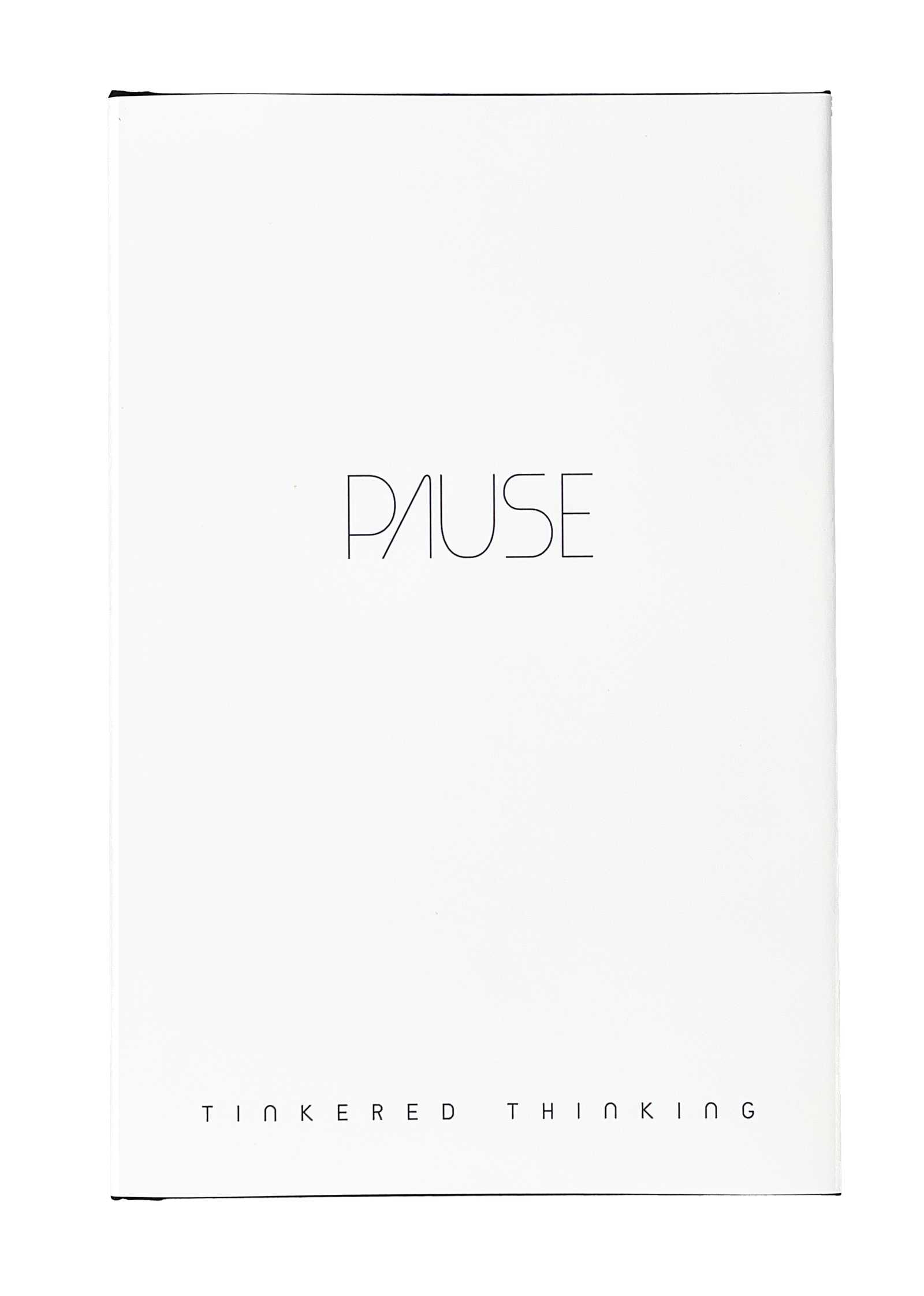
The first non-fiction book from Tinkered Thinking. PAUSE is a short book on meditation. Now available on the Tinkered Thinking Bookstore.
The SECOND illustrated book from Tinkered Thinking is now available!

SPIN CHESS
A Chess app from Tinkered Thinking featuring a variant of chess that bridges all skill levels!

REPAUSE
A meditation app is forthcoming. Stay Tuned.




THE IDEAL CIRCUMSTANCE
April 23rd, 2022
As a concept, the ideal circumstance is usually a fairly static dream in a person’s head. The right living situation, relationships, income and toys. It’s a hazy set of goals that we carry around with us, regardless of making progress toward them or not. While these “dream life” goals can be very motivating they can miss an important point. And it’s best encapsulated by the rich person who finally gets to the point where they can spend all their time on the beach, and while sitting on that beach for the third week, there’s an unsettling sense of: now what?
A better strategy is to shorten the time horizon and imagine a cascade of possible ideal circumstances. Given the goals for the next six months, what would be the ideal circumstance for them?
This sort of thinking isn’t generally available to people because of the rigid nature of keeping a job. For the most part a person’s time is almost completely spoken for. The freedom to wonder about life in 3 and 6 month stretches doesn’t usually come until retirement. Obligations stitch a person to their income pretty tightly, and it’s usually the un-obligated who can be so whimsical with their time, and flexible with how they achieve their goals.
A growing number of people, however, are trading in the old fashioned 9-5 for a more flexible, often remote situation. Living and working on that beach can be far cheaper than expected, and part time work paired with cheap living can afford a lot more time - that crucial ingredient which a 9-5 obliterates - to consider more flexible ways toward long term goals.
Most importantly, such flexibility can turn the ideal circumstance into an evolving equation, a process which has many incarnations. What could be better when compared to the traditional image of decades of toil capped by a vague sense of freedom in the later part of life?
Strangely, an idea of the ideal circumstance can get in the way of seeing an excellent circumstance right before us. Being so focused on some distant and unavailable circumstance can obscure the present - even if the present has evolved into a previously imagined ideal circumstance! Embarrassingly, I speak from very recent experience. . .
NOW WHAT?
April 22nd, 2022
Achievement is underwhelming. The success and euphoria that comes with a big goal finally materializing is fleeting at best. It can be enhanced, a bit, and we try all the time to pump up the celebration. Usually with alcohol, and food and friends. (But sleep deprivation of several days also adds - though it’s highly discouraged that you do this - sometimes it just happens when there’s a big crunch) But no matter how glorious that peak of feeling is, it remains just a peak, and it passes as quickly as anything else in life.
There’s two important things to realize about this all-too-human phenomenon. One is that it’s not a great idea to celebrate every win. This is an aspect of how the dopamine system works. To keep it healthy and revved up for solid motivation, it’s best to keep the dopamine system a little confused, and this means being a little erratic with when the “treat” actually arrives. Because celebration depletes our dopamine system by overtaxing it. And then, much like the actual hangover that often accompanies such celebration, there’s second hangover where dopamine his slowly returning to it’s normal operating levels. But celebrating for only some instances of success helps keep this system well oiled and tuned.
The second thing to realize about this momentary window of glorious achievement is that it’s the wrong thing to seek satisfaction from. Because the arrival of the end result is so fleeting, it doesn’t make up much of our experience. It’s just a thin slice of time. But the process required to get to that moment - that’s nearly the entire time we spend, and if that’s not a source of satisfaction, then it’s likely time for a hard and brutal examination of one’s own life.
What happens when work is satisfying but difficult is that our days become peppered with these tiny moments of achievement. Especially if the work requires figuring something out - something new - something that requires learning, confusion and moments when we are stricken without an idea of where to go next. See the reason why we go see adventure movies and dramas is for the same reason that we should embrace difficult work - it’s simply more interesting, and that feeling of paralysis when you don’t know what to do next only makes victory more sweet when you figure out a way forward.
SMALL BETS, SMALL WINS
April 21st, 2022
Why is it so important to edge outside of the comfort zone? And why is it called the comfort zone if we’re supposed to get out of it? Perhaps it would be better names the stagnation zone? What exactly occurs in this stagnating comfort zone? We do what is entirely predictable. We stick to the script, ensuring the reliable outcome. There’s no risk in this place, and because there’s no risk, there’s no possibility of any kind of reward outside of what comes with the usual routine. The comfort zone is a holding pattern, and the farther outside this holding pattern we venture, two things happen: our risk of messing up increases, but the size of potential reward also increases.
This is why small bets are so important. Staying inside the comfort zone is like placing a bet in a rigged game: the odds aren’t just high, they are pretty much guaranteed. But so is the pay off of that non-risk, which isn’t anything new or better or interesting compared to what we’ve always been doing. In short, there’s no real risk, and so - no reward. But venture out of the norm, and suddenly there’s a degree of risk. Try your hand at a new skill, test the waters with a business idea, ask that cutie out on a date. All of these suddenly introduce uncertainty, which is synonymous with risk. By mixing our own skills with the randomness out in the world, we engage that uncertainty, take that risk, but also discover and learn, no matter how badly we lose. Getting rejected by the cutie can have the unexpected effect of creating resilience in the face of rejection. A failed business project is almost always replete with lessons about what it means to enter the market, and finding out we have no innate talent for some new skill can create a strange and refreshing sense of being a beginner, like a child working through the first steps of learning.
All of these are relatively small bets. Pouring one’s life savings into a first business project would be a big bet - and an unwise bet. A better version would be to take perhaps 10% of those savings and create the minimum viable version of that business idea and see if it can garner any kind of success - any kind of small win.
Small wins lead to more small wins, and introspect, a course of exploration can look like one giant inevitable win. But like the montages in movies, that’s not what it is. Success begets success. Small wins beget more small wins.
The impulse may be to increase the size of the bet. A small bet worked, why not go for a medium bet this time, and if that works, why not a big bet after that? Surely this is a good direction!
But there in lies the error. The direction of that first small win might not be the overall direction. It might just be the entrance. In the same way that the front door to a house doesn’t indicate the direction to the bedroom. There’s navigation to be done. Which is why its best to creep toward success with a series of small bets and small wins. At any juncture, it might be wiser to cast two or three small bets to see which direction is best instead of one big bet in the wrong direction.
It’s a bit like playing Marco Polo. Each call out of “Marco” gives an idea of where you should head. But a bunch of small bets versus one big bet is the difference between saying “Marco” a bunch of times to zero in on your opponent, and saying “Marco” once and heading off in that direction which is nearly guaranteed to be immediately outdated.
Success is a moving target, and each small bet is an experiment to see which direction success might lie.
A LUCILIUS PARABLE: SMALL WINS
April 17th, 2022
Lucilius was tinkering with a giant robotic contraption in his garage. It was a massive complication which - to his perpetual chagrin - wasn’t working. The robot was supposed to become a general laborer to help Lucilius with his other projects but nothing was coming together the way it was supposed to. He was sitting there, trying to run through all the thousands of variables in his mind which a kid walked into the garage and said:
“Hi.”
Lucilius started, startled and turned to see the kid.
“Hello there.”
“Can you teach me to shoot bow and arrow?”
Lucilius raised an eyebrow, now confronted with the refreshing straightforwardness that children can often display.
“Uh, are you from around here?” Lucilius asked, spotting the kid’s bicycle laying on the driveway.
“I live a couple blocks away.”
“And do your parents know where you are?”
“No.”
Lucilius considered the situation for a moment.
“Do they know you ride your bike around and talk to strangers?”
“Yea.”
“Huh,” Lucilius sounded, “Well, that’s rather … old fashioned of them, I guess. Certainly isn’t progressive,” Lucilius remarked, more for himself.
“So what makes you think I can teach you how to shoot a bow?”
The kid pointed to a corner of the garage, and Lucilius looked, seeing an old compound bow peeking out from a high shelf.
“Well there you go…” Lucilius laughed.
“I saw it while riding by.”
Lucilius looked back at his robotic mess. It would be nice to take a break, he realized. He couldn’t figure out what was wrong anyway.
“Yea sure,” Lucilius said.
He got down the bow, and a quiver and handed the two to the boy. Then he took some cardboard boxes from the recycling, cut them to create long rectangles, stacked them, and then rolled them all into a tight cylinder which he bound round with duck tape. He grabbed some rope, a fat marker and with the cylinder in hand he motioned for the kid to walk with him. There was a tree on the side of the house that would do nicely, Lucilius figured, thinking about stray arrows flying further into the back yard. He bound the cylinder of cardboard to the tree with rope, parallel to the ground, making one of its ends face the boy. Then he uncapped the marker and scribbled in a bull’s eye.
“How far back should I stand?” The boy asked when all seemed ready.
“That’s a good question,” Lucilius said. “How far back do you think?”
The kid shrugged. “Maybe here?”
“Do you think you can hit the bull’s eye from there?”
“I dunno.”
“Let’s go with a different strategy then. Come over here.”
Lucilius took an arrow from the quiver and helped the boy set it up with the bow directly in front of the target.
“But this is silly.” The boy stated.
Lucilius looked back and forth between the kid and the target right in front of him.
“Why’s it silly?”
“Because the target is right there!”
“But you’ll get a bull’s eye on your first shot, isn’t that cool?”
“Yea but it’s not like a real shot.”
“Well, think of it this way,” Lucilius said. “You could spend all day shooting at this thing from back over there, and eventually at some point, you’ll hit the target. And eventually after that, you’ll probably hit the bull’s eyes. But it’ll take a long time, and it won’t feel good every time you miss. But if we start right here, you’ll have a small win in the bag right at the start.”
“It’s still not a real shot.”
“Ah, but that’s because I’m not thinking about your first shot, I’m think about how to best get you from here, to over there,” Lucilius said, pointing back where the boy had stood previously.
“Go ahead, just for me, take a shot from right here.”
The kid frowned but leveled the bow, concentrated for a moment, and the let the arrow fly, and indeed, it sliced into the wobbly dot Lucilius had scrawled onto the cardboard.
“Nice,” Lucilius said. “Ok, now take a step back.”
The boy did as Lucilius pulled the arrow from the target. “Now try again from there.”
Lucilius repeated this with the boy until he was half a dozen steps away from the target and the arrow’s landing was starting to veer away from the bull’s eye. But with each shot that landed, the boy was getting more and more excited about the process, eager to take the next step back.
On the eighth step back, the arrow hit the edge of the target.
“Ok,” Lucilius said. “Now we have an answer to that question.”
“Which question?” The kid asked.
“How far back should you stand? We found the answer. This is where you should start to practice. When you can hit the bull’s eye from here, you’ll be ready to take another step back.”
The boy pondered the thought, and then he leveled the bow again, concentrated harder and let the arrow fly. This time it landed closer to the center.
“Look at that. Your first nine shots hit the target and a few of them were bull’s eyes. Imagine how you’d be feeling if you missed all of those shots by standing too far away? Do you think you’d be having as much fun as you are now?”
The boy shook his head.
“Small wins, that’s how you start learning anything.”
And as Lucilius watched the boy take his next shot, his own words echoed in his mind. Small wins. He thought back to the monstrosity that was in his garage, and a pained smile grew on his face. He realized that with the entire project, he hadn’t followed his own advice, the simple strategy where success begets more success.
ATTENTIONAL COIN
April 15th, 2022
It’s a casual marvel that we can drive a car and have a conversation simultaneously. No doubt many will remember that this wasn’t always possible. That first time driving was likely high stress, and laser focus. Don’t distract me! But as time goes on and we learn, we learn exactly what needs attention, and what doesn’t. We start off paying attention to everything on the road, and eventually realize that it’s really only necessary to pay attention to potential dangers, freeing up a lot of cognitive energy that we can then put into a conversation with someone in the passenger seat, or on the speaker phone.
It’s fascinating how this split of attention can fluctuate. Hold on a second, while I get through this crazy intersection.
Now imagine the partner in conversation is a driving instructor, and the task is to talk about your driving as you drive. You need to describe what you are paying attention to, and why. I’m watching the curb because I don’t want to hit it. I’m watching the lights up ahead. I see kids playing close to the street.
Attention is still split, but it’s been folded back on itself, like one side of a coin that can see the other side. This exercise maps on directly to the meditating mind, but instead of driving, it’s your thoughts and the sensations that arrive via your body, be it sound, vision, touch and all the like.
Can you report on the flux of your thoughts in real time?
It may at first seem like a paradox. Wouldn’t a report on a thought constitute as a thought? Yes, certainly, but there’s a crucial event that takes place.
Ordinarily we are on a kind of autopilot, as when we effortlessly drive a car. That mental autopilot is dominated by thoughts about the past and the future at the expense of only paying the slightest fraction of attention to the present. When we take a moment to recognize what sort of thought we are currently engaged in, we are switching from the past or future to the present. It’s merely a question about what is happening right now, as opposed to yesterday or tomorrow. This interrupts the train of thought.
To bring it back to the driving circumstance, it’s possible to get so involved in a conversation with someone on the phone that we lose track of where we are actually trying to go while driving. Where am I going? I missed my turn! This happens all the time, even without a conversation. We can simply be lost in our own thoughts while driving. But imagine this: would it be just as easy to miss your turn if you were constantly talking about your driving experience? No, you’d be doubly focused on what you were doing.
A moment of mindfulness when we realize that we’ve been lost in thought is a lot like realizing you’ve missed your turn. And people who are just beginning to learn how to meditate often see this experience as a failure. Uh! I suck at this! I was having a thought again! But this instance is actually the hallmark of practice. If a person can have enough of these kinds of moments, then they can begin to expand. The time between realizing what thought we were just having and the next stretch of time we are lost in thought grows, and in this space we have the freedom to recognize what’s going on in the moment - how vibrant the visual field is, that tension in the shoulders we’ve been holding and can finally release, the feel and flow of breath.
Strangely, recognizing failure is the first sign of success in meditation. It’s akin to realizing you missed your turn while driving, sooner rather than later. The sooner the mistake is caught, the less distance we need to backtrack, and the more time we save.
For the novice of meditation it’s akin to thinking: wow, imagine if I’d been lost in thought for another decade or two without ever really being present? Could there be any greater success than taking a moment to disconnect from the mind’s incessant jabber to simply be in the present and take some time to appreciate it?