-compressed.jpg)

Daily, snackable writings to spur changes in thinking.
Building a blueprint for a better brain by tinkering with the code.
subscribe
rss Feeds
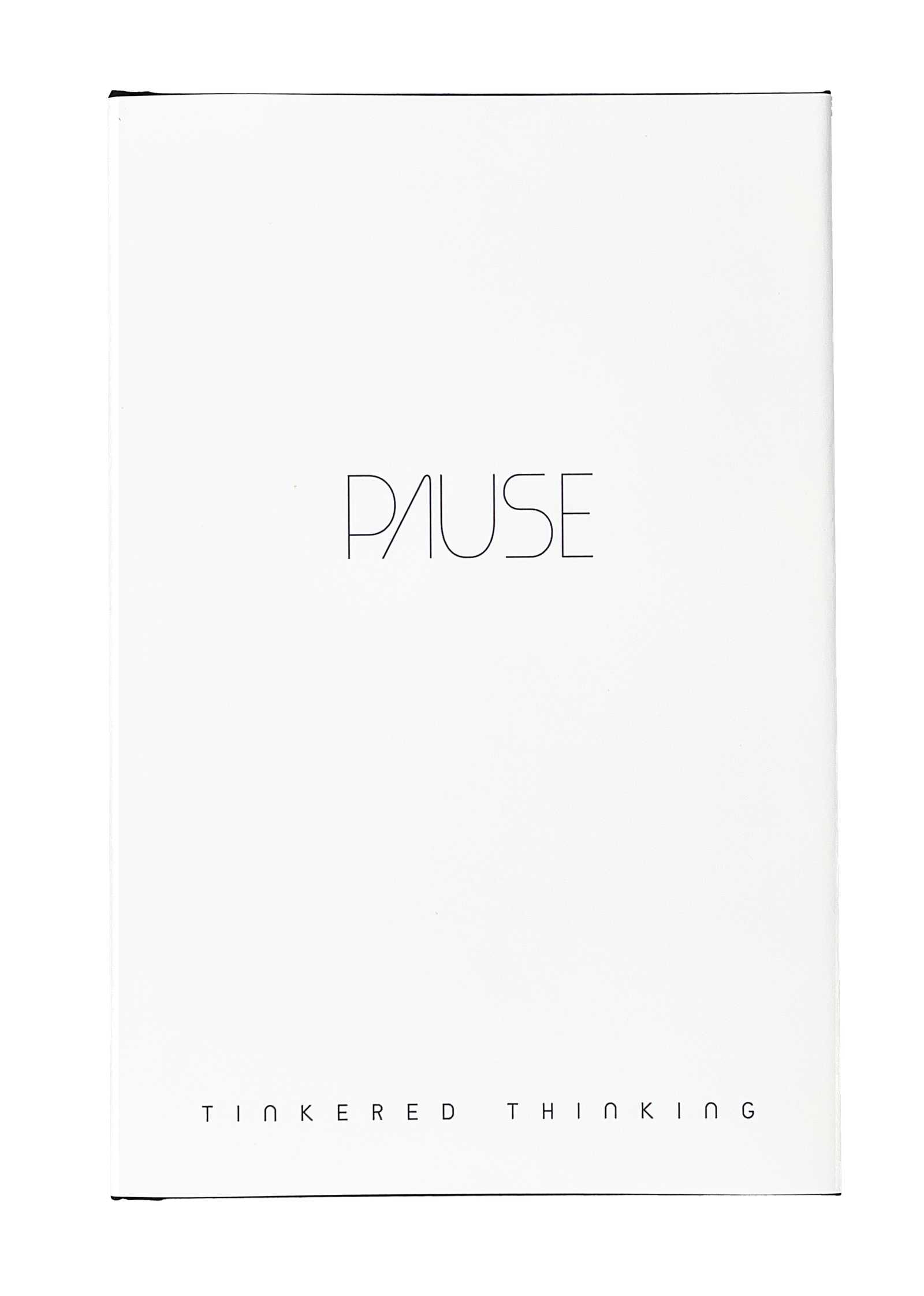
The first non-fiction book from Tinkered Thinking. PAUSE is a short book on meditation. Now available on the Tinkered Thinking Bookstore.
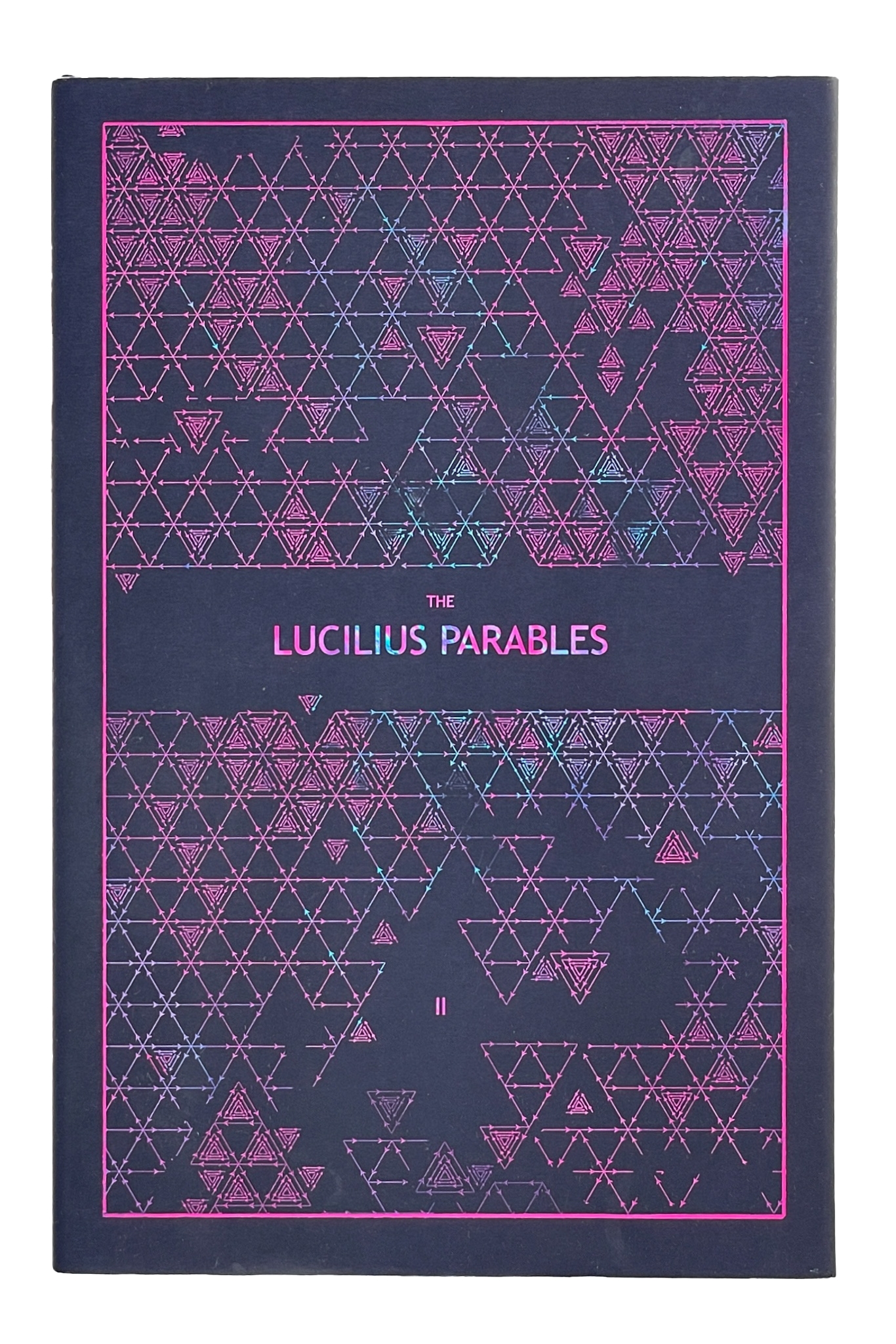
The SECOND illustrated book from Tinkered Thinking is now available!

SPIN CHESS
A Chess app from Tinkered Thinking featuring a variant of chess that bridges all skill levels!

REPAUSE
A meditation app is forthcoming. Stay Tuned.




THERE IS NO TRY
June 7th, 2018
At the beginning of any undertaking, before any action has been taken, the most important, vital ingredient to success is formed: our perspective towards the undertaking.
It may seem cocky to declare that we will DO something we have never achieved before.
It may seem more wise to try a new undertaking instead.
If certainty is a dangerous trap, should we not be cautious and tentative about new undertakings?
The answer is more nuanced than the dichotomy of do & try suggests.
We cannot be certain about the outcome of our efforts.
But we can be certain about the authenticity, intensity and consistency of our efforts.
Reality is not fully under our control, but the nature of our actions is under our control.
To approach reality with any kind of certainty about what will happen or how reality will react to our efforts is bound to disappoint and cripple confidence. Reality just has far too much information for us to fully integrate in a way that allows us to manipulate it to desired outcomes every single time.
The difference between doing and trying has nothing to do with the outcome of anything we undertake.
They are perspectives about our effort.
To try something inevitably contains a focus on failure. Inherent in the word is a big comfy space for imagined failure to inhabit. In some sense, this makes failure our focus. And in so doing, our efforts are more likely to fail.
Or rather:
when the efforts of trying result in failure, we are more likely to cease trying because the ‘failure’ is a confirmation of our original perspective.
The conceptual picture is complete, the story has come full circle.
To try, is to expect failure. This becomes a self-fulfilling prophecy. It is also a self-reinforcing delusion because it perpetuates a consistent idea of one’s self that is only accurate within it’s own framework. Any success no matter how tiny is proof that this framework is flawed because it demonstrates that something exists outside of it’s framework. Meaning: if we can change the way we frame events, actions, efforts & undertakings, it changes the outcome.
To do, is a perspective that anticipates something beyond failure. To do is a perspective that allows one to imagine changes in the course of action in order to get closer to the desired goal.
To do is the perspective that efforts will not cease until something akin to the goal is achieved no matter how winding, varied and detoured the path to that goal. ‘Failures’ are simply unexpected detours and bumps in the road.
To do is a commitment to our effort, no matter how feeble our ability, how lacking our knowledge, or how daunting the obstacle.
Ability can be developed with practice.
Knowledge can be gathered
Obstacles can be overcome.
A case in point: Mindfulness meditation. The practice is simple, just focus on the breath. Even after many many many sessions though, it can still seem impossible. The mind drifts off and thinks about something. Isn’t that failure? Perhaps. Does that mean it’s a waste of time?
By refocusing over and over and over - by responding properly to this ‘failure’, the practice yields incredible results over time. Even though it can easily be viewed as constant failure from moment to moment. Transcending that failure and maintaining the practice is what yields the results.
There is no try.
It’s a self-cancelling perspective. A waste of time. A philosophical dead-end. To try, fail, and stop, has exactly the same result as never attempting in the first place. Literally: Trying is not doing. Therefore try does not exist. Only:
Do, or do not.
RETROSPECT OBSTACLE
June 6th, 2018
When an obstacle appears, we often kick and scream.
Long after the fact, while telling the story, we may sound even grateful for the oabstacle for the efforts it required us to undertake. A sense of reverence for that ‘life experience’ might even arise as we mythologize our own narrative.
But when a new obstacle appears we fail to remember this transition.
When an obstacle appears, might we look on it with gratitude? How might this perspective influence our ability to find a solution, make the effort, act thoughtfully and succeed?
Perhaps the better question: Which is more likely to have a positive influence on our efforts upon an obstacle: kicking and screaming?
or gratitude
6 HOURS
June 5th, 2018
“We waited for 6 hours in the ferry line, if it hadn’t been for that it would have been a perfect trip.”
I heard someone say this today. Not once, but several times.
We complain that we do not have enough time to read.
We complain how life throws inconvenient delays our way.
Can one problem be solved with another?
Is it so hard to always carry a book?
Too bad for her.
It could have been. . .
“It was a perfect trip. We did wait for the ferry for 6 hours, but it was great, I just read the whole time. Which reminds me. Oh my god, I have to tell you about this book.”
NOT TOO BAD
June 4th, 2018
We hear this all the time.
My diet is… not too bad.
My body is… not too bad.
My finances are… not too bad.
Orderly apartment? Not too bad.
Relationships? Eh. Not too bad.
This mother-pheasant-plucking, stinking-Balzac, god-forsaken catch-phrase is everywhere.
Of all the aspects of life. What is the one thing that when questioned about, you’d like the answer to be….
It’s fucking stellar.
Start with that one. But don’t end there. Once you have some progress with momentum. Start making the rounds.
CONFUSION OR CURIOSITY
June 3rd, 2018
Confusion is a delicious word: Con + fusion.
The fusion of two contrary things.
Yep. That’s confusing alright.
When do we feel confused? What are the two contrary things that are suddenly being fused and
prompting such a delightful feeling of vulnerability?
Generally one of the two things is: our understanding of reality.
And the other?
Generally, it’s Reality.
The two come up against one another and our brain starts running around inside our skull with it’s head chopped off. Ironic that we feel so vulnerable and worried when it happens. We’re chock full of contradictions.
Is vulnerability and worry the best reaction we can muster? No.
Must we chose between confusion and curiosity? No. (That was a red-herring title.)
The better order is not an either/or but a ‘both’:
Confusion, then curiosity.
That’s how we’ll rearrange our understanding of things and fuse it to that other pesky contra:
Reality.
Curiosity is a powerful tool that can lead us from confusion to Eureka.