-compressed.jpg)



Daily, snackable writings to spur changes in thinking.
Building a blueprint for a better brain by tinkering with the code.
subscribe
rss Feeds
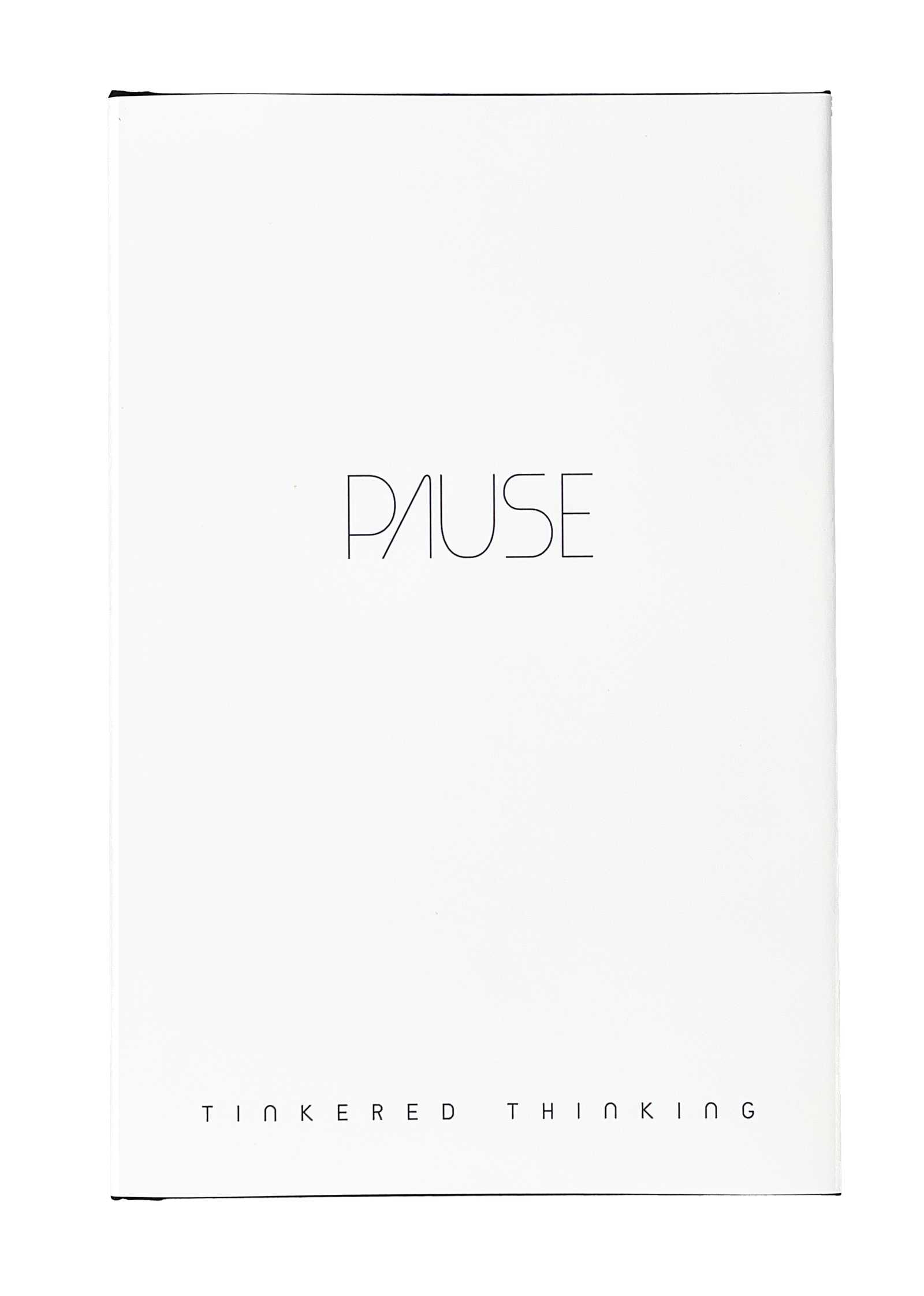
The first non-fiction book from Tinkered Thinking. PAUSE is a short book on meditation. Now available on the Tinkered Thinking Bookstore.


The SECOND illustrated book from Tinkered Thinking is now available!

SPIN CHESS
A Chess app from Tinkered Thinking featuring a variant of chess that bridges all skill levels!

REPAUSE
A meditation app is forthcoming. Stay Tuned.




COOK AND CRITIC
June 2nd, 2018
This episode references Episode 14: Sample All the Kool-Aides. If you’d like to fully understand the reference, best to check out that episode first.
I recently heard someone say that platforms like YELP and Trip Advisor have put a lot of local professional critics out of business.
Apparently, it’s easy to be a critic.
As the common adage goes: Everyone’s a critic.
It is easy to point out what is wrong.
And yet everyone wants recommendations. Everyone wants to know what is good.
“What should I do about this problem?”
We give our best advice. The straight-forward advice. We describe the path that seems to make sense.
The response:
“Yea, but…”
It’s always easy to point out what is wrong.
Just because something is easy does not mean that it is correct, helpful or even appropriate.
Even if there is something obviously wrong with the advice, this does not mean that it should not be entertained. We are so quick to dismiss a friend’s ‘actionable-theory’, and yet we forget another common default:
“In theory that sounds good, but in practice....?”
But what if a so-so theory leads to an action in practice that results in something good? Something unexpected and surprising?
We know there is a disconnect between theory and practice. And yet we acknowledge it only when it caters to our lazier selves, when trying out the theory requires action: In theory that sounds good but in practice it will probably fail….so there’s no point in trying. We do the opposite, we ignore the hazy connection between theory and practice when it might require action. The friend’s theory might have flaws, but taking action on it might produce beneficial surprises, because… theory never predicts the results of practice perfectly. We ignore the fact that any action based on any theory (no matter how flawed) leads to more information than doing nothing. This is why it's good to SAMPLE ALL THE KOOL-AIDES. Sampling does not require full, devoted adherence. But it gives us far more information than doing nothing.
How about this: “It sounds like it has some flaws, but I'm going to try it anyway, just to see what happens. Just for shits and giggles.”
Usually we just want to talk, and try to make ourselves feel better via the talking. But the tiny sense of accomplishment that comes with talking things through does not last. It does not change our life. Often it's best to just shut-up and TRY something. . . anything.
Some talk can be productive. But never without succeeding actions based on theories batted around by caring people.
The critic is our easy default.
Refraining from expressing the criticizing thought. Pausing. Asking what actually might help move something forward. What actions might bring more informed answers. What experiments on reality might yield a stronger more detailed map of the world.… This is the better, difficult work.
Being a critic is easy. It’s like getting served a nice big juicy meal that required no effort. All that is required is the experience of devouring and destroying it and broadcasting whatever emotional reaction it “inspires.”
Better to be a cook, or rather: a chef.
Get in the kitchen, and throw some ingredients together and see what we can create.
It requires action.

CHILDISH RECURSION: THE WHY-SHOVEL
June 1st, 2018
This Episode references Episode 30: The Only Tool. If you’d like to fully understand the reference, best to check out that episode first.
What is that question that children are always asking?
Why?
. . .
But why?
. . .
But why?
Each answer we give is a layer of understanding, and a child is quick to whip out The Why-Shovel and dig a little deeper. It is the most basic example of THE ONLY TOOL we have – the question – sharpening itself. In lieu of the skill of forming a better question, merely repeating the question requests a better answer. It sharpens the answer in lieu of a sharper question.
This is a fucking superpower.
A superpower that eventfully gets stomped on by some exhausted, overworked, adult who is giving the quickest, easiest answer in the hopes that the questioning will stop. This is understandable because it is just that much more difficult to pause, listen deeply and thoughtfully respond when perpetually exhausted, overworked and looking for relief.
The irony is that one deeply thoughtful answer about the subject eliminates the need for answering 100 questions. Each shallow answer is poked at with another question, because the answer did not go deep enough. Hence the recursive question: but why?
Instead we teach children to answer good questions with quick shallow answers. Monkey see, monkey do. And this behavior says: look, there are good deep questions, but you’ll get by just fine if you just answer them quickly and move on – it really doesn’t matter if you answer it well, just get it over with.
No wonder they grow up and do exactly the same thing to the new generation of children.
Perhaps what is really lost is the opportunity to teach the child how to think.
Somehow the kid can see the shallowness of the answer and so asks again. The kid is looking for something more interesting, something for the brain to chew on.
What if we answer a question with a question? What a question.
What if the child is looking for more than just an answer? What if the child is looking for a way to think?
What is the method of thinking we impart? A quick shallow answer will do just fine. Don’t bother putting thought into it.
Most all of us experienced this. Whether it be a parent, or a teacher who was particularly poor in their ability to choose a profession. We have all had plenty of influences that say: look, you don’t need to be thoughtful, you don’t need to dig deep, you don’t need a better question or a better answer. You’ll get by just fine without any of that.
What if for a moment we entertain the possibility of going back to our child selves and changing the way that all went down?
What would have been a better response when you asked that inevitable question: but why?
“Well what do you think?”
“What if I weren’t here, how would you try to find the answer?”
“Are there any experiments you can do to try and find out?”
“I don’t know, so let’s find out.”
But that can’t happen. We can’t go back in time. We can’t re-rear ourselves to our liking. Often we see the next generation as the hope and opportunity and then simply make the same mistakes based on those age-old examples.
But what about who we are now?
What about the questions we ask ourselves today?
Can we apply some of this childish recursion to ourselves? And to our own lives?
The gift is that we have the power to answer these questions.
We just need to resurrect the habit of asking.
If we could muster just a fraction of that childish recursion, how far might it push our understanding on any given subject? How might it open up the possibilities?
We are so quick to say: I can’t. . .
What if we replace that with:
Why not?
or
What if?
and
Well, let’s find out.
BUSYNESS
May 31st, 2018
Ironically. . .
Busyness is often a form of laziness.
Or rather, the counter-intuitive by-product of laziness.
The aimless existence of couch-potatoes and serial sitcom dopers do not have sole claim to the throne of laziness.
Being more productive does not mean adding more things to our to-do lists. Often it means saying no, cutting out the unnecessary and doubly focusing on what is actually important.
Busyness becomes a by-product of laziness when we fail or refuse to first pause and ask ourselves what is actually important. What really needs doing? That is the difficult work. That requires flexing the brain.
Merely being busy does not automatically result in…. results.
Certainly there is a higher probability that results will occur if we are actually doing things. But simply being busy is no guarantee that the results will be aligned with what we truly desire.
Ironically, the probability of desired results occurring goes up if we do the opposite of busyness first: devoting some quiet methodical time to what ‘busy’ tasks are worth doing.
In productivity-speech, this can be relegated as Prioritization.
But usually this just means a reorganization of a giant list of tasks.
Funny enough, the word ‘priorities’ used to be only singular. There was only one priority. Meaning the one thing that comes before all else, the prior.
It is funny that ‘what comes before’ is now a giant laundry-list of busyness.
If we are prioritizing a giant list of things, have we flipped the meaning? Have we taken the huge lists of tasks and put it in front of the one thing that should be prioritized? The priority?
What are we procrastinating to do? What are we putting off and filling in the time with huge lists of busy-shit tasks in order to stave off doing the one most important thing?
Something that is more difficult than ‘being busy’?
Something that might be uncomfortable?
The hard work:
Pausing. Considering deeply what is important.
If we cannot say ‘no’ to things that will busy us, then we have not properly identified The Important.
TRAVEL
May 30th, 2018
This episode references Episode 8 Tiny Steps and Leaps and Episode 42 Level-Up, if you want to understand these references, best to check them out first.
What a grandly touted activity. A symbol of status, and some might even kid themselves: a symbol of courage.
From Socrates to Seneca to present day, it’s been asked: why go travelling? You’re going to carry along the problems you wish to escape.
Our discontentment with our situation, life, even our self has very little to do with our surroundings or environment – though such can have a meaningful impact on us – it’s more important to see that everything has to do with our perspective.
The distance we wish to travel from who we currently are, should not be mistaken for a plane ride.
And since that long ago time of wisdom and lore, travel has only become easier. Exceedingly easy. And there's a problem with that...
The large leaps we need to make are often hyperbolized as giant far-flung adventures.
As though the way to change is to quit our job, pack our bag and fling our life all over the world. Many people do this thinking that it will *automatically* result in that substantial change they crave but fear to face honestly. It might help, but expecting one's self and life to automatically Level-up is a fantasy.
Travelling is incredibly easy these days, and carrying one’s comfortable little bubble along for the ride isn’t just exceedingly easy, it’s an industry. ‘Resorts’ are little more than satellite versions of the comforts of home with a more compelling change of “desktop background picture”. Even the slightly more adventurous pretty much always have a facebook/Instagram/email/reddit teat to suck on, no matter where in the world you are.
The large leaps we need that are hyperbolized literally in movies with far flung adventures are recreated in only the most superficial Disney-land-ride ways when we go travelling.
Want to travel? Want some transformative experience? Throw a dart at a map of the world and then go to that place without using a motor of any kind, no plane, no car, no train, no motorcycle. That’ll be an adventure. That will pop a comfort bubble.
What is required for change is discomfort. First, foremost, and last.
The greater discomfort we willingly embrace, the greater probability that we will progress into the changes we wish to become.
AUTOPILOT
May 29th, 2018
Learning and attempting a new activity usually results in a heightened awareness.
Learning to drive a car, for example. The student, aware of the high stakes of a mistake is wide-eyed and looking everywhere.
Over time, with experience and familiarity, this behavior changes. Until the lazy complacent driver is comfortable eating a bagel while yelling at someone on one phone, texting on another, down shifting through a left turn and cursing the fates that they did not have enough time to lean out the window and berate another driver for failing to follow their version of the rules.
We don’t even have to go this far. It’s only to point out that awareness decreases.
Why?
The student driver is unsure of what aspects of the environment are important, so the student driver is attempting to pay attention to everything. Learning a skill like driving has a lot to do with figuring out what in the immediate environment is important, potentially important, and what things are not important at all.
The process of learning how to drive invariably results in: figuring out what to ignore.
Our vigilance as drivers plummets over time as we are lulled into a survivor’s bias form of complacency.
And yet still: car accidents are a substantial killer of our species.
How many accidents might have been avoided if everyone involved had maintained the hyper awareness that the student driver has?
Of course this just isn’t possible. Doing something regularly breeds complacency, whether it be a job, driving. In some sense our minds seem programed to get bored as fast as possible.
Emotion is a form of autopilot. And just like the complacent, distracted, over-confident driving human: it is not very smart and quite liable to steer straight into catastrophe.
As children we learn emotional constructs from those around us. We are not born with these emotions (though a baby can seem pretty pissed off, scared and angry at 4 in the morning for a new parent.) There is only discomfort and a sense of ease. These get extrapolated into a whole variety of ‘emotions’ so that we can communicate to others more efficiently what is happening. Anger and sadness are both a form of discomfort but being able to tell the difference between the two communicates exceedingly quick some basic information about the situation.
Back in the caveman days, an angry tribe member would put us on alert with exceptional swiftness. This probably primes us faster for defense from an external enemy (or an internal one..). Whereas a sad tribe member still communicates that something is wrong but does not prime others for a large potential physical struggle (err. fighting.)
(this is an undoubtedly primitive hypothetical example of emotion as communication. For more on this topic, please delve into Lisa Feldman Barrett’s often mentioned work.)
While emotion is useful, problems quickly mount when emotion becomes the default: the autopilot.
New information in the environment arises:
A colleague has made a joint project delayed. Think about what can be done? Nope, just show frustration.
A spouse has made a purchase we disapprove of. Think and discuss? Nope, just show anger.
A foreigner with limited English cannot understand our complicated coffee order. Demonstrate patience and help this person learn and further integrate? Nope just say the order louder, with plenty of aggravation.
The reason why emotion as autopilot causes such problems is because emotions are too simple.
A child can list for you the major emotions.
Plutchik’s Wheel of Emotions gives us 32 emotions with some quaint colors between to indicate a spectrum.
But communication in ANY language yields nearly an infinite spectrum of communication with any degree of depth, detail and thoroughness…
if...
we are willing to take the time.
Emotions blanket the spectrum. Using emotions gets a point across quicker, but at the sacrifice of detail.
And the devil is in the details. Or lack thereof.
Like the ‘experienced’ complacent driver who learns what is ‘ok’ to ignore and develops a kind of autopilot, the emotional human is likewise using a simplified mode of reaction.
Running on emotion is autopilot.
But then the complacent driver after thousands of comforting miles steers into a nuanced situation that cannot be read properly without strong awareness. And the driver might pay the price of that mistake with their life.
The emotional human drives into an argument with emotion and might pay the price of a treasured relationship. Or worse: pay the price of time wasted. Time spent in a slowly degrading relationship that does not die and does not flourish. But just wastes time. Wastes potential. And perpetuates the status quo: a trend of negativity, an open sore never healing, the scab always rubbed off by the next blunt emotional communication. Lacking the detail, the communicative sensitivity that clearly calls each person into focus.
This is the mistake of the autopilot.
Being present actually creates a distance between ourselves and the emotion we might feel.
Being present calls into tight focus what is truly important and the present emotion is rarely what comes into focus.
Isn’t it funny how everyone wants the controller when a single-player videogame is being played with a group of friends? Everyone wants to DRIVE. A chance to pay attention, make a turn, get better. But take the videogame away, give us the vast world that we live in and we are so quick to switch and go through our days on autopilot.
Life is short.
Why spend a single moment of it on autopilot?