-compressed.jpg)


Daily, snackable writings to spur changes in thinking.
Building a blueprint for a better brain by tinkering with the code.
subscribe
rss Feeds
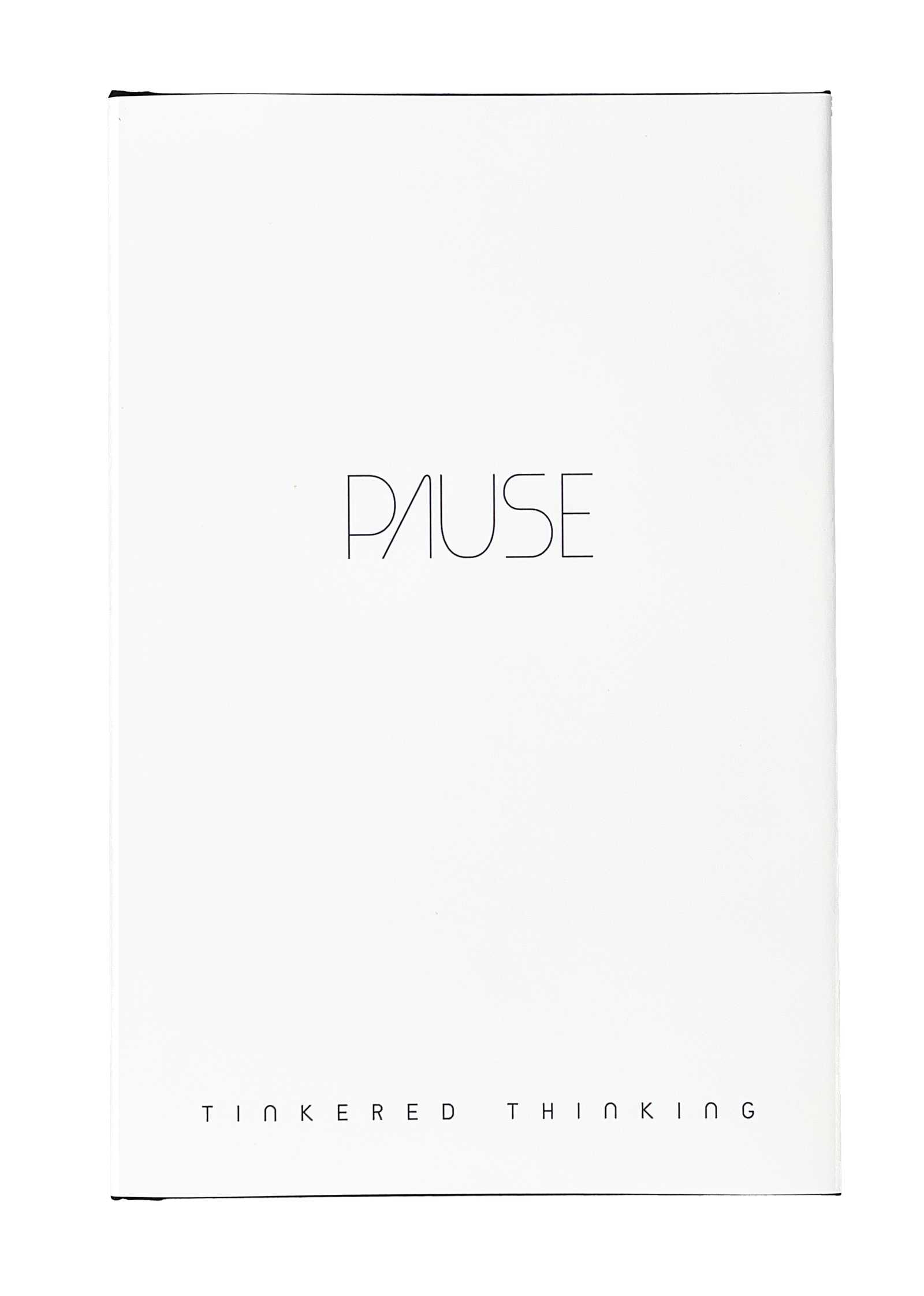
The first non-fiction book from Tinkered Thinking. PAUSE is a short book on meditation. Now available on the Tinkered Thinking Bookstore.
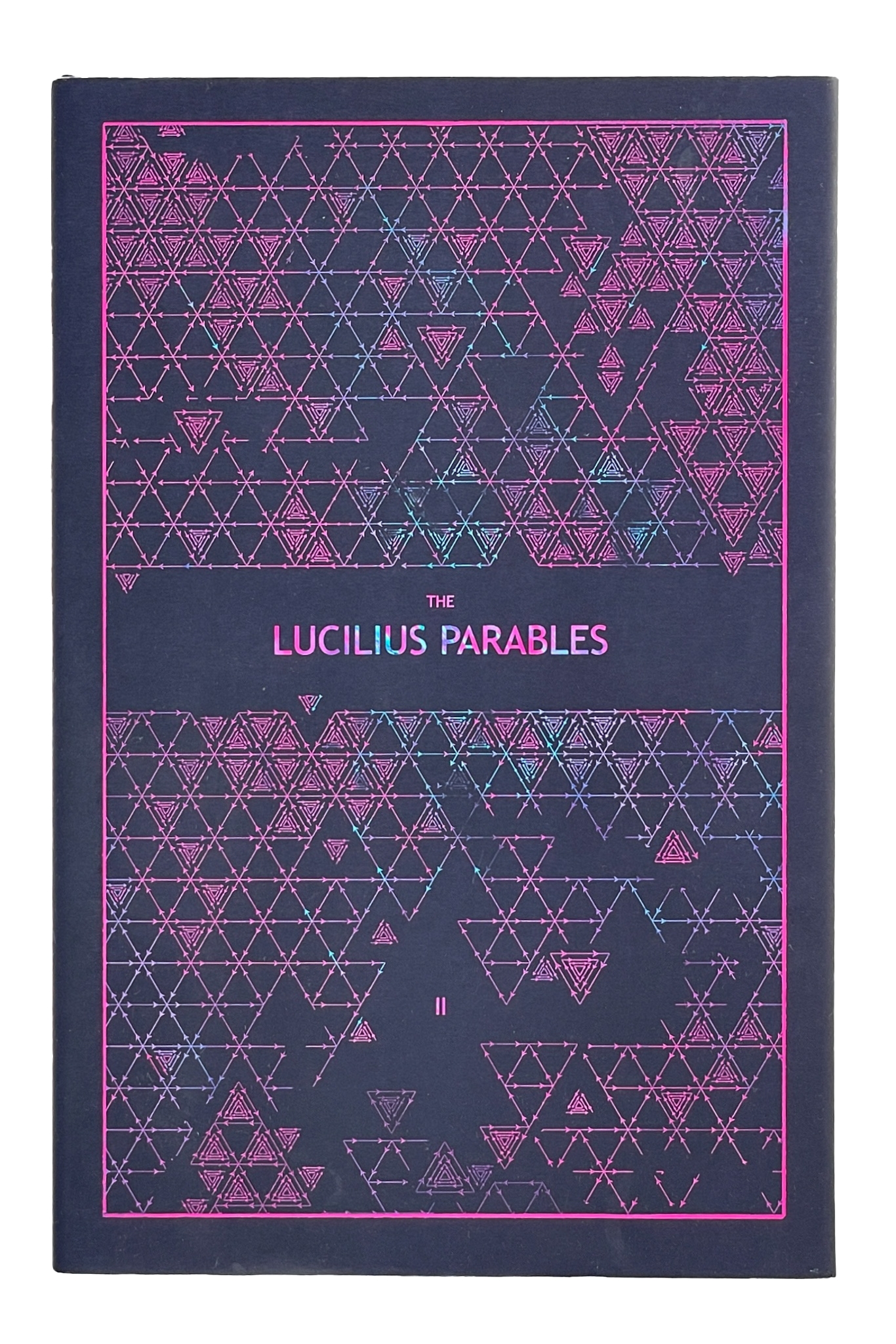

The SECOND illustrated book from Tinkered Thinking is now available!

SPIN CHESS
A Chess app from Tinkered Thinking featuring a variant of chess that bridges all skill levels!
REPAUSE
A meditation app is forthcoming. Stay Tuned.




ROSE-COLORED CUFFS
May 18th, 2018
This episode references episode 25: Preacher vs. Teacher vs. Party-maker and episode 21: The Montage is False.
Those who care for us do so –presumably- for a simple reason: because of who we are.
A heavy pour and quick shot of logic produces this trap:
If I change, will they still love me?
This is dangerous. First and foremost because it is an assumption. What’s to say that family and friends won’t love you more if you change?
And if it feels painful to merely exist.
Painful to think.
Painful to operate.
Painful to just get up in the morning.
Painful to just keep going. . .
Anyone who loves you will be open arms, and let you go through that open door of change. They will be there on the other side too, waiting for you again.
That is the cheesy ideal circumstance. Meaning, it's not usually the case.
Not everyone is open to such change: changes in ourselves often uncomfortably highlight changes that loved ones need to make in themselves. This can be finagled into a virtuous cycle, a community of change. But it requires tender gloves, and flexible, agile, experimenting, often counter-intuitive thinking. Difficult. Perhaps trying to navigate the already-difficult path of changing one's self is enough for the moment. Don't take on the whole world around you.
Take heed that change happens slowly.
Declarations of a better you and a better future need not be made. Keep it a secret. The montage is not going to happen overnight.
Think of change more like a subversive tree root cracking the sidewalk. You never notice until after it's happened.
The very aggravating aspect of change - that it happens so slowly – can be an ally when it comes to the restraining influence of loved ones. Before they notice, the good habits will have their hold. Before they can complain, you’re fortifications will be built. Before they doubt, your work will speak for itself.
Loved ones intend to be supportive. But often their own fears, insecurities and inequities turn their influence into rose-colored handcuffs. Working to keep you as you are, so they don't have to confront such an up-close example of the fact that change is possible. That a better you can be built. And in turn prove that they too could build a better self too.
Those who have any fear of change work against feeling that kind of obligation. No matter what they might think or say about being supportive. It's the old reptile part of the brain hijacking the higher executive function in the name of the sacred cause of laziness.
Don’t struggle against them, and preach as a prisoner.
Quietly plan your escape.
Study the lock.
By the time they notice you’ve escaped, You’ll be kickin’ it on a beach in Mexico.
So to speak.
(And who knows, they might just be inspired to join you: the Party-maker.)
REAR-VIEW
May 17th, 2018
The past is undeniably important. It contains all the experiences that have influenced who we are. It is the single vast ingredient required for reflection. It stores all the information that allows us to make sense of the present. It feels exceptionally realistic and overwhelmingly convincing. Because once: it was reality.
But reality is not the past.
Reality is something new. It incorporates many aspects of the past. But to think it is the past or even very close to the past is to live in the past. To do this is to live in a conceptual version of the present based on a present that no longer exists - Except in the mind. To do this is to ignore reality. Let time slip by you. To be robbed of the future.
Where is the balance? Between reflection and practicing awareness in the present moment?
While driving we mostly look at the road in front of us, and only routinely make quick checks in our mirrors, which are very useful tools.
But we cannot do both at the same time.
We cannot keep our eyes on the road in front of us AND check our mirrors.
You must do one or the other.
If you are too focused on your mistakes, misfortunes & misery, you might be blind to avoid the next crash right in front of you.
Would it be a good idea to stare in your rear-view mirror the whole time while driving?
Even most of the time?
Do you have your eyes on what’s in front of you?
PILLS, THERAPISTS AND THE IKEA EFFECT
May 16th, 2018
1.
How many of us have heard these sorts of responses?
"I suffer from depression and anxiety..."
"Yes, I take something for it."
"Yes, I see a therapist."
"Yes, I've put a bow on the issue."
"...yes, I am still depressed and anxious. It's better, but..."
2.
Much of the economy runs on a single, simple and fragile idea. The idea that you can: get someone else to do it. Outsource the responsibility.
Throw money at the problem, and it will sort itself out.
Well that might work. But really what's happening is paying for responsibility displacement. Bureaucratic corporations are stellar at this:
"Should we mine the talent we already have, invest in that talent and develop it? Or should we hire a consultant?"
Consultant. Definitely a consultant. (Is usually what happens. And some consultants are good. The good ones realize how limited their reach and influence is and work with that. Most consultants, however, act like a temp boss that commandeers, trying to prove themselves, instead of asking, what can these people do? Where is the disconnect, how can they flourish? How can I succeed by making the need for a consultant irrelevant?)
3.
The best doctor I've ever interacted with was a physical therapist. After hearing the details of my ailment, he said something to this effect:
"Ok we’ll probably have half a dozen sessions, probably fewer. The degree to which you regain strength and function, however, is ultimately up to you and the work you put in."
This guy could have fed me some bullshit medical lingo and easily pumped me for money for months. But he opted for the opposite: a balance between minimum effort and maximum results, and made it abundantly clear that my health was in large part my own responsibility. He was kind, patient, listened very well and ultimately: enabled me to solve the problem.
Of the dozen or so Physical Therapists that work in the same office, his waitlist is the longest, by double.
He is an example of reversing the responsibility economy. By providing the tightest, most succinct and densest value possible.
There is tremendous negative opportunity to take advantage of people's desire to outsource responsibility. But there are two people for every tango.
Blame cannot be solely placed on the corporation, the bad doctor, and all those who take advantage.
The consumer, the client, the customer, the guest.. is just as big a target for that blame. Probably more considering the old adage that demand creates the supply - rarely the other way around.
Be wary of how responsibility is outsourced. Do you genuinely need expertise solving a particular issue? Or are you hoping someone else will solve it if you throw money at them?
4.
The success of IKEA has been at least partially attributed to something termed "the IKEA effect".
Simply put: people like the things they own more, if they build those things themselves.
IKEA created a sort of symbiotic relationship and benefited from putting a little of the responsibility of construction onto their consumers.
My physical therapist did the same thing.
5.
What about mental health?
Some quick casual research will reveal that physical exercise is just as effective as Prozac.
2-3 months of daily mediation also begins to produce equally powerful results.
And yet so many opt to feed a pharmaceutical corporation, and less-than-brilliant therapists who also need to pay bills and have had years of schooling that may or may not function like implicit biases against you, convincing everyone, including you, that you are sick.
The good thing about rock bottom is that it's a great foundation.
The good thing about the IKEA effect is that if you build a better you, you’ll have no one to blame for that success, except yourself. And no one can take it away from you. And if you need to do it again and again and again. You’ll know how.
Legos anyone?
THE ONLY TOOL
May 15th, 2018
Our most powerful tool is not an answer.
The most powerful tool is a question, and our brain’s ability to form and apply questions is our greatest attribute as a species.
What?
How?
Why?
Often the real genius of this tool is when it’s applied to itself, as in: is this the best question we can ask? Is there a better question that is more helpful? In this way, our greatest tool can be used like an ax that sharpens itself.
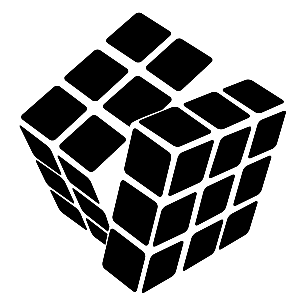
Take the Rubix Cube as an example. It’s widely considered a sign of intelligence for anyone who can solve it. The feat appears almost magical when it is finally completed. Like pouring out a bag of scrabble pieces and watching a sonnet appear.
How is the Rubix Cube solved?
A fair question.
But is it a useful question?
Inevitably, that question would involve tracking the position and orientation of 26 cubic pieces relative to each other with 54 colored faces. For the average person this is far beyond our telephone-number-sized memory.
What is a better question?
Well, that first question had too big of an answer. This is one way to analyze a question. How big and complicated is the answer? Most often it's like Thanksgiving Dinner where our eyes are much bigger than our stomachs. In this case the question begs an answer we cannot fathom. We need a smaller problem, a more narrow question. We need to take smaller bites.
Can the question be downsized to arrive at a smaller answer – a more manageable answer?
This might be a useful question. And notice it is a question applied to the first question.
How about starting with just one side of the Rubix Cube?
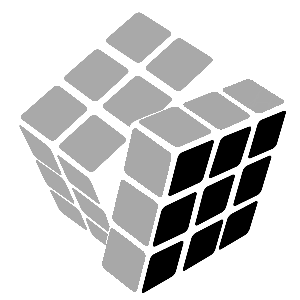
This is often how it goes. People retreat from the 3 dimensions of the Rubix cube to just 1 dimension, and look to solve just one color (9 out of 54 faces).
Getting one side to have all one color is not terribly hard. And this is where progress stagnates. . . this is where most people abandon the puzzle.
But Why?
After one side is ‘done’, there’s the realization that none of this face's adjoining edges match up correctly.
Suddenly the effort of accomplishing one side seems unproductive and we are back at square one faced with 3 dimensions of confusion.
This is the crucial point where people usually give up, and it is because the right question has still not been asked.
The mistake is jumping from the one dimension back to three dimensions.
What about just 2 dimensions?
What does that mean? What would that look like?
Well, what if we attempt to solve one side as before, but this time do so with the aim of having just one edge – just three of the faces on an adjoining side – have the correct corresponding colors. I.E. Solve the whole white side with just three of the red faces lined up that share an edge with the white side, so at the end of this tiny exercise 12 of the 54 faces look like they are in the right position.
This is jumping from 1 dimension to just 2 dimensions.
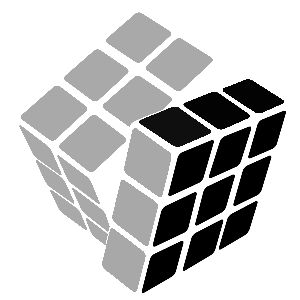
Notice how much more specific and detailed this question is. It does not jump from 9 colored squares to 54, it jumps only 3, from 9 to 12.
Increasing the specificity of a question often yields a more useful answer. It helps break down a problem into manageable parts. And if it is still too difficult to answer, it must be broken down further.
Perhaps one edge is too much. What about a full side and just two corresponding red faces that match up? Or just one? And then two.
Can this strategy then be reapplied to the other edges of the white side? So that we end up with the top level of the rubix cube being solved. I.E. the whole white side and the 3 colors on the adjoining edges, red, green, orange and blue? If we can move in the way, we go from 9 colored squares to 12, to 15, to 18 to 21.
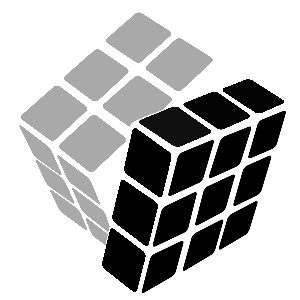
Might the small differences between strategies for each edge create a familiarity with how each dimension of problem solving affects the next? Could the principles deduced from these smaller exercises be one of the keys to getting the very last face into place? Absolutely.
Likewise, the best teachers do not simply profess the best answers. Rather, they ask the better questions. Nor do they dodge questions for which they have no answer. Instead they use these as points of departure to further explore their topic and improve their expertise. And if a teacher gets excited about a question for which they have no answer, you know you have a winner.
Indeed, if Curiosity were a superhero, the ‘question’ is certainly the lightsaber it carries.
But as with any tool, our mastery of it requires constant use, constant practice and training, because a tool is only as useful as the person who wields it.
A LUCILIUS PARABLE: CHANGE OF SCENERY
May 14th, 2018
When Lucilius was 170 years old, he was living in a cave, meditating for 15 hours a day. He had been at this practice for many years and was perfectly content, finding the exploration from that seat unending and expanding.
One day, while Lucilius was meditating, two figures entered his cave. They were clad in black armor made from interlocking titanium plates. Their helmets shown only as black mirrors curved before their unseen faces. In unison they approached Lucilius and as he opened his eyes to greet them, they hoisted him up by his arms and dragged him out of his cave.
He was thrown in the back of a small armored craft where he stayed as the figures loaded into the cockpit and the craft ascended.
After some time, the craft landed and Lucilius was taken from the holding bay. The craft was in a building now and Lucilius was lead through a series of halls until he was guided into a large room. It was a courtroom of sorts from what Lucilius could tell. But he had been at his practice of meditation for so long that he no longer knew the language, nor indeed how people communicated since the entire proceeding appeared to happen in absolute silence. The figure central in the room, whom Lucilius thought might be a judge of some sort, wore a similar helmet that curved like a black mirror before the person’s face. The figure lifted an iron gavel, dropped it quickly, and the same figures who had brought Lucilius pulled him away from the room and lead him back to the craft in which they’d brought him.
Lucilius could feel the small pressure of lifting off and then again as the craft accelerated away, and after some time again, they landed and took Lucilius from the holding bay. They had landed atop a massive compound with no windows or distinguishing marks of any kind. All Lucilius could make out about the building before they entered was that it seemed to be made in a repetitive manner with the same large basic structure, so that the building could grow infinitely, if only another like piece was added to it’s sprawling configuration.
Inside, Lucilius was led down a long hall lined with door after door. None had windows, only a small number affixed in the center. And it was silent. Lucilius could hear nothing aside from the light foot falls of himself and the figures guiding him. They slowed and stopped before a door which opened with a hiss, and silently swung wide as if by a careful and invisible hand. The figures pushed Lucilius into the small cell and behind him the door swiftly swung shut and clicked.
Lucilius looked at the four walls and smiled. He sat in the center and was positioning himself when an unseen panel in one of the walls opened and a bowl of steaming vegetables emerged on a retractable shelf.
Lucilius ate the delicious food, looking at the perfect craftsmanship of the surfaces of his cell. He placed the bowl back on the board, which retreated back into the wall and vanished as the panel replaced itself.
He settled down in his posture, smiled, and began to meditate once more.
120 years prior to this, Lucilius was filled with compassion for a woman who was miserable having been forced to wait an additional 5 minutes in a waiting room. The day preceding this miserable existence, Lucilius had seen the same woman sitting in much the same way in a cafe, doing nothing.