-compressed.jpg)
Daily, snackable writings to spur changes in thinking.
Building a blueprint for a better brain by tinkering with the code.
subscribe
rss Feeds
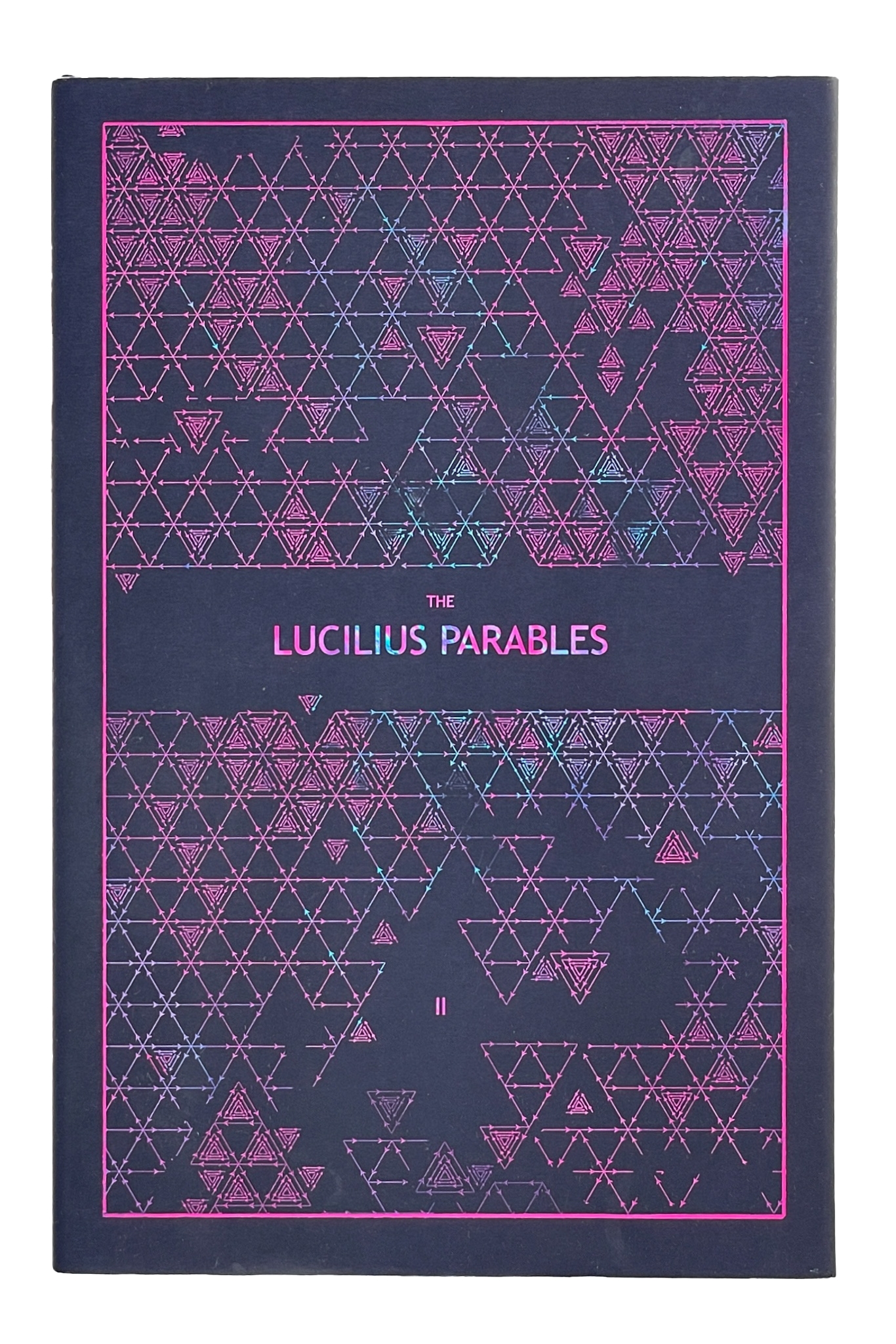
The SECOND illustrated book from Tinkered Thinking is now available!
SPIN CHESS
A Chess app from Tinkered Thinking featuring a variant of chess that bridges all skill levels!
REPAUSE
A meditation app is forthcoming. Stay Tuned.


RIVALNYM CASE STUDY: FANATICAL FAN
January 31st, 2020
As Winston Churchill once said, A fanatic is someone who can’t change his mind and won’t change the subject.
The diminutive form, that of just being a fan, speaks of the same phenomenon but to a lesser degree. And more importantly, we think of a fan as someone who has a positive and healthy interest, whereas fanatic is far more negative and conjures up notions that are generally dangerous to our sense of how we think things should be.
These two words are rivalnyms. They essentially describe the same thing, but from two completely opposite emotional standpoints. Rivalnyms are pairs of words, like synonyms and antonyms. Rivalnyms share much the same definition, in that both words refer to the same phenomenon, like synonyms, but they have opposing emotional signatures attached to them, somewhat like antonyms.
This pair, that of Fan & Fanatic
form one of the best rivalnym pairs because they can convey opposite feelings when in fact they are pretty much the same word, since the word fan is simply a diminutive form of fanatic that’s been merely shortened; nothing could be more emblematic of the strange fact that our perspective is mostly determined by our emotional response as opposed to our thoughtful treatment of any given subject.
Our language is laced with rivalnyms that allow us to describe events in opposing ways. Language appears to be built in this way because people have different emotional responses to the same things.
An event that makes one person nervous makes another person excited. Nervous and excited form rivalnyms in this case, eye-rollingly appropriate too, considering each refers to the other.
This split in language that we can identify with rivalnyms seems to indicate something perhaps fundamental about the way our emotional composure can be geared towards receiving the experiences of life. While that’s a larger subject to be unpacked at another time, Rivalnyms do, in the meantime provide a clue about our own composure and how to change it if we so want. Being aware of rivalnyms in your own language can become a sort of mindful practice, akin to that of a detective, but when the subject is one’s own self.
For example, when we hear ourselves say that we are lonely. This is a negatively tinted description of the state of being alone. As opposed to focusing on the state of being lonely, we can re-describe the situation with a positive tint. We can ask:
How can I enjoy this gift of solitude?
CHARGED BATTERY PART II
January 30th, 2020
I personally finished a 10 day fast this week. It breaks my previous record of 9 days which was accidentally set while very ill and somewhat stranded in the Himalayas. That experience showed me that it was possible to go without food for a very long time, and having an experience like that in the back or your mind is incredibly powerful when you eventually come across fasting and all the purported benefits. It’s much easier to think: I can do that.
Short fasts of 1-2 days are simply the worst. What most people don’t realize is that after these two days, the body calms down. Mental acuity goes way way up, and even strength improves significantly.
This makes sense from an evolutionary point of view. No food is a sign to the body that the environment is sparse and it might be a while before the next meal. So the body sort of reorganizes what it’s doing and makes sure the brain is working as well as possible so that it can figure out what it needs to in order to get food, and it likewise makes sure that physical abilities are as tip top as possible so that the brain can use that body in whatever way it needs to manipulate the environment in order to get food. Whether that mean tracking an animal for several days, or coming up with an ingenious way to trap one.
It’s these benefits, the mental ones in particular that I personally have come to value the most.
That being said, there are untold health benefits. The genome starts functioning in a new way, and after a couple days of fasting, it starts a process called autophagy.
This word literally means “self” “eating”. But perhaps not in the way you think. The body starts combing itself for poorly made proteins and dysfunctional cells and rips them down to basic parts in order to rebuild things correctly, making things more efficient.
The best analogy is to think of owning a business. Let’s say you’ve got 100 employees, and suddenly there is a huge drop in revenue because of external market forces. You are forced to lay off 10% of your workforce in order to stay profitable. Now here’s the question:
Are you going to lay off your best 10%? Or are you going to think about who you could do without and lay off your worst 10%?
The answer is obvious and this is exactly how the body goes about it’s process of autophagy. Organs shrink and become more efficient as a result. Things quite literally start running better, because they have to.
Dr. David Sinclair has written an interesting book entitled “Lifespan: Why We Age and Why We Don’t Have To.” It details a fascinating information theory of aging, but poignantly, at the very end, the one thing he singles out as the greatest predictor of a long and healthy lifespan is calorie restriction.
Fasting simply makes our bodies go longer and in better more able fashion.
Intermittent Fasting is quite the craze these days, but truth be told everyone who sleeps does some form of intermittent fasting because they’re simply unconscious for a good part of the day. This is why it’s called breakfast, you’re literally breaking the fast that you slept through.
Stop eating for a couple days, and after that initial period when the body is expecting it’s usual hit of food and whines when it doesn’t get it, you start to look at everyone else and bizarrely the whole world looks as though it’s addicted to food.
We are, frankly. As mentioned before, we’re programmed to eat as much as possible because our species has clearly experienced some bleak times. We have an addiction programmed into us for it.
One of the nice things about a long fast is that the near constant thought and desire for food melts off.
Normally while working, there’s always that thought of what am I going to have? And then of course it’s often a distraction. I’ll get something to eat before I start this project. It can be a constant distraction. But commit to a few days and after that initial day or two of hunger, the mind clears, the desire melts off and there’s honestly a great deal of freedom in that mental space.
One thing that is very important to have dialed in during any kind of multi-day fast is the regimen of water-soluble supplements, like potassium, calcium, salt and a few others. Without these things can become quite painful, and I speak from dumb experience. But with this dialed in, it’s far easier than most would imagine. All the fat soluble vitamins are actually stored in the liver and in a person’s fat.
The benefits at the end of the day are just too numerous to ignore. You save money, you get back a lot of time, your focus and strength improves, so combined with the extra time you get way more done than you normally would, oh and your essentially activating all of these latent super powers in the body that make it healthier and ultimately you live longer and better as a result. Is there anything else we can do that packs this many diverse benefits?
After fasting a few times and truly internalizing all of these benefits and how they all interact with one another, you begin to see that most eating is simply..
mindless entertainment.
CHARGED BATTERY PART I
January 29th, 2020
Tell someone you haven’t eaten anything for the past week and they look at you like you’re legit insane.
In the culture climate of the last few decades it goes against everything we’re told and elicits thoughts about eating disorders.
However, this might be the one area where grandmother’s wisdom doesn’t hold. If you think about it, most grandparents in the western world, specifically north America, got their eating advice from parents who went through the Great Depression… an era when people had so little to eat they actually did starve to death.
Make sure you eat enough, is perhaps more reminiscent of a passed down trauma.
Truth is, we’re very well built for going without food for long periods of time. If you close your eyes and imagine yourself as a hunter – gatherer from 100,000 years ago, do you think you’d be getting 3 square meals a day?
Not at all. You might have something that amounts to a very dry salad. But the good stuff only came along every once in a while. After a big successful hunt, or when the tribe comes across bushes of berries. We learned to eat everything edible because there was such a likelihood that we wouldn’t have anything to eat at all.
Frankly, the fact that we are so well built to go without food is the reason why so many people have weight problem. Our body is permanently programmed to save as many extra calories as possible.
Why? Because the times our ancestral bodies had to go without food were so numerous and frequent that putting on fat became a permanent feature.
Notice that our bodies haven’t adapted to do the same with other necessities, like sleep and oxygen. We can’t go a couple minutes without taking a breath and go a night or two without sleep and your performance regarding anything starts to go down the drain. Keep sleep depriving yourself and you run the risk of significant brain damage and death.
But Skip a meal?
Sure you might proclaim to the world that you’re starving! but in reality, you’ll be fine.
If you can grab a good hold of your side, then your battery is still charged up.
And just to put it in perspective, it’s worth mentioning the case of a man named Angus Barbieri.
In 1965 he weighed 456lbs. Then he fasted for 382 days. Think about that for a second. The guy didn’t eat for over a year. When he finished he was 180lbs. And he kept it off for the rest of his life.
One way to think about obesity, is to think people have fully charged batteries. If there was a famine tomorrow, it doesn’t take a rocket scientist to figure out who would last the longest.
THE HINGE
January 28th, 2020
Stories hinge on questions. Many great stories only have one question at their heart, a question at the center upon which the whole story turns and seeks to explore that question. Everything leading up to that question in the story is –for the most part- just building context for that question to occur.
For those who’ve seen American History X, that central question is: “Has anything you’ve done made your life better?”
The main character is hit with the full force of this question as he realizes the answer is no. He spends the rest of the movie trying to explore how the answer to that question could become a yes.
In the action movie, The Matrix, our main character Neo is told that he’s not “the one” which seems to be the whole point, but he’s never all that concerned about this distinction and is always more interested in what’s possible. The question hides a little later in the story and it’s phrased more as a statement. When the remaining crew are about to pull the plug on a trapped and drugged Morpheus, Neo says “I think I can bring him back.”
Any phrase that begins with “I think” is really more of a question. It implies: I’m not sure, I need to find out. Which is exactly what a question does to us. It sends on a mission to find out. A quest.
We see this in great literature too. At the heart of the Odyssey, Odysseus goes to the underworld to speak with a famous prophet named Tiresias. The prophet fills Odysseus in on the fact that Poseidon is upset with him and he needs to make reparations, but in addition to that, Tiresias tells Odysseus that if he cannot get control over his wild impulses that have blossomed as a result of war, he will never get home. That’s the question: can Odysseus change from a warlike state back into person who can successfully reenter civil society? This is perhaps the central question at the heart of all post traumatic stress derived from battle, and the second half of the Odyssey is dedicated to the exploration of this question.
Even in a book like Mary Shelley’s Frankenstein, we have a question. The monster, who has been hiding out behind a random family’s house and listening and watching their life secretly finally sees his own reflection. He comes to a great realization which answers an important question that has been building in the monster’s mind. The question is similar to that of the Odyssey: Can the monster ever be a part of human society? Upon seeing his own reflection he decides the answer to that question is no, and the rest of the story is really the monster dealing with the answer to this question, and eventually he flees to the snowy world of the north pole where Frankenstein finally loses him.
We are confronted with many questions everyday. We entertain questions all the time, in books, as they arise in our mind, but unless a question has an impact on our behavior – unless we are driven to actually go find an answer, these questions that we encounter aren’t in their best form, or perhaps simply aren’t a good a fit. The best questions change our life, they represent the points when our story hinges and suddenly goes in a new direction.
It begs to wonder..
What are the questions that have caused your life to veer in new directions?
Or perhaps,
You’re still looking for that question.
WHERE IS YOUR INSPIRATION?
January 27th, 2020
How do you decide what your next thought will be?
Think about this for a moment. You could be reading or listening to this episode of Tinkered Thinking and you don’t have any idea what the very next sentence will be. How is this any different from the stream of consciousness novel that we hear in our head as we think?
There are some passive ways to determine what we will think in the future, but they aren’t full proof. We make notes for ourselves. Oh! I need to remember this for tomorrow, I’ll write it down and leave it on my desk where I’ll see it. But think about this for a second. This is essentially laying a trap for your own attention. It’s ‘deciding what you’ll think’ in a rather round about way.
But to decide on your very next thought? Well to even contemplate this question is to have that next thought, which is a contemplation you weren’t necessarily expecting, but there it is. It’s grabbed your attention with or without your blessing.
We don’t decide our next thought. It simply pops up.
In an eerie way, it’s as though the thought is choosing us, instead of the other way around.
Some might regard this as a little summary of the argument that there’s no such thing as free will. And while that debate is rife with lots of head knocking by respected figures on both sides, it’s simply not a useful argument.
It’s more interesting and useful to contemplate how this flow of thoughts is hindered, helped and filtered.
For example: if you are super busy with a whole bunch of little menial tasks at work, do you have time for thoughts about whether or not you are spending the short time you have alive in a meaningful way or not?
No, not really. You’re mind is busy dealing with some minutea, and small potential solutions or directions to each little task are popping up in your mind as you look at the details and you watch yourself implement these solutions and carry out these tasks.
We go on vacations to relax and finally think about things. But is there ever much space for interesting thoughts to pop up in your head while you’re three margaritas deep and you spent the last morning reading someone else’s thoughts in a book they’ve published, and now you have to figure out the next fun thing to do so the vacation doesn’t feel wasted?
Putting wasted time to good use is a skill all unto itself. Carving out 10 minutes or an hour here and there to simply think while full of energy and relaxed isn’t going to yield much. But make it a constant habit and a structure emerges and the mind starts to spin a new kind of story. But who has an extra hour a day? Certainly not anyone with a Netflix subscription.
And while that might seem like a smart jab, it would miss an important point, which begins to emerge with a different question: does anyone watch Netflix in the morning before work?
No. Not at all.
We watch at the end of the day, after a long day, when we are tired and just want to unwind. Escape a little.
At the end of our day, our energy, both physical and mental is spent. It’s a rare person who’s made a habit of forging on after a busy day and forcing themselves to put that extra time to good use. It’s more practical to think about how our energy ebbs and flows and when it peaks. Carving out an extra hour in the morning for a little meditation, perhaps a quick exercise routine and half an hour of quiet contemplation can have incredible results if continued for a few years.
This is a secret within the community of creative people. As Neil Gaiman has said, every time he wants to write a new book, he makes himself incredibly bored, which simply means having a bunch of free time with nothing to do. His mind starts to entertain him at some point, and he simply starts writing it down.
Could there be a simpler definition of inspiration?
Many, if not all of us have experienced that depressing sensation of being locked into a boring job, overwhelmed with the feeling that we aren’t doing what we are supposed to be doing. It’s a difficult situation and feeling to deal with. It can easily lead to darker places.
One useful way to look at this experience is to wonder if that feeling is not actually an impulse of inspiration, waiting at the door while you are preoccupied with tedious tasks.
Think about it, it’s like you’re running around, maybe you’ve got something on the stove, and you’re trying to brush your teeth at the same time, trying to get everything done and then there’s a knock at the door. You’re expecting a package, and you know the delivery man isn’t going to wait for long and he’s not going to leave the package. But that thing on the stove is about to burn, and you’ve got your mouth full of toothpaste froth. Your anxiety spikes.
We’ve all had a similar situation. You. Just. Want. To. Get. To. The. Door.
But there are all these tedious tasks that demand attention.
That thing burning on the stove, and burshing your teeth, and all the other little things that are driving you crazy are like that unfulfilling job. And that anxiety you feel is that going-nowhere-in-life depression as you clock in for another shift.
That package that is waiting at the door?
That’s inspiration.
If you don’t make time to let it in,
how will you ever be able to focus on it?