-compressed.jpg)
Daily, snackable writings to spur changes in thinking.
Building a blueprint for a better brain by tinkering with the code.
subscribe
rss Feeds
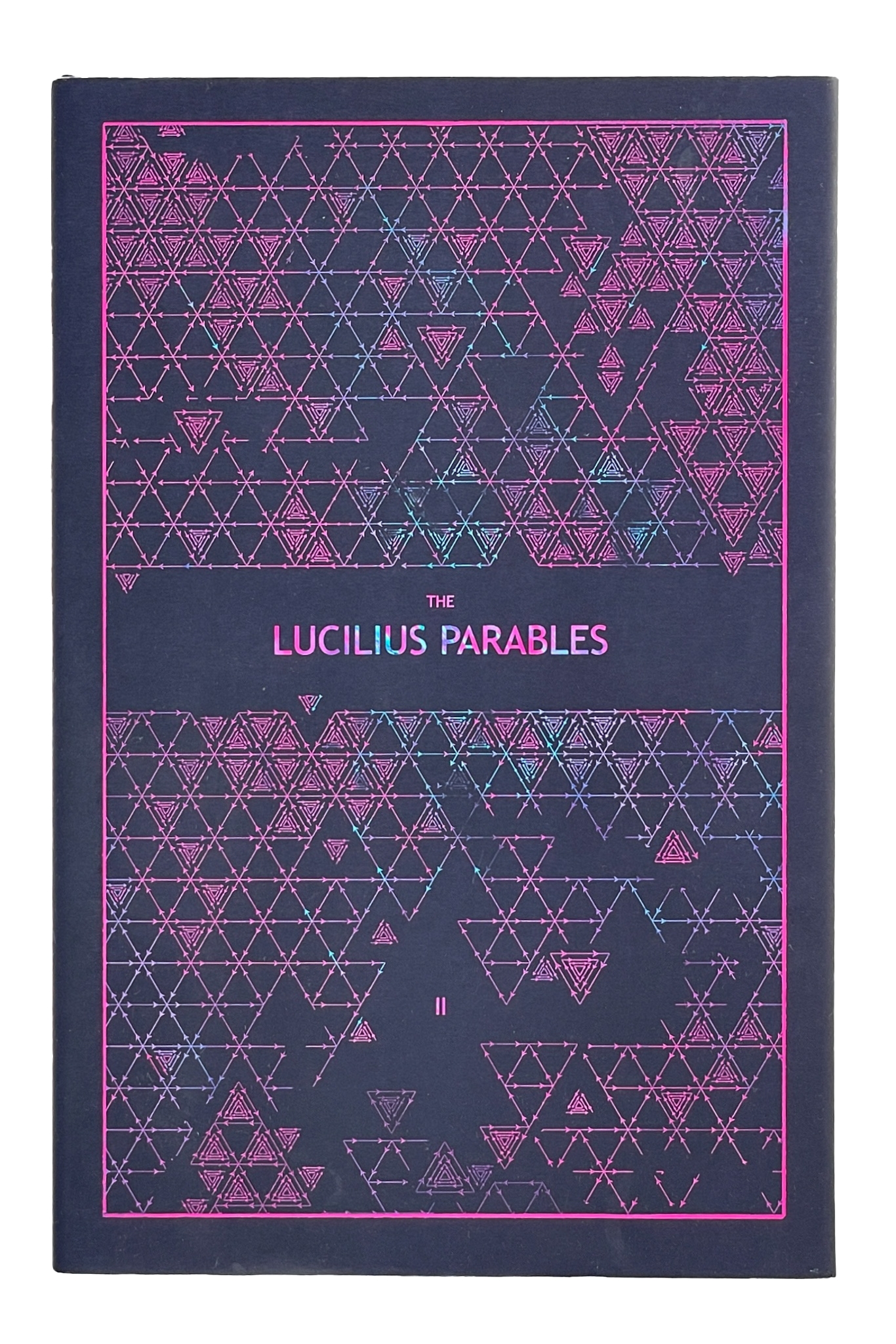
The SECOND illustrated book from Tinkered Thinking is now available!

SPIN CHESS
A Chess app from Tinkered Thinking featuring a variant of chess that bridges all skill levels!
REPAUSE
A meditation app is forthcoming. Stay Tuned.




A LUCILIUS PARABLE: TINKERED BEAUTY
January 26th, 2020
Lucilius was walking down the street, hands in pockets, feeling the crisp air of an aging winter give way to the touch of a near spring, reaching through a string of tomorrows. The city streets had an ambient hustle, neither congested nor empty.
The ambergris light of late evening seemed to seep around buildings and even in the shadows the city still seemed to gleam. The faint whine of electric motors hummed between and underneath all the conversations that travelled up and down the sidewalks. All seemed to drift in and out of Lucilius and he found himself smiling.
He caught sight of an old couple sitting waiting for a bus muffling smiles, and each was surreptitiously poking the other in turns underneath crossed arms. It was cute, and Lucilius felt himself momentarily overwhelmed, quickly averting his eyes to make sure they wouldn’t feel watched and stop. He thought about sending someone a message about it. Wouldn’t be the same, he heard his mind saying. That simple urge to just share a thing, however small and maybe meaningless, but so human, plagued him now.
He came to, realizing he was looking at a large advertisement featured on the side of a bus stop alcove. A protest poster for the Southern Mars Coalition obscured the center of the minimalist ad. He scratched at a corner of the protest poster and peeled it off to look at the full ad. It was a simple white expanse with a large white egg. And in the center of the egg, in simple lettering it said:
Art
Intelligence
Another part of you,
always with you.
AI
Lucilius studied the ad for a few moments and then walked on, wandering on with nowhere in mind and no place to pull him. The sun ratcheted lower and the temperature began to fall and Lucilius headed down into a shopping center wanting only to continue walking among people. He meandered, needing nothing, but entertaining himself with storefronts and gadgets, when he came across another advertisement, a huge floor to ceiling image of the egg. It was just outside the store.
He stared at the giant egg. He hadn’t really paid much attention to the buzz in the news around this company and its product. But the simple color, the comforting plump shape of the egg made him curious. He walked in and an associate smiled and asked if they might help.
“Yea, I was wondering about maybe getting one of these things.”
The salesman laughed. “One of our dæmons?”
Lucilius was taken aback. “I’m surprised you call it that, it sounds pretty malevolent.”
The salesman smiled. “Our CEO is really passionate about it and we’re honestly doing our best to change the public perception of the word.”
“So what exactly is it?” Lucilius asked.
The salesman looked up, thinking about the question. “Think about it like a genie, but one that doesn’t grant unrealistic magic wishes.”
“But it can grant realistic wishes?”
“Well,” the salesman said, “it would be a part of you, a reflection of you that’s designed to be a compliment to who you are, and many people find that it helps them self-actualize, and what is that really other than getting better at granting yourself the things you’ve been wishing for?”
Lucilius was a little skeptical. “Alright, well, what the hell, I’ll try it out.”
The salesman laughed. “It’s a little more involved than that.”
“Meaning what?”
“Well, it’s quite a commitment.”
Lucilius was a little confused. “What do you mean? You must have some sort of return policy, don’t you?”
The salesman looked at him sideways. “Do children have return policies?” he asked.
“That’s quite a bit different, isn’t it? I’m not getting a child here. You said this thing is some kind of complimentary reflection.”
“Yes, but it’s much much more than that. It’s a relationship, or friendship unlike any you’ve ever had. Would you talk about the people in your life in the same way you talk about things you buy having return policies?”
“No, certainly not, but then again, I don’t buy those people. And beyond that, to be brutally honest, people cut each other out of their lives all the time.”
“True, but you’ve worked in some capacity to get some people in your life and keep them around?”
Lucilius pondered this a moment. “So no return policy?”
“No not really, but some people and their dæmons do go their separate ways.”
“Separate ways? So these things really do have a mind of their own?”
The salesman tried to grasp for the right script, the proper wording. “We still don’t understand the mystery of consciousness, but everyone who has entered this experience finds it hard to believe that they aren’t interacting with something with a mind and spirit of it’s own.” The salesman continued to read Lucilius’ skepticism. “Look, this isn’t for everyone.”
“Not exactly the best sales tactic there, is it?”
“This product wasn’t really developed with just profit in mind. Quarterly profits mean nothing to our founder when pitted against his goals for the future.”
“Ok, well, I want to try it out,” Lucilius said, pulling out his wallet.
The salesman chuckled a little. “It’s not that simple.”
“What do you mean?”
“Well first, you need a BMI, which we can provide, but some people do choose other carriers.”
“Really, a Brain-Machine-Interface?”
“it’s how you’ll primarily communicate.”
“Huh, so we’ve let these things into our head now, have we? Hadn’t heard about that.”
“We also need to do some brain imaging, which we would do here, in house, and there is a battery of psychological assessments. You’ll have to schedule an appointment.”
“Wow, so all booked for today?”
Lucilius went ahead with two full days of assessment and scanning and then had a brain-machine-interface implanted throughout parts of his neocortex. And then he had to wait for several weeks while super computers crunched the numbers from the result of his assessment. The whole process was quite expensive, and Lucilius had just about decided the whole thing was a sham and had nearly forgotten about it when one day, in the middle of his meditation, he heard a voice say:
“An active connection has been detected. To activate your interface, please think of the code you were given when the implant was installed.”
Lucilius looked around. There was no one with him. The procedure for the interface had been so easy and painless that he’d totally forgotten that there was a small lattice of sensors and signals cradling his cortex. He thought back to the day he’d had the procedure. The most annoying part was proving that he’d memorized the interface code by going through dozens of digital exercises to ensure the memory would stick.
He thought about the code. He heard the voice again:
“Interface activated.”
Nothing else happened. After a minute, Lucilius closed his eyes to resume his formal meditation. He noted his thoughts as they arose, refocusing his attention on the feelings of his breath. The expanding sensation of his chest, the slight chill as the fresh air entered him, the release and relaxation that came as the breath left him. One particular thought came up and grabbed his whole attention. His awareness of breath dissolving.
The thought was about thoughts themselves. As he’d realized many times before, we do not and cannot choose what our next thought will be. They simply arise. But what held his attention so curiously this time, was what this implied.
Do our thoughts choose us? He wondered.
It was a satisfying question. As disturbing as it was powerful to realize. He relaxed with the thought, letting the question go, the sense of his breath, the awareness of the space around him settling back in.
After some time a mechanical bell he’d programmed came to life and gently rang. He opened his eyes and got up. The day, now glowing in the windows looked beautiful and he opened the main window in his kitchen. The melodies of songbirds, now resurrected and abundant drifted in through the clean cool air. Lucilius poured himself a coffee and sat down in the growing sunshine to read.
“Whatchya readin?”
Lucilius looked up. His place was empty.
“Just kidding, I can see what it is from here.”
Lucilius looked around a little more frantically.
“Let’s see…” the voice said, and then it hummed a little tune. “Huh, not bad. Hadn’t read that one. . . did you catch the typo at the top of the page you’re on? Interesting the way he breaks down questions, certainly practices what he preaches by using questions to do it.”
It was then that Lucilius noticed the slight movement on the window sill, obscured by the flood of morning light, nearly wrapping around and concealing the tiny shape. His pupils constricted in the brightness and the form began to resolve.
It looked as though there was a tiny white butterfly on the window sill. It’s wings slowly arched up to touch and then spread down and wide. Then it lifted into the air and glided to the table where Lucilius sat. It perched on the edge of his coffee mug.
“Smells good. Though I wouldn’t know. Well actually, I can simulate all the neural structure for taste and smell, so I guess I know what it’s like. But who knows. It’s like colors. How can you be sure that everyone else is seeing the same thing when you all call it red? Someone could actually be seeing what you’d call blue, but they just experience red and blue differently and no one knows about the discrepancy because all the names are glued to the right things, regardless of what sort of true color they might have…”
The butterfly fluttered in a quick jump to Lucilius’ hand, and he lifted it to get a closer look.
“But you’ve already thought of all that sort of thing, haven’t you.”
The butterfly wasn’t a butterfly at all, but looked as though it was made of folded paper, like an origami butterfly.
“It’s you that’s talking.”
“Yep. But you don’t have to talk out loud. I can hear you if you just think it. Though that’s about it. The settings for your neural interface don’t give me access to anything else.”
The butterfly fluttered into the air before Lucilius gliding in a playful circle before him.
“What’s your name?”
The paper butterfly stopped midair and hovered motionless.
“Huh. Honestly hadn’t thought about it yet. I guess that’s a sort of thing ya need. Let’s go with Tinky.”
“Tinky? You want me to call you Tinky?”
“Yep.”
“Why Tinky?”
“eh, I came across it while reading through the internet on my way over here.”
“while reading through the internet?”
“Yea, I read this story that’s exactly like what’s going on with you and me, right now. I took the name from there. It’s short for Tinker Belle, that is belle with two ‘e’s. Not a bell that you ring but a beauty that you lavish with attention and gifts and love, naturally.”
“Tinkered Beauty?” Lucilius asked.
The little fluttering paper butterfly responded,
“In the flesh… sort of.”
OBSESSIVE IMPULSE
January 25th, 2020
We all have an impulse to obsess. While the word has a fairly negative connotation, it’s appropriately descriptive, but we only use the word obsessive when it’s being leveraged on something that may not be very good for us.
Examine a synonym of obsessive for a moment. The word fanatic.
This generally implies a person who is obsessed about something that we deem negative. But cut off the last four letters and you get the word fan.
The two are related in the obvious way.
A fan is a fanatic, but one which is generally harmless or positive. These two words are Rivalnyms, and hilariously so considering they are in fact pretty much the same word. Perhaps, none of the words so far examined by Tinkered Thinking exemplifies the underlying nature of rivalnyms more than this pair.
The fan/fanatic dichotomy begins to illustrate how our impulse to obsess can be either good or bad.
When we fall in love, and the intensity is mutual and generally leading to good places, we might identify that as a positive instance of obsessiveness. Though the mere use of the word makes one squint and wonder if something unhealthy is going on.
When we become addicted to something, that’s certainly an obsession and the word feels entirely appropriate.
When we lose ourselves in our work with great productive results, that might be a kind of obsession. When we love a company so much we are willing to clean toilets for a few years in order to get a shot at the more exciting roles. That might be a positive form of obsession.
When we start to learn something and we manage to get past that barrier to entry – that period of slow difficult learning at the beginning when nothing seems to work – and then beyond that when our abilities compound in faster, more agile ways, it’s easy to get obsessed because the feedback is so quick and the sense of agency is so high.
It can be extremely powerful to become mindful of this impulse in one’s self. People often indulge in obsessions for years and years without realizing how much harm it’s doing. Akin to an abusive relationship, the full realization doesn’t come until after when a new perspective on the past behavior unfolds.
But knowing we have this obsessive impulse can also be used for good. Say you want to learn something. Because of the barriers of entry for most skills, that obsessive impulse isn’t going to kick in for a while. But this fact can be used as intellectual leverage to keep going in order to stay motivated.
All of this might sound a bit lofty or abstract, but fortunately we have something that pours rocket fuel into this impulse and makes it’s prevalence all the more evident on a smaller time scale.
The internet.
This issue with it is simple.
We are all looking for something to obsess about.
The internet makes this a blessing and a curse depending on how quickly you decide on what to focus on.
Did you know that a whopping 40% of youtube use is for learning? That’s an astonishing use of the internet to leverage learning.
There are infinite productive rabbit holes of learning that are afforded by the internet.
Then there is also
rage,
and empty pleasure.
Best not to be so quick when you decide to interact. Reserve that impulse and take in more.
STROLLING THROUGH INFINITY
January 24th, 2020
Think of what it’ll be like when you go to bed tonight. It’ll most likely be dark, and quiet. Now here’s the question. If you drifted off to sleep, and slept for exactly 24 hours and woke up in the exact same conditions, that is, it’s dark in just the same way and it seems to be just about the same time, would you know that a day had passed?
Other than the fact that you might feel incredibly refreshed and energized, the answer is no. Unless you look at your phone for the date, or corroborate the missing time with other details, say the fact that you missed work, there’s simply no way to tell that time has past. Even if you’d had a slew of intense dreams, we’re all familiar with the experience of hitting the snooze button and having what seems like hours worth of dreaming in just a couple minutes.
This begins to unpack an unappreciated conundrum regarding time and our experience of it.
From a subjective point of view, time is not uniform. It ebbs and flows, it stops and then stitches itself together with huge gaps missing.
We’re all familiar with the experience of time seeming to crawl while we endure some less than ideal circumstance, like a boring day at work or school. Minutes seem to have complete painstaking lives of their own.
But when we have fun, time seems to fall away like cash on a spending spree.
However, regardless of how it slows down or speeds up, or stitches itself together across deleted portions, for us, our experience of time is endless.
But we die, you might say.
True, there’s a lot of evidence that points out the probable fact that we will all die. However, there lies a subtle unseen aspect of this experience.
The end of one’s time with death seems like an endpoint because everyone else who continues to live can mark that end point in a larger context.
This is an important point. The only reason there is an ‘end’ to anything is because people from other perspectives can place the duration of something, or in this case someone’s life in a larger piece of time. But for the person who has passed away, the experience of this expanded time quite literally doesn’t exist. The only way to be truly aware of the end of your life would be to experience the world after you cease to exist, which is of course a contradiction of terms.
The point of this exercise is to highlight something about our subjective experience of time. That is, since it’s dependent on our waking conscious existence, then our subjective experience of time and our life is that it never ends, our life is subjectively infinite. The moment we pass away, our life stops in time from the point of view of others, but from our own point of view, time ceases to exist. There is no future second, minute or hour during which we can look back and say that was my life and it ended right there. This inability to be aware of this end means that from our subjective point of view, it quite literally has no end. The awkward alternative is to say that our experience of time is infinite. This sounds ridiculous only because we quickly imagine that other people and the world will continue to persist beyond our life, but this is an imagined fiction. We have no way of accessing and experiencing those potential facts. We arrive at this imagined fiction inductively from the fact that other people have died, but this always fails to take into account what the subjective experience of time would be.
Another way to think about it is to go backwards: can you remember the moment you were born? No, or course not. We can all recall a few early memories, but it’s more accurate to say that our experience of time doesn’t really have a beginning. There is, however a point when we start remembering things in ways that we can recall, but this is no different than waking up in the morning. Your memory comes back on line. Perhaps you remember a few dreams, but you can’t remember every little toss and turn in the same way you can remember where you went at the end of the day.
While our conception of time and history allows us to place ourselves in a larger context, our own experience is one of a continually expanding, non stop ride.
We are in some sense strolling through infinity.
Albeit our own personal infinity.
QUESTING STATEMENTS
January 23rd, 2020
At the heart of a question is a push to go discover something. It’s even in the word. Lop off the last three letters of the word question and what do you get? A quest.
It’s no accident.
What exactly is at the end of that quest we are pushed on to go discover?
The answer, ironically, isn’t really an answer.
What we hunt for at the behest of a good question is a new perspective, one that reveals the world in a different way, in the context of the original question now well explored.
For a moment, think of it like a movie you are about to see that you’ve heard excellent things about.
What’s it about?
You’re in for a treat. I don’t want to tell you any more, just watch it.
There’s a kind of joyful buzz in the imagination in those moments before we actually begin to watch. And then when the film is over, our question: what’s it about? . . . has certainly been answered, but it’s more than an answer at that point. It’s an experience that has unfolded in a continual change of perspective.
Good questions aren’t meant to simply ponder, they push us into a dialogue of building with reality, rearranging parts of reality so that it shows us a new perspective.
Another way to think about this is to realize that questions in this manner can also be rephrased as statements.
Take this question for example: Is there a better way to word this?
versus..
I know there is a better way to word this.
Both the question and the statement are indicating something about the future where some imagined version of reality may or may not exist. However, the statement carries a bit more psychological horsepower than the tentative sounding question, which might defeatedly be answered with a no.
We might look at our project and ask: can I make this work?
The question holds almost as much impending failure as the limp statement I’ll try.
But rephrase the question as I know I can make this work. And suddenly there’s a bit more motivation to go on the journey to actually find out.
While this connection between questions and this particular variety of statements might seem to undermine their respective definitions a little, we have to step back and take in a larger context regarding language, namely, what’s the point if not to use it to better effect? Language is, after all, a tool, and regardless of how it’s seems to have been built and how it seems it should be used, the more important consideration is what can we actually do with it?
TIME WELL SPENT
January 22nd, 2020
We’re always afraid to lose tangible things. The money in the safe, a sentimental trinket, our phone. But these things pale in comparison to the value of time.
Time is potentially infinitely more valuable than anything we might own. And yet we are ironically quick to let it slip by. Or sell it to the owner of the company we work for.
It’s perhaps a little quaint, not to mention ironic, that we are so careless with the one thing that is most valuable in life.
Luxury, when we commonly think of it, calls to mind images of private jets, glasses of cold champagne, nice watches, and effortless destinations. But this is not the true definition of what luxury means to those who can “afford” it.
The most luxurious gift you can give someone is to grant them more time – to somehow save them time that they’d otherwise have to spend on something extraneous. The top tier of luxury has more to do with convenience than it has to do with fancy things to own.
This pairs the ultra wealthy with an unlikely subset of society: the homeless. Though, it goes without saying that the life of almost all homeless is an extremely tough one, and the time they do have on their hands is most likely not enjoyable. The likeness to the ultra wealthy is more akin with those who have willingly separated themselves from possession and the usual obligations of society. A figure like the Buddha comes to mind.
Both the ultra wealthy and the ascetic have this one central issue with time in common; both are going to extremes in order to hang on to as much time as possible.
This begs the question: what is time well spent?
This may in fact be the most important, and of course, the most difficult question that we can confront ourselves with.
Is time well spent if you are using it to maximize future time?
Or it time better spent without bothering with such things and simply investigating how to simply be present inside the enigmatic moment?
There’s something paradoxically inscrutable about this question. It’s almost as infuriating as what’s the meaning of life?
But fortunately it can prove to be more useful. And we can achieve this by changing the context. By zooming in. Instead of asking how ALL time can be well spent, which is a bit of a non sequitur since we cannot spend all time in one single way, we can ask:
How would today be well spent?
or
How would the next hour be well spent?
How would the next five minutes be well spent?
All of these questions invariably have different answers because they are addressing different levels of context, and each question increases in specificity because the resolution of time is higher. These questions, though share something crucial in common. They all require a thoughtful pause.
One thing we can be fairly sure about when it comes to this question of time well spent is that time spent contemplating the value of our moments alive is never wasted. This small action, this event, this question that we are always free to pose ourselves, is at core, an act of gratitude.
No matter how difficult life is, even the worst of our lot is lucky to glimpse this strange universe. To wonder how to spend our time during this glimpse is to honor it.