-compressed.jpg)
Daily, snackable writings to spur changes in thinking.
Building a blueprint for a better brain by tinkering with the code.
subscribe
rss Feeds
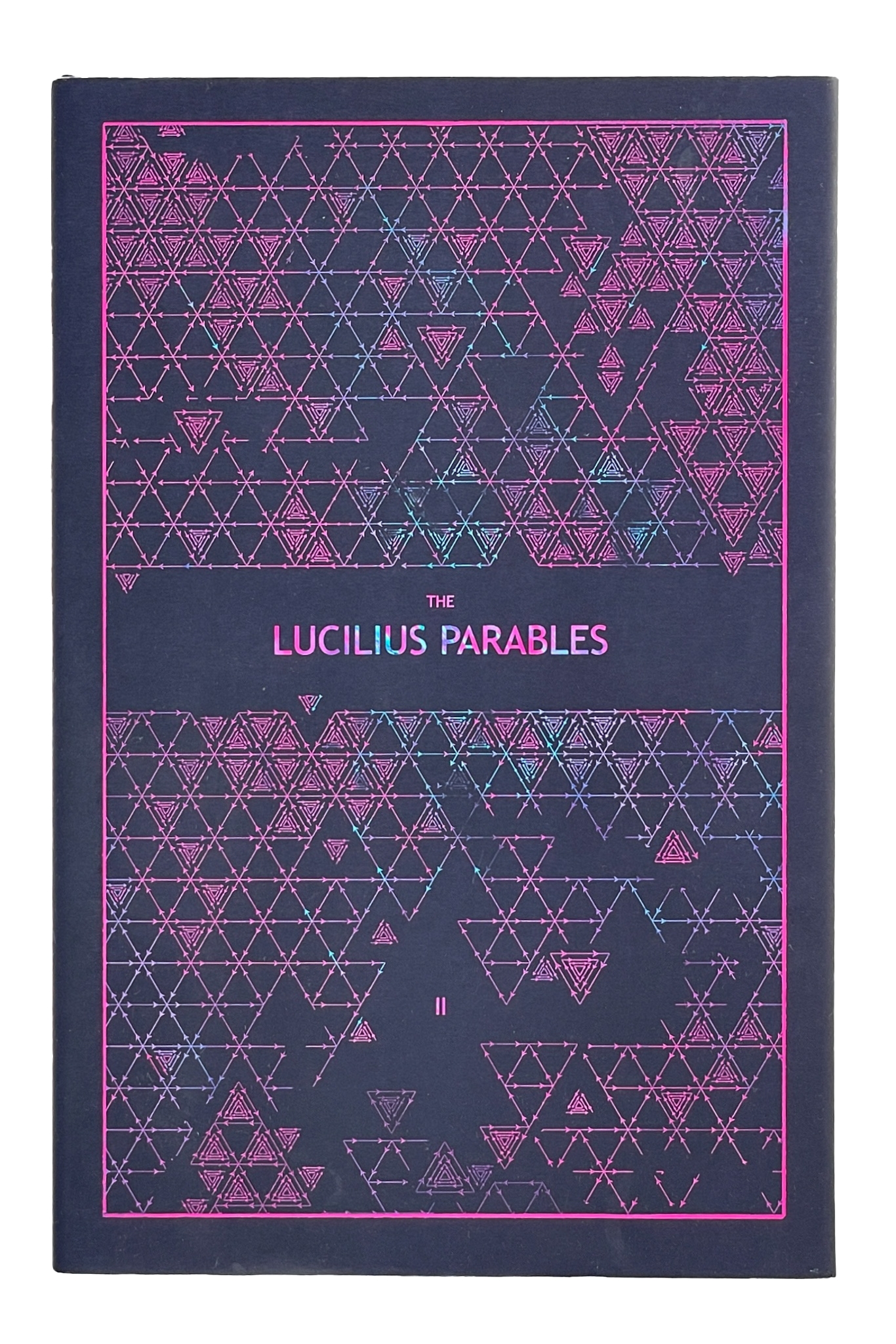
The SECOND illustrated book from Tinkered Thinking is now available!

SPIN CHESS
A Chess app from Tinkered Thinking featuring a variant of chess that bridges all skill levels!

REPAUSE
A meditation app is forthcoming. Stay Tuned.




PASS THE TIME
August 19th, 2019
Something to pass the time is a very strange concept.
Time is the most precious opportunity we have. No matter what we do, it’s going to pass.
Money makes a bit more sense in this context. It’s always possible to make more, but time? That’s gone the moment it’s used.
It stands to reason that the person who is just trying to pass the time, until the next pressing matter is at hand, has not thought deeply about what it means to have only some unknown finite amount of time left.
Contemplating this regularly exercises an important discretion about the tasks and activities that we choose to do.
For example, if each of us could have a total for all the time we’ve spent watching T.V. or scrolling through social media, and then instantly be able to convert that into time spent doing one difficult thing, like learning the piano, or a language, or some new skill, or building out a business idea, it’s likely to be staggering just how much time seems like it was wasted.
We have lulled ourselves into a state of complacency about how fast death hurtles towards us from the future.
When unplanned intervals of time open up in front of us, the best way to pass that time is perhaps to review how we’ve been spending our time, and whether or not we need to make a change.
A LUCILIUS PARABLE: FULL STOP
August 18th, 2019
Lucilius was contemplating a detail of a recent project when he realized he’d forgotten to message a friend about an upcoming dinner he wouldn’t be able to make. It reminded him of the last time they’d gotten together. The food had been spectacular, particularly a dish of sunchokes. He could probably recreate the dish himself he realized. And how much better would it all taste if he grew everything himself. Something to keep in mind for the future. He’d always wanted to build a cabin up in the north, and of course it would have a huge garden where he could plant everything to his heart’s content. He’d tried to do his best with an urban plot once but his work had kept him away from the untended ground. Some things he’d planted had popped up, and along with them so many other things. Weeds and what not. Things always popping up, he thought, and felt himself sigh at the tiring thought. But it was this sense of his body in space, his chest falling that allowed his mind to stumble off the train of thought. Lucilius realized, remembered really, that he was sitting on a cushion, and had been for several hours. He was on a silent retreat, and it was the third day, and he smiled, amused, as his practice kicked him back into the present.
PEAK EDUCATION
August 17th, 2019
This episode is dedicated to London, who claims to have reached ‘peak education’.
There are a few general areas in which we can strive to be better. We can seek to be in better physical condition through exercise and nutrition. We can seek to be wealthier by making more money. And then we can also – presumably – learn, acquire knowledge and understand.
The first, physical fitness, has a limit to it. We are constrained by the physical body that we have. Different genetic make ups accord to the sort of physique a person can acquire. Someone who is 5 foot 2 inches can’t reach 6 feet through any kind of exercise.
In this respect, money and education are more alike. We can always make more money. There is no limit on this, as evidenced by the fact that the richest person to exist isn’t in the past, but in the present, and these people, along with many others grow richer every day. The success of the lottery is a great example of this belief. Imagine for a moment someone who says they’ve reached ‘peak money’ with the aim of meaning that it’s impossible for them to have more money than they have. This is simply ridiculous. Anyone could disprove this person by handing them a penny.
Education falls into a similar suit. A fifteen year old, equipped with even the most lackluster education would be like a god if he were suddenly transported to the twelfth century, or even imagine a time before Aristotle and the pre-Socratics, when this fifteen year old - with the ease only afforded by being jaded - could describe the movement and number of the planets, their general composition, the fact that on a microscopic level all things are made of atoms that vaguely resemble the structure of solar systems with negatively charged electrons zipping around a nucleus made of protons and neutrons. Imagine still further, this jaded fifteen year old before a crowd of befuddled elders listening, noticing someone in the back coughing from sickness, and then describing the nature of germs and how microbes move through air and by touch and enter the body and wreak havoc, and how our immune system which is composed of similar elements formats itself to combat the virus or bacteria. Not only this, but a fifteen year old would be able to describe what soap is, and even though your average 15 year old doesn’t know how to make soap, chances are good that this fifteen year old could probably figure it out through some experimentation.
It took the human species thousands of years to figure these things out. And if we go beyond the human race, we can say that brains that can presumably think and figure things out the way a crow can use meta-tools to solve a puzzle that contains food, have been around for far longer. As a bubbling entity itself, it took the planet billions of years to become aware of these concepts.
Imagine what kind of status would be bestowed upon this fifteen year old thrown back in time.
It’s been theorized that proto-religious leaders who were able to understand and calculate the appearance of rare events like solar and lunar eclipses gained power through this knowledge. Simply because it was impressive.
Everything looks like magic until the underlying mechanics are understood.
If you are the only person who understands something, then you look like a magician.
Now if we return to this idea of ‘peak education’. We can wonder: if a fifteen year old from the year 9,000 were suddenly transported to us today, what kind of divine magician would he appear to be?
There is only one avenue through which this can occur. Physical exercise peaks, and money, while it can yield influence and create mobility, cannot actually make you smarter, even if you try to pay people to make you smarter. It is only education that accomplishes this. But a still subtler distinction must be made here.
Aside from some research initiatives, everything that one might learn in an educational institution falls into the category of what we already know.
Attending a university is – for the most part – a giant request for information we’ve already gathered and integrated. Most educational programs are at base simply an elaborate vocabulary test, whether that means defining Godel’s Theorem or describing the function and position of the Substantia Nigra within the brain.
The cutting edge of education is ultimately self-education.
It’s a process of forming novel questions and seeking the answers by manipulating reality until reality shows you how it works in a way that no one has ever seen before.
And if you can ask a good question that nobody has ever asked before. Bonus points.
If you can answer it, then fame and fortune may await, for we will all be amazed by something that seems like magic.
To you, of course, it’ll seem like an obvious no brainer
since,
you understand.
This episode relies heavily on ideas explored in Episode 390: Question about the Question.
TOUCH THE SKY
August 16th, 2019
Where does the sky start?
Gazing upwards can give the feeling that the sky is far away, that it’s the place of planes and clouds. But raise your hand towards the heavens and then looking at your hand, ask: where exactly is it really?
Does it not touch the sky? Does it not reside in the sky?
The meteorological phenomenon of fog, is just a low flying cloud that touches the ground.
If the sky touches the ground then do we not by default touch the sky the moment we walk outside? We might even reclassify buildings as a strange subterranean landform.
If you entered a cave somewhere on the Himalayan plateau - and no one would argue that you’ve gone subterranean - you’d be at a much higher ‘altitude’ compared to the rest of the planet.
All the buildings we’ve build are composed of the earth in some respect. We’ve simply reorganized, purified and recombined all of these earthly ingredients and joined and stacked them in novel ways. If you’re indoors, then the ceiling above you is fundamentally part of the earth. And hence, we are subterranean, even when we are in the penthouse of the tallest skyscraper.
But venture outside and you touch the sky.
Of course it never feels like this. Never seems like it.
And here lies an analogy so ripe it’s practically foul.
The phrase ‘touch the sky’ litters the lexicon of rappers, and leadership jargon and the motivation we try to impart to children.
The assumption is that we can somehow work hard and rise to touch the sky as though we finally achieve some sort of apotheosis.
(As a side note, that iconic dome on top of the United States Capitol building has a painting on the inside of it called ‘The Apotheosis of Washington’ which depicts George Washington becoming a god among angels in the heavenly clouds.)
But of course Washington never actually flew up into the sky. He accomplished everything on the ground.
For those who yearn for something better, something greater, that sort of success can feel unfathomably far away, just as the sky seems far away.
Without seeing the flaw in the image, the feeling is paradoxical, you can always move a little higher, but at what point do you touch the sky?
Realizing that we already touch the sky can collapse the feeling that there is an impassable gulf between us and the things we wish to accomplish.
As is so often the case, it’s merely just a matter of getting started.
Touching the sky is really a paradox of perspective.
DISTANT LANDS
August 15th, 2019
Everyone has destinations in mind that they’d love to visit for the first time. It’s a new experience and everyone hungers to find out a little more, particularly first hand, being there.
Compare this with other experiences that we may or may not have. Learning some difficult thing for example.
Oh, that’s not for me!
But have you tried it?
I just know it’s not my thing.
How can anyone hold on to such hypotheticals with so much certainty without having a full experience to confirm or deny?
Let’s say it’s rocket science, computer engineering, or oil painting, or rock climbing.
It’s not hard to find a person who would shirk at the mention of trying any if not all of these activities.
How different would it be if we were guaranteed to be really good at it the moment we start trying to do one of these activities?
Well, in that case, most people would feel differently, and instantly point out the impossibility of this fictional premise.
But if we remember all those distant exotic lands that we’d like to visit, we somehow over look the crowded airplane, the crap food, the traffic and panic on the way to the airport, the missed layover, the over booked flight, the reservation that vanishes upon arrival…
Enjoying those distant lands always requires some amount of aggravation to get there.
And how is that any different from getting good at something difficult?
Learning is – inherently – an uncomfortable and confusing experience.
The moment we understand something well enough to demonstrate that knowledge, we are no longer learning in that specific respect. In order to continue learning, we must move on to new territory that is again, uncomfortable and confusing.
The key to starting that process is asking a good question.
One that sets our mind off on a new quest.
The episode relates to Episode 390: Question about the Question.