-compressed.jpg)
Daily, snackable writings to spur changes in thinking.
Building a blueprint for a better brain by tinkering with the code.
subscribe
rss Feeds
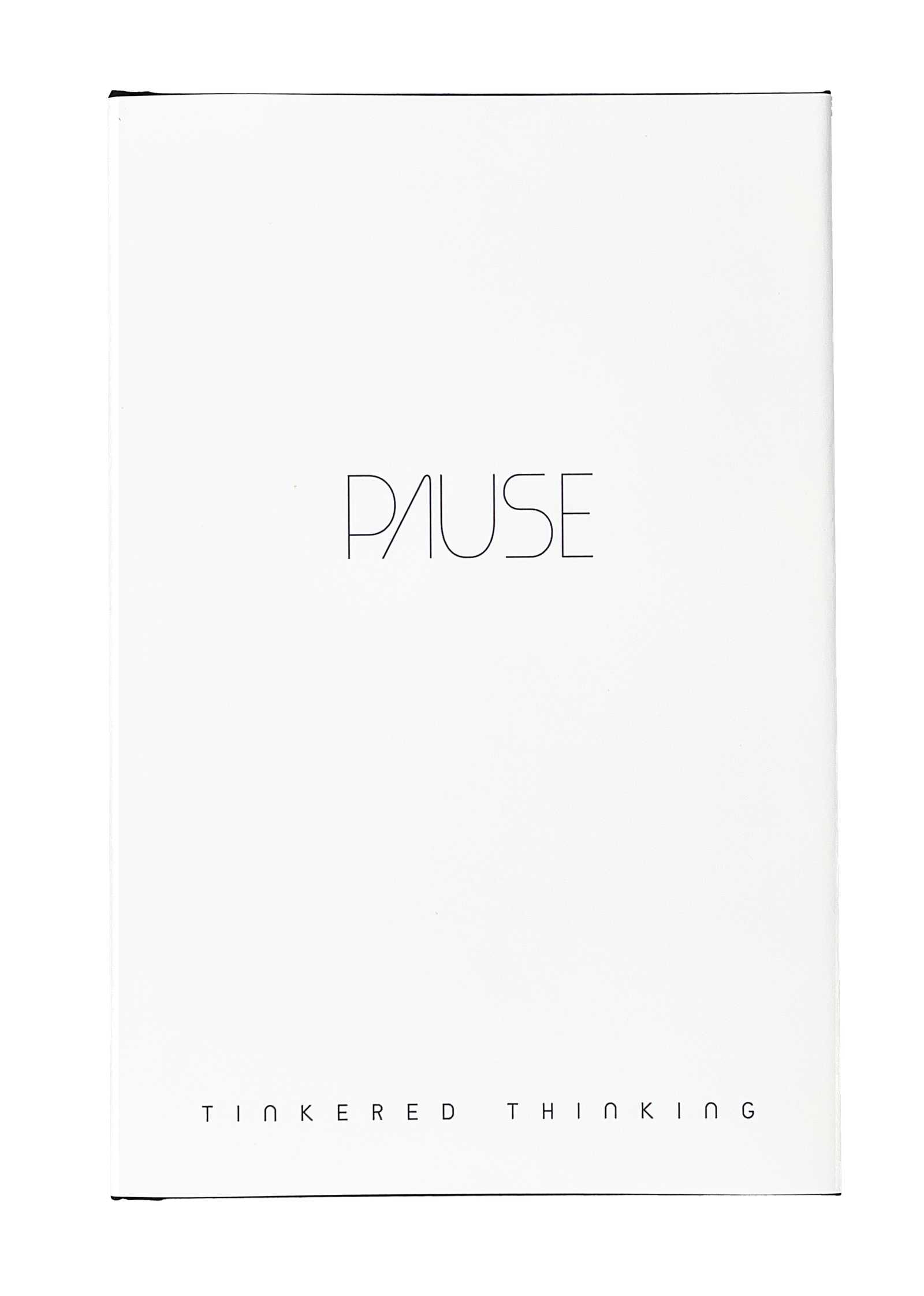
The first non-fiction book from Tinkered Thinking. PAUSE is a short book on meditation. Now available on the Tinkered Thinking Bookstore.
The SECOND illustrated book from Tinkered Thinking is now available!

SPIN CHESS
A Chess app from Tinkered Thinking featuring a variant of chess that bridges all skill levels!

REPAUSE
A meditation app is forthcoming. Stay Tuned.




FLUID IDENTITY
May 3rd, 2018
Imagine an actor who came on set and started portraying their character in exactly the same way they had portrayed the last character from a totally different film. Say, jumping from Ingmar Bergman’s ‘Persona’ to Pixar’s ‘Toy Story’.
I smell an awkward flop.
(or an Avant garde masterpiece for reasons that read like masturbatory musings – but that’s another subject)
Is there anything worse for an actor than to be typecast?
To be typecast means that the industry and everyone associated thinks you can only do one thing, one way. End of story. You might as well be doing menial work on a factory line while day-dreaming about big lotto wins and dancing Twinkies.
But to overly identify with any kind of identity is typecasting yourself.
No need for mediocre fame. No need for riches. You can limit yourself all on your own.
And you probably do.
Who doesn’t?
But to what degree?
No one is unlimited. Properly constructed limits give us avenues to function, flourish and progress.
But if your limits are circular, they’re perhaps defeating the purpose and usefulness of limits. If you are doing the same thing day-in and day-out with only tiny variations that are random and meaningless: You’re doing yourself a disservice.
Even a wheel gets somewhere despite the fact that it’s spinning. ( Give it two seconds of thought and you realize that any point on a moving wheel is not a circle but more like an old school telephone chord. Looping but moving.
No, simply moving through time doesn't count. We're talking about that cheesy, over-used verb: growth.)
Have you typecast yourself?
Are you a spinning wheel touching no ground, just doing loops in the same place?
Take a cue from good actors and seek diverse roles for your personality to stretch out in.
But take a step beyond those actors.
Write your own script.

THE IDENTITY DANGER
May 2nd, 2018
Identifying with certain traits, habits, work, preferences and beliefs is a very human thing to do.
“I am an artist.”
“I am a Lawyer.”
“I am Catholic.”
“I am a Marxist.”
Many of these identities come complete with communities, philosophies, codes of conduct – all sorts of things that weave their way throughout the mental structures of a person and reinforce that identity.
Giving up an identity is often seen as either freedom (say from a particularly secluded religious sect with practices far different from most of society) or as betrayal (think of a Marxist group of friends hearing the news that one of them has become a diehard capitalist.) or even just uncomfortable: you no longer consider yourself an artist? Who’s ever even heard someone say that?
There is implicit bias inherent in these identities.
All this means is that the identities we associate with tweak and bend our view of the world.
Does holding on to any identity too tightly increase this skew and tweak when it comes to our view of the world? If so this might lead to severe and long reaching limitations that may stunt potential and possibility.
A little foray into implicit bias research:
Even black people take a longer time to pair ‘black’ with things that are considered ‘good’ (check out the IAT – Implicit Association Test for more info)* Does this indicate that black people can have a bias against black people. Yes. Both black doctors and white doctors have been found to prescribe less pain medication to black people given identical reports of pain to other white patients.
If people can have implicit bias against those of a similar group to themselves…
Can we have an implicit bias against ourselves?
“I suffer from Depression.”
The medical establishment has done us a lot of good, but the way it had to go about it’s work in the most basic way – that of identifying things and creating names - presents a trap for human psychology.
Depression. ADHD. ADD. Anxiety. All of these were once a hazy set of symptoms that were set on the backdrop of an enormous spectrum of human behavior. Then they were singled out, grouped, and given names.
Names that people could identify with.
What's the difference between that statement and this one:
Names that people could adopt as identities.
If such a juxtaposition evokes strong emotion, then that in itself is an interesting fact worth unpacking.
Would anyone get upset if they came across someone saying the statement “Gravity makes things repel each other” ? Probably not. Because it’s clearly wrong. But implying that someone has adopted depression as an identity puts the responsibility squarely on the shoulders of the depressed person. This can easily sound like "It's your own fault." Which is a dangerous direction of logic. The problem is that it is not sound logic. It is an emotion fuelled conclusion that starts with some logic. The better conclusion is not: "It's their own fault". The better conclusion is far more nuanced: Knowing what we do about human psychology, how can the developmental processes of depression be used as a framework to reverse the direction of the mindset?
Usually... the best conclusions are simply better questions. Not cocky definitives about reality. A love of certainty is perhaps the root of problems regarding identity, and a question is a conscious curious adventure away from the safe bubble of certainty.
Whether depression is an identity that someone has integrated (unintentionally) into their personality or if it is a fact of their nature is a question worthy of controversy and touching nerves.
Recent thought and research on emotions has concluded that emotions themselves are concepts that we as humans have constructed.
Traditionally, emotions are seen as happening to you…
But emotions are not genuine reactions to the world. (Though this is how they feel) Emotions are simply: useful concepts for constructing and interpreting our experience of reality. (Check out Lisa Feldman Barrett’s work)
And if they are constructs. They can be deconstructed.
Or simply swapped out.
Let’s look at another concept. 2+2=5.
Is that a useful concept? Not really. So you trash it.
It may seem flippant to say that you can trash an emotion. But, if you can have an incorrect thought, which feels certain, what can we say about that feeling of certainty?
The party was at 8:00 and a friend misinformed you, telling you it was at 7:00. What can we say about the feeling of certainty about the time of the party, before you uncovered the mistake? Before you knew there was a mistake in your information, you assume you are correct and therefore adopt a feeling of certainty. This might seem like a harmless example, but it's implications are powerful.
We can say that the emotion of certainty was false.
2+2=5
Now there is an interesting concept. A false emotion.
Here’s one of the simplest rubrics that can be applied to any given emotion that is occurring.
Is this emotion useful?
Perhaps.... Not.
It’s a strange concept to identify with. The idea that you can decide which emotions and thought patterns are useful and relevant and therefore valid. And which emotions and thought patterns are detrimental, useless and therefore irrelevant and decidedly in – valid.
It’s a radical perspective. Which means it takes time not just to wrap one’s head around, but to fully embody. It’s not like a t-shirt you can throw on tomorrow and wear forever.
Like anything else, it requires time, patience, awareness, and slow work. and curiosity.
Is curiosity something you identify with?
The better question:
Which do you choose to identify with more, depression or curiosity?
*since the writing of this post the IAT has come under considerable scrutiny and it's clear there are very real problems with the test. However, the examples used in the post in conjunction to the mention of the IAT are real and still stand to bolster the point being made.
SELECTING THE SOLUTION
May 1st, 2018
Is the best solution the one that solves as quick as possible?
Problems and solutions are often thought of in a rigid way, the way puzzle pieces fit. Only one piece fits into another.
For that sort of problem, yes, one solution exists. But that’s a simple problem.
Most problems are more complicated and might respond to a great variety of solutions. Which do we choose? Often the quickest and easiest. At least that’s how it seems at the beginning. Often those quick and easy solutions compound the problem, or spawn a new problem, or they are somehow incomplete. Inevitably this creates more work. The pattern is repeated, and a quick solution to the new version of the problem is applied. Bureaucracies are stellar at this snowball effect: creating largely unnecessary amounts of work over the long term by implementing short term solutions. (In essence this is the bad side of business, creating busy-ness in lieu of forging a new path, with clear and curious vision.)
The method of selecting a solution has become the real problem.
Unless you are snapping puzzle pieces together or dodging a baseball, quick and easy does not get it done.
A better way to seek the solution is to think about the nature of the solution, the work and the time.
Perhaps this is a more useful question:
What solution results in the least amount of time and effort over the long term?
Installing a sprinkler system might seem like a lot of time and work up front, but it’s better than running around putting out fires forever.
FIREBOMB YOUR LIFE
April 30th, 2018
The better things are, the less likely we want to stir the pot. Right?
Is the opposite true? Shouldn’t it make sense that the worse things are, the more willing we should be to stir the pot? I mean, what do you have to lose? Cut roots and take to the wind.
If things are mediocre, and this whole game ends with death anyhow, why not get feisty with the time left? Like those seniors who escaped from their retirement home. They had nothing to lose.
Perhaps the more interesting bit about those seniors is if they’d wished they’d developed that attitude sooner in life…
The only person who is really watching you, is you. At the very least, do yourself a favor and make it entertaining.
SAMPLE ALL THE KOOL-AIDES
April 29th, 2018
Why not try any available strategy to make it happen? Even if we don’t like it. Perhaps the more important question is why don’t we like it?
Plants and trees strike their roots out in every direction possible. Just to cover their bases. You never know where the goods are going to be.
Zig Ziglar might have a bunch of religious things to say, but does one potentially unattractive aspect taint the whole thing? Maybe. But if things are truly not good. Isn’t “I’ll take what I can get” or “I’ll use what I’ve got” a better strategy than the cynicism, nihilism, and the overly-critical mindset that got us to such a low point? Isn’t denying one’s self the potential good of something that’s not perfect, a limitation and a potential hindrance to making progress? . . .Much like the one little limiting religious aspect of the exuberant lecture that might make it seem for some like a claustrophobic turn-off?
Shunning everything that might help simply because it’s not perfect, invariably limits us. From the benefits, from the growth, from the chance to develop a smarter mind, that can pick out all the useful, nutritious pieces for a future self, a better self.
Identifying negatives for the sake of more inaction has a negative impact on us. It’s like passing up a free $5 because it’s not a ten dollar bill.
If we’re really drowning, we’ll grab for anything.
If we’re really drowning, we’ll break all limits of our personal bubble and reach out.
If we’re really drowning, what have we got to lose?
First we must sample all the Kool-Aides. And then we must cherry-pick, mix and match the flavors that will work just for us.